Reading the C41A Specifications
Thirteen models, and the number in the name is not the blow energy — it is the weight of the falling part. That single distinction explains most of the confusion around this series, so it is worth taking first.
- Weight of falling part (kg) — 15 kg to 2,000 kg, and the model number: C41A-250 has 250 kg coming down. It sets how heavy a section the hammer can work; it is not a tonnage, and it is not an energy.
- Blow energy (kJ) — 0.16 kJ to 54 kJ, the work actually delivered. The two figures rise together but not in step: 15 kg gives 0.16 kJ, 2,000 kg gives 54 kJ.
- Max. blow frequency (min-1) — 300 blows per minute on the 15 kg, easing to 80 on the 2,000 kg. The light ram is what makes the fast rate possible.
- Malleable blank (square / round) — 30 × 30 mm up to 350 × 350 mm, or Φ35 to Φ400 mm. This is the row that decides whether your billet fits the hammer, before energy is even discussed.
- Working area height (mm) — 160 to 1,000 mm, i.e. the space between the dies. Tall tooling or a tall workpiece has to clear it.
- Motor power and frame weight — 2.2 kW to 132 kW, and 290 kg to 48,000 kg of frame. On the large models the steel mount (up to 24,000 kg) is a separate item, so the foundation and lifting plan both change.
| Model |
Falling part |
Blow energy |
Blows/min |
Motor |
| C41A-15L |
15 kg |
0.16 kJ |
300 |
2.2 kW |
| C41A-25L |
25 kg |
0.27 kJ |
250 |
3 kW |
| C41A-40L |
40 kg |
0.53 kJ |
245 |
4 kW |
| C41A-55L |
55 kg |
0.7 kJ |
230 |
7.5 kW |
| C41A-75L |
75 kg |
1 kJ |
210 |
7.5 kW |
| C41A-110L |
110 kg |
1.98 kJ |
180 |
15 kW |
| C41A-150L |
150 kg |
2.5 kJ |
180 |
18.5 kW |
| C41A-250B |
250 kg |
5.6 kJ |
140 |
22 kW |
| C41A-400B |
400 kg |
9.5 kJ |
120 |
30 kW |
| C41A-560B |
560 kg |
13.7 kJ |
115 |
45 kW |
| C41A-750B |
750 kg |
19 kJ |
105 |
55 kW |
| C41A-1000L |
1,000 kg |
27 kJ |
95 |
75 kW |
| C41A-2000L |
2,000 kg |
54 kJ |
80 |
132 kW |
*Figures are taken from the parameter table above. Model suffix L and B follow the frame series in that table. The part, its material and the blank size decide the model — the table is the start of the conversation, not the answer.
One row behaves differently from the rest of the table: the steel mount. Up to the 55 kg model it sits in a few hundred kilos, and on the 75 kg and 110 kg models the cell is empty in the table above — treat it as part of the quotation rather than as a fixed number. From the 150 kg model up it becomes a real item, reaching 24,000 kg on the 2,000 kg machine, which is a lifting and foundation question long before it is a price question.
The working area height matters more than buyers expect. It runs 160 mm on the 15 kg and 1,000 mm on the 2,000 kg, and it is what a tall die stack or a tall workpiece has to clear — a hammer can have plenty of energy and still not accept the tooling you already own.
What a Pneumatic Hammer Is For
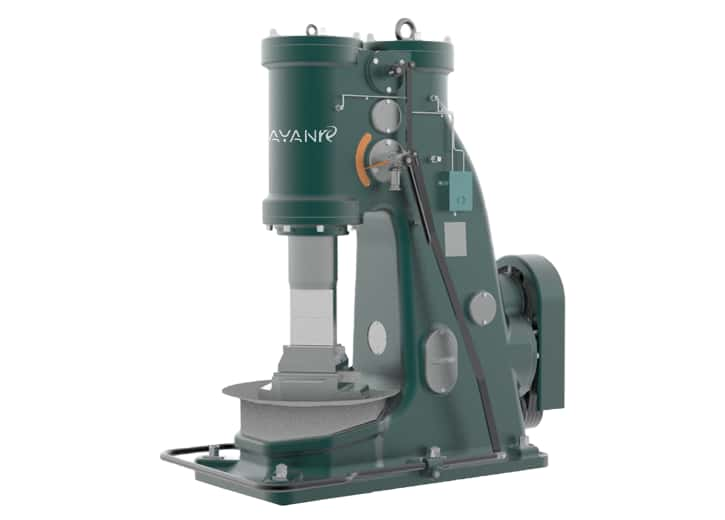
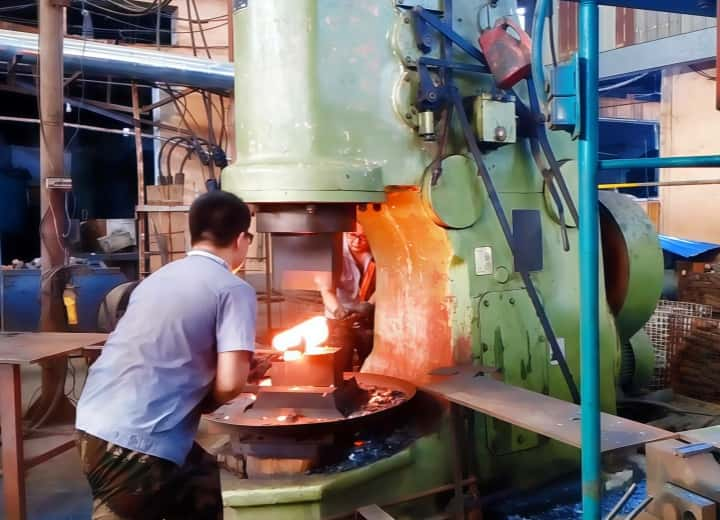
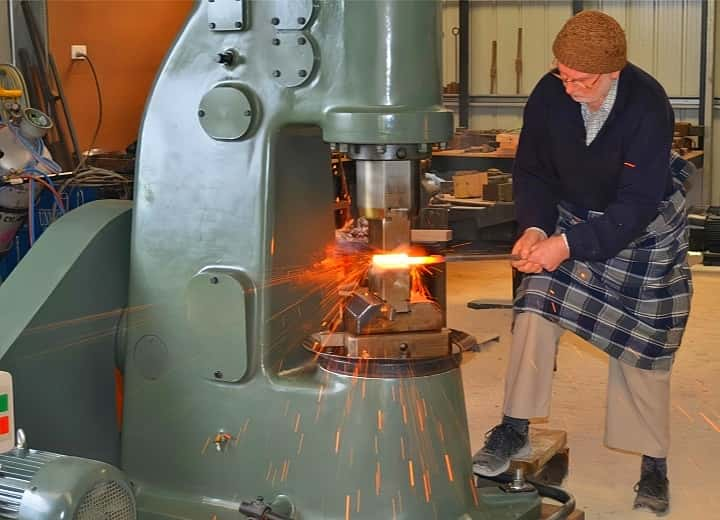
A pneumatic hammer lifts its ram and drives it down on compressed air, and it is the machine most open-die workshops start with: cheap to buy, simple to keep running, and fast enough in the light ranges to shape a part while it is still hot. It works the billet between flat or simple tools, steered by hand, so it suits one-off and short-run free forging rather than a repeating cavity.
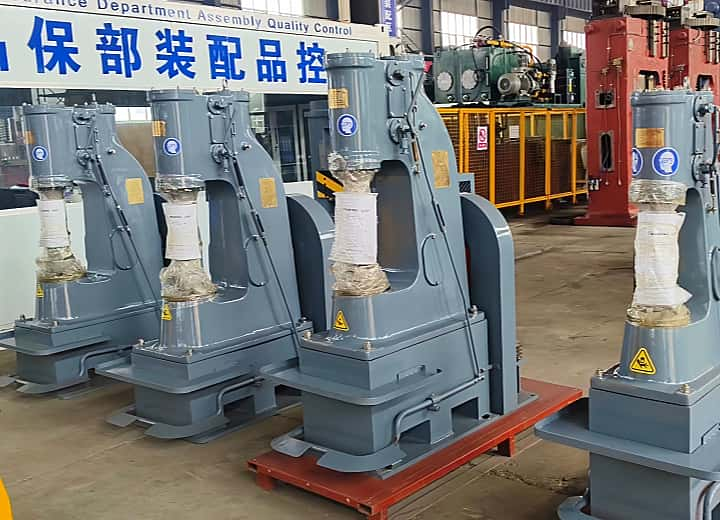
The C41A adds one thing that changes where it can be installed: the compressor is built into the machine. A conventional air hammer needs a compressor and a receiver somewhere in the shop, a dryer if the air is wet, and a line to the hammer; this one needs a power connection and a foundation. For a workshop that does not already run a compressed-air system, that is the difference between a project and a delivery.
The model ladder itself — what each frame size is used for, which industries each one serves, and how the structure changes from the 15 kg to the 2,000 kg frame — is written out in the C41A series pneumatic forging hammer guide.
For the mechanics behind the blow — how the air is compressed, when the valve opens and what the ram does between strokes — see how a pneumatic forging hammer works.
Typical work:
- Knife blanks and blades — the 15-40 kg models, where a light fast blow is what the work needs
- Hand tools, hardware and agricultural parts — 55-250 kg, the volume range of a small forge
- Shafts, bars and simple profiles — 400-1,000 kg, drawn out under continuous blows
- Forging stock and preforms — up to a 350 × 350 mm square or Φ400 mm round on the 2,000 kg
- Repair shops and tool rooms — where one machine has to cover whatever comes through the door
Materials: carbon and low-alloy steels and most of the grades a general forge handles. Pneumatic hammers are the traditional tool for exactly this range, and the three controls — single blow, continuous blow, and striking force set at the valve — are what let an operator move between a heavy breaking pass and a light finishing one on the same heat.
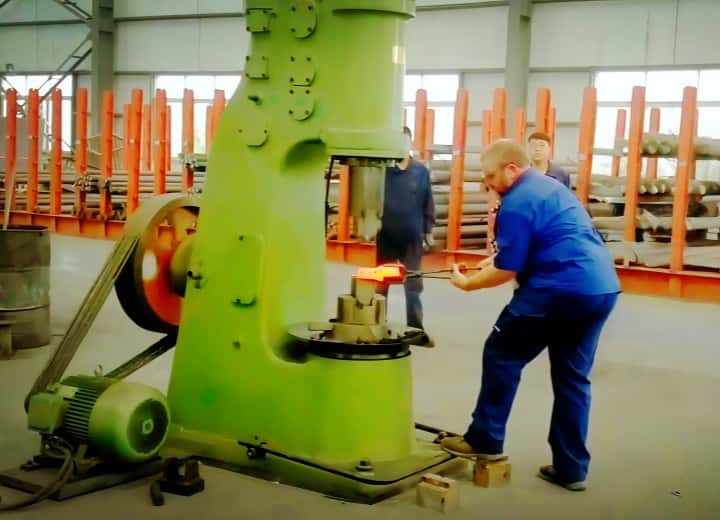
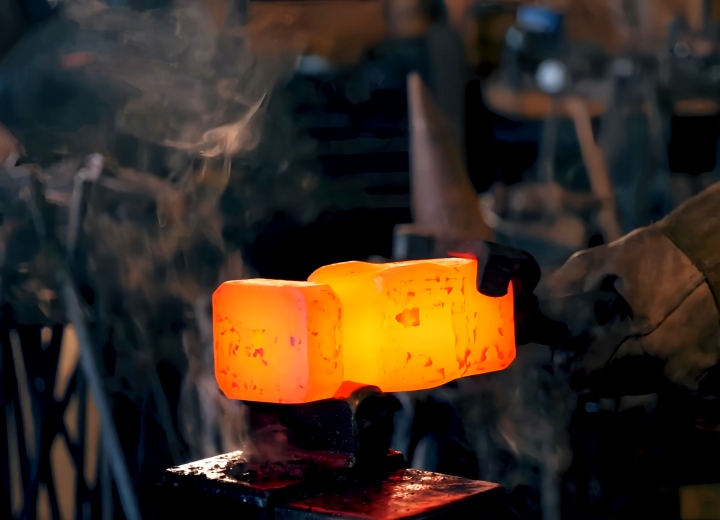
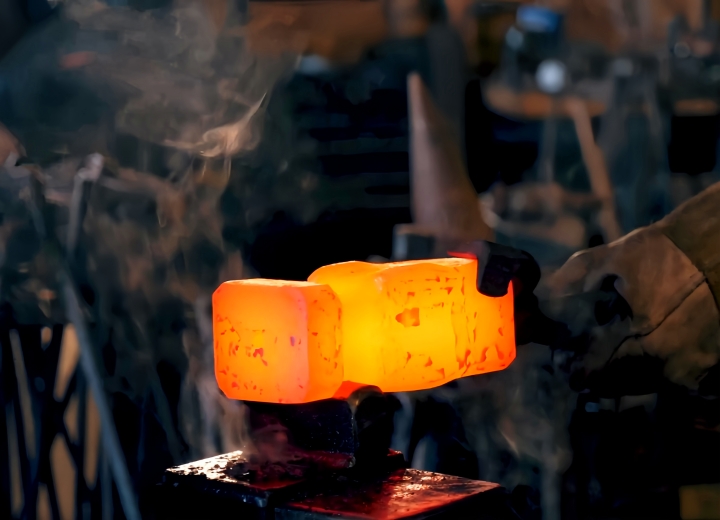
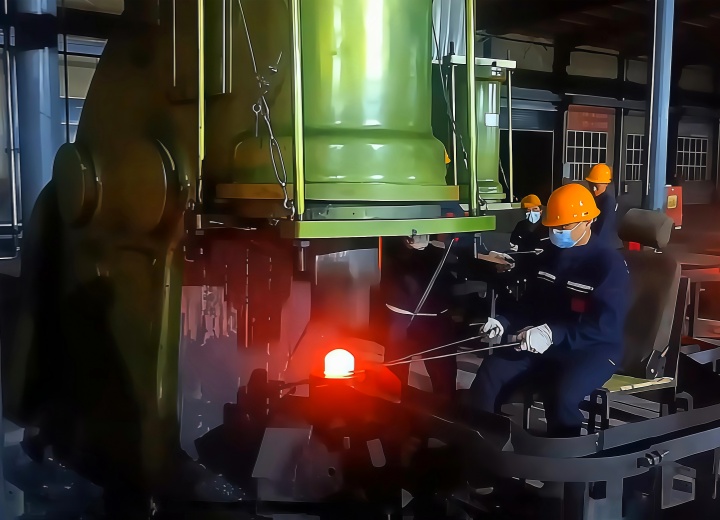
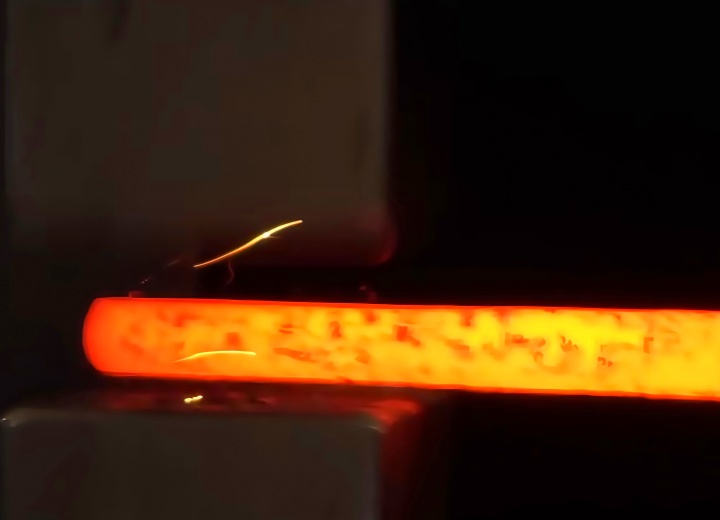
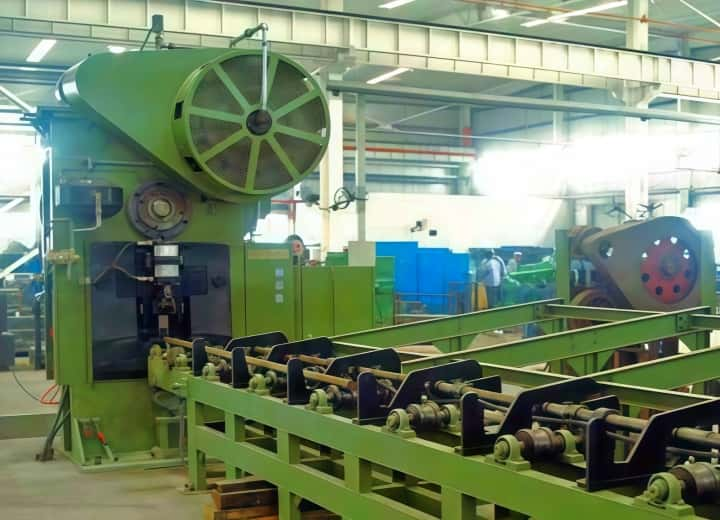
Drawing out a shaft or bar blank on the 560 kg model. Same continuous-blow work as the shaft and profile range in the list above, on a heavier ram.
Drawing out a heated billet on a 560 kg C41A pneumatic forging hammer.
Three numbers size the hammer, in this order: the largest blank section you must work (that is the square or round row), the heaviest part you intend to forge (that is falling weight and blow energy together), and the annual output (which decides whether the small or the large end of the range is worth buying). Send a drawing and the billet size and we size from those three.
Pneumatic Hammer or Hydraulic Hammer
This series stops at 54 kJ, and that is the honest place to start the comparison. Above it, a pneumatic hammer is no longer the right tool, and the work moves to a hydraulic machine.
- Stay with the C41A when the blanks are small to medium, the batch is short and mixed, the shop has no compressed-air system, and capital cost decides the purchase
- Move to a hydraulic hammer when you need more energy than 54 kJ, when the operator has to work to a repeatable blow rather than by feel, or when energy cost per part matters across a full shift — the C61YA single-arm hammer runs 30-350 kJ and the C66YA double-arm hammer runs 35-875 kJ
- Move to a press when the part is large and has to be worked through to the core — the Y13KA and the Y13A do that, and neither is comparable to a hammer by nameplate
In the 30-54 kJ overlap the two types are genuinely interchangeable on capability, and the decision turns on running cost and control. A hydraulic hammer pays for itself on energy where the hammer runs all shift; a pneumatic hammer wins where it runs a few hours a day on mixed work, or where there is no air system and the installation cost would dominate.
For the blacksmith side of that decision — which hammer suits blades, hand tools and mixed small work — the blacksmith power hammer guide works through type, size and cost.
Price, Lead Time and Ordering
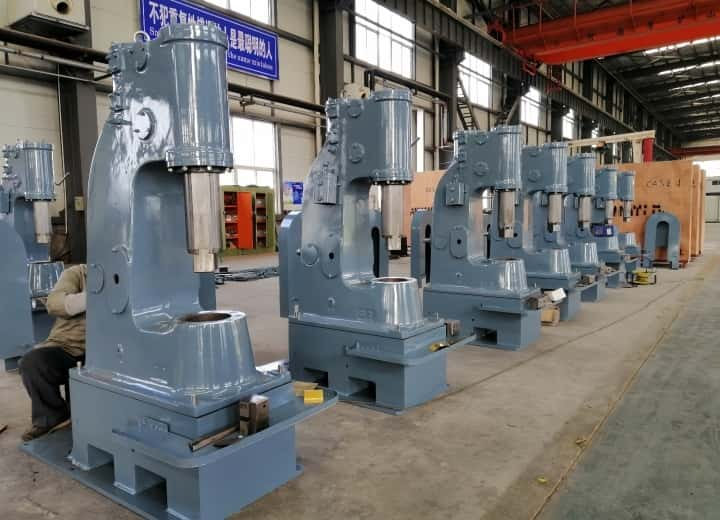
There is no public price list, because a C41A is configured to your requirements. The frame comes in 13 standard models; the die tooling, the foundation arrangement and the electrical specification are set per project. Here is what moves the price:
- Model size — 15 kg to 2,000 kg of falling weight, and everything scales with it: motor 2.2 kW to 132 kW, frame 290 kg to 48,000 kg
- Steel mount and foundation scope — from a few hundred kilos up to 24,000 kg, and whether that block, the anchor bolts and the load drawing are in your scope or ours
- Tooling — flat dies, cutters, or a simple impression; the hammer is sold with the die arrangement you actually forge with
- Electrical specification — voltage, phase and frequency for your plant
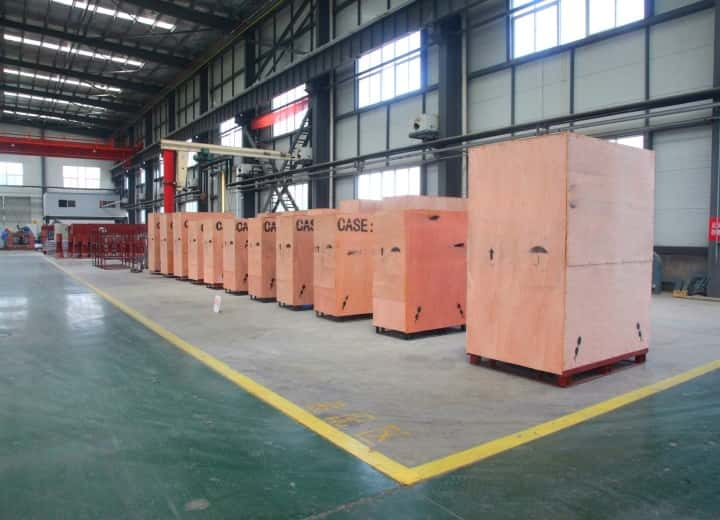
- Delivery terms and packing — the 2,000 kg machine is a multi-piece shipment, so whether the quote is ex-works or delivered matters more than on a small model
- Spare parts package — which wearing parts you keep on hand for the first year
To move from a model range to a firm number, send five things: a drawing or clear photo of the forged part, the material grade, the billet size (square or round), the required falling weight or blow energy if you already know it, and your annual output. If you already own tooling, say what it is — the working area height and the die seat decide whether it will fit.
What comes back is a model recommendation with the reasoning, a quotation against your specification, the foundation drawing, and the power requirement for that model. Lead time is quoted per order, because the model and the tooling both move it: the hammer is scheduled into production once the configuration is confirmed, so the date comes with the quotation rather than being guessed in advance.
Once the hammer is running, the routine that keeps it there — the daily air-line check, the oil points and the interval for each — is set out in the pneumatic hammer maintenance checklist.
C41A Pneumatic Hammer FAQ
Does C41A-2000 mean 2,000 kg of blow force?
No — it is the weight of the falling part, 2,000 kg. The blow that weight delivers is 54 kJ. Falling weight and blow energy rise together across the 13 models but they are two different figures, and neither is a tonnage: an air hammer is rated by what it weighs coming down and what that weight delivers, not by a press-style tonnage.
Do I need a compressor to run it?
No. The compressor is built into the machine, so it needs a power connection and a foundation — not an air line, a receiver or a compressor room. That is the practical difference between this series and a conventional compressed-air hammer.
What size billet can it work?
From 30 × 30 mm square or Φ35 mm round on the 15 kg model, up to 350 × 350 mm square or Φ400 mm round on the 2,000 kg. Check this row before the energy row: a hammer that will not take the billet is not fixed by buying more blow energy.
Can the striking force be adjusted during a job?
Yes. Single blow, continuous blow and striking force are all set at the valve, so an operator can break down a billet with heavy blows and finish it with light ones without changing the setup. That is the control the small-model work depends on.
Pneumatic or hydraulic — which should I buy?
This series stops at 54 kJ. Below that, a pneumatic hammer is cheaper to buy and simpler to keep running, and the built-in compressor means it can go anywhere with power. Above 54 kJ, or where the blow has to repeat exactly all shift, the work belongs on a hydraulic hammer — the C61YA from 30 kJ or the C66YA from 35 kJ.
How much foundation does it need?
It scales with the model. The frame runs 290 kg on the 15 kg model to 48,000 kg on the 2,000 kg, and the steel mount is a separate block of up to 24,000 kg. On the larger models the foundation is designed from the load drawing we supply with the quotation, not from a rule of thumb.
Is the C41A a fixed model, or configurable to my requirements?
Configurable. The 13 models are standard frame sizes; the die arrangement, the mount and foundation scope, and the electrical specification are set per project. That is also why there is no published price, and why the delivery date comes with the quotation rather than off a table.