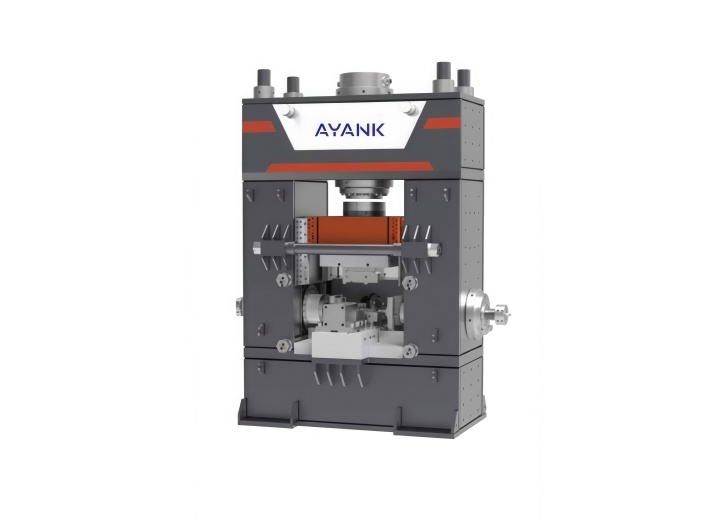
Product parameters
| Item |
Unit |
ZGD370 |
ZGD460 |
ZGD560 |
ZGD680 |
ZGD1000 |
ZGD1250 |
|
| Outer diameter of rolling die |
mm |
370 |
460 |
560 |
680 |
1000 |
1250 |
| Width in commission for rolling |
mm |
500 |
570 |
700 |
850 |
1200 |
1400 |
| Max. length of work-pieoe |
mm |
570 |
710 |
870 |
1050 |
1920 |
2500 |
| Adjustment of center distance |
mm |
15 |
17 |
20 |
20 |
25 |
20 |
| Rotaing speed of roller |
r.p .m |
62 |
56 |
52 |
40/25 |
15/30 |
8 |
Max . blank
dimension |
Square |
mm |
50 |
65 |
90 |
110 |
140 |
180 |
| Round |
mm |
Φ55 |
Φ75 |
Φ100 |
Φ125 |
Φ160 |
Φ200 |
| Longitudinal stroke of |
mm |
490 |
630 |
758 |
depend on |
depend on |
depend on |
| transfer arm |
manipulator |
manipulator |
manipulator |
| Lateal stoke of arm |
mm |
436 |
505 |
550 |
750 |
920 |
1420 |
| Vertical and horizontal adjustability |
mm |
Adjustable |
Adjustable |
Adjustable |
Adjustable |
Adjustable |
Adjustable |
| Adjustment of longitudinal |
mm |
200 |
200 |
400 |
Unadjustable |
Unadjustable |
Unadjustable |
| position |
| Single lateral stroke |
mm |
Adjustable |
Adjustable |
Adjustable |
Adjustable |
Adjustable |
Adjustable |
| Max.load capacity |
kg |
12 |
12 |
30 |
50 |
150 |
250 |
| Main motor power |
kW |
18.5 |
22 |
55 |
132 |
250 |
355 |
| Total weight |
ton |
10 |
12.5 |
22 |
60 |
70 |
120 |
Reading the ZGD Specifications
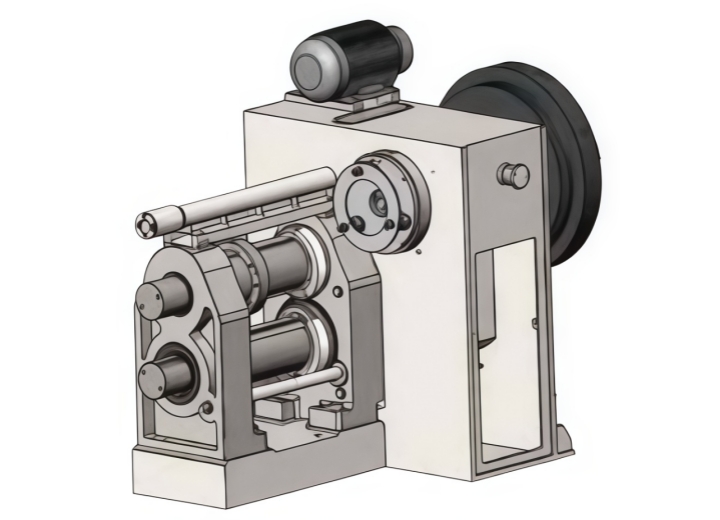
The model number is the outer diameter of the rolling die in millimetres. ZGD370 carries a 370 mm die, ZGD1250 a 1,250 mm die. That single figure sets how wide the roll gap can open, and through it how large a billet the machine can swallow.
Three rows in the table decide the model, and they are not interchangeable. Max blank dimension is the billet you can feed in, from 50 mm square on the ZGD370 to 180 mm square on the ZGD1250, or Φ55 mm to Φ200 mm round. Max length of work-piece is the longest part that can be rolled, 570 mm to 2,500 mm across the range. Main motor power sets the rate, from 18.5 kW up to 355 kW. Feed a billet the machine cannot take and nothing else matters; match the billet first, then check length, then power.
Two rows are usually misread. Max load capacity is not the weight of the finished part. It is what the transfer arm can carry, 12 kg on the smallest model to 250 kg on the largest. A heavy part on a light arm needs a manipulator, not a bigger machine. And on the ZGD680 and above, longitudinal stroke of the transfer arm reads "depend on manipulator". That is not a missing number. Those models are built to work with a manipulator, so the stroke comes from the equipment around them.
How the roll forging process runs
A rolled preform is made in five steps, and only one of them happens inside the machine.
- Cut and heat the bar to billet length and bring it to forging temperature.
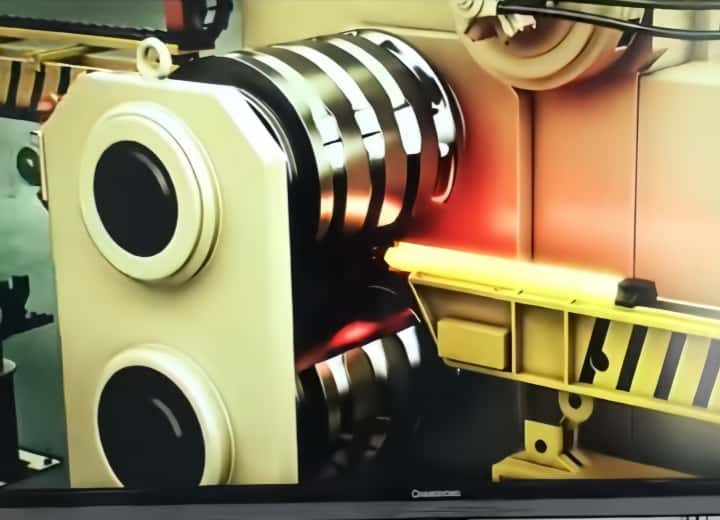
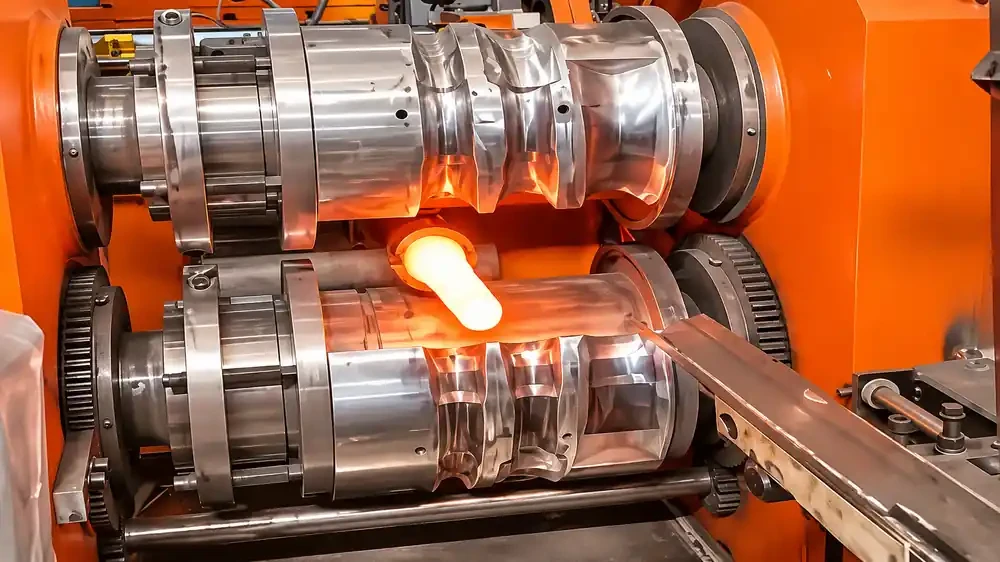
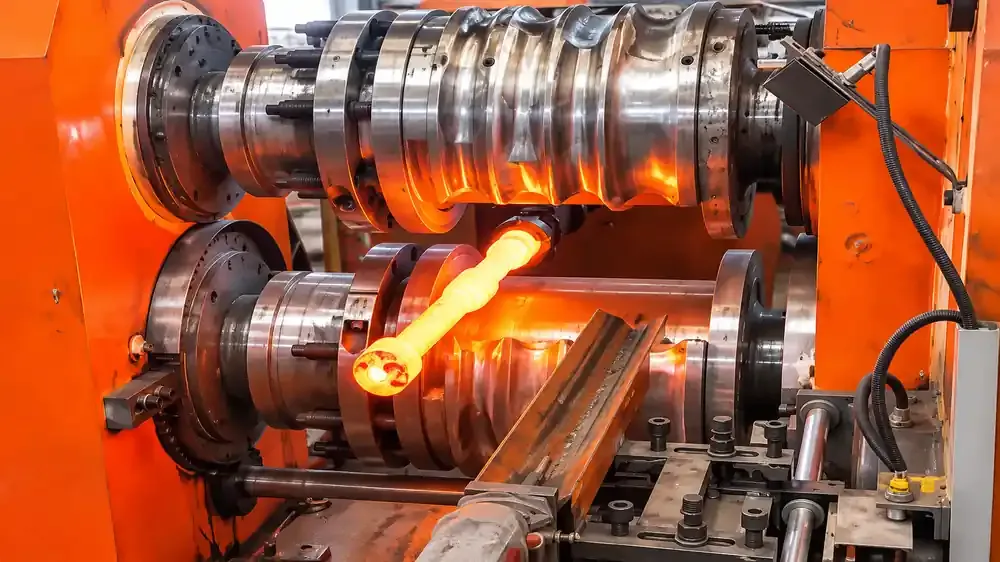
- Feed the hot billet into the gap between the two grooved rolls.
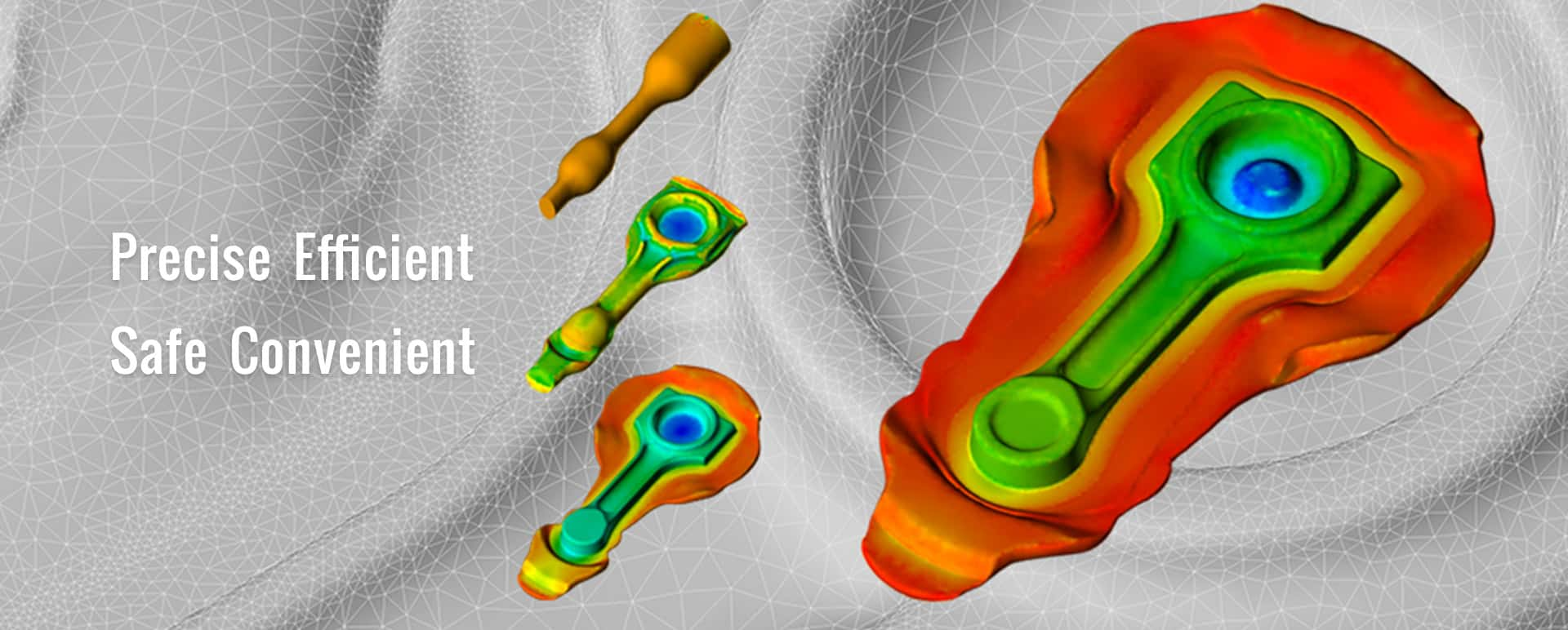
- Roll. The dies are cut so the gap narrows along the arc. As the rolls turn, the billet is drawn through and squeezed down in stages, not in one bite.
- Discharge the stepped preform, with the material already distributed where the finishing die needs it.
- Finish on the hammer or press. The roll forging machine does not replace it.
The saving comes from step three. Because the deformation is progressive and local, the billet is shaped rather than hammered into submission. A rolled preform sits closer to the finished contour than a hand-worked one, so the flash and the scale loss in the finishing die are smaller. On a long shaft part, that difference repeats on every piece.
Rolling is also a continuous process. There is no heavy ram reversing at the top of every stroke, which is why noise and vibration stay lower than on a hammer doing the same preforming work. In a workshop with neighbours, that is not a small thing.
Roll forging or hammer preforming
Both routes put a shaped preform under the finishing die. What separates them is where the work sits in the line.
| Item |
Roll forging (ZGD) |
Hammer preforming |
| How the shape is made |
Continuous reduction between grooved rolls |
Repeated blows between flat or simple dies |
| Best part profile |
Long, stepped and tapered shafts |
Short, blocky parts and simple shapes |
| Preform accuracy |
Close to the finishing contour |
Depends on operator skill |
| Noise and vibration |
Lower, continuous process |
Higher, impact process |
| Tooling per part |
One roll die pair per part shape |
Simple dies, quicker to make |
| Fits an automated line |
Yes, with transfer arm or manipulator |
Harder to automate |
The choice is not which machine is better. It is whether the part is long and stepped enough that rolling pays back the roll dies.
Where roll forging pays off
The machine earns its place on parts that are long relative to their section, and that repeat in volume.
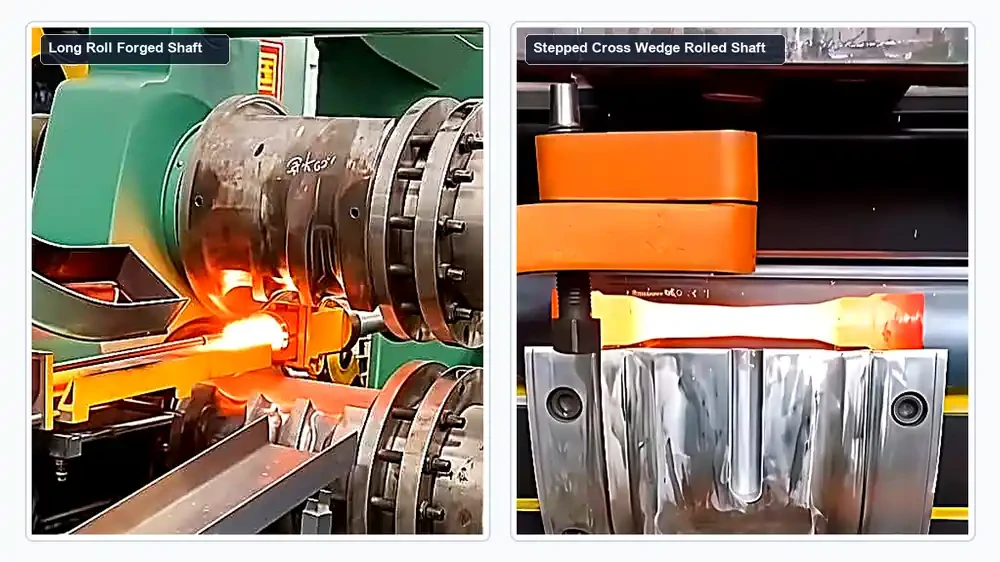
- Connecting rods and steering knuckles for automotive and tractor build, where the preform has to place material at both the eye and the shank.
- Crankshaft and camshaft blanks, long enough that hammer preforming would need several heats.
- Hand tools: wrench bodies, pliers, hammer heads and similar drop-forged items made in large batches.
- Agricultural and hardware parts with a stepped section and a steady annual volume.
- Shafts and bars that need reduction along the length with the grain flow following the profile.
What these have in common is serial production of the same shape. A one-off part will not repay a roll die; a run of thousands will.
What the line needs on site
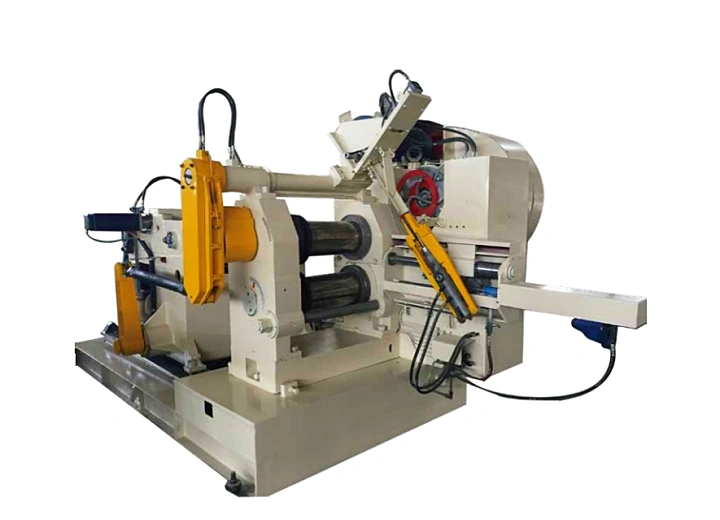
The machine arrives as a unit of 10 to 120 ton depending on model, and it needs a foundation built for that weight. A foundation drawing is issued with the order, sized to the model and to the soil conditions at your site. Do not pour before you have it.
Connected power follows the main motor, from 18.5 kW on the ZGD370 to 355 kW on the ZGD1250. That is the drive only; add the transfer arm, lubrication and lighting when you size the supply.
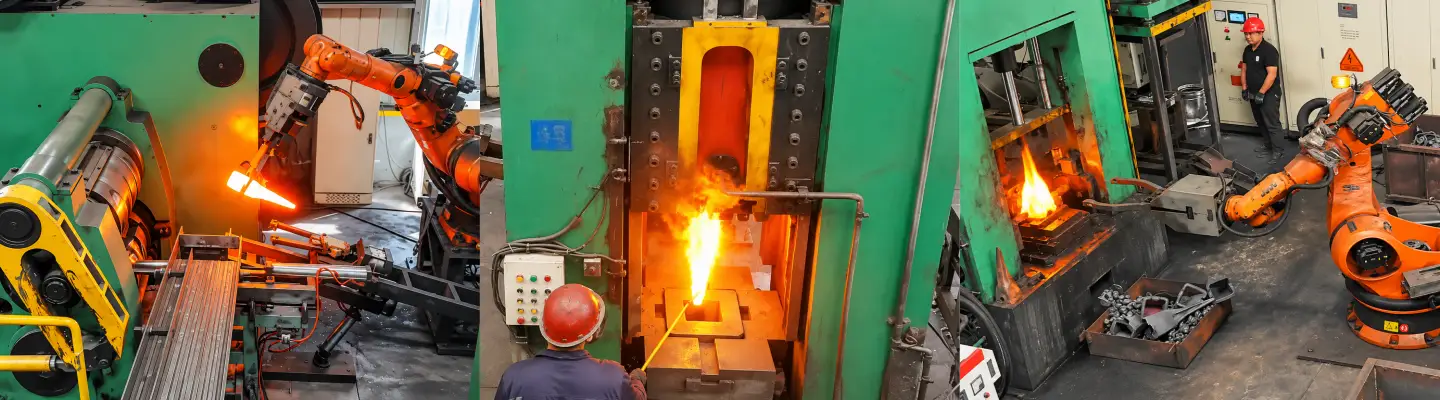
Two things decide how the machine behaves in your plant. First, the roll forging machine is fast, so the equipment downstream has to keep up. If the hammer or press cannot take a preform at the rate the rolls produce one, the rolls wait. Second, work handling: below ZGD680 the transfer arm has its own longitudinal stroke, so the machine can be fed and unloaded on its own. From ZGD680 up, plan for a manipulator.
ZGD Roll Forging Machine FAQ
What blank sizes can a ZGD roll forging machine take?
The largest blank each model accepts runs from 50 mm square on the ZGD370 to 180 mm square on the ZGD1250, or Φ55 mm to Φ200 mm round.
Does a roll forging machine replace the die forging hammer?
No. It makes the preform and the hammer or press finishes the part. On simple stepped shafts it can roll close enough that only a light finishing pass follows.
What do the model numbers mean?
The number is the outer diameter of the rolling die in millimetres. ZGD370 has a 370 mm die, ZGD1250 has a 1,250 mm die.
Which model do I need for a given part?
Match the billet first against max blank dimension, then check the part length against max length of work-piece, then confirm the rate with main motor power.
What is max load capacity for?
It is the weight the transfer arm can carry, 12 kg to 250 kg depending on model, not the weight of the finished part.
Can it run in an automatic line?
Yes. It works with a mechanical arm or manipulator, and from ZGD680 up the longitudinal stroke of the transfer arm is set by the manipulator rather than built into the machine.
Send your forging drawing or part details — we will recommend the machine that fits and quote it.
Drawings by email, so the file arrives intact. Prefer to type it out? Use the message form at the bottom of this page.
Email your drawing