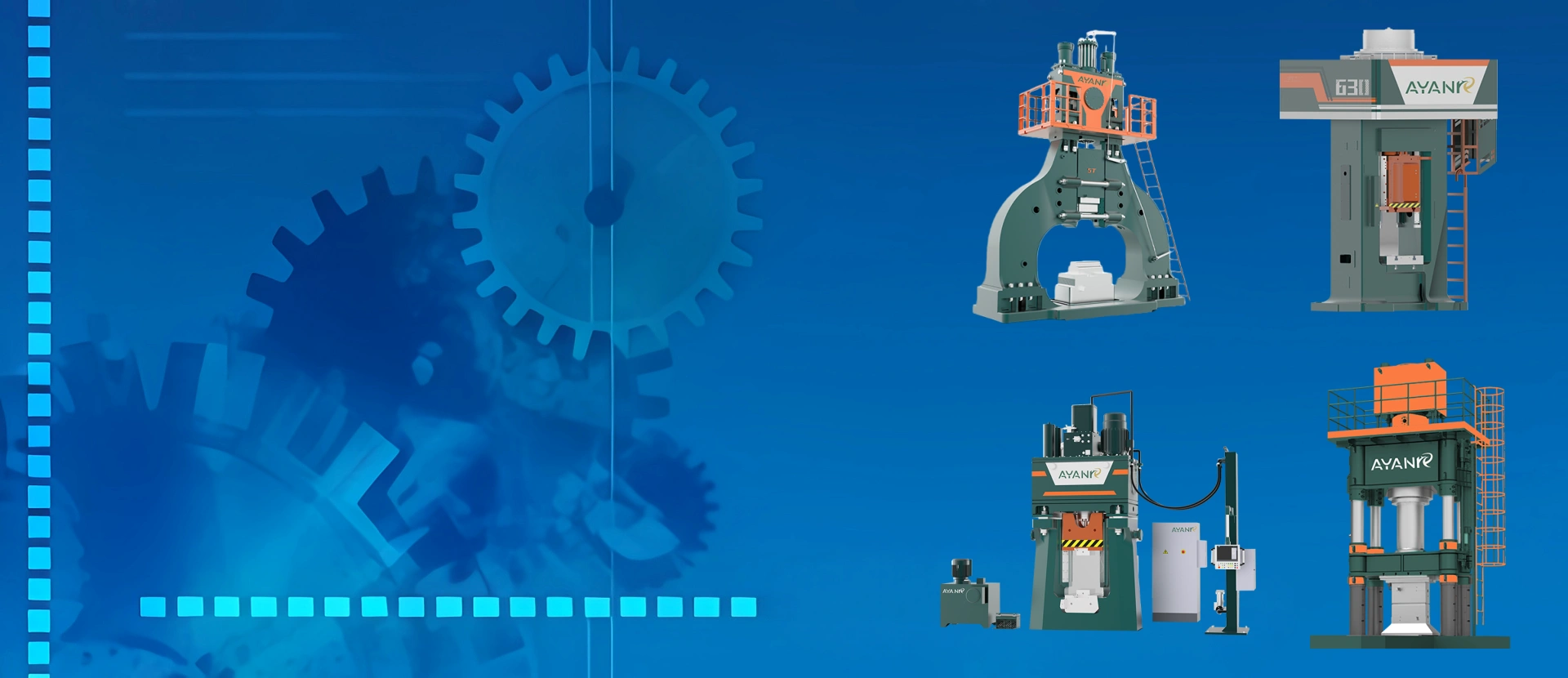
For an excellent blacksmith, having a stable, reliable, and suitable pneumatic power hammer is very important.
Many people only look at price and tonnage when choosing a power hammer, ignoring equipment stability, application scenarios, and after-sales support. In the end, they can afford to buy it but cannot afford to use it, and the more they use it, the more they lose. All common pain points are concentrated in actual production.
The following details the pain points encountered during the selection of a power hammer, as well as the advantages of the AYANK power hammer!
Pain points encountered during the selection process of a pneumatic power hammer |
Why is choosing the AYANK FORGING pneumatic power hammer more guaranteed? |
|
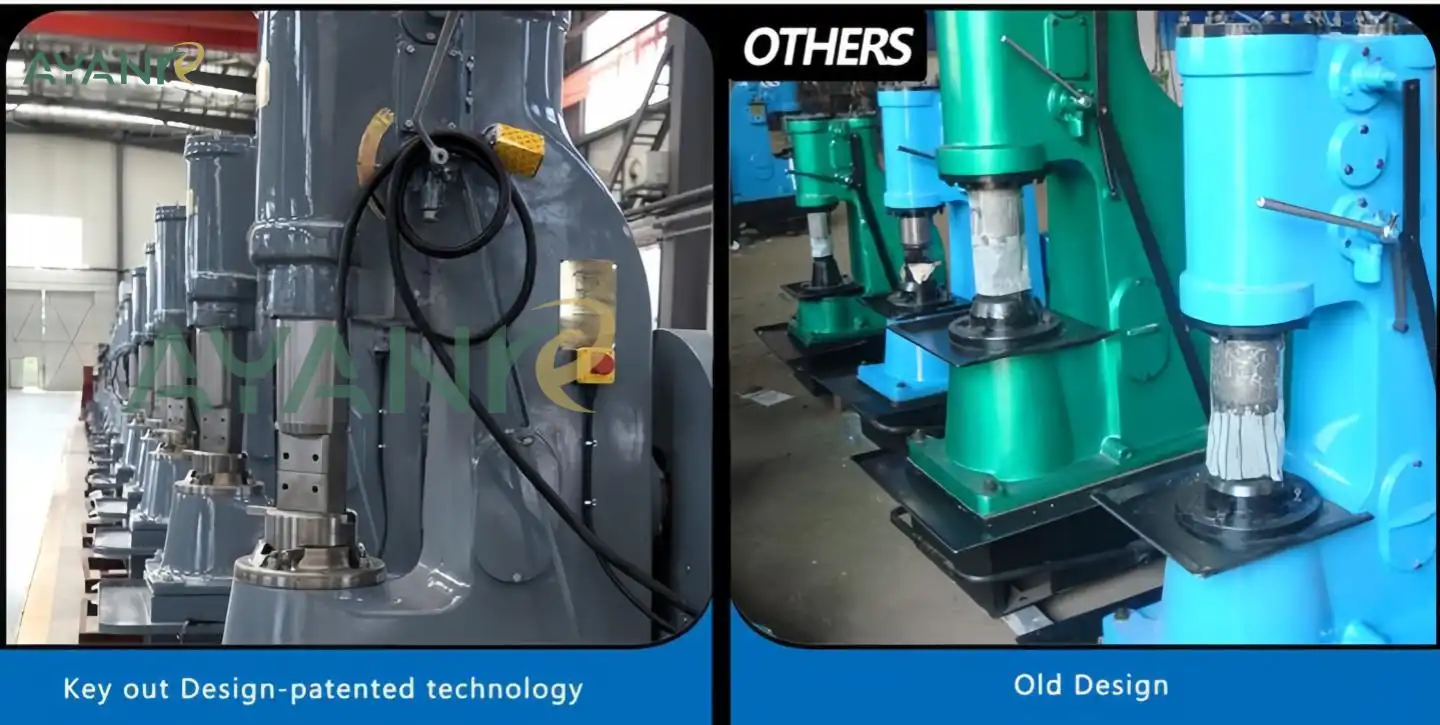
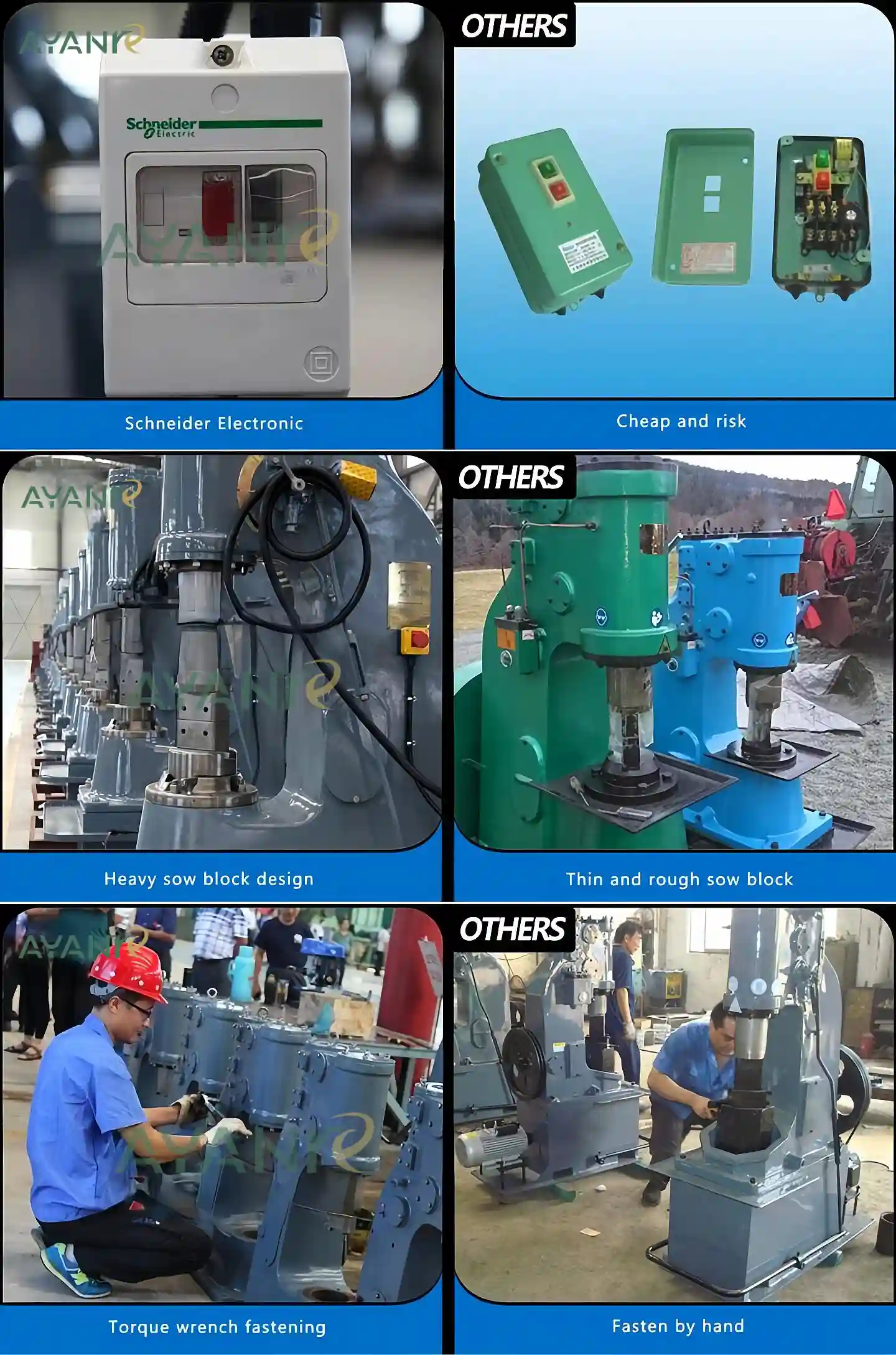
1.Poor quality, frequent shutdowns for repairs A large number of low-priced generic power hammers on the market use spliced bodies, which are prone to problems such as cylinder air leakage, seal ring aging, hammer rod loosening, etc., requiring minor repairs every three days and major repairs every five days. |
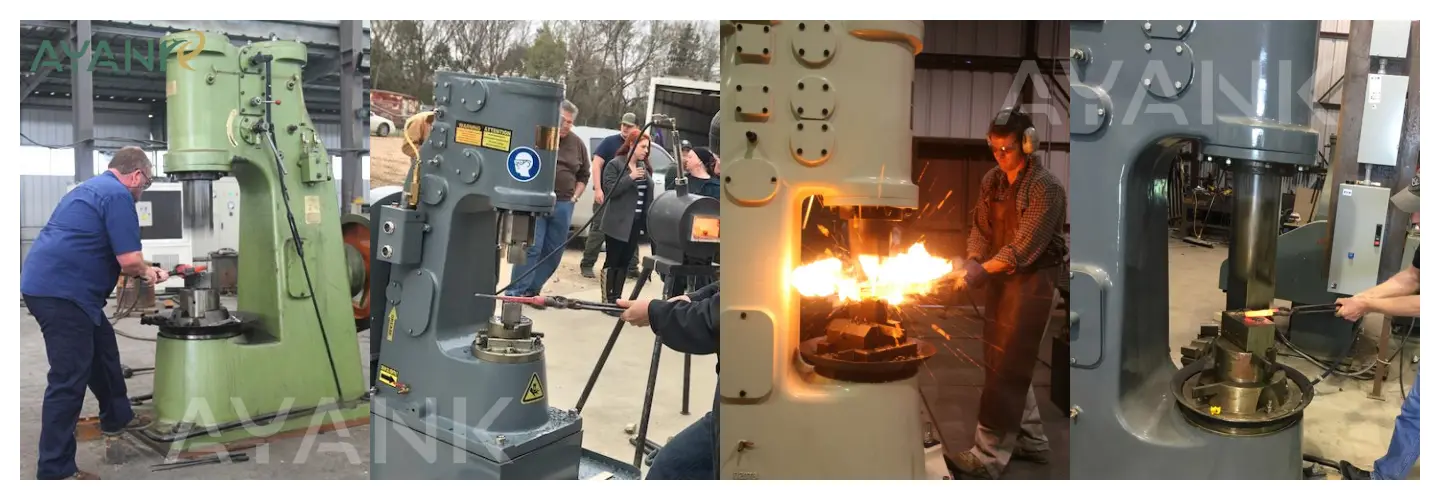
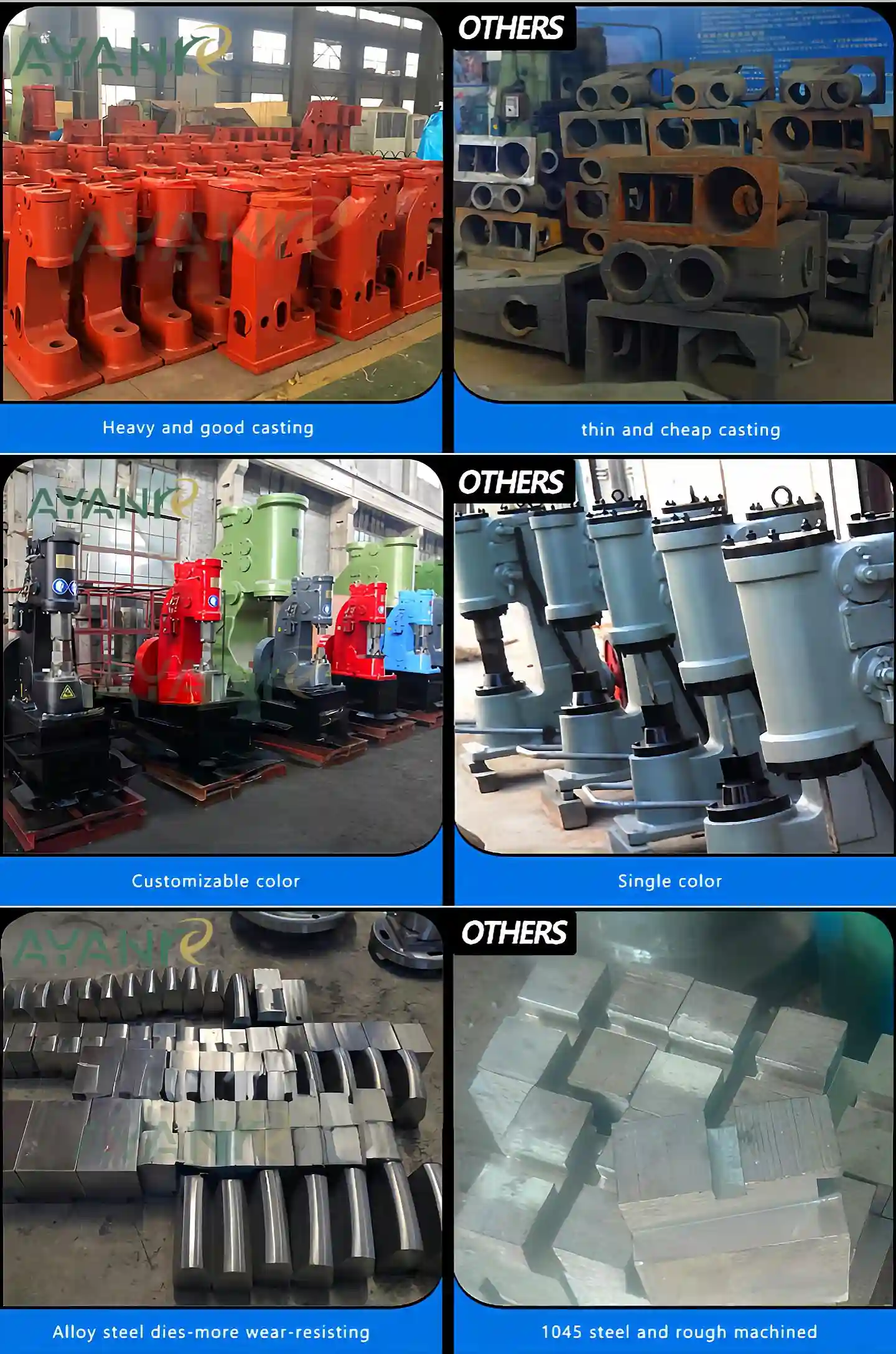
1.High quality, stable and reliable, no project delays Adopting a one-piece molded body, completely solving common faults such as cylinder air leakage and hammer rod loosening. With 70 years of experience in the pneumatic hammer production industry, we have a 10,000-square-meter parts warehouse, keeping a full range of wearing parts in stock. Daily maintenance only requires periodic replacement of sealing rings and lubricating oil. Simple maintenance, extremely low failure rate, fully ensuring stable project schedules. |
|
2.Excessively high energy consumption — "Electricity bills exceed order revenue" Old refurbished bodies or inferior pneumatic power hammers have unreasonable air circuit designs and low striking efficiency, consuming twice as much electricity as others for the same amount of work. |
2.Low energy consumption, reducing electricity costs Equipped with a brand-new body structure, German imported motors and electronic control systems, combined with self-developed patented air circuit and electrical design, greatly improving striking efficiency. Lower power consumption for the same workload, increasing net profit. |
|
3.Troublesome installation — "Only realized it couldn't be installed after buying" Did not confirm foundation requirements or power specifications in advance. Upon arrival, it was discovered that the motor does not match the voltage, the floor load-bearing capacity is insufficient, and there is not enough space. |
3.Simple installation — plug and play after unboxing Voltage and frequency are confirmed in advance, and the motor is customized to perfectly match your local power conditions. For large pneumatic hammers, foundation condition requirements will be provided for construction; small pneumatic hammers have no foundation requirements. |
|
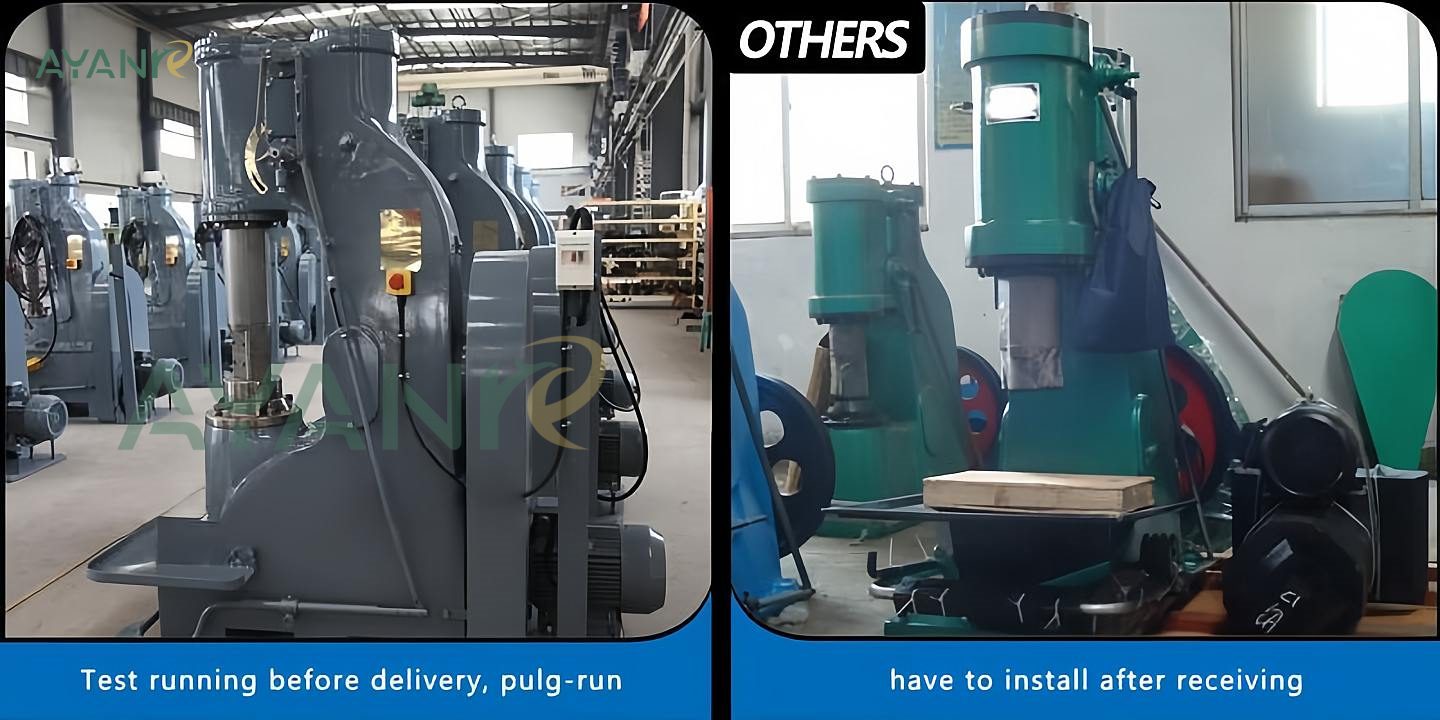
4.Unable to operate normally after installation After waiting eagerly for two months, the power hammer finally arrived. After installation and plugging it in, it was found that it could not operate normally because no trial run or debugging had been performed before leaving the factory. Contacting after-sales customer service could not solve the problem, resulting in losing both the money and the goods. |
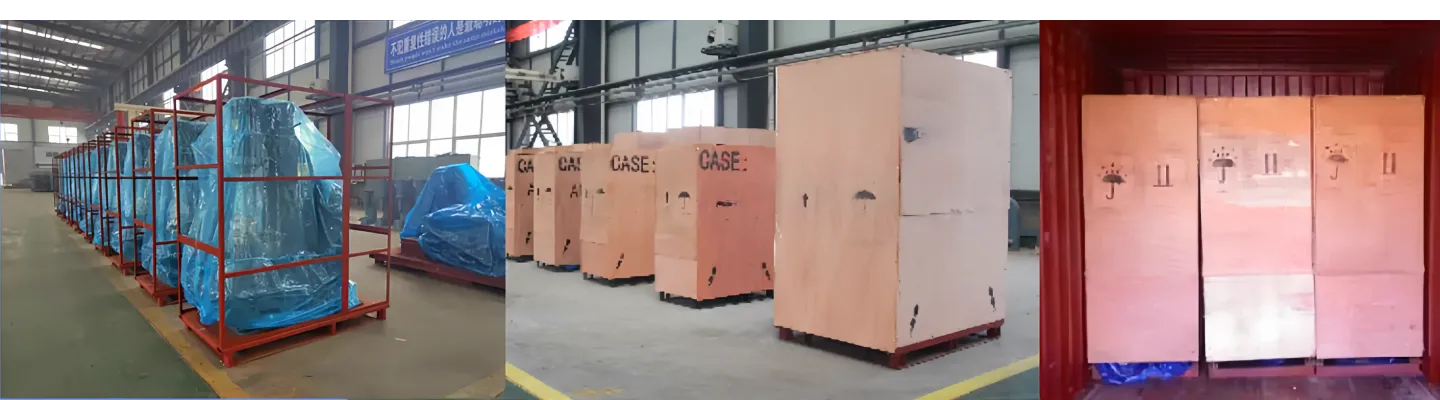
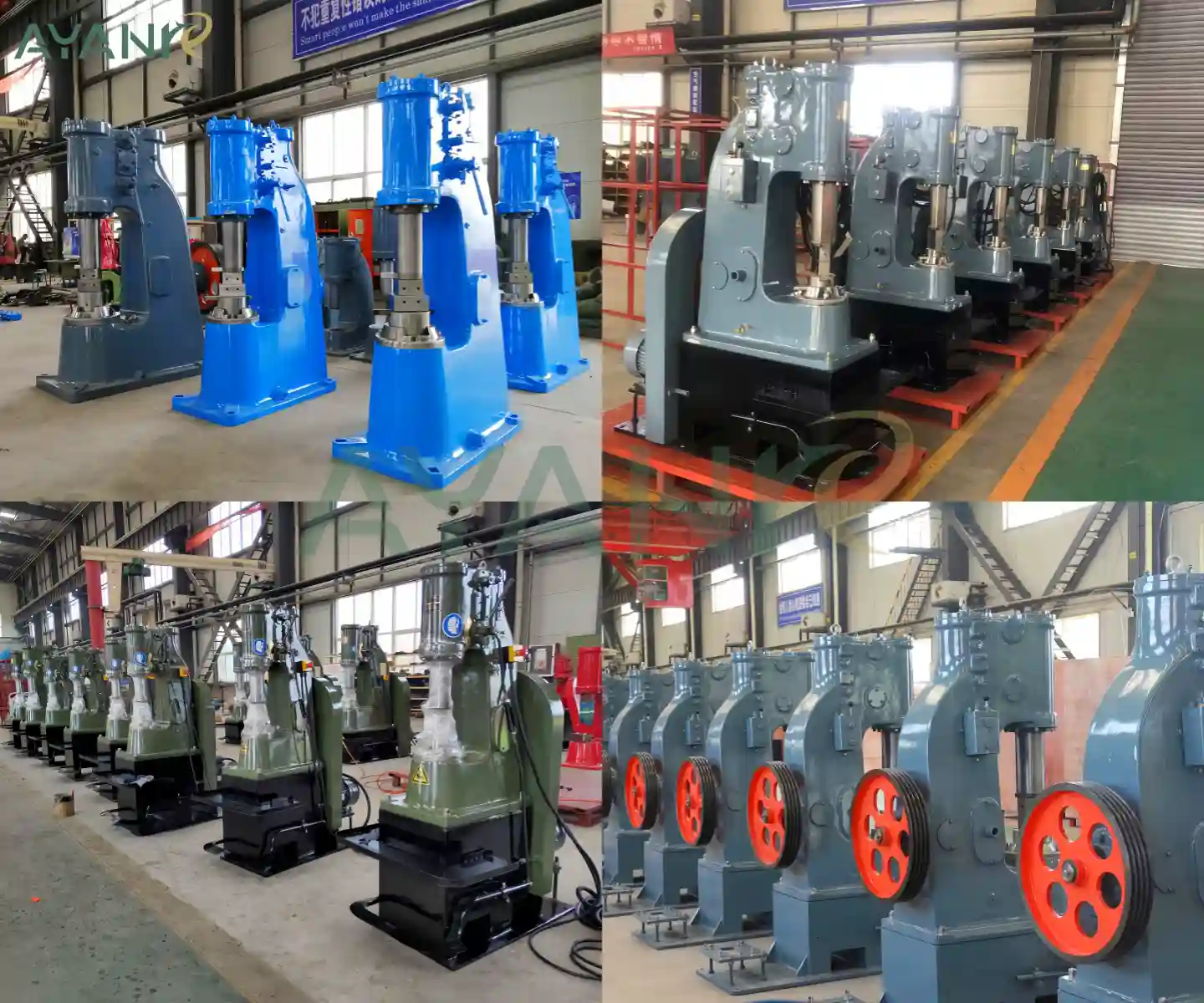
4.Ready for production upon delivery All power hammers undergo two full-machine trial runs and debugging before leaving the factory. The entire machine is protected by steel frame fixing plus wooden box double-layer packaging to prevent transportation damage. After receiving and installing, users can start production directly without any debugging, eliminating the problem of new machine failures and inability to use. |
|
5.Lack of after-sales service — "No one takes care of you after purchase" No installation guidance, no operation training, no supply of consumable parts. |
5.Guaranteed reply within 24 hours — "Follow-up even after purchase" Installation guidance videos and training are provided. Spare parts are produced in-house and kept fully stocked. If problems arise, pneumatic hammer experts provide online video guidance to solve issues. |
|
6.Choosing too small: "Can't forge, very frustrating, low efficiency"; choosing too large: "One strike ruins it, uncontrollable" When taking batch orders, the hammer strikes but the steel material doesn't budge, forcing repeated heating and striking, with efficiency barely faster than manual work. You can't take on large workpieces, watching orders slip away. |
6.One-on-one precise model selection, avoiding choosing too large or too small Based on the user's forged products, material specifications, daily output, site and power conditions, a suitable model is recommended tailored to their needs, completely solving the awkward situation of "small hammer lacks power, large hammer wastes material," ensuring every piece of equipment matches their own production requirements. |
|
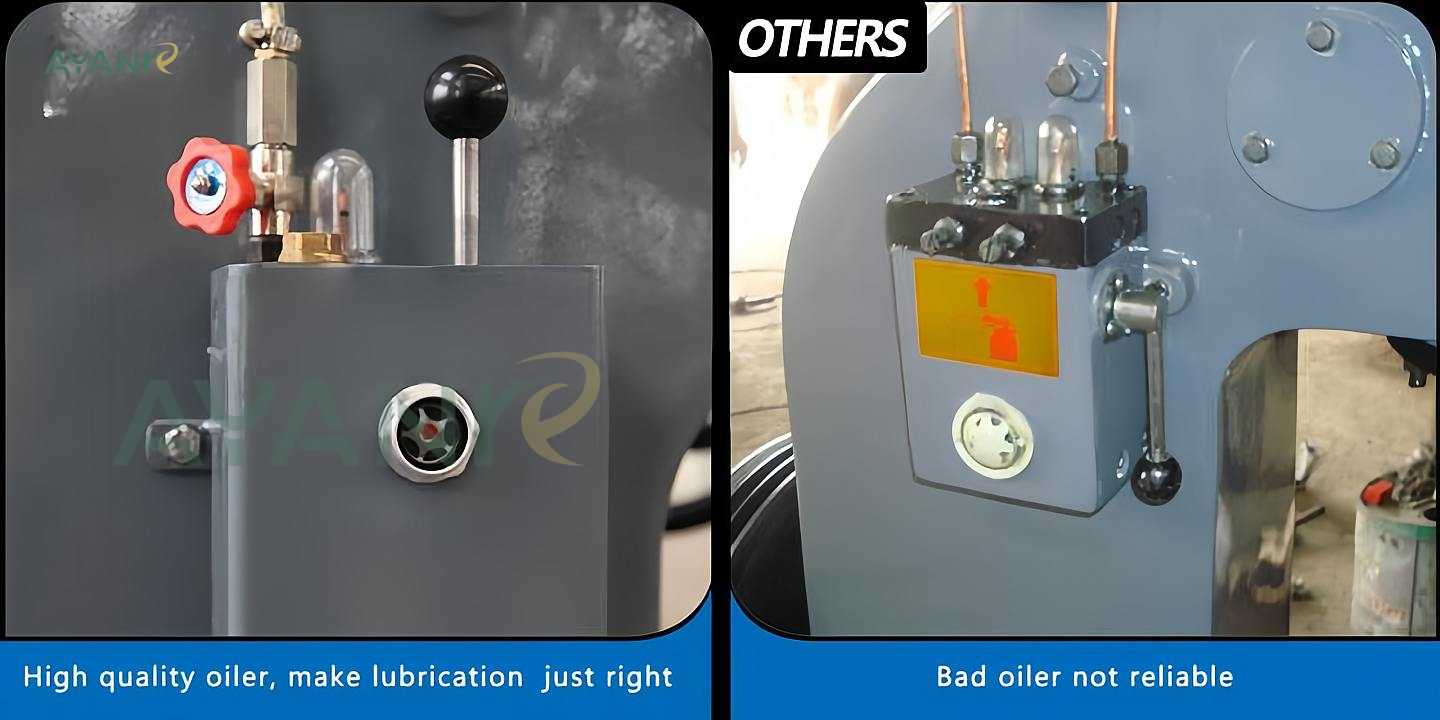
7.Unstable striking force — imprecise control valve The poor precision of the power hammer's control valve causes forging force to fluctuate unpredictably, making it impossible to achieve consistent steel grain texture and workpiece thickness. Standardizing batch orders becomes difficult, and for high-end artistic forging, there is no stable texture, making it hard to produce high-quality, reproducible finished products. |
7.Precise and adjustable force, suitable for both rough and fine forging Striking force and frequency can be freely controlled through air intake volume. Whether for thick steel cogging, heavy shaping, or small part finishing and pattern carving, the output is uniform and stable, resulting in consistent workpiece texture and extremely high yield rate. |
|
8.Single hammer head type, unable to meet diverse process requirements The standard hammer head has poor versatility, only capable of simple rough forging. It is completely inadequate for complex processes such as fine ornamentation, special shaping, and irregular workpieces, and customization is not supported, directly limiting the workshop's product categories and order scope. |
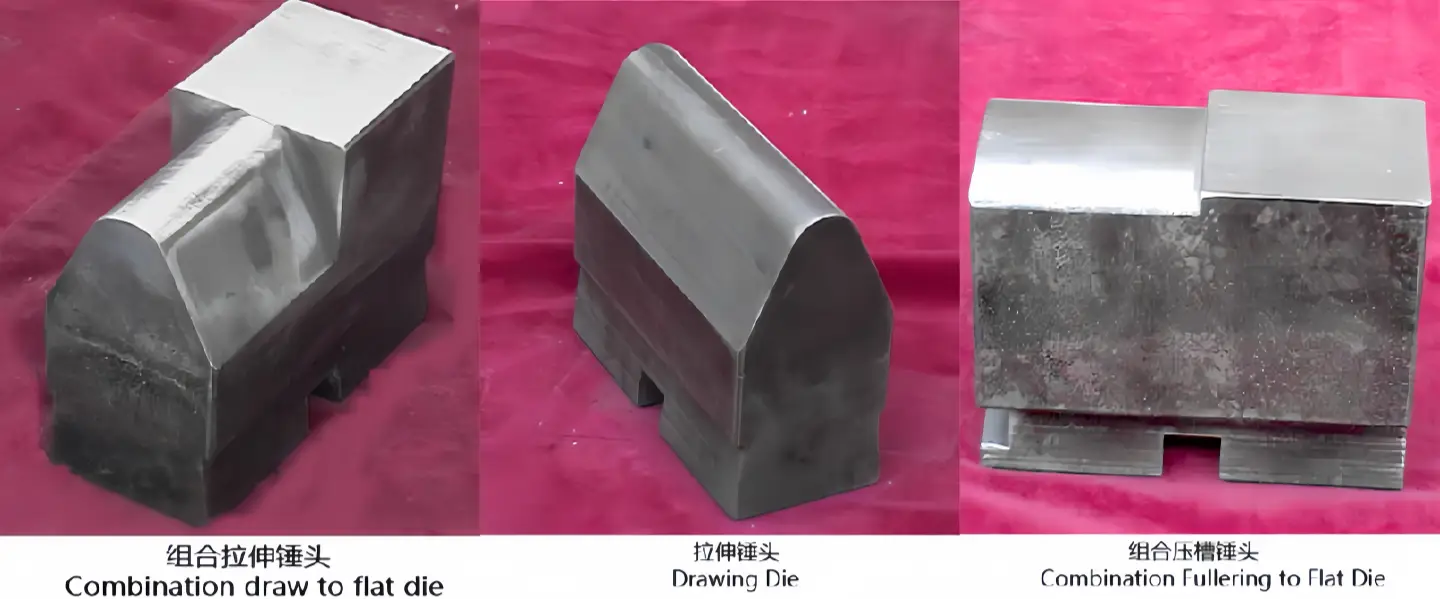
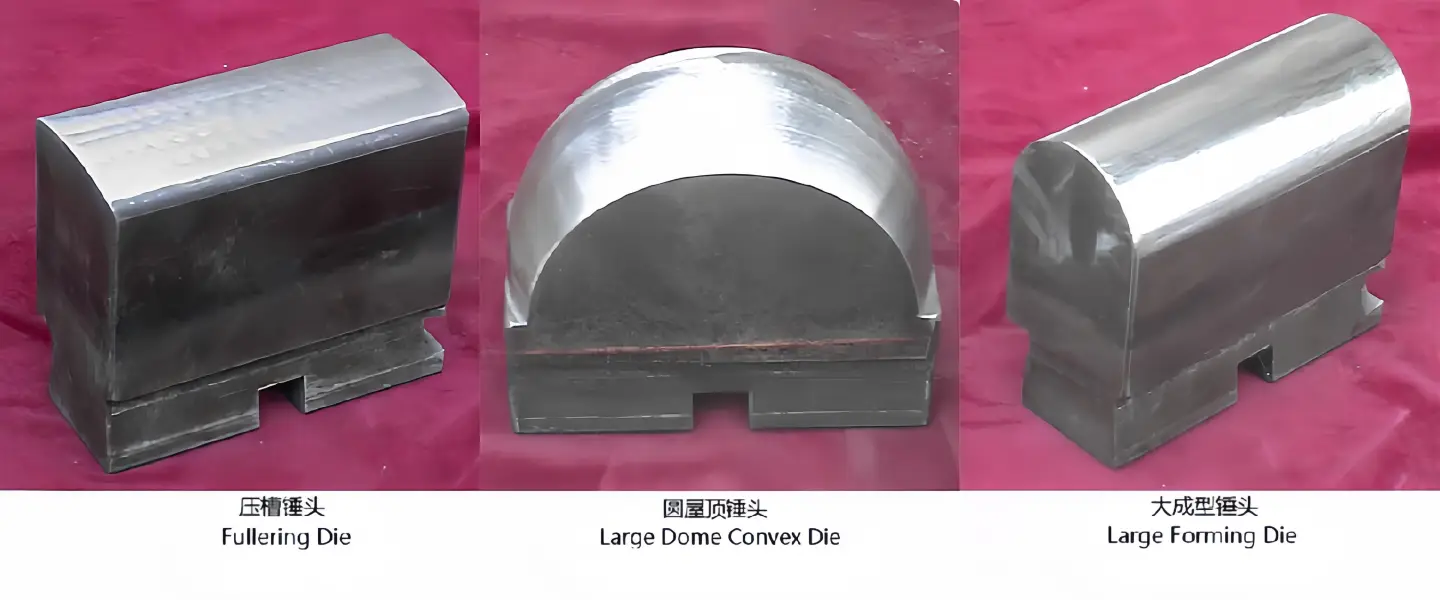
8.Multiple special hammer heads available to meet various process requirements A variety of special hammer heads are kept in stock for selection. If there are special process requirements, drawings can be provided, and our machining workshop offers custom hammer head services. |
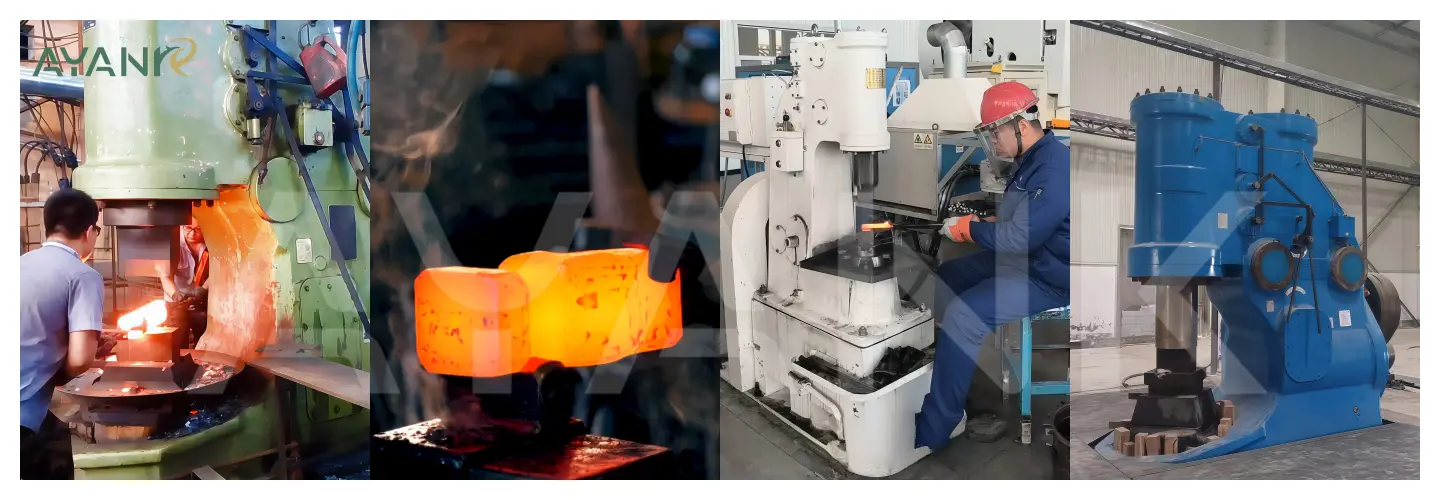
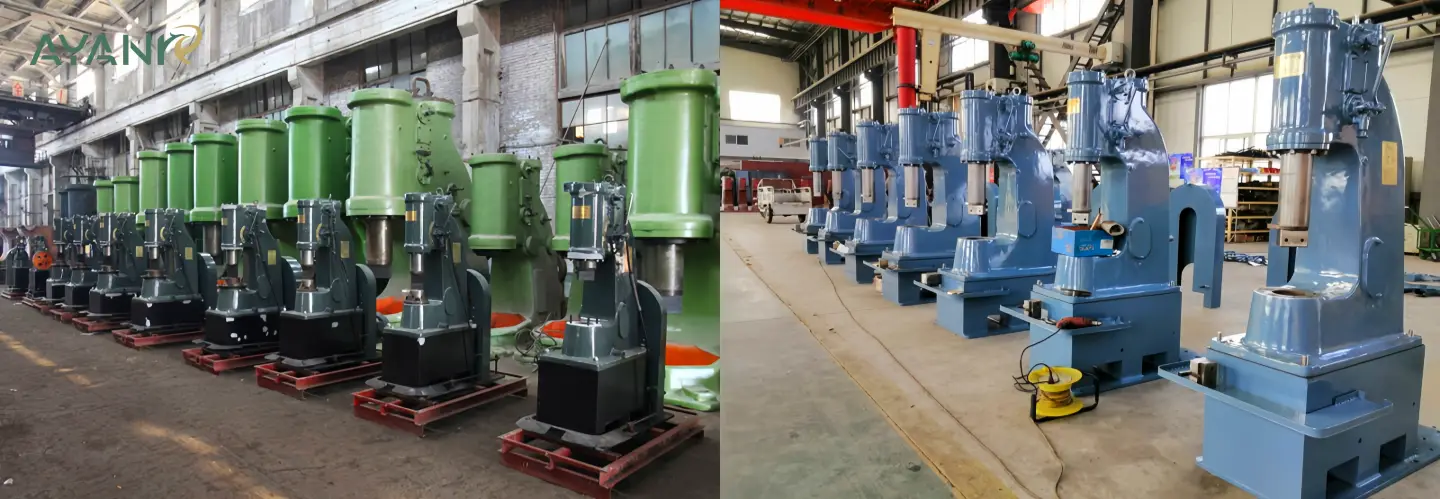
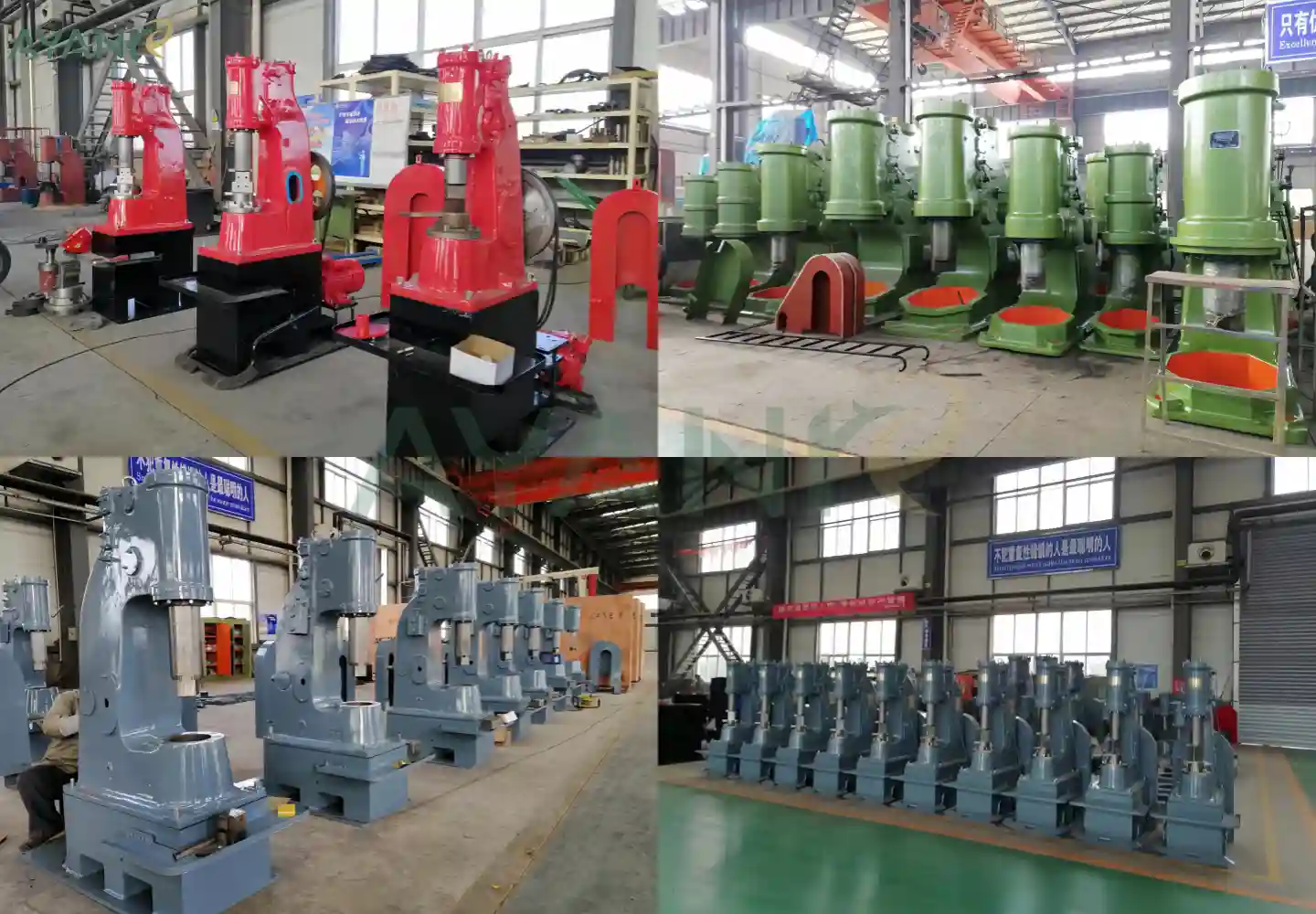
Addressing all the pain points blacksmiths encounter when selecting and using power hammers, the AYANK C41A full series of pneumatic power hammers is comprehensively optimized in terms of quality, energy consumption, installation, service, and model selection, perfectly adapting to all scenarios including personal hobbies, small workshop orders, and factory mass production.
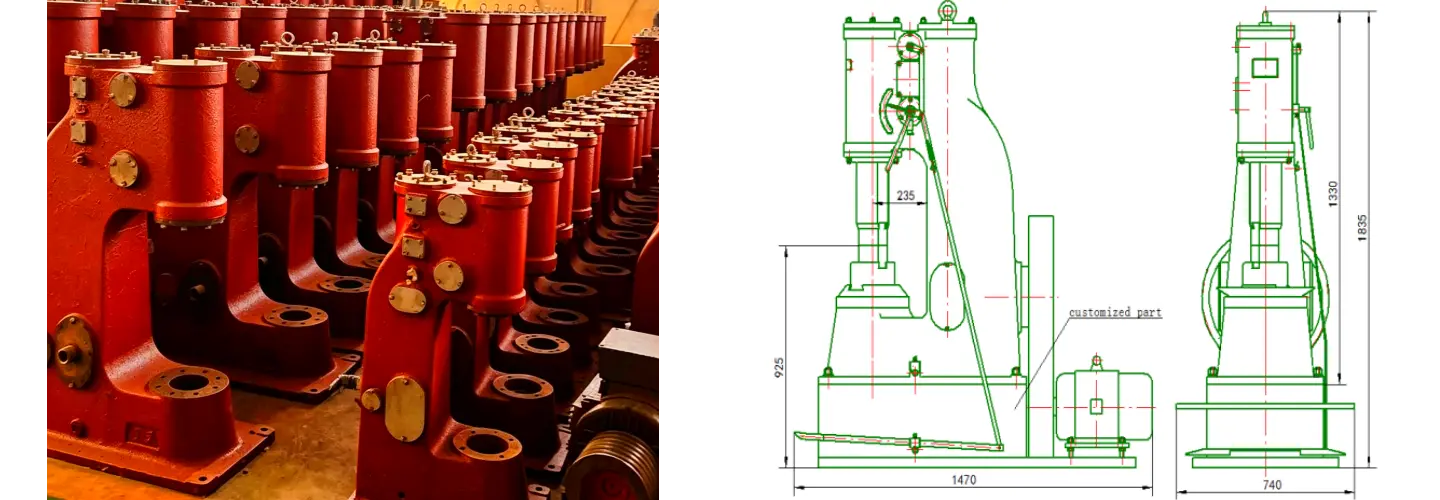
1.What products do you mainly forge? (Knives, agricultural tools, architectural iron art, mining accessories? What are the dimensions? What materials are used?)
2.How much do you forge per day? (Occasionally making a few pieces, or mass production?)
3.What are your site conditions? (Single-phase or three-phase power? What is the voltage in V? What is the frequency in Hz?)
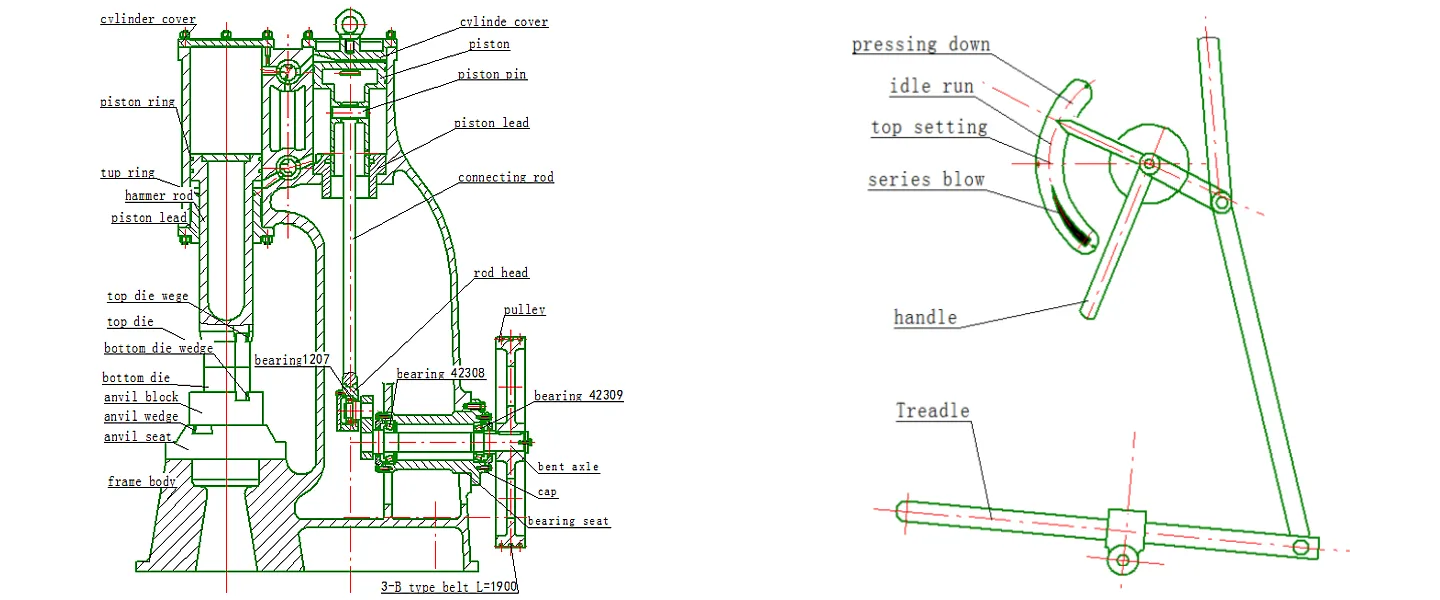
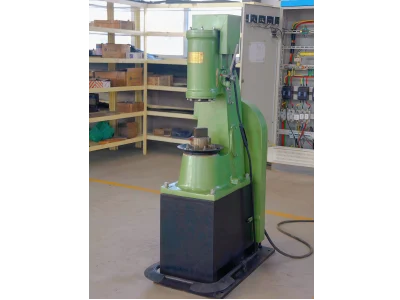
| 15kg Pneumatic Hammer — Entry Level / Crafts / Small Part Repair Target users: Iron art enthusiasts, small jewelry/knife workshops, teaching and training Typical products: Small knives, shovels, gardening tools, decorative iron flowers, horseshoes Features: Small footprint, compatible with household power, relatively low noise |
Model (Hammer Head Mass):15kg
Striking Energy (J):0.16
Forgable Billet Round Bar (mm):Φ35mm
Square Bar (mm):30×30
Theoretical Striking Frequency (min⁻¹):300
Machine Weight (kg):490
|
 |
|
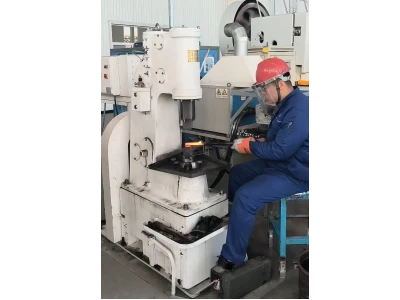
25kg Pneumatic Hammer — Main Force of Small Workshops / First Choice for Knifemakers
Target users: Apprentice blacksmiths, independent knifemakers, small blacksmith shops, farm tool repair shops
Typical products: Kitchen knives, scissors, small farm tools (hoes, sickles), flat iron products
Features: Moderate striking force, flexible control, operable by one person
("Brazilian knifemaker Paulo uses a 25kg hammer to make kitchen knives, producing 40 pieces per day")
|
Model (Hammer Head Mass):25kg
Striking Energy (J):0.27
Forgable Billet Round Bar (mm):Φ48mm
Square Bar (mm):40×40
Theoretical Striking Frequency (min⁻¹):250
Machine Weight (kg):1080
|
 |
|
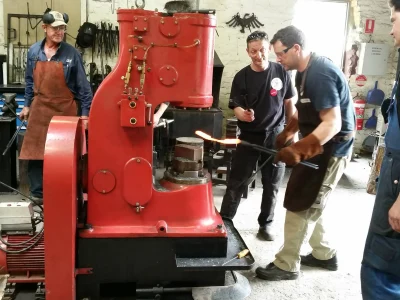
40kg Pneumatic Hammer — Advanced Level / Small to Medium Batch Production
Target users: Professional blacksmith shops, medium-scale workshops
Typical products: Medium-sized farm tools (axes, picks), architectural ironwork (railing leaves), motorcycle parts
Features: Significantly improved striking force, capable of forging Φ30–40mm round steel, about 50% higher efficiency than 25kg
|
Model (Hammer Head Mass):40kg
Striking Energy (J):0.53
Forgable Billet Round Bar (mm):Φ68mm
Square Bar (mm):52×52
Theoretical Striking Frequency (min⁻¹):245
Machine Weight (kg):1260
|
 |
|
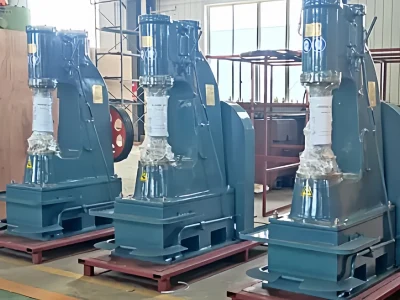
55kg Pneumatic Hammer — Professional Grade / Heavy Farm Tools and Tools
Target users: Blacksmiths, professional forging factories, mining tool repair stations
Typical products: Hardware tools, medical instruments, gold and silver processing, manufacturing, agricultural machinery, mechanical equipment forgings, etc.
Features: Strong striking force, capable of forging Φ50mm round steel, suitable for cogging and drawing-out processes
Note: Power conditions and foundation need to be communicated in advance
|
Model (Hammer Head Mass):55kg
Striking Energy (J):0.7
Forgable Billet Round Bar (mm):Φ75mm
Square Bar (mm):60×60
Theoretical Striking Frequency (min⁻¹):230
Machine Weight (kg):1750
|
 |
|
75kg Pneumatic Hammer — Quasi-Industrial Grade / Batch Production Powerhouse
Target users: Professional blacksmiths, small forging factories, batch production workshops
Typical products: Mainly applied in construction, hardware, electrical appliances, railways, small steel pipes, forgings, etc.
Features: Large striking energy, high frequency, capable of continuous operation for over 8 hours
Note: Power conditions and foundation need to be communicated in advance
|
Model (Hammer Head Mass):75kg
Striking Energy (J):1.0
Forgable Billet Round Bar (mm):Φ85mm
Square Bar (mm):65×65
Theoretical Striking Frequency (min⁻¹):210
Machine Weight (kg):2700
|
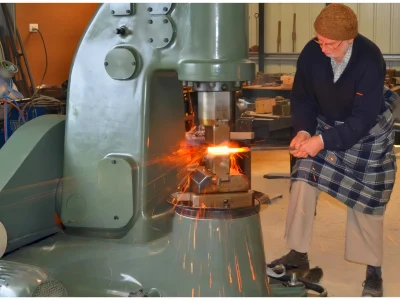 |
|
110kg Pneumatic Hammer — Industrial Grade / Heavy-Duty Forging
Target users: Professional blacksmiths, small forging factories, mechanical repair workshops
Typical products: Applied in construction, hardware, electrical appliances, railways, small steel pipes, forgings, etc.
Features: Maximum striking force, capable of forging round steel above Φ80mm
Note: Power conditions and foundation need to be communicated in advance
|
Model (Hammer Head Mass):110kg
Striking Energy (J):(1.98)
Forgable Billet Round Bar (mm):≤Φ120mm
Square Bar (mm):110×110
Theoretical Striking Frequency (min⁻¹):180
Machine Weight (kg):3300
|
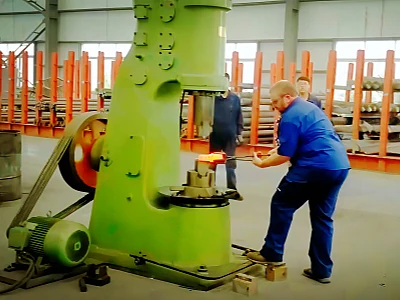 |
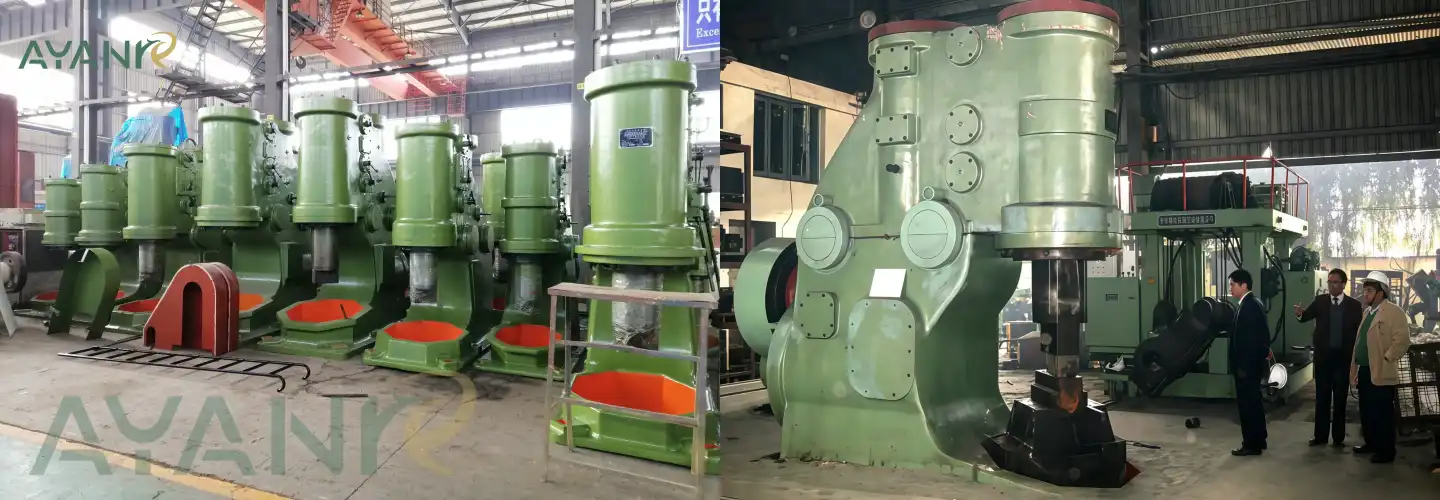
The maximum producible air hammer is 2 tons. Click to learn more!
|
Model (Hammer Head Mass)
|
Striking Energy (KJ)
|
Forgable Billet |
Theoretical Striking Frequency (min⁻¹) |
Machine Weig
|
|
|
Round Bar (mm) |
Square Bar (mm) |
||||
|
15kg |
0.16 |
Φ35mm |
30×30 |
300 |
490 |
|
25kg |
0.27 |
Φ48mm |
40×40 |
250 |
1080 |
|
40kg |
0.53 |
Φ68mm |
52×52 |
245 |
1260 |
|
55kg |
0.7 |
Φ75mm |
60×60 |
230 |
1750 |
|
75kg |
1.0 |
Φ85mm |
65×65 |
210 |
2700 |
|
110kg |
1.98 |
Φ120mm |
110×110 |
180 |
3300 |
Common Misconception 1: Bigger is always better
(Many beginners think buying a bigger hammer means getting it right in one go. In reality, a large hammer has excessive striking force, making it difficult to control when working on small pieces, easily damaging molds or workpieces.)
Common Misconception 2: Only looking at price, ignoring after-sales service
(A pneumatic hammer is a long-term investment. The availability of wear parts, warranty policy, and response speed of technical support are more important than the initial price.)
Common Misconception 3: Neglecting foundation and installation
(Large-tonnage pneumatic hammers have clear requirements for foundations. It is recommended to consult the manufacturer for foundation drawings before purchasing.)
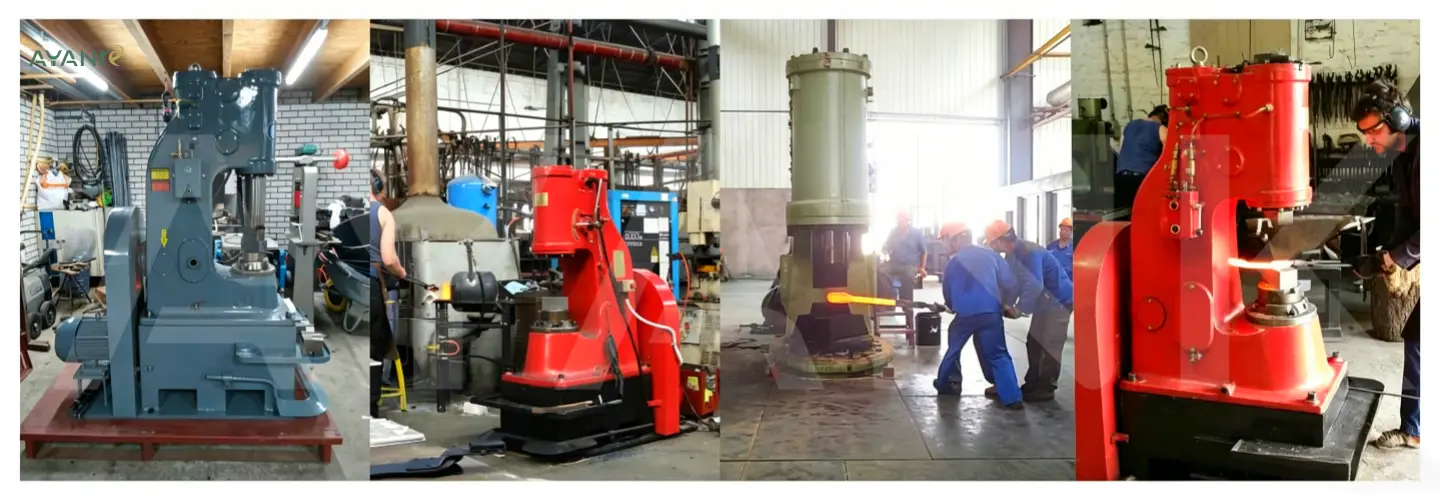
For blacksmiths who want to improve quality, efficiency, and profits, the key is not to practice skills hard, but to choose the right power hammer.
Avoid the pitfalls of poor equipment: maintenance traps, energy consumption traps, and selection traps. A stable, energy-saving, precise pneumatic power hammer with comprehensive after-sales service can stabilize your craftsmanship, double your production capacity, and drastically reduce scrap rates.
If you are struggling with selection and don't know what tonnage of pneumatic hammer suits you,
you can tell us your forged products, material specifications, and daily output
to get a one-on-one exclusive selection plan and quotation!
Receive the news that you are interested in.