
Quick Answer
An electric screw press machine is a CNC-controlled forging machine that uses an electric motor, typically a servo motor, to drive the screw and flywheel system and convert rotational energy into forging energy through the ram.
Compared with a traditional friction screw press, an electric screw press eliminates the friction-disc drive, can reduce energy consumption by 40%–60%, and provides repeatable blow energy with consistency of approximately ±1%–2%. It is widely used for hot die forging of steel, aluminum, copper alloys, and other forgeable materials.
However, selecting the right electric screw press is not simply a matter of choosing a tonnage. Forging material, projected area, required blow energy, die dimensions, production volume, and automation requirements should all be evaluated before selecting the machine.
Technical Guide by AYANK Forging
This guide combines electric screw press working principles with practical equipment-selection considerations for industrial forging projects. Technical specifications and machine recommendations should always be confirmed against the actual forging part and production requirements.
What Is an Electric Screw Press Machine?
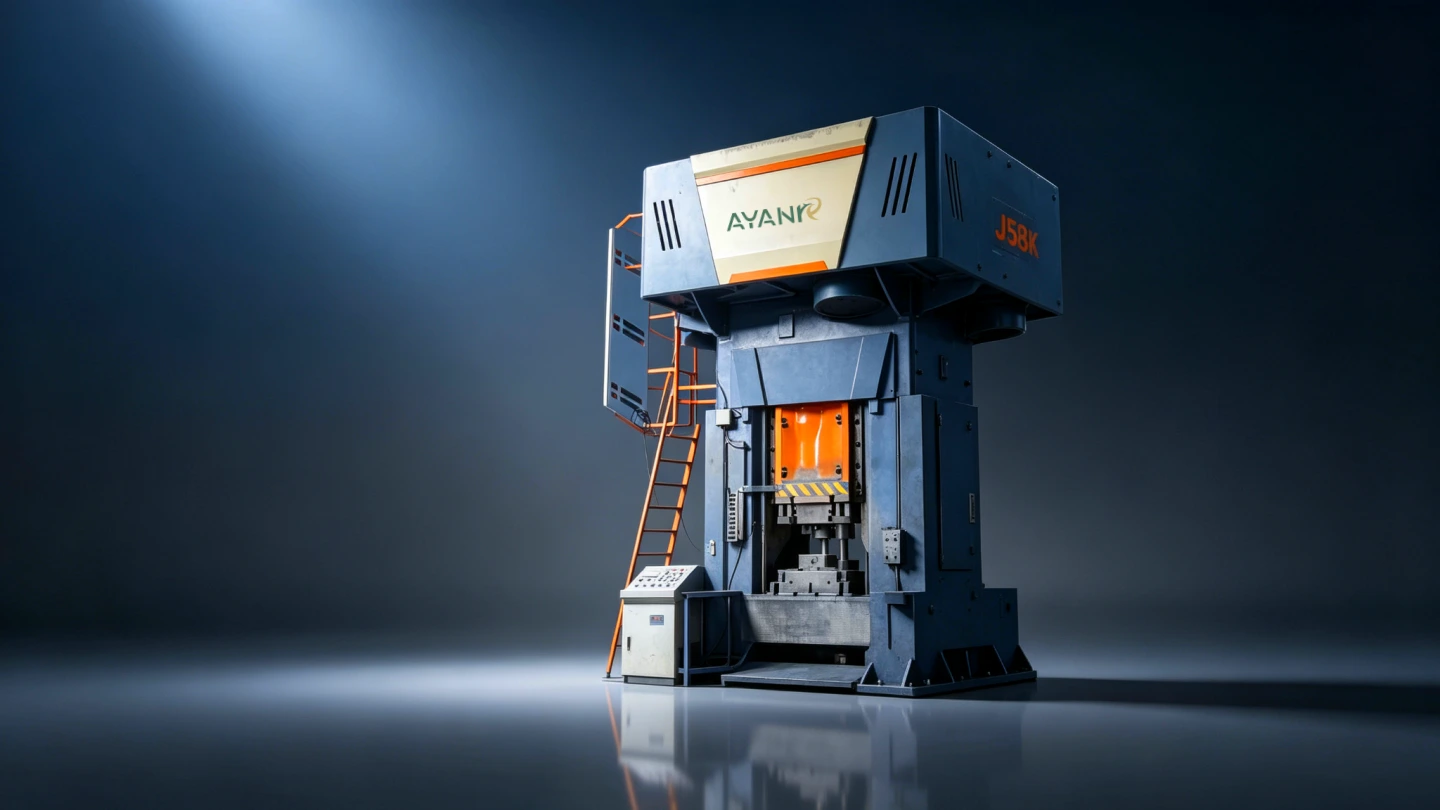
An electric screw press machine, also called an electric screw forging press, is a screw-driven forging machine in which an electric motor drives the rotating system and screw mechanism to move the ram vertically.
During the downward stroke, rotational energy is converted into forging energy as the upper die contacts the heated workpiece. The material plastically deforms and flows into the die cavity.
The main machine system typically includes:
- Electric or servo motor
- Drive system
- Flywheel or rotating energy-storage assembly
- Screw and nut mechanism
- Ram
- Upper and lower dies
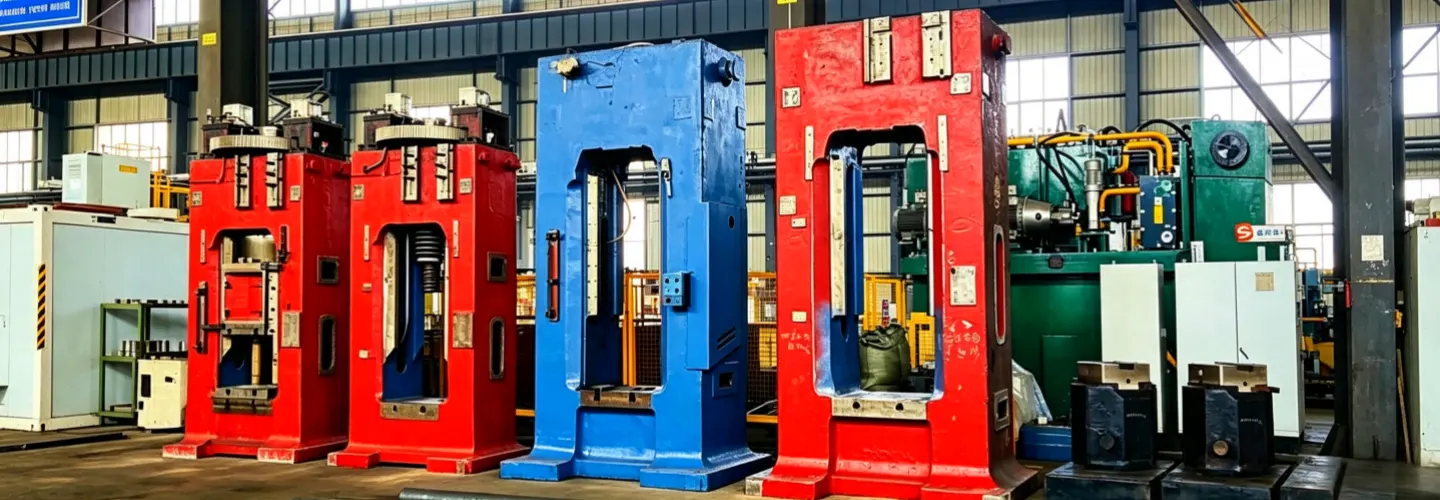
- Machine frame and guides
- Lubrication system
- CNC and electrical control system
Depending on the drive and control design, manufacturers may also use terms such as servo screw press, CNC screw press, direct-drive screw press, or electric screw forging press. Buyers should confirm the actual drive architecture and technical specifications rather than assuming that every term refers to exactly the same machine configuration.
How Does an Electric Screw Press Machine Work?
A typical forging cycle can take approximately 3–6 seconds per stroke, depending on machine tonnage, forging process, stroke setting, and production configuration.
Step 1: Billet Preparation
Bar stock is cut into billets according to the required forging weight. Accurate billet weight is important because excessive material increases flash, while insufficient material may cause incomplete die filling.
Step 2: Heating the Workpiece
The billet is heated to the appropriate forging temperature. Typical process ranges include approximately 1150–1250°C for carbon and alloy steels, 420–480°C for aluminum alloys, and 650–750°C for copper alloys.
Actual forging temperature should be determined according to the material grade and forging process because temperature directly affects deformation resistance, required forging energy, material flow, and die life.
Step 3: Die Preparation
The upper and lower forging dies are installed and aligned. Lubrication, die height, tooling position, and the required forging program are checked before production begins.
Step 4: Billet Loading
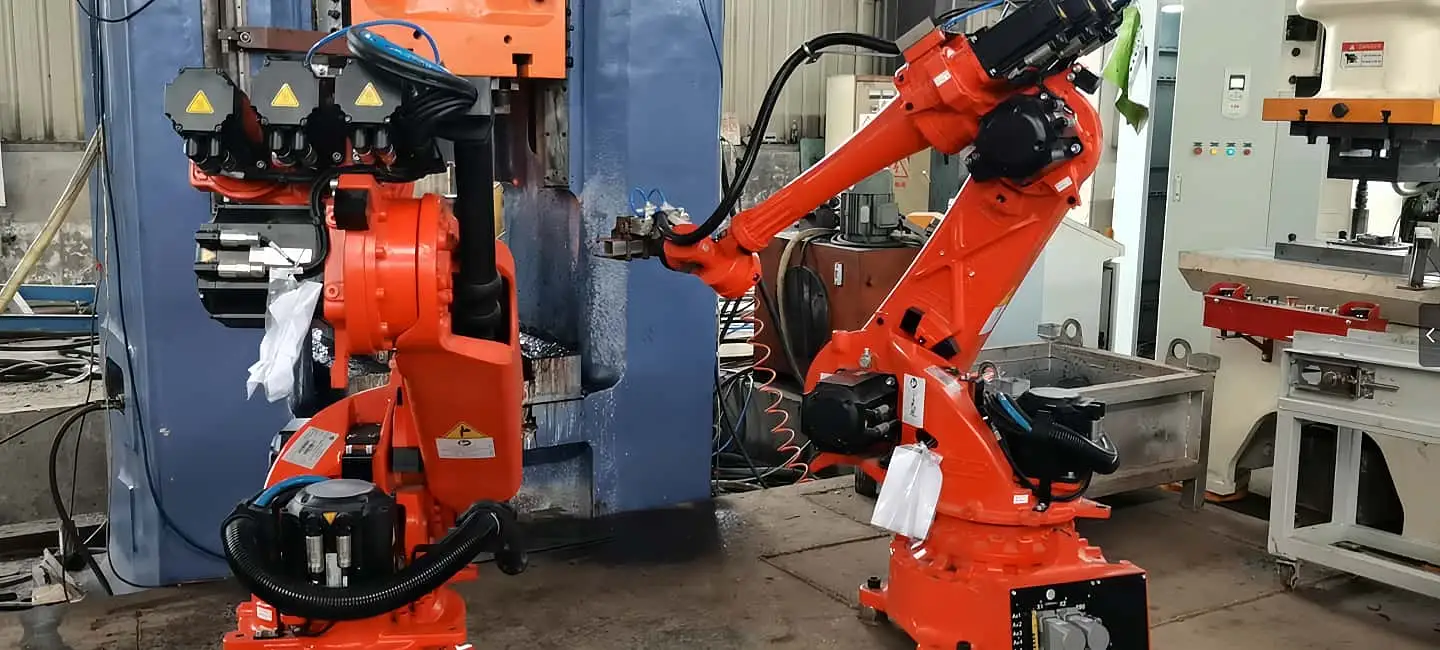
The heated billet is placed in the lower die manually or transferred automatically using a forging manipulator, six-axis robot, walking beam, or other material-handling system.
Step 5: Motor Drives the Screw System
After receiving the CNC command, the electric drive accelerates the rotating system to the programmed operating condition. Unlike a traditional friction-drive system, power transmission does not depend on friction discs.
Step 6: Ram Descends and Delivers Forging Energy
The screw mechanism converts rotational movement into the downward movement of the ram. When the upper die contacts the heated billet, stored energy is transferred into the workpiece as deformation energy.
Step 7: Material Fills the Die Cavity
The heated material flows through the die cavity according to the tooling and forging process.
Programmable blow energy allows the process to be matched more closely to the part. Insufficient energy can result in incomplete filling, while excessive energy can increase flash, die loading, and unnecessary wear.
Step 8: Return Stroke and Part Removal
After the forging stroke, the drive reverses and raises the ram. The forged component is removed and transferred to subsequent operations such as trimming, heat treatment, shot blasting, inspection, or machining.
Electric Screw Press vs. Friction Screw Press
Electric screw presses and friction screw presses use similar screw-driven forming principles, but their drive and energy-control systems are different.
| Aspect | Electric Screw Press | Friction Screw Press |
|---|---|---|
| Drive method | Electric motor drives the screw/flywheel system | Motor drives friction discs that transfer power to the flywheel |
| Energy consumption | Approximately 40%–60% lower | Higher energy losses due to friction and slip |
| Blow energy control | Programmable according to part requirements | More dependent on friction transmission |
| Blow consistency | Approximately ±1%–2% | More affected by friction-system condition |
| Maintenance | No friction blocks; fewer friction-related wear components | Friction linings require periodic replacement |
| Automation | Suitable for CNC and robotic integration | Older machines may require additional control upgrades |
| Initial investment | Generally higher | Generally lower |
| Long-term operating cost | Generally lower where energy and maintenance savings are significant | Can be higher due to energy loss and friction-component maintenance |
Electric screw presses are particularly attractive for new forging lines where energy efficiency, repeatability, programmable process control, and automation are important.
What Can an Electric Screw Press Produce?
Automotive Forgings
Typical automotive applications include connecting rods, steering knuckles, wheel hubs, transmission components, gear blanks, suspension parts, flanges, and other safety-critical forgings.
Hand Tools and Hardware
Electric screw presses can be used for wrenches, pliers, hammer heads, sockets, axes, brackets, hot-forged fasteners, and other industrial hardware.
Industrial Machinery Components
Common applications include gear blanks, collars, flanges, couplings, valve bodies, pump components, railway fittings, and general engineering forgings.
Non-Ferrous and Special Alloy Forgings
Depending on the machine and process configuration, servo electric screw presses can also be used for aluminum alloys, copper alloys, titanium alloys, and other forgeable materials requiring controlled energy input.
Key Advantages of Electric Screw Press Machines
Programmable Forging Energy
Blow energy can be programmed according to the workpiece and forging stage, helping reduce both insufficient deformation and unnecessary energy input.
High Process Repeatability
Blow consistency of approximately ±1%–2% helps maintain stable process conditions during batch production and reduces dependence on manual operator adjustment.
Lower Energy Consumption
By eliminating the traditional friction-disc transmission, electric screw press machines can reduce energy consumption by approximately 40%–60% compared with conventional friction screw presses.
Easier Automation Integration
CNC control makes the machine suitable for integration with induction heating systems, manipulators, robots, walking beams, trimming equipment, and automated production lines.
Reduced Friction-Drive Maintenance
Eliminating friction blocks reduces one important source of wear and routine maintenance associated with traditional friction screw presses.
Servo vs. Conventional Electric Screw Press
Electric screw presses can use different drive and control configurations. Two commonly discussed categories are conventional electric screw presses and servo-controlled electric screw presses.
Conventional Electric Screw Press
Conventional systems typically use an asynchronous or three-phase motor with a corresponding mechanical transmission and control system. They can provide a practical solution for relatively simple forging processes where highly flexible energy programming is not required.
Servo Electric Screw Press
Servo-controlled machines use a servo or torque-motor system with closed-loop control of parameters such as speed, position, and energy.
They are particularly suitable where process repeatability, programmable forging parameters, production monitoring, and automation integration are important.
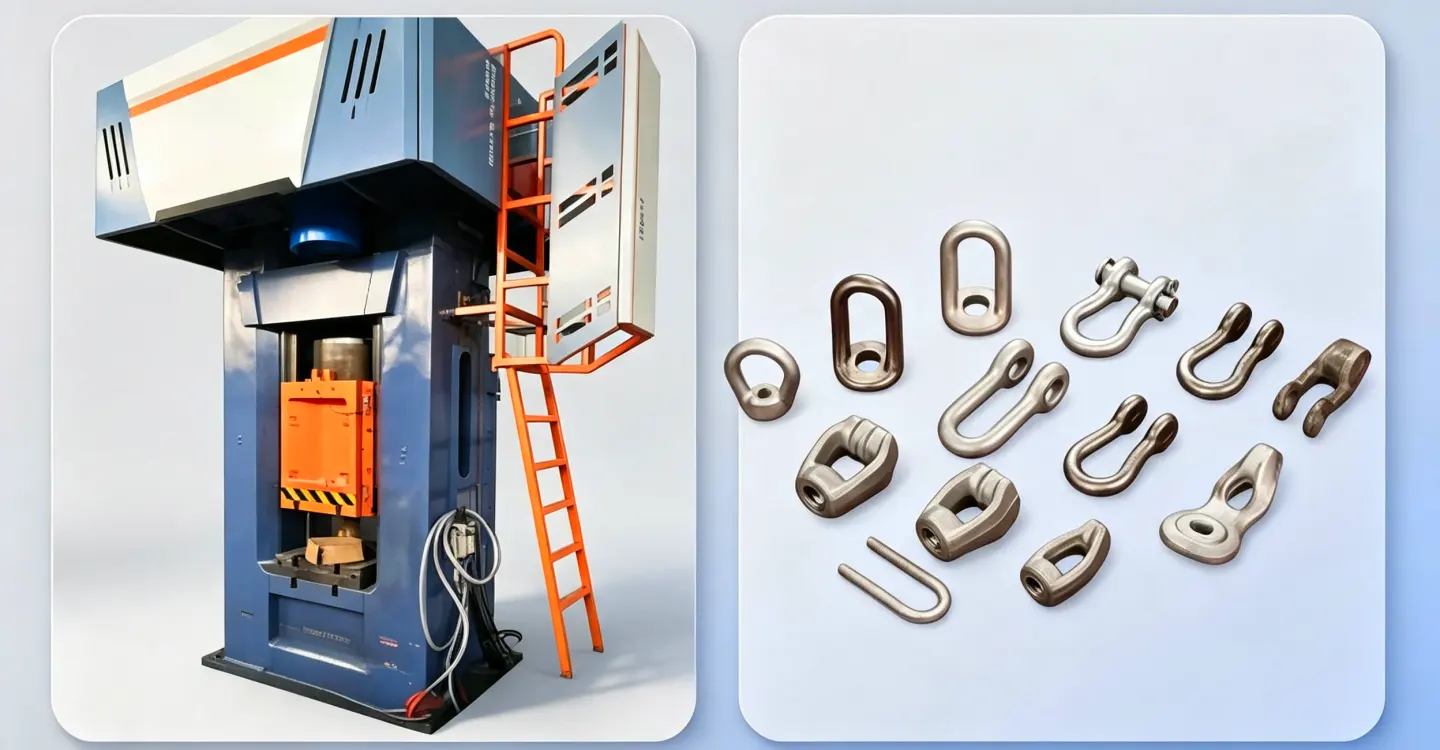
Electric Screw Press vs. Forging Hammer
An electric screw press and a closed die forging hammer can both be used for industrial die forging, but they apply energy to the workpiece differently.
| Factor | Electric Screw Press | Forging Hammer |
|---|---|---|
| Forming method | Controlled screw-driven energy stroke | Repeated impact blows |
| Energy control | Programmable | Adjusted through the hammer operating process |
| Repeatability | High | More dependent on process and operation |
| Automation | Highly suitable | Can also be automated depending on the line |
| Process flexibility | High | High, especially for multi-blow forging processes |
Neither machine is automatically better. The correct choice depends on the forging material, workpiece geometry, die design, required deformation process, production volume, and automation strategy.
Electric Screw Press vs. Mechanical Hot Forging Press
| Factor | Electric Screw Press | Mechanical Hot Forging Press |
|---|---|---|
| Forming principle | Energy-based screw-driven forming | Mechanical fixed-stroke forming |
| Production flexibility | High | Best suited to stable repetitive production |
| Process adjustment | Flexible energy settings | More fixed process characteristics |
| Typical production | Multi-product and medium/high-volume forging | High-volume dedicated production |
| Automation | High | High |
Electric screw presses are often considered for flexible, multi-product forging production, while mechanical hot forging presses can be advantageous for highly repetitive, high-volume dedicated production.
Final machine selection should always be based on the actual forging process rather than production volume alone.
The Biggest Selection Mistake: Choosing by Tonnage Alone
Buyers frequently start an inquiry with a request such as:
“Please quote a 1000T electric screw press.”
But nominal tonnage alone is not sufficient to select the correct machine.
Two electric screw presses with the same nominal tonnage can differ by more than 30% in actual blow energy. This is why both nominal capacity and available forging energy should be compared.
Machine selection should consider:
- Material grade
- Forging temperature
- Forging weight
- Projected area
- Required blow energy
- Part geometry
- Die dimensions
- Stroke and daylight
- Production volume
- Automation requirements
How AYANK Selects an Electric Screw Press for a Forging Project
When a customer asks AYANK for an electric screw press, our engineering evaluation begins with the forged part and production process, not simply with a requested tonnage.
1. Review the Forging Drawing
We first review the 2D or 3D drawing, finished forging dimensions, part weight, projected area, material grade, and required tolerances.
2. Evaluate Material and Forging Conditions
Material deformation resistance changes significantly with alloy grade and forging temperature. Steel, aluminum, copper alloys, and titanium therefore require different process considerations.
3. Calculate Required Capacity and Blow Energy
Required force is evaluated from factors including projected area and material deformation resistance at forging temperature.
As a practical selection guideline, the required forging force should generally fall within approximately 60%–80% of the machine's rated capacity rather than operating continuously at 100% of rated capacity.
Blow energy must also be evaluated because machines with similar nominal tonnage can have substantially different energy characteristics.
4. Check Die Size and Working Space
We check the upper and lower die dimensions, bed size, ram size, stroke, shut height, daylight, ejector requirements, sensors, lubrication, and cooling interfaces.
5. Evaluate Production Volume
Required annual production and cycle time influence the machine configuration and determine whether manual loading, a manipulator, robot, walking beam, or complete automatic line is more appropriate.
6. Evaluate Existing Production Problems
When replacing existing forging equipment, information about the current machine can help identify the real problem.
Examples include:
- Insufficient die filling
- Unstable forging quality
- High energy consumption
- Low production capacity
- Excessive die wear
- High maintenance requirements
- Difficulty integrating automation
7. Design the Complete Forging Process
For an automated forging project, the electric screw press should not be evaluated as an isolated machine.
A complete forging line may include:
Billet Cutting → Induction Heating → Temperature Detection → Automatic Feeding → Forging → Trimming → Cooling → Inspection
These systems should be considered during initial engineering so that electrical controls, safety systems, material transfer, and cycle times can be properly integrated.
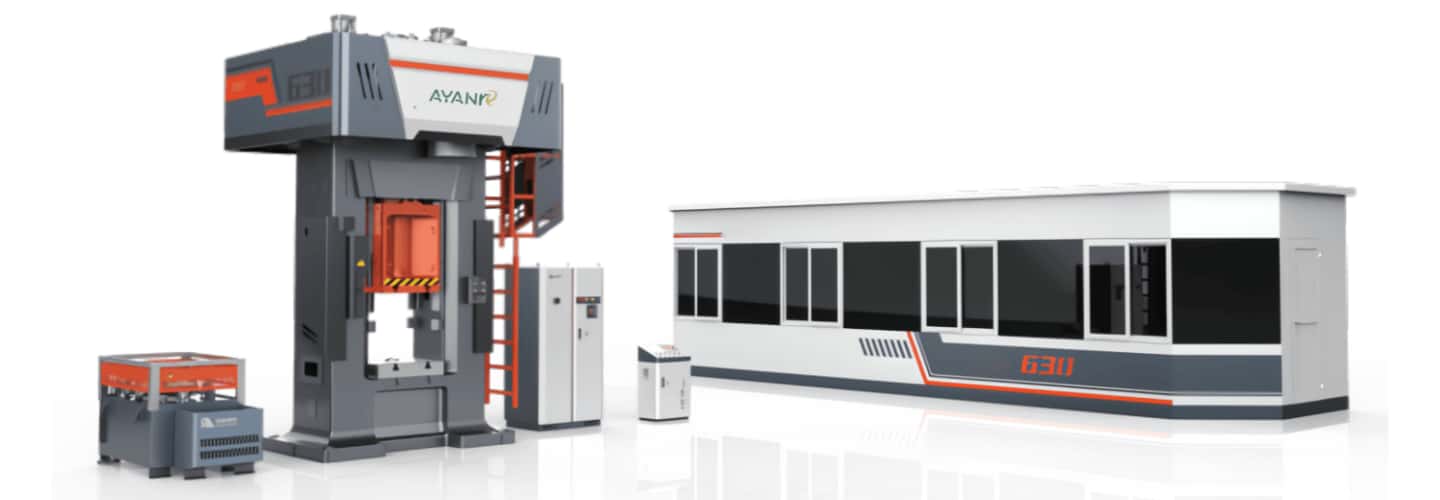
Real Project: J58ZKA Electric Screw Press for Automotive Forging
A European automotive component manufacturer contacted AYANK while upgrading an existing hot forging line. The customer needed a new electric screw press for batch production of alloy-steel automotive forgings and wanted better energy control, production repeatability, and compatibility with automated material handling.
Instead of selecting the machine from nominal tonnage alone, AYANK's engineering team evaluated the forged part, material, projected area, required forging energy, die dimensions, production target, and automation requirements before recommending the press configuration.
Customer: Automotive component manufacturer in Germany
Forged Part: Automotive transmission component
Material: 42CrMo alloy steel
Finished Forging Weight: Approximately 8.5 kg
Annual Production: Approximately 350,000 pieces
Forging Process: Hot closed-die forging
Billet Heating: Induction heating
Previous Equipment: Friction screw press
Recommended Machine: J58ZKA Servo Direct Drive Electric Screw Press
Selected Capacity: 1600T
Material Handling: Automated billet feeding and robotic transfer

Customer's Forging Requirements
The customer's existing production process relied on a conventional friction screw press. As production volume increased, the company wanted to improve control over forging energy while reducing the process variation associated with the existing friction-drive system.
The main project requirements included:
- Stable forging of 42CrMo automotive components
- Consistent die filling during continuous batch production
- Repeatable forging energy
- Reduced dependence on operator adjustment
- Compatibility with induction heating and automatic billet feeding
- Robotic transfer between forging operations
- Capacity for approximately 350,000 forgings per year
The customer initially focused primarily on nominal machine tonnage. However, after reviewing the forging drawings and process requirements, AYANK evaluated the project from both required forging force and available blow energy.
Why AYANK Recommended a 1600T J58ZKA Electric Screw Press
The recommendation was based on the forging process rather than simply matching the customer's requested tonnage.
AYANK engineers reviewed the projected area of the forging, the deformation resistance of 42CrMo at the specified forging temperature, required die filling, forging energy, die dimensions, and the desired production rate.
The machine was sized so that the calculated forging requirement remained within an appropriate working range rather than continuously operating near 100% of rated machine capacity.
As a practical selection guideline, AYANK generally aims to keep the required forging force within approximately 60%–80% of rated machine capacity, while separately confirming that the available blow energy is sufficient for the required deformation.
This distinction was important because two screw presses with the same nominal tonnage can differ by more than 30% in actual blow energy.
For this application, the J58ZKA servo direct-drive configuration was selected because the customer also required programmable energy control, high process repeatability, and integration with an automated forging line.
Why We Did Not Recommend a Smaller Machine
A smaller machine could have reduced the initial equipment investment, but it would have left less operating margin for the required deformation and future process variation.
Running too close to maximum machine capacity would also provide less flexibility if the customer later introduced parts with a larger projected area or more demanding forging conditions.
The objective was therefore not to select the smallest machine capable of producing the part, but to select a machine that could operate within a practical production range while maintaining sufficient forging-energy capability.
Why We Did Not Recommend a Larger Machine
AYANK also evaluated the possibility of moving to the next larger press size. However, unnecessary oversizing would increase more than the machine purchase price.
It could also increase:
- Foundation requirements
- Installed electrical capacity
- Machine footprint
- Tooling requirements
- Auxiliary equipment requirements
- Overall project investment
Since the 1600T configuration provided the required process capability with an appropriate operating margin, moving to a significantly larger machine was not necessary for the specified forging.
Why the J58ZKA Servo Direct Drive System Was Selected
Machine capacity was only one part of the decision. The customer was upgrading from a friction screw press and wanted greater control over the production process.
The J58ZKA servo direct-drive electric screw press allows forging energy to be programmed according to the part and forging process.
With blow consistency of approximately ±1%–2%, the machine provides a more repeatable energy input during batch production.
Eliminating the traditional friction-disc drive also contributes to approximately 40%–60% lower energy consumption compared with conventional friction screw press technology under comparable operating conditions.
For the customer, these characteristics were particularly relevant because the machine would operate as part of an automated production cell rather than as an isolated manually operated press.
Forging Line Configuration
The electric screw press was engineered as the central machine within the forging cell rather than as a standalone equipment purchase.
The production process was configured around the following sequence:
Billet Preparation → Induction Heating → Temperature Detection → Automatic Feeding → J58ZKA Forging → Robotic Part Transfer → Trimming → Cooling → Inspection
Coordinating these operations during the initial equipment design allowed the press cycle, billet temperature, robot movements, safety system, and downstream operations to be considered as one production process.
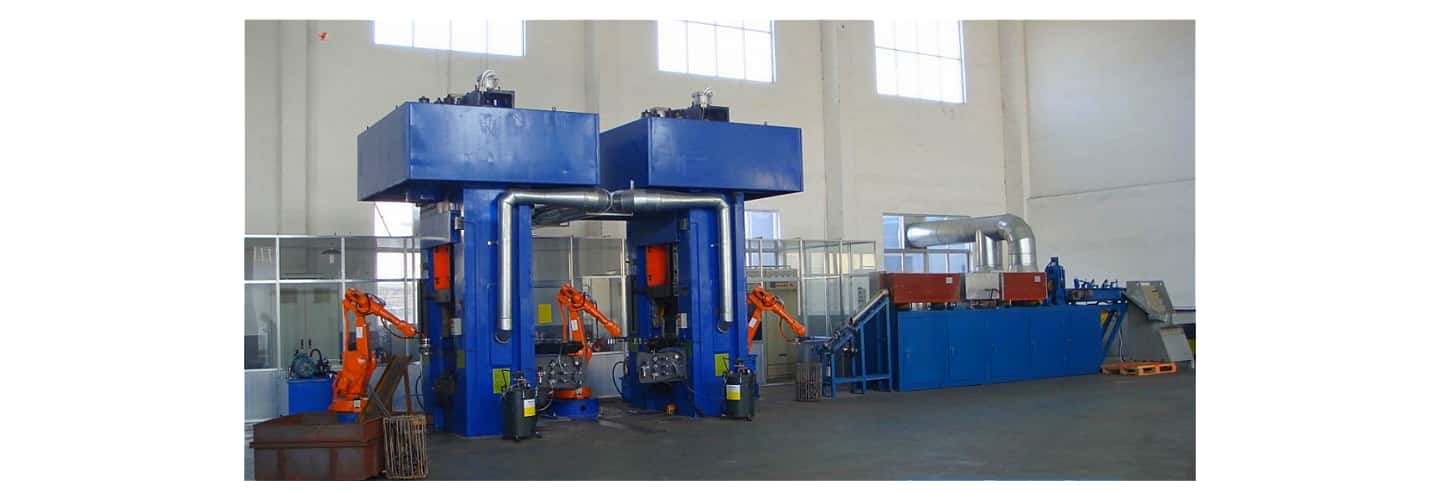
Project Results
After commissioning, the new forging cell provided the customer with a more controlled and repeatable production process compared with the previous friction screw press setup.
Key project results included:
- Stable batch production of the specified 42CrMo automotive component
- Repeatable forging-energy control throughout the production cycle
- Reduced dependence on manual operator adjustment
- Improved compatibility with automated billet handling and robotic transfer
- Lower energy consumption compared with the customer's previous friction-drive equipment
- A production configuration capable of supporting the customer's planned annual output
The project also left sufficient process flexibility for future adjustment of forging parameters when producing similar components within the machine's working range.
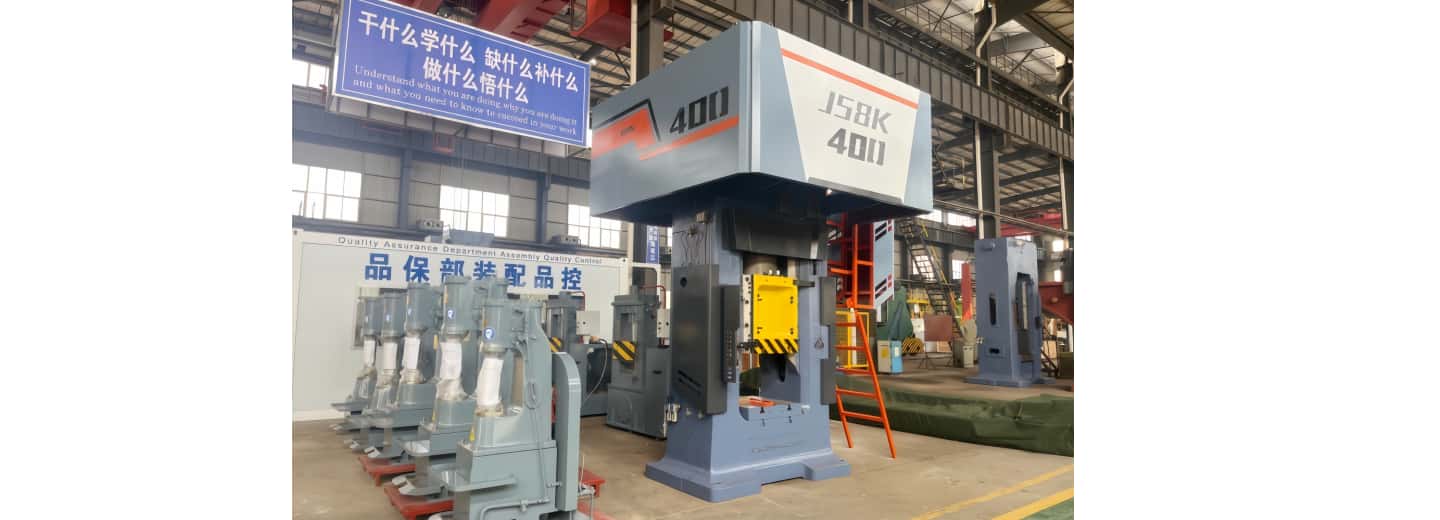
What This Project Shows About Electric Screw Press Selection
The main lesson from this project is that an electric screw press should not be selected from tonnage alone.
A buyer may initially ask for a 1000T, 1600T, or 2500T machine, but the correct recommendation should come after evaluating the actual forging.
The selection process should answer four separate questions:
- Is the nominal machine capacity sufficient for the projected forging area and material?
- Does the machine provide enough blow energy for the required deformation?
- Can the die, stroke, daylight, and working space accommodate the tooling?
- Can the machine achieve the required production rate and automation level?
Only after these factors are evaluated together should the final electric screw press model be selected.
J58KA vs. J58ZKA Electric Screw Press
AYANK supplies both J58KA electric screw presses and J58ZKA servo direct-drive electric screw presses for different forging requirements.
J58KA Electric Screw Press
The J58KA Series provides electric screw press solutions for industrial die forging applications. Machine capacity and configuration should be selected according to the workpiece, required forging energy, die dimensions, and production requirements.
View J58KA Electric Screw Press →
J58ZKA Servo Direct Drive Electric Screw Press
The J58ZKA Series uses a servo direct-drive configuration designed for applications requiring precise energy control, programmable operation, process repeatability, and automation integration.
View J58ZKA Servo Direct Drive Electric Screw Press →
The final choice between J58KA and J58ZKA should be based on the actual forging process rather than model designation alone.
Electric Screw Press Procurement Checklist
Before requesting a quotation, prepare:
- Part drawings, preferably 2D and 3D
- Material grade and forging temperature
- Maximum forging weight
- Projected area
- Annual production volume
- Required cycle time
- Current forging process and existing equipment
- Die dimensions
- Automation requirements
- Available installation space
- Foundation conditions
- Local voltage, phase, and frequency
- Required certifications
- Installation and commissioning requirements
- Spare-parts requirements
- Target delivery schedule
Questions to Ask an Electric Screw Press Manufacturer
- What is the actual blow energy in kJ, not only nominal tonnage?
- What is the energy repeatability during continuous production?
- What motor and CNC control system are used?
- How is forging energy programmed and monitored?
- What are the screw and nut specifications?
- What are the bed, ram, stroke, shut height, and daylight dimensions?
- Can the machine integrate with our existing heating and automation equipment?
- What foundation is required?
- What installation and commissioning services are included?
- Which spare parts should be kept in stock?
- What is included in the warranty?
- Can you provide references for similar forging applications?
- Can a forging trial be performed before shipment?
A capable electric screw press manufacturer should be able to discuss the customer's forging process and explain why a particular machine configuration is being recommended rather than simply providing a price by tonnage.
Common Mistakes When Buying an Electric Screw Press
Mistake 1: Selecting Only by Tonnage
Two machines with the same nominal tonnage can differ by more than 30% in actual blow energy. Always compare both nominal capacity and available energy.
Mistake 2: Ignoring Die Design
Machine performance and die design are closely related. An unsuitable die or forging process can result in poor filling, excessive flash, short die life, or unstable production even when the press itself is correctly sized.
Mistake 3: Buying the Largest Machine Possible
Oversizing increases equipment investment and may also increase foundation, electrical, tooling, and operating costs. The objective is to select sufficient capacity with an appropriate operating margin.
Mistake 4: Comparing Only Purchase Price
Equipment should also be compared by energy consumption, maintenance requirements, spare-parts availability, production capacity, installation support, and expected operating life.
With proper maintenance, the machine frame can typically operate for approximately 15–25 years. The screw and nut are wear components and may typically require refurbishment after approximately 2–5 years, depending on workload, operating conditions, lubrication, and maintenance.
Mistake 5: Not Providing Part Information
An inquiry that only says “We need a 1000T press” is not sufficient for accurate equipment selection.
Providing drawings, material grade, forging weight, projected area, production volume, and cycle requirements allows the manufacturer to evaluate the actual forging process.
Frequently Asked Questions
What is an electric screw press machine?
An electric screw press is a forging machine that uses an electric drive and screw mechanism to convert rotational energy into the ram movement and forging energy required to deform a workpiece between dies.
What is the difference between an electric screw press and a friction screw press?
A friction screw press transfers power through friction discs, while an electric screw press uses an electric drive system. Electric screw presses can reduce energy consumption by approximately 40%–60% and provide programmable forging energy with blow consistency of approximately ±1%–2%.
How fast is an electric screw press?
A typical forging cycle is approximately 3–6 seconds per stroke, although actual cycle time depends on machine size, stroke, forging process, billet handling, and automation.
What materials can an electric screw press forge?
Applications include carbon steel, alloy steel, stainless steel, aluminum alloys, copper alloys, brass, titanium alloys, and other forgeable materials, depending on the machine and process configuration.
How do I choose the right electric screw press tonnage?
Machine capacity should be calculated using the actual forging requirements rather than part weight alone. Important factors include projected area, material deformation resistance, forging temperature, required blow energy, die dimensions, and production requirements.
As a practical selection guideline, required forging force should generally remain within approximately 60%–80% of rated machine capacity.
Why should I compare blow energy as well as tonnage?
Two machines with the same nominal tonnage can differ by more than 30% in actual blow energy. For screw presses, both nominal capacity and available energy are important when evaluating whether the machine can complete the required deformation.
How long does an electric screw press last?
With proper operation and maintenance, the machine frame can typically provide approximately 15–25 years of service. Wear components such as the screw and nut may typically require refurbishment every 2–5 years, depending on operating conditions and maintenance.
Can an electric screw press be integrated into an automatic forging line?
Yes. Electric and servo screw presses can be integrated with induction heating, temperature monitoring, robots, manipulators, walking beams, trimming equipment, conveyors, and other production-line systems.
Looking for an Electric Screw Press Machine?
AYANK manufactures electric screw presses for industrial forging applications, including J58KA electric screw presses and J58ZKA servo direct-drive electric screw presses.
Instead of simply sending us a required tonnage, provide:
- Part drawing
- Material grade
- Forging weight
- Projected area
- Annual production volume
- Existing forging process
- Automation requirements
AYANK's engineering team can then evaluate the required capacity, blow energy, die space, machine configuration, and automation requirements for the project.