Forging Equipment Manufacturer: Die Forging Machines, Open Die Forging Machines
Friction Press vs. Electric Screw Press: A Comprehensive Comparison of Technology and Era Evolution
2025-12-15
Friction Press vs. Electric Screw Press
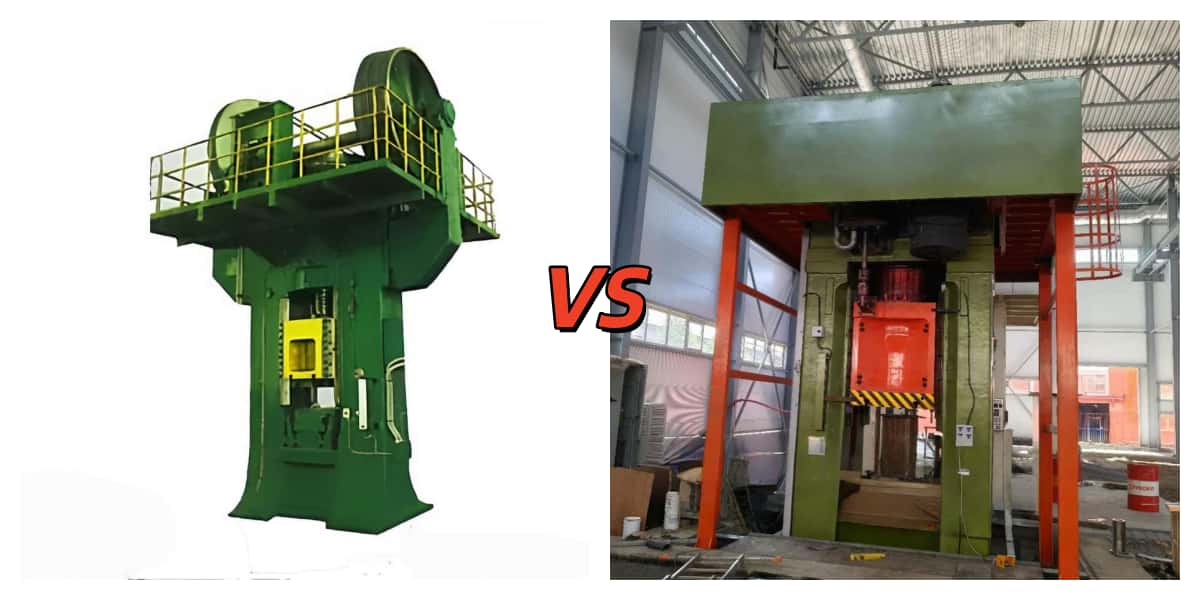
In the highly specialized field of forging, there are numerous enterprises with a long and storied history. Due to the unique operating conditions of forging equipment, interference design is often employed in their manufacturing. Consequently, with proper maintenance, forging equipment is typically very durable .The friction press, as an older generation of equipment, still maintains a certain presence in the market. In contrast, the Electric Screw Press has become one of the mainstream equipment in the current forging market . With over a decade of experience in the forging industry, I frequently encounter clients inquiring about the differences between friction presses and electric screw presses. Below is a detailed introduction to the characteristics and differences of these two types of equipment.
The table below provides a visual comparison of the key differences:
Comparison Dimension
Friction Press
Electric Screw Press
Drive Method
Friction disc drive, low transmission efficiency
Motor direct drive, high transmission efficiency
Control Precision
Relies on operator skill, precision hard to guarantee
Digital control, strike energy precisely adjustable
Energy Performance
Motor runs continuously, high energy consumption
Starts/stops on demand, saves 30%-55% energy
Die Life
Short (typically under 4,000 pieces)
Significantly extended (can exceed 15,000 pieces)
Automation Level
Relies on manual operation
Programmable control, supports automated production lines
Maintenance Cost
Frequent replacement of wear parts like friction belts
Short transmission chain, simpler maintenance
Environmental Impact
Higher noise, risk of oil leakage
Lower noise, no oil pollution risk
Basic Principles of the Screw Press
Both friction presses and electric screw presses are types of screw presses. Their common characteristic is the use of the screw transmission principle, employing a screw and nut as the transmission mechanism to convert the forward and reverse rotational motion of the flywheel into the up-and-down reciprocating motion of the slide, thereby forming the workpiece .During operation, the drive system of the screw press accelerates the flywheel to store energy. The rotating screw, connected to the flywheel, drives the nut, which in turn moves the slide downward. When the slide contacts the workpiece, the stored rotational kinetic energy in the transmission mechanism is converted into impact energy on the forging, shaping the workpiece through the die on the slide. After the blow, the motor drives the flywheel in reverse, raising the slide back to its original position .Screw transmission combines the dual attributes of hammers and presses, avoids the defect of a fixed bottom dead center found in mechanical presses, and can achieve digital control, facilitating automation. It is widely used in automated precision die forging production.
Equipment Development History
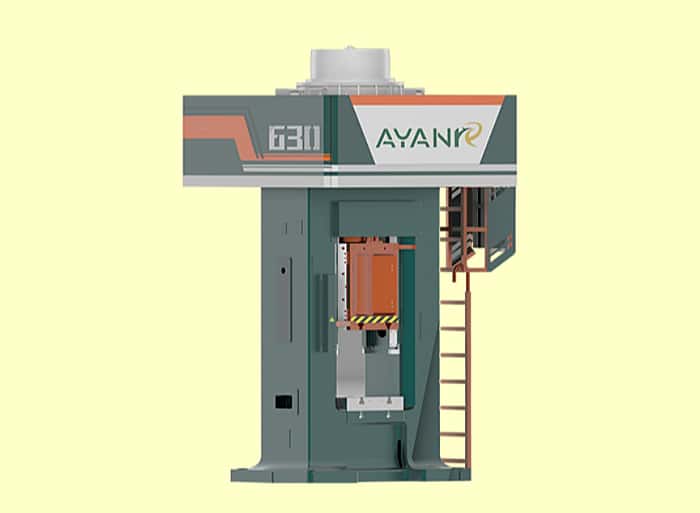
The friction press is an old-fashioned type of screw transmission equipment. It was listed in China's "Catalogue of Obsolete Production Capacity, Processes, and Products (First Batch)"as early as 1999 . Currently, it is almost no longer produced, but due to its large existing market base, it still sees small-scale circulation in the second-hand market.The electric screw press, developed on the basis of the friction press, is the current mainstream equipment. The latest type is the servo direct-drive electric screw press, primarily used for high-precision non-ferrous alloy forgings .Overall, the development of screw presses has primarily involved continuous iteration and updates of the drive system and transmission, moving towards smarter, more efficient, more energy-efficient, more environmentally friendly, higher precision, and more adaptable directions .
Detailed Working Principles
Friction Press Operation
The motor of a friction press drives a transmission shaft to rotate in one direction via a belt. The friction discs on the shaft rotate accordingly. When the slide needs to descend, a reversing valve shifts, causing an operating cylinder piston to move down. This action, through a lever system, moves the main shaft axially to the right, pressing the friction disc against the flywheel. The friction drive rotates the flywheel, and this rotation is converted into the vertical movement of the slide via the screw .After the slide contacts the workpiece through the die, the energy stored in the moving flywheel and slide is fully released as an impact force on the workpiece. After forging, the reversing valve shifts again, the operating cylinder piston moves up, the friction disc presses against the flywheel, causing it to reverse rotation, and the slide rises. Upon reaching the preset position, the reversing valve shifts once more, a return spring resets the friction disc to the neutral position, and a braking action stops the slide at the set point .
Electric Screw Press Operation
The electric screw press is driven by a servo motor, which rotates the flywheel and the screw fixed to it in both forward and reverse directions via a pinion gear. The screw drives the slide up and down .When a start signal is input, the motor drives the screw and slide to accelerate downward through the pinion and flywheel/large gear. Once the motor reaches the preset speed required for the strike energy, it stops accelerating. The kinetic energy stored in the flywheel performs the work, forming the forging. Simultaneously, the motor immediately drives the large gear in reverse. Upon reaching a certain position, the motor enters a braking state, causing the large gear to bring the slide back to the preset position .
Core Differences Comparison
1. Transmission Structure and Efficiency
As a product of an earlier era with less advanced motor technology, the friction press relies on friction discs for energy storage. It has more transmission links, leading to significant energy loss. The friction belts are prone to wear and require frequent replacement, making blow precision difficult to control. Maintenance frequency and costs are relatively high . The transmission efficiency of a friction press is low, approximately 0.65 during the slide's downstroke and only about 0.35 during the return stroke .The electric screw press represents an upgrade from the friction press, eliminating the friction disc transmission and adopting a direct drive approach, significantly shortening the transmission chain . There are two main transmission forms for electric screw presses: one is the gear-transmitted type with specifications ranging from 0.4 MN to 80 MN, and the other is the direct-drive type with specifications from 0.16 MN to 16 MN .
2. Control Precision and Automation
The friction press lacks a numerical control system, making precise energy control impossible. When a forging requires less energy, excess energy is released onto the dies and the machine frame, causing damage . Furthermore, the friction press relies entirely on manual operation, which is arbitrary, results in poor consistency of forgings, and incurs increasing labor costs due to the poor working environment and high labor intensity .The electric screw press incorporates a digital control system and closed-loop position control. It allows for digital setting of strike energy and position, storage and retrieval of striking programs, and avoids the impact of excess energy on dies and the frame . It can also coordinate with various devices to form automated production lines, supporting operational warnings and remote monitoring .
3. Energy Efficiency and Operating Costs
The electric screw press does not require constantly operating friction discs. Its motor only starts when needed, greatly improving energy utilization efficiency. It is widely believed in the industry that electric screw presses improve energy utilization efficiency by 30% to 55% compared to friction presses . The shortened transmission chain reduces the frequency of replacing wear-prone parts, significantly lowering maintenance frequency and costs .
4. Die Life and Product Quality
Statistics indicate that the die life of a friction press is generally below 4,000 pieces . In contrast, due to its precise control of strike energy, the electric screw press releases no excess energy onto the dies, resulting in a typical die life of over 15,000 pieces, and sometimes even exceeding 50,000 pieces .Through closed-loop position control providing real-time feedback to the control system, the precision and consistency of forgings are greatly enhanced . It meets the requirements for various processes such as precision forging, sizing, coining, stamping, straightening, and flattening. It is suitable for pressure welding processes like stainless steel clad cookware and precision forging of titanium alloy blades and other blades .
Summary of Core Advantages of Electric Screw Presses
The electric screw press is characterized by its great versatility, simple structure, easy adjustment and maintenance, absence of a fixed bottom dead center for the slide (facilitating die design), and high forging precision . It can be used for both hot forging and precision forging/sizing, and is suitable for forging various metal materials including steel, aluminum, and other alloys .
This equipment is widely used in industries such as automotive and motorcycle parts, engineering machinery, home appliances, power generation, aerospace, rail transportation, medical devices, and hardware tools. It is an ideal choice for the automated transformation and intelligent upgrading of modern forging enterprises .