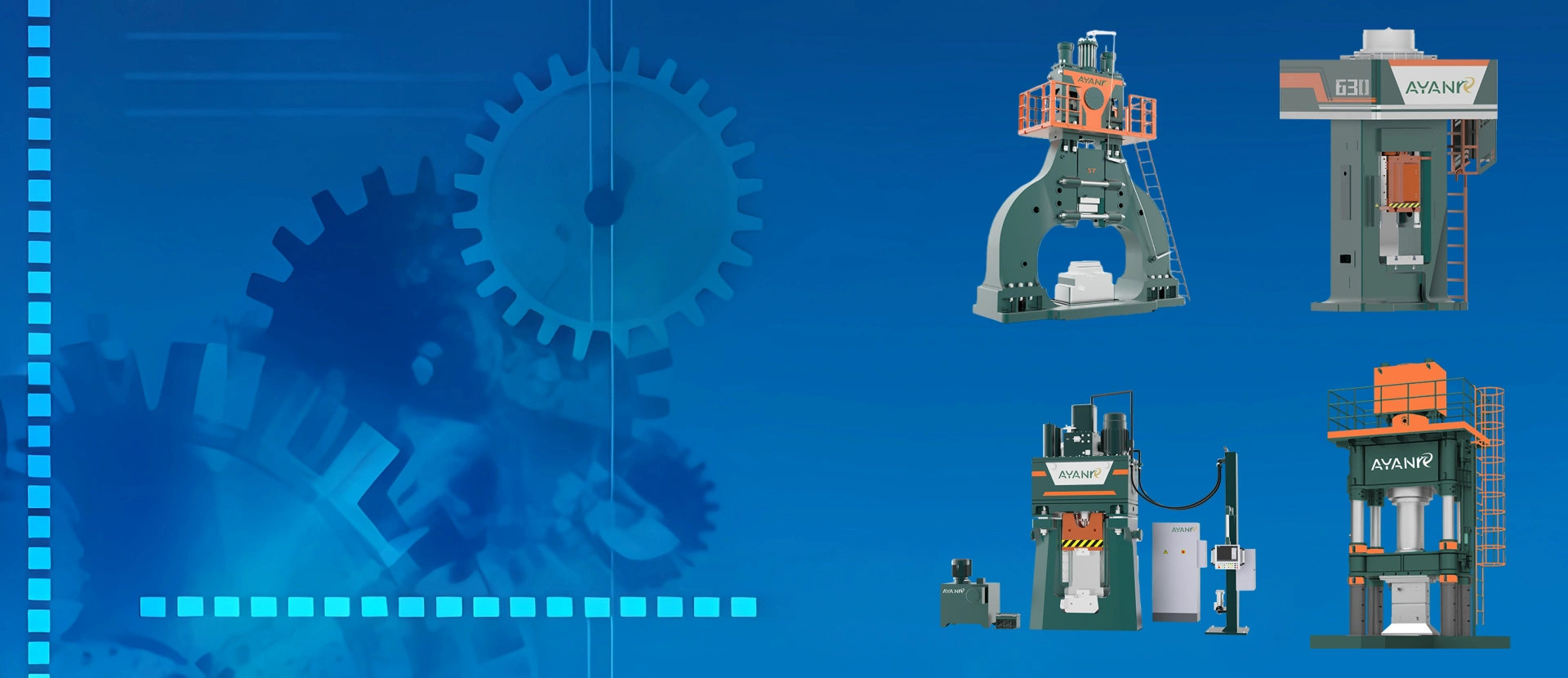
J58KA Electric Screw Press: Five Forging Applications
2025-11-03
The application of electric screw presses is very extensive, covering various fields from conventional forging to precision forming. Their main application ranges include:
Precision Die Forging: This is its core application. It is suitable for forgings requiring high dimensional accuracy, weight consistency, and surface quality.
Hot Forging: Suitable for forming metal billets at high temperatures (e.g., steel, titanium alloys, superalloys).
Warm Forging: Suitable for forging below the recrystallization temperature, achieving a balance between forming precision and material properties.
Sizing/Calibration: Utilizes its precise stroke control and closed-height stability for the final finishing of forgings to obtain accurate dimensions.
Sheet Metal Forming: Can also be used for processes like stamping and coining.
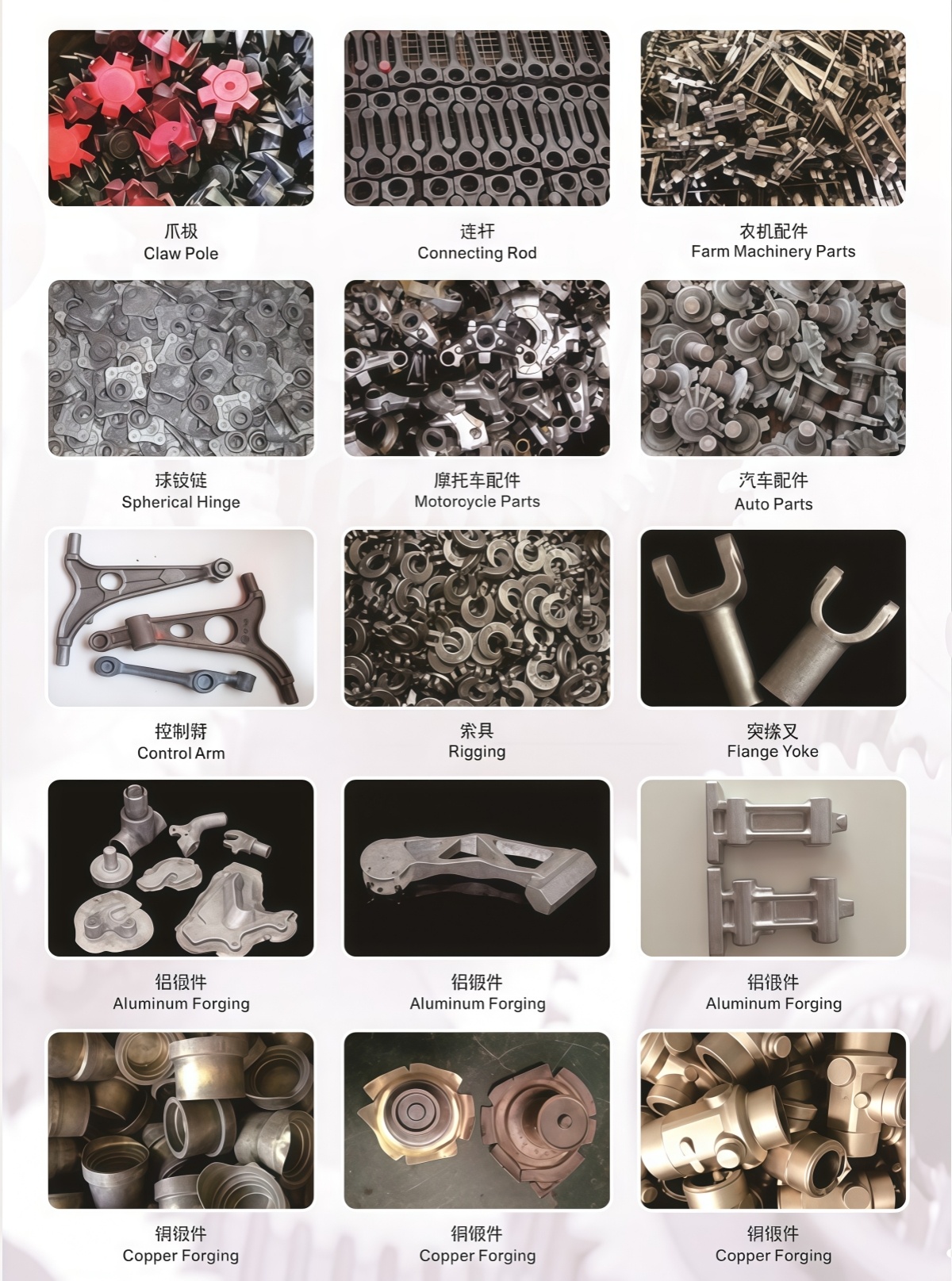
Forged parts produced on the J58KA electric screw press:
Why One Press Covers All Five Processes
A forging screw press stores energy in a flywheel and releases it through a screw and nut. It forms by energy, not by a fixed stroke — the slide has no fixed bottom dead centre and stops wherever the die and the workpiece stop it. That single characteristic is what lets one machine move from a deep precision die to a shallow coining pass without changing die height.Three consequences matter on the shop floor:
Energy per stroke is set on the control panel, so a light sizing pass and a full blow run on the same press. On the J58KA the repeatability of that setting is ±1.5%.
The flywheel friction safety device is set to slip before the frame is overloaded, which protects the machine if a die is set too tight.
Die contact time is short, so the workpiece does not chill against the die — the property that makes the machine usable for hot and warm forging as well as cold work.
Process by Process
Precision Die Forging
This is the core application, and it is where the absence of a fixed bottom dead centre matters most. The die closes to a height, not to a stroke position, so dimensional accuracy, weight consistency and surface quality are governed by the die cavity rather than by a mechanical stop in the press. What the machine contributes is the same energy value blow after blow, and the ability to strike a second time in the same heat when the cavity needs a finishing blow.
Hot Forging
Forging at temperature — carbon and alloy steel, titanium alloys, superalloys — is where short die contact pays. The slide reaches working speed just above the die and the energy is delivered in one blow, so the interval between the billet leaving the furnace and the die closing stays short. Because the energy is settable, the same press can take a heavy breakdown blow and follow it with a light finishing blow.
Warm Forging
Warm forging sits below the recrystallization temperature. Against hot forging there is less scale and less thermal contraction to compensate in the die; against cold forging the forming force stays in a practical range. The screw press suits that middle ground because the energy can be dialled to the point where the material fills the cavity without the die taking a shock load it was not designed for.
Sizing and Calibration
Sizing is a single light blow that corrects height, flatness and die mismatch after the main forging operation. It depends on stroke control and closed-height stability rather than on tonnage, which is why the energy setting is turned down: a sizing die that receives a full blow closes further than intended and takes the correction back out of tolerance.
Sheet Metal Forming: Stamping and Coining
Beyond die forging, the same press handles shallow stamping, coining and marking — operations that need a controlled squeeze rather than a deep draw. Coining benefits most from the energy setting, because the relief is formed by one controlled impact and die life depends on not exceeding it.
Where These Processes Are Used
AYANK supplies this equipment into nine application areas: automotive parts, engineering machinery, aerospace, ships, energy, rail transit, medical equipment, hand tools and power hardware. The five processes above are what those industries buy the press for — precision die forging and sizing where a tolerance has to hold, hot and warm forging where the part is formed from bar stock, coining for the finishing pass. The series runs from 250T to 10000T in 11 models, so the process choice normally selects a model rather than a machine family.
What to Send With an Enquiry
A part drawing plus four process facts is enough to size the machine: the material and billet weight, the finished part weight and how many operations the die performs in one heat, the tolerance on the dimension that matters most, and whether the press will run standalone or inside an automated line. From there the choice is between variable-frequency transmission (J58K) and servo direct drive (J58ZK) — the J58KA electric screw press advantages and applications page sets out the difference in more detail.Two dimensions get fixed early because they constrain the die design: the minimum die height, which is 560 mm between the slide bottom and the bolster, and the stroke.
Frequently Asked Questions
Can one J58KA run hot forging and sizing?
Yes. Both are energy settings on the same press. Hot forging uses a heavy blow with the billet at temperature; sizing uses a light blow once the part has cooled or been trimmed. The die set changes, the machine does not.
What tonnage do I need?
It depends on the projected area of the forging, the material, and how much deformation happens in one heat — which is why AYANK asks for a drawing rather than a number. The range covers 250T to 10000T, so the answer is normally a model inside the series.
What is the difference between J58K and J58ZK?
J58K uses variable-frequency drive through a conventional transmission; J58ZK is servo direct drive, where the motor acts on the screw without a gear train. Removing that transmission stage is where the maintenance saving and the efficiency gain come from.
Does the press need special attention on the foundation?
It sits in a foundation pit that is checked for standing water, scale build-up and anchor bolt tightness as part of routine service — the same routine that covers the guideway and thrust bearing clearances. The electric screw press maintenance schedule lists every check and its tolerance.