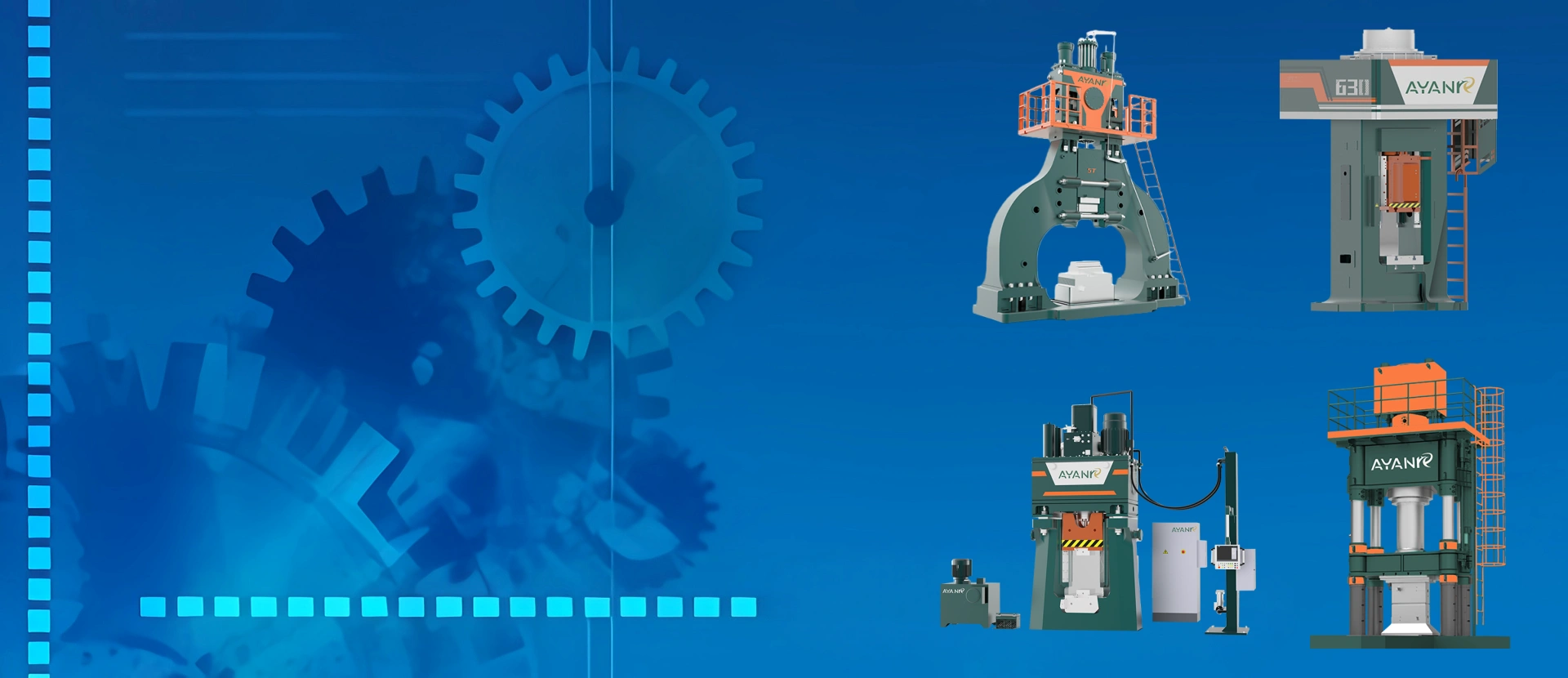
I. Comparison of Performance Characteristics of CNC Die Forging Hammer and Friction Screw Press
Characteristics of CNC Die Forging Hammer
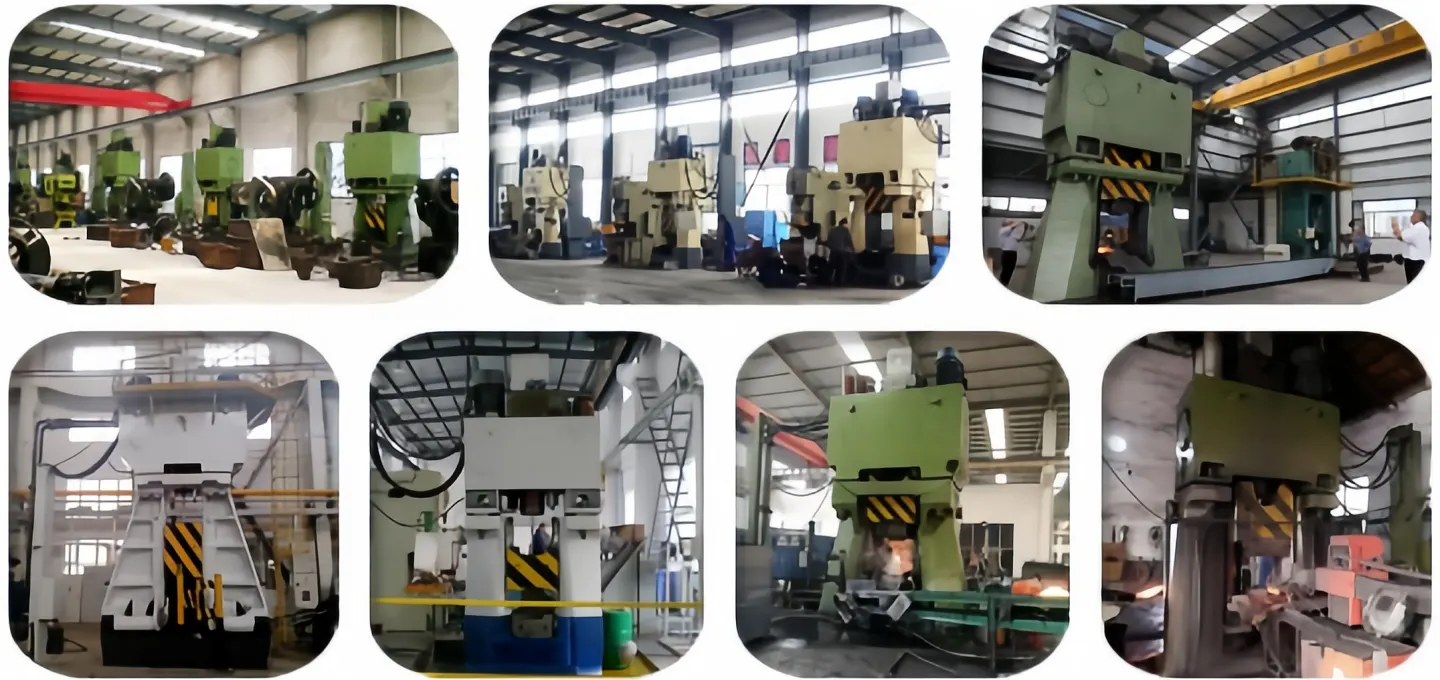
The CNC die forging hammer is a forging equipment used for producing various die forgings under medium or mass production conditions. It can perform multi-cavity die forging. Due to its simple structure, high productivity, low cost, and adaptability to the requirements of die forging processes, it is a commonly used forging equipment.
The outstanding advantage of the CNC die forging hammer lies in its fast striking speed, resulting in short contact time with the die. This makes it particularly suitable for occasions that require high-speed deformation to fill the die cavity, such as forgings with thin ribs, complex shapes, and weight tolerance requirements. Because of its fast and flexible operating characteristics, its adaptability is very strong, and some people call it a "universal" equipment. The forging hammer is the forming equipment with the best performance-to-price ratio.
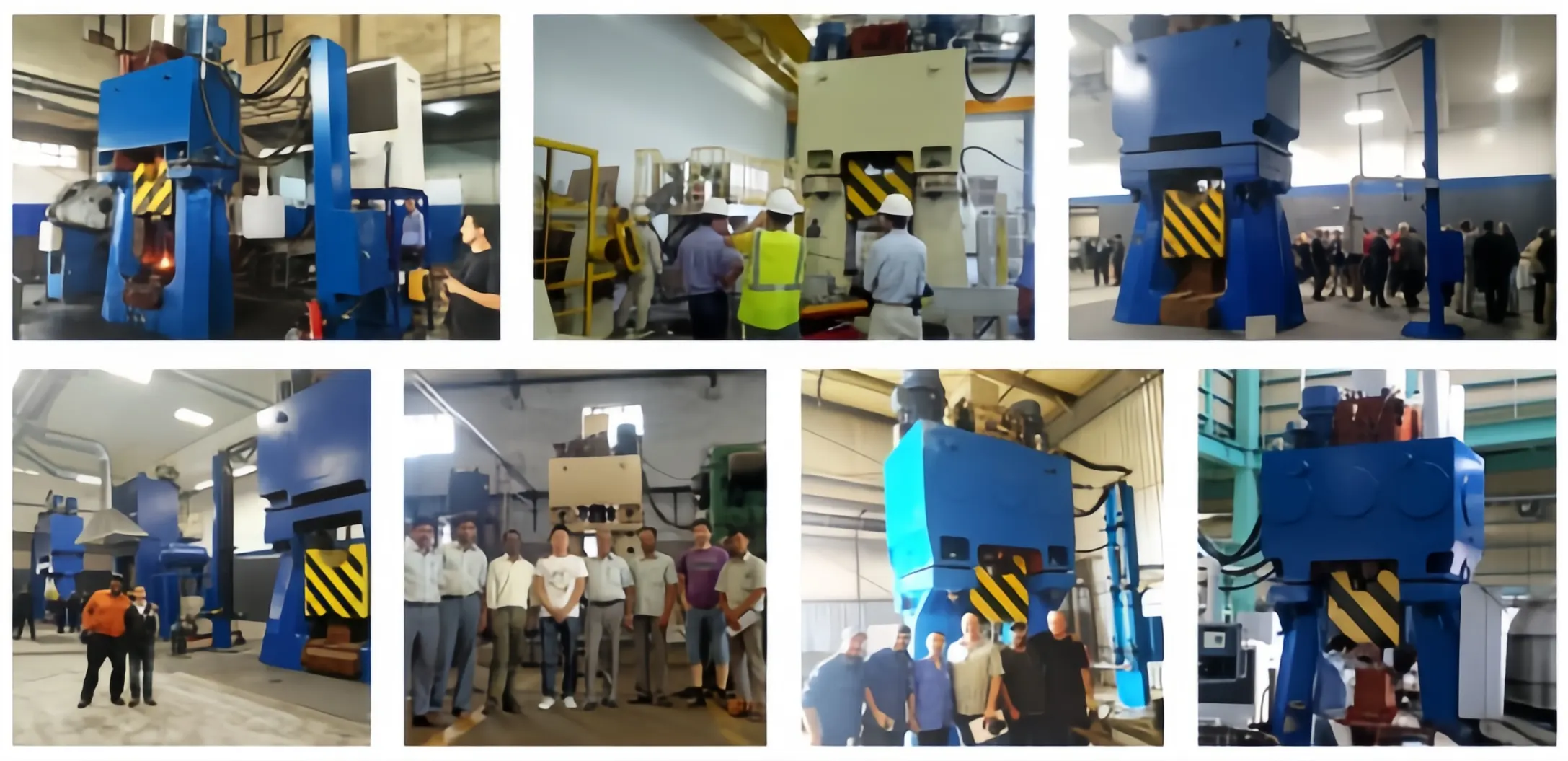
The AYANK C92KA series CNC die forging hammer, while possessing the same advantages as traditional forging hammers, also features high frequency, high precision, low energy consumption, long die life, easy operation, and easy maintenance.
High frequency is due to its unique hydraulic system, which enables the hammer head to obtain greater energy within a shorter stroke. That is, short-stroke, high-speed, and high-frequency continuous forging becomes a reality, creating conditions for efficient and rapid forming of forgings. This advantage of the CNC forging hammer is unmatched by other forging equipment. (The striking frequency of the CNC hammer is 70–90 times/min, while that of the friction screw press is 6–15 times/min.)
High precision is attributed to its unique U-shaped integral frame with X-type radial guide rail structure and advanced hydraulic and electrical control systems. The U-shaped integral frame ensures frame rigidity while greatly improving the motion accuracy of the hammer head. The digital programmable control system ensures that the striking energy output of the forging hammer under any operator's work remains consistent, guaranteeing the consistency of forging precision.
Low energy consumption: Due to the full hydraulic drive mode, its energy utilization efficiency is more than twenty times higher than that of traditional forging hammers. At the same time, because the striking energy can be programmed and controlled, the forging hammer can use the energy for the deformation of the forging during operation without generating excess striking energy, since excess striking energy is also a waste of energy.
Long die life: Because the CNC die forging hammer adopts the concept of high-speed, short-stroke striking, its maximum striking speed can reach about 6 m/s, the forging forming time is as short as 5–15 ms (friction screw press: 30–150 ms), and the die cold strike time is about 2–3 ms (friction screw press: 30–60 ms). Therefore, the impact loss and thermal loss on the die are greatly reduced. At the same time, precise digital energy control can make the actual output energy match the deformation work of the forging, reducing the damage caused by excess energy (cold strike) to the die and improving die life.
Friction Screw Press

Since the friction screw press has dual working characteristics of both the die forging hammer and the hot-die forging press, namely, there is a certain impact effect during operation; the slide stroke is not fixed; and the force between the slide and the worktable during forging is borne by the frame structure of the press, etc., the characteristics of friction screw press die forging are as follows:
The slide stroke speed is slow, with a slight impact nature, allowing multiple strikes and deformations in one die cavity. It can provide large deformation energy for large deformation processes (such as upsetting and extrusion) and also provide large deformation force for small deformation processes (such as coining and embossing).
Compared with the CNC die forging hammer, the friction screw press has poor ability to withstand eccentric loads. It is usually used for single-cavity die forging, and preforming is generally carried out on other auxiliary equipment. It is also possible to arrange two cavities under conditions where the eccentric force is not large, such as bending—finish forging or upsetting—finish forging. At the same time, friction screw press die forging is also limited by unfavorable factors such as equipment tonnage, low working speed, and the need for auxiliary equipment for preforming.
Due to the structural characteristics of the friction screw press, its vibration transmission to the outside is relatively small, so the foundation structure is relatively simpler than that of the die forging hammer, and generally no vibration damping mechanism is required. The infrastructure cost is lower.
2. Degree of Automation
From the perspective of automation degree, the CNC die forging hammer is a programmable striking device controlled by PLC, with the capability to expand into a fully automated production line. At the same time, because the CNC die forging hammer can be used for multi-cavity forging, when carrying out automation upgrade and transformation, for relatively complex forgings (requiring preforming and blocking), the CNC hammer production line basically does not need additional auxiliary equipment.
In summary, both the CNC die forging hammer and the friction screw press have their own characteristics in forging applications, and they can replace each other in many fields. When selecting, it is necessary to evaluate based on the characteristics of one's own forgings and future development needs, so as to minimize investment costs and maximize benefits.
Receive the news that you are interested in.