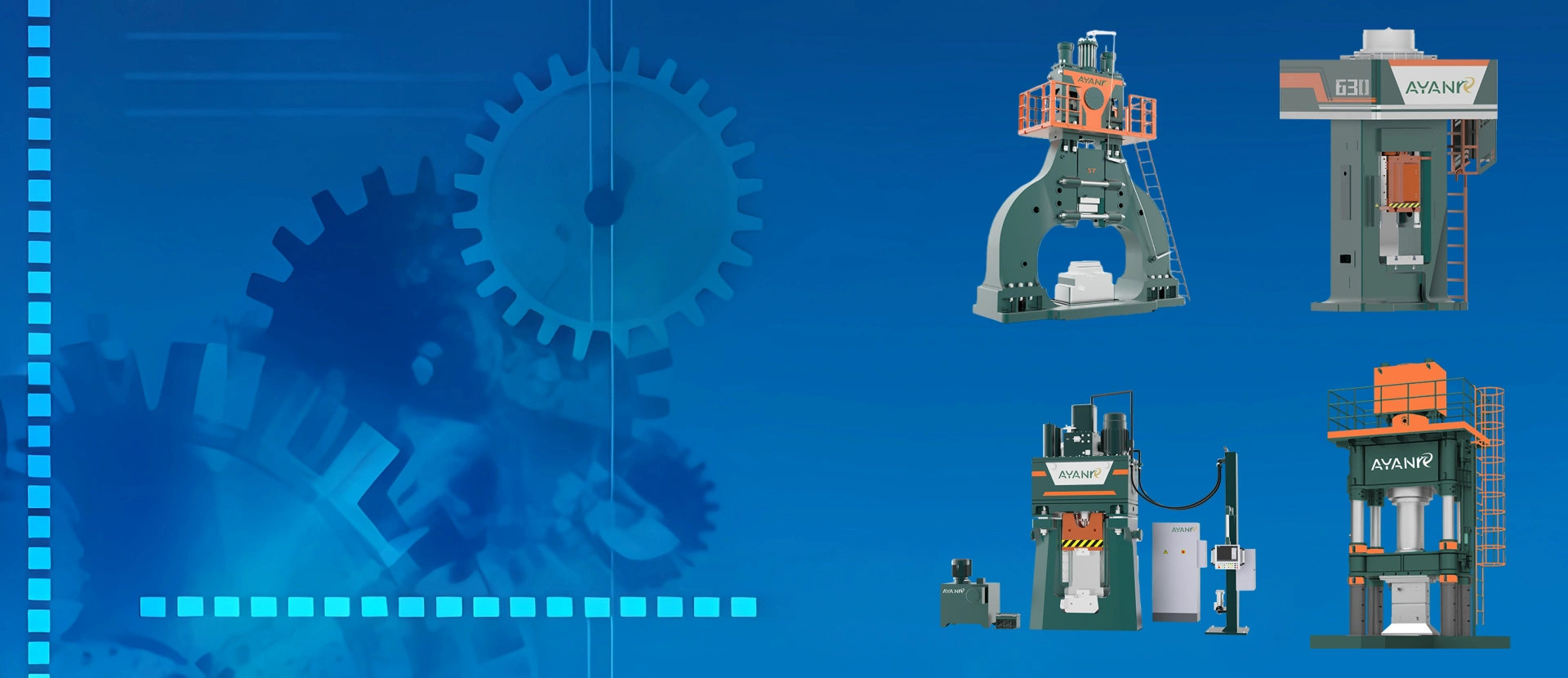
An electric screw press machine is a CNC-controlled forging machine that uses an electric motor, typically a servo motor, to drive the screw and flywheel system and convert rotational energy into forging energy through the ram.
Compared with a traditional friction screw press, an electric screw press eliminates the friction-disc drive, can reduce energy consumption by 40%–60%, and provides repeatable blow energy with consistency of approximately ±1%–2%. It is widely used for hot die forging of steel, aluminum, copper alloys, and other forgeable materials.
Selecting the right electric screw press is not simply a matter of choosing a tonnage. Forging material, projected area, stroke length, die dimensions, production volume, and automation requirements should all be evaluated before selecting the machine.
Technical guide by AYANK Forging. This guide combines electric screw press working principles with practical equipment-selection considerations for industrial forging projects. Technical specifications and machine recommendations should always be confirmed against the actual forging part and production requirements.
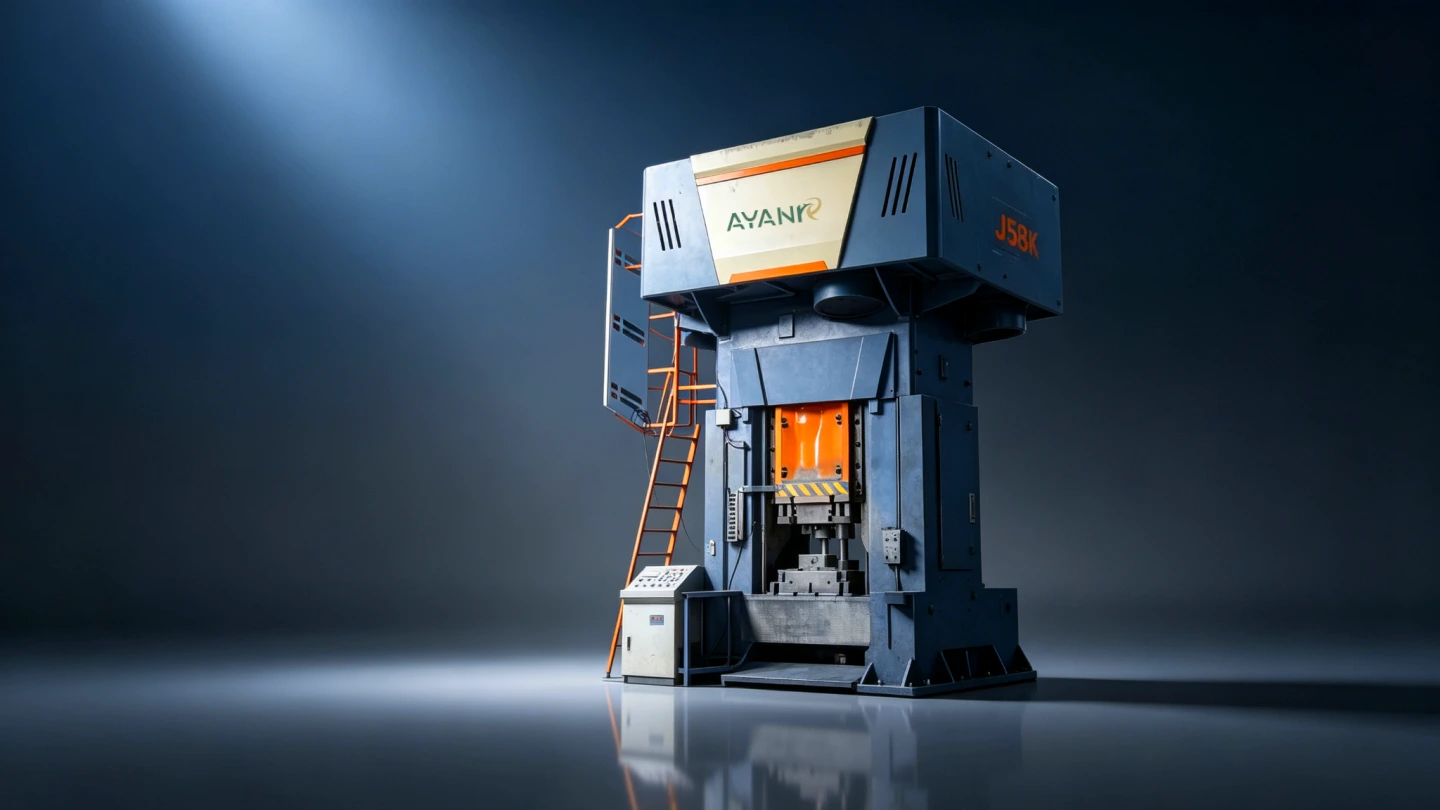
An electric screw press machine, also called an electric screw forging press, is a screw-driven forging machine in which an electric motor drives the rotating system and screw mechanism to move the ram vertically.
During the downward stroke, rotational energy is converted into forging energy as the upper die contacts the heated workpiece. The material plastically deforms and flows into the die cavity.
The main machine system typically includes:
The energy path runs in one line: motor drive → rotating system → screw and nut → ram → upper die → workpiece → lower die.
Depending on the drive and control design, manufacturers may also use terms such as servo screw press, CNC screw press, direct-drive screw press, or electric screw forging press. Buyers should confirm the actual drive architecture and technical specifications rather than assuming that every term refers to exactly the same machine configuration.
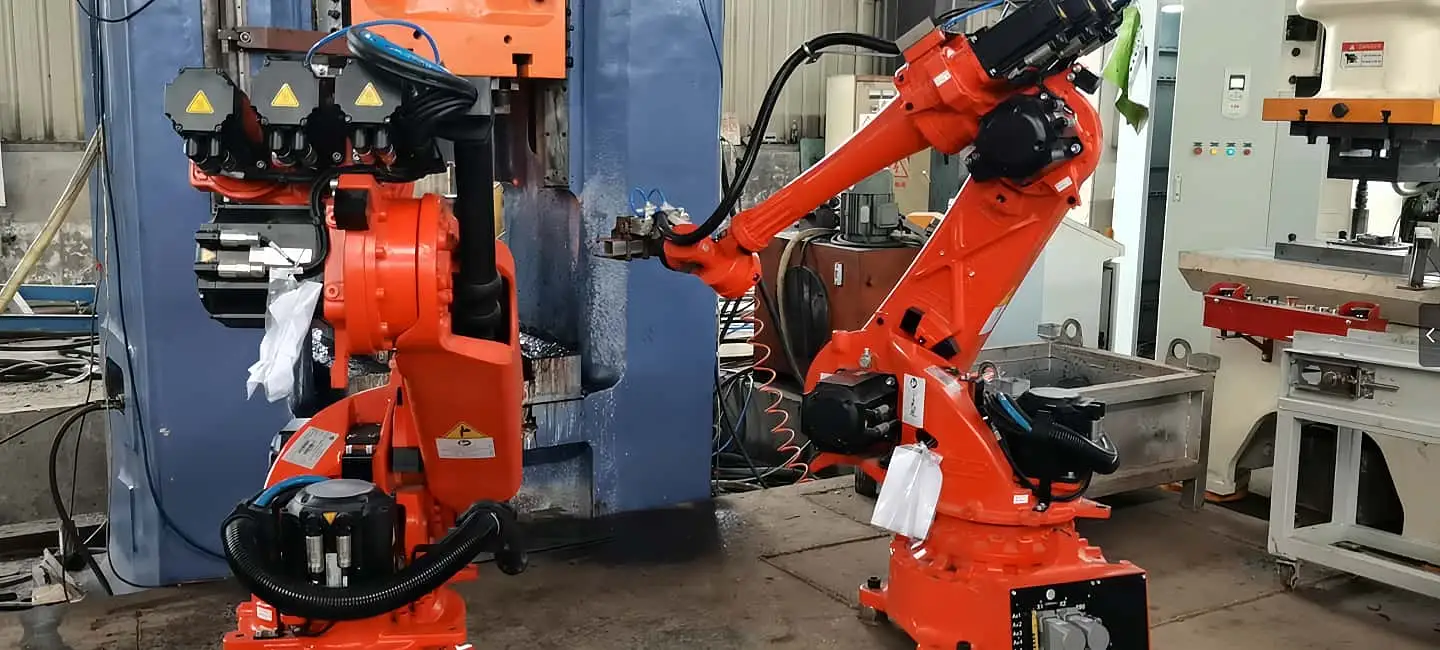
A typical forging cycle takes approximately 3–6 seconds per stroke, depending on machine tonnage, forging process, stroke setting, and production configuration.
Bar stock is cut into billets according to the required forging weight. Accurate billet weight is important because excessive material increases flash, while insufficient material may cause incomplete die filling.
The billet is heated to the appropriate forging temperature. Typical process ranges include approximately 1150–1250 °C for carbon and alloy steels, 420–480 °C for aluminum alloys, and 650–750 °C for copper alloys.
Actual forging temperature should be determined according to the material grade and forging process, because temperature directly affects deformation resistance, required forging energy, material flow, and die life.
The upper and lower forging dies are installed and aligned. Lubrication, die height, tooling position, and the required forging program are checked before production begins.
The heated billet is placed in the lower die manually or transferred automatically using a forging manipulator, six-axis robot, walking beam, or other material-handling system.
After receiving the CNC command, the electric drive accelerates the rotating system to the programmed operating condition. Unlike a traditional friction-drive system, power transmission does not depend on friction discs.
The screw mechanism converts rotational movement into the downward movement of the ram. When the upper die contacts the heated billet, stored energy is transferred into the workpiece as deformation energy.
The heated material flows through the die cavity according to the tooling and forging process.
Programmable blow energy allows the process to be matched more closely to the part. Insufficient energy can result in incomplete filling, while excessive energy can increase flash, die loading, and unnecessary wear.
After the forging stroke, the drive reverses and raises the ram. The forged component is removed and transferred to subsequent operations such as trimming, heat treatment, shot blasting, inspection, or machining.
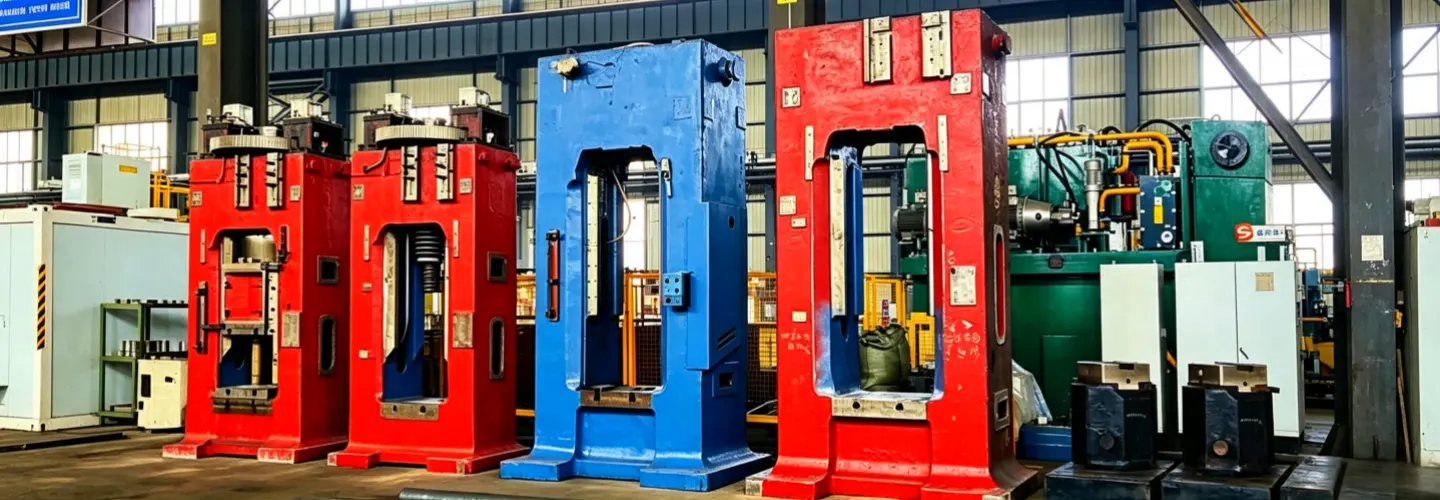
Electric screw presses and friction screw presses use similar screw-driven forming principles, but their drive and energy-control systems are different.
| Aspect | Electric Screw Press | Friction Screw Press |
|---|---|---|
| Drive method | Electric motor drives the screw/flywheel system | Motor drives friction discs that transfer power to the flywheel |
| Energy consumption | Approximately 40%–60% lower | Higher energy losses due to friction and slip |
| Blow energy control | Programmable according to part requirements | More dependent on friction transmission |
| Blow consistency | Approximately ±1%–2% | More affected by friction-system condition |
| Maintenance | No friction blocks; fewer friction-related wear components | Friction linings require periodic replacement |
| Automation | Suitable for CNC and robotic integration | Older machines may require additional control upgrades |
| Initial investment | Generally higher | Generally lower |
| Long-term operating cost | Generally lower where energy and maintenance savings are significant | Can be higher due to energy loss and friction-component maintenance |
Electric screw presses are particularly attractive for new forging lines where energy efficiency, repeatability, programmable process control, and automation all matter.
Typical automotive applications include connecting rods, steering knuckles, wheel hubs, transmission components, gear blanks, suspension parts, flanges, and other safety-critical forgings.
Electric screw presses can be used for wrenches, pliers, hammer heads, sockets, axes, brackets, hot-forged fasteners, and other industrial hardware.
Rigging hardware is forged the same way — see forging shackles and turnbuckles on an electric screw press.
Common applications include gear blanks, collars, flanges, couplings, valve bodies, pump components, railway fittings, and general engineering forgings.
Depending on the machine and process configuration, servo electric screw presses can also be used for aluminum alloys, copper alloys, titanium alloys, and other forgeable materials requiring controlled energy input.
For process-by-process detail, see electric screw press applications in the forging industry.
The five processes a J58KA is bought for — precision die forging, hot forging, warm forging, sizing and calibration, and sheet metal forming — are covered one by one in five forging applications of the J58KA.
Blow energy can be programmed according to the workpiece and the forging stage, which cuts both insufficient deformation and unnecessary energy input.
Blow consistency of approximately ±1%–2% helps maintain stable process conditions during batch production and reduces dependence on manual operator adjustment.
By eliminating the traditional friction-disc transmission, electric screw press machines can reduce energy consumption by approximately 40%–60% compared with conventional friction screw presses.
CNC control makes the machine suitable for integration with induction heating systems, manipulators, robots, walking beams, trimming equipment, and automated production lines. What a full automated forging production line with an electric screw press looks like in practice is covered in the line-level guide.
Eliminating friction blocks removes one important source of wear and of the routine maintenance that comes with a traditional friction screw press.
Electric screw presses can use different drive and control configurations. Two commonly discussed categories are conventional electric screw presses and servo-controlled electric screw presses.
Conventional systems typically use an asynchronous or three-phase motor with a corresponding mechanical transmission and control system. They remain a practical solution for relatively simple forging processes where highly flexible energy programming is not required.
Servo-controlled machines use a servo or torque-motor system with closed-loop control of parameters such as speed, position, and energy. The design advantages of direct-drive electric screw presses explain why this arrangement removes the gear stage entirely.
They suit applications where process repeatability, programmable forging parameters, production monitoring, and automation integration all matter.
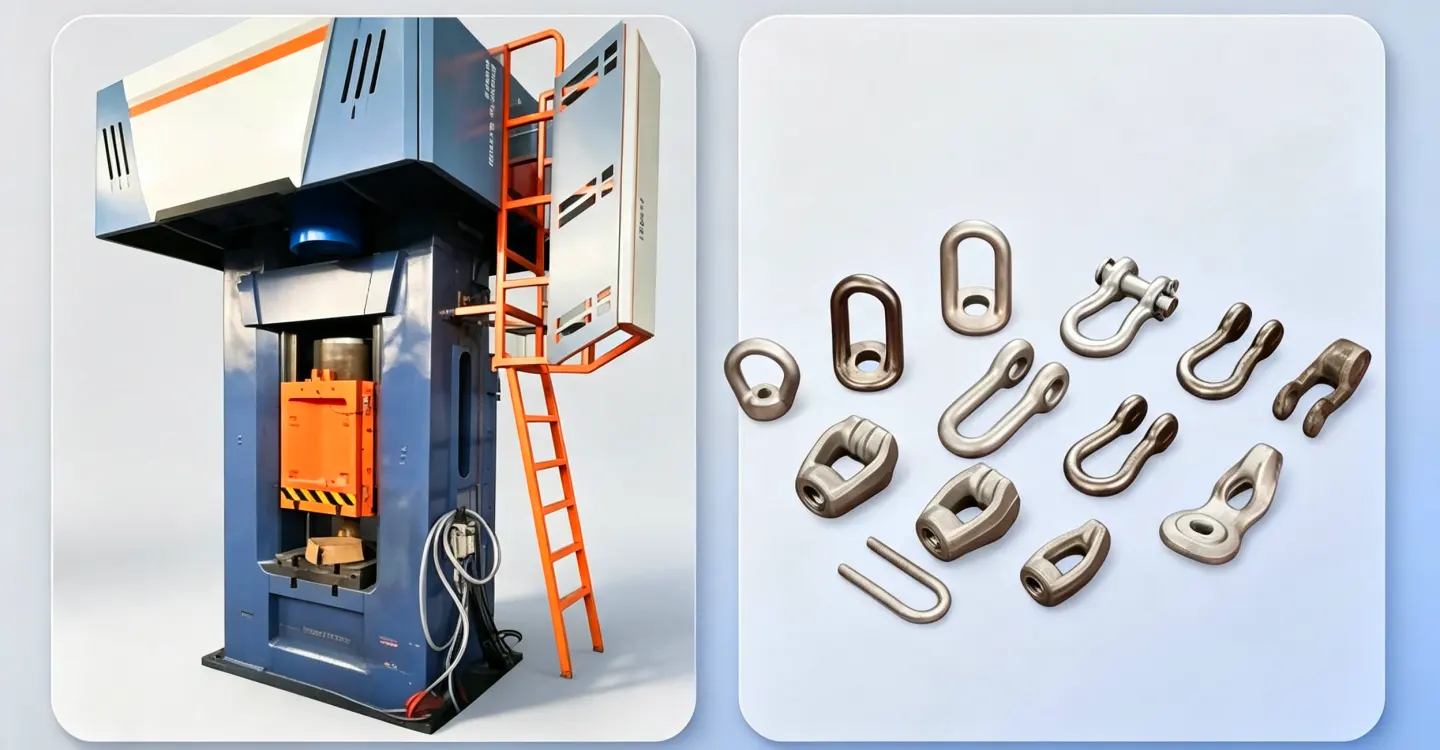
An electric screw press and a closed die forging hammer can both be used for industrial die forging, but they apply energy to the workpiece differently.
| Factor | Electric Screw Press | Forging Hammer |
|---|---|---|
| Forming method | Controlled screw-driven energy stroke | Repeated impact blows |
| Energy control | Programmable | Adjusted through the hammer operating process |
| Repeatability | High | More dependent on process and operation |
| Automation | Highly suitable | Can also be automated depending on the line |
| Process flexibility | High | High, especially for multi-blow forging processes |
Neither machine is automatically better. The correct choice depends on the forging material, workpiece geometry, die design, required deformation process, production volume, and automation strategy.
For a comparison between hammer types and friction presses, see CNC die forging hammer vs friction screw press.
| Factor | Electric Screw Press | Mechanical Hot Forging Press |
|---|---|---|
| Forming principle | Energy-based screw-driven forming | Mechanical fixed-stroke forming |
| Production flexibility | High | Best suited to stable repetitive production |
| Process adjustment | Flexible energy settings | More fixed process characteristics |
| Typical production | Multi-product and medium/high-volume forging | High-volume dedicated production |
| Automation | High | High |
Electric screw presses are often considered for flexible, multi-product forging production, while mechanical hot forging presses can be advantageous for highly repetitive, high-volume dedicated production.
Final machine selection should always be based on the actual forging process rather than production volume alone.
The side-by-side across forming principle, flexibility and automation sits in electric screw press vs hot die forging press, together with where each machine wins on cost over its working life.
Buyers frequently start an inquiry with a request such as:
“Please quote a 1000T electric screw press.”
But nominal tonnage alone is not enough to select the correct machine.
Nominal force is a limit, not a description of what the machine does per stroke. Two presses rated at the same tonnage can differ in stroke length, strokes per minute, minimum die height and worktable size — and those differences decide whether the machine suits your die.
Machine selection should consider:
The table below is the capacity ladder shared by the J58KA electric screw press and the J58ZKA servo direct drive series, so the same nominal force, stroke, die height and worktable geometry appear at every size. Both series are built from 250T to 10,000T, so every column below applies to either drive. Nominal force sets the projected area you can forge, stroke number sets output per hour, and worktable size sets the largest die you can mount. Confirm the exact model against your forging drawing before ordering.
| Item | Unit | 250 | 315 | 400 | 630 | 1000 | 1600 | 2500 | 4000 | 6300 | 8000 | 10000 |
|---|---|---|---|---|---|---|---|---|---|---|---|---|
| Nominal force | kN | 2500 | 3150 | 4000 | 6300 | 10000 | 16000 | 25000 | 40000 | 63000 | 80000 | 100000 |
| Max. allowable working force | kN | 4000 | 5000 | 6300 | 10000 | 16000 | 25000 | 40000 | 64000 | 100000 | 125000 | 160000 |
| Slide stroke | mm | 320 | 380 | 400 | 450 | 500 | 600 | 650 | 750 | 850 | 850 | 1000 |
| Stroke number | strokes/min | 28 | 26 | 24 | 20 | 18 | 16 | 14 | 12 | 10 | 9 | 8 |
| Min. die height | mm | 500 | 550 | 570 | 720 | 750 | 960 | 1050 | 1510 | 1720 | 1800 | 2160 |
| Worktable size | mm | 560×600 | 640×700 | 730×750 | 900×820 | 1050×920 | 1280×1000 | 1400×1200 | 2200×1680 | 2200×2000 | 2400×2200 | 3000×2400 |
| Slider bottom size | mm | 560×560 | 620×654 | 730×630 | 870×710 | 1020×850 | 1280×968 | 1560×1110 | 2000×1500 | 2100×1750 | 2200×2000 | 2800×2000 |
When a customer asks AYANK for an electric screw press, the engineering evaluation begins with the forged part and production process, not with a requested tonnage.
We first review the 2D or 3D drawing, finished forging dimensions, part weight, projected area, material grade, and required tolerances.
Material deformation resistance changes significantly with alloy grade and forging temperature. Steel, aluminum, copper alloys, and titanium therefore require different process considerations.
Required force is evaluated from factors including projected area and material deformation resistance at forging temperature.
As a practical selection guideline, the required forging force should generally fall within approximately 60%–80% of the machine's rated capacity rather than operating continuously at 100% of rated capacity.
Stroke length and stroke rate matter as much as tonnage. Machines with similar nominal force can differ in how far the ram travels and how many strokes they deliver per minute — both of which decide whether the die fits and what output the line can reach.
We check the upper and lower die dimensions, bed size, ram size, stroke, shut height, daylight, ejector requirements, sensors, lubrication, and cooling interfaces.
Required annual production and cycle time influence the machine configuration and determine whether manual loading, a manipulator, robot, walking beam, or complete automatic line is more appropriate.
When replacing existing forging equipment, information about the current machine helps identify the real problem. Examples include:
For an automated forging project, the electric screw press should not be evaluated as an isolated machine.
A complete forging line may include:
Billet cutting → induction heating → temperature detection → automatic feeding → forging → trimming → cooling → inspection
These systems should be considered during initial engineering so that electrical controls, safety systems, material transfer, and cycle times can be integrated properly. How the stations are sequenced across a whole line is set out in the forging automation production line guide.
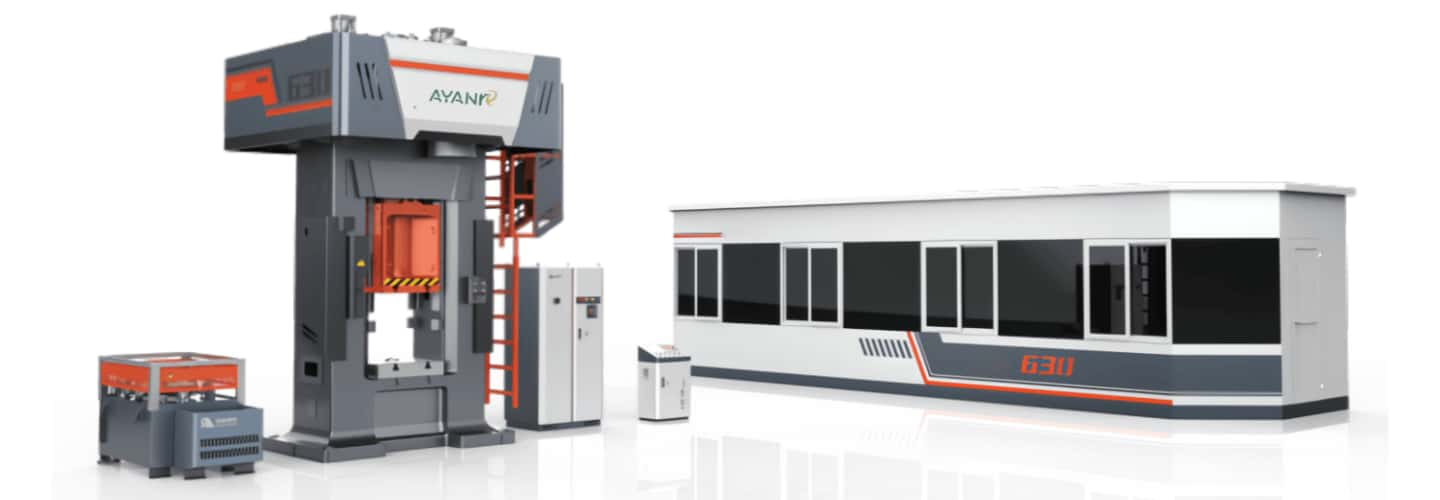
A European automotive component manufacturer contacted AYANK while upgrading an existing hot forging line. The customer needed a new electric screw press for batch production of alloy-steel automotive forgings and wanted better energy control, production repeatability, and compatibility with automated material handling.
Instead of selecting the machine from nominal tonnage alone, AYANK's engineering team evaluated the forged part, material, projected area, die dimensions, production target, and automation requirements before recommending the press configuration.

The customer's existing production process relied on a conventional friction screw press. As production volume increased, the company wanted to improve control over forging energy while reducing the process variation associated with the existing friction-drive system.
The main project requirements included:
The customer initially focused primarily on nominal machine tonnage. After reviewing the forging drawings and process requirements, however, AYANK evaluated the project against the full machine specification rather than the tonnage figure alone.
The recommendation was based on the forging process rather than on matching the customer's requested tonnage.
AYANK engineers reviewed the projected area of the forging, the deformation resistance of 42CrMo at the specified forging temperature, required die filling, die dimensions, stroke, die height and the desired production rate.
The machine was sized so that the calculated forging requirement stayed inside an appropriate working range rather than running continuously near 100% of rated capacity.
As a practical selection guideline, AYANK generally aims to keep the required forging force within approximately 60%–80% of rated capacity, while separately confirming that stroke length and die space suit the tooling.
For this application, the J58ZKA servo direct-drive configuration was selected because the customer also required programmable energy control, high process repeatability, and integration with an automated forging line.
A smaller machine would have reduced the initial equipment investment, but it would have left less operating margin for the required deformation and for future process variation.
Running too close to maximum capacity would also leave less flexibility if the customer later introduced parts with a larger projected area or more demanding forging conditions.
The objective was therefore not to select the smallest machine capable of producing the part, but a machine that could operate within a practical production range while maintaining sufficient capability.
AYANK also evaluated moving to the next larger press size. Unnecessary oversizing would increase more than the machine purchase price. It could also increase:
Since the 1600T configuration provided the required process capability with an appropriate operating margin, moving to a significantly larger machine was not necessary for the specified forging.
Machine capacity was only one part of the decision. The customer was upgrading from a friction screw press and wanted greater control over the production process.
The J58ZKA servo direct-drive electric screw press allows forging energy to be programmed according to the part and the forging process.
With blow consistency of approximately ±1%–2%, the machine delivers a more repeatable energy input during batch production.
Eliminating the traditional friction-disc drive also contributes to approximately 40%–60% lower energy consumption compared with conventional friction screw press technology under comparable operating conditions.
For this customer those characteristics mattered because the machine would run as part of an automated production cell rather than as an isolated manually operated press.
The electric screw press was engineered as the central machine of the forging cell rather than as a standalone equipment purchase. The production process was configured around the following sequence:
Billet preparation → induction heating → temperature detection → automatic feeding → J58ZKA forging → robotic part transfer → trimming → cooling → inspection
Coordinating these operations during the initial equipment design allowed the press cycle, billet temperature, robot movements, safety system, and downstream operations to be treated as one production process.
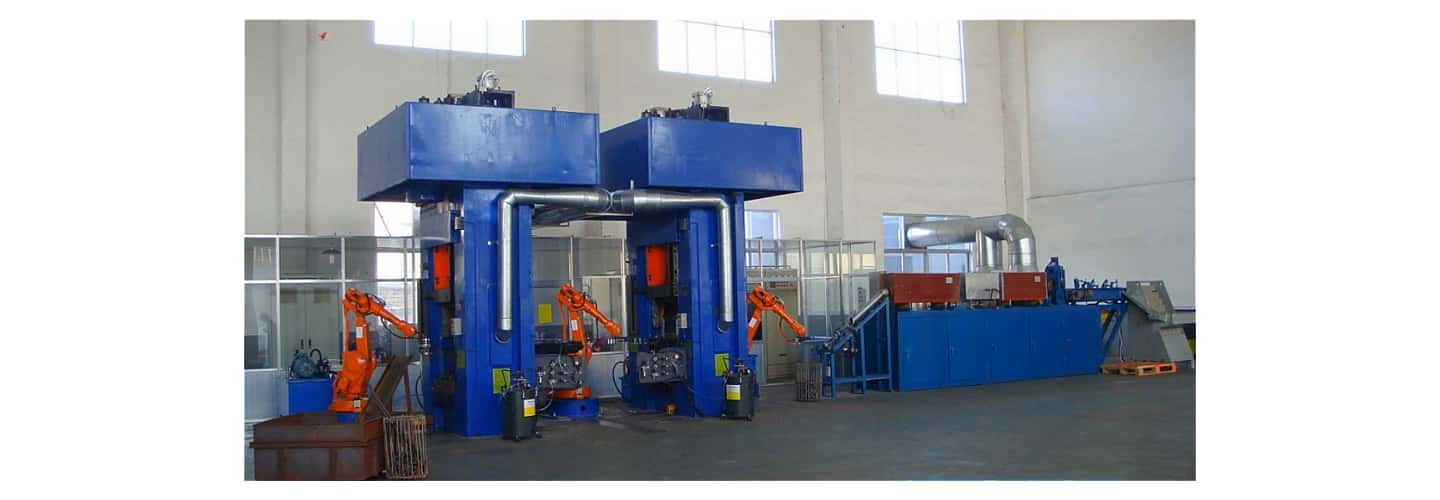
After commissioning, the new forging cell gave the customer a more controlled and repeatable production process compared with the previous friction screw press setup. Key results included:
The project also left enough process flexibility to adjust forging parameters later when producing similar components inside the machine's working range.
The main lesson is that an electric screw press machine should not be selected from tonnage alone. A buyer may initially ask for a 1000T, 1600T, or 2500T machine, but the correct recommendation should come after evaluating the actual forging.
The selection process should answer four separate questions:
Only after these factors are evaluated together should the final electric screw press model be selected.
AYANK supplies both J58KA electric screw presses and J58ZKA servo direct-drive electric screw presses for different forging requirements.
The J58KA series provides electric screw press solutions for industrial die forging applications. Machine capacity and configuration should be selected according to the workpiece, required forging energy, die dimensions, and production requirements.
View J58KA Electric Screw Press →
The J58ZKA series uses a servo direct-drive configuration designed for applications requiring precise energy control, programmable operation, process repeatability, and automation integration.
View J58ZKA Servo Direct Drive Electric Screw Press →
The final choice between J58KA and J58ZKA should be based on the actual forging process rather than on model designation alone.
Before requesting a quotation, prepare:
Once the machine is on the floor, the routine that keeps blow energy repeatable — die fitting, the lubricant points and the checks before each shift — is set out in electric screw press maintenance.
A capable electric screw press manufacturer should be able to discuss the customer's forging process and explain why a particular machine configuration is being recommended, rather than providing a price by tonnage.
Two machines with the same nominal force can differ in stroke, stroke rate and die space. Compare the whole specification, not the tonnage figure.
Machine performance and die design are closely related. An unsuitable die or forging process can result in poor filling, excessive flash, short die life, or unstable production even when the press itself is correctly sized.
Oversizing increases equipment investment and may also increase foundation, electrical, tooling, and operating costs. The objective is sufficient capacity with an appropriate operating margin.
Equipment should also be compared by energy consumption, maintenance requirements, spare-parts availability, production capacity, installation support, and expected operating life.
With proper maintenance, the machine frame can typically operate for approximately 15–25 years. The screw and nut are wear components and may typically require refurbishment after approximately 2–5 years, depending on workload, operating conditions, lubrication, and maintenance.
An inquiry that only says “We need a 1000T press” is not enough for accurate equipment selection.
Providing drawings, material grade, forging weight, projected area, production volume, and cycle requirements allows the manufacturer to evaluate the actual forging process.
An electric screw press is a forging machine that uses an electric drive and screw mechanism to convert rotational energy into the ram movement and forging energy required to deform a workpiece between dies.
A friction screw press transfers power through friction discs, while an electric screw press uses an electric drive system. Electric screw presses can reduce energy consumption by approximately 40%–60% and provide programmable forging energy with blow consistency of approximately ±1%–2%.
A typical forging cycle is approximately 3–6 seconds per stroke, although actual cycle time depends on machine size, stroke, forging process, billet handling, and automation.
Applications include carbon steel, alloy steel, stainless steel, aluminum alloys, copper alloys, brass, titanium alloys, and other forgeable materials, depending on the machine and process configuration.
Machine capacity should be calculated from the actual forging requirements rather than from part weight alone. Important factors include projected area, material deformation resistance, forging temperature, die dimensions, stroke and production requirements.
As a practical selection guideline, required forging force should generally remain within approximately 60%–80% of rated machine capacity.
Nominal force is the maximum the frame and screw are rated for. Whether a machine suits your part also depends on stroke length, strokes per minute, minimum die height, worktable size and drive configuration. Two presses with the same tonnage can behave very differently on the same die.
With proper operation and maintenance, the machine frame can typically provide approximately 15–25 years of service. Wear components such as the screw and nut may typically require refurbishment every 2–5 years, depending on operating conditions and maintenance.
Yes. Electric and servo screw presses can be integrated with induction heating, temperature monitoring, robots, manipulators, walking beams, trimming equipment, conveyors, and other production-line systems.
AYANK manufactures electric screw presses for industrial forging applications, including J58KA electric screw presses and J58ZKA servo direct-drive electric screw presses.
Instead of sending a required tonnage on its own, provide:
AYANK's engineering team can then evaluate the required capacity, die space, machine configuration, and automation requirements for the project.
Send your forging drawing or part details — we will recommend the machine that fits and quote it.
Receive the news that you are interested in.
