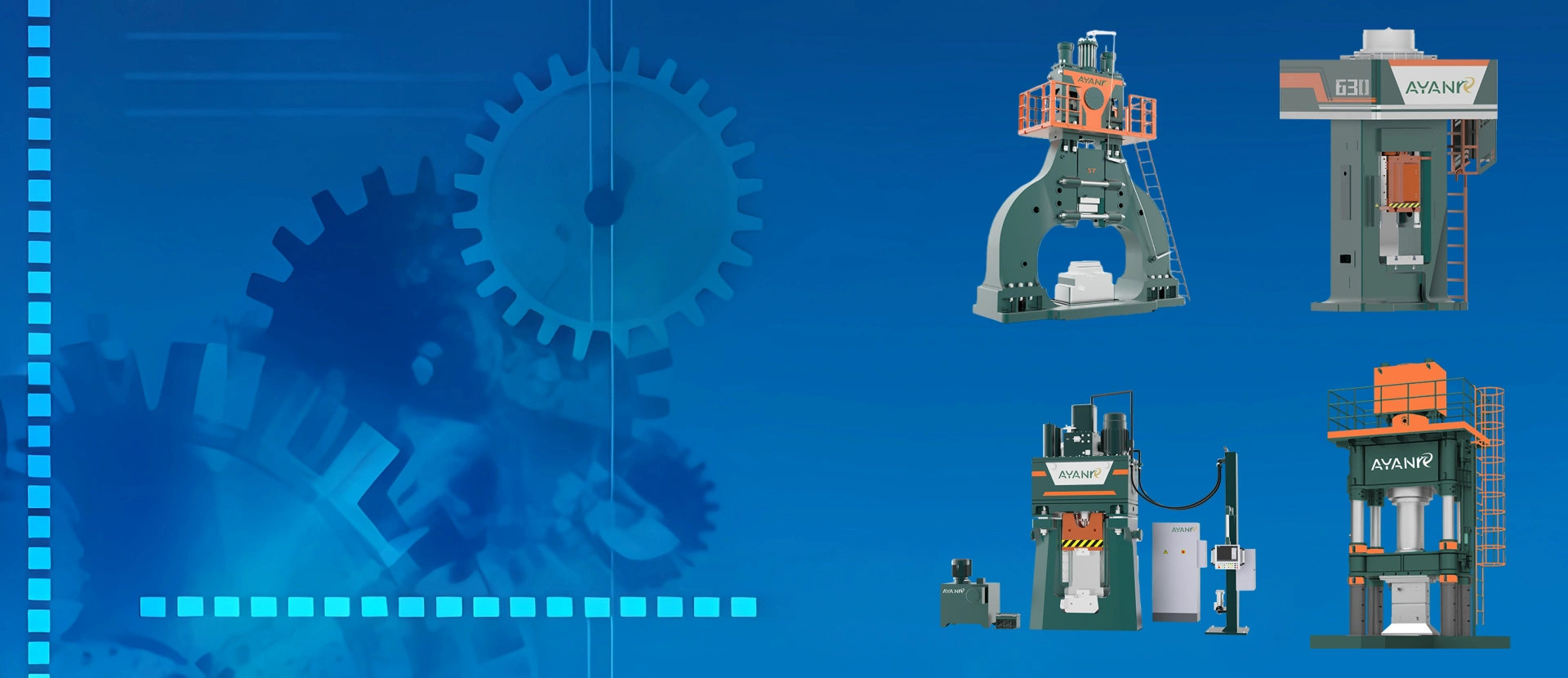
The Y13A series open die forging hydraulic press is indispensable key equipment in the machinery manufacturing industry. Large-scale mechanical equipment used in aviation, shipbuilding, petroleum, chemical engineering, steel rolling and military applications calls for large open-die forgings and large die forgings, and forgings of that size are produced on large open-die forging presses and large die forging presses. The quantity, variety, grade and quality of the forging equipment a country owns is therefore one of the standards used to measure its industrial level.
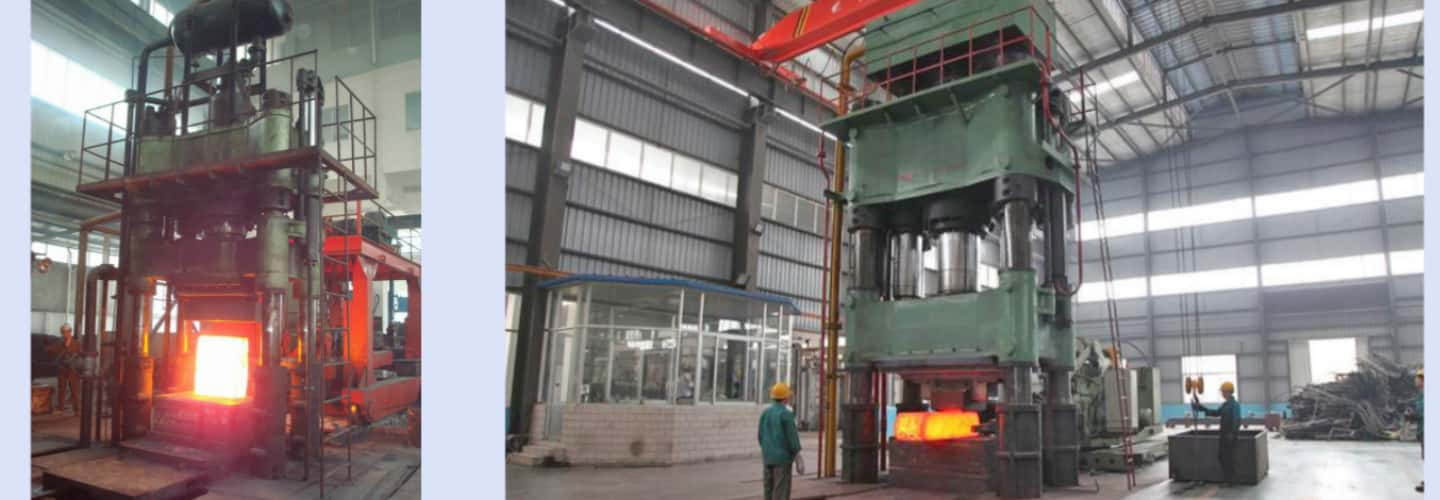
The Y13A series from AYANK FORGING is large open-die forging equipment, built in two configurations: the ordinary open-die forging hydraulic press, and the ring rolling preform dedicated hydraulic press.
This configuration handles open-die forging and die forging of metal materials. It provides fast forging, normal forging and pressure holding, which covers the process steps a forge actually needs - upsetting, drawing out, punching, expanding, bending and offsetting.
This configuration carries an automatic billet centering device and a swing-arm punch device, so upsetting and punching are completed quickly in one sequence. It is built to sit in front of a CNC radial-axial ring rolling mill, where the preform it produces sets what the mill can roll.
The series runs from the Y13A-800 at 8 MN to the Y13A-16000 at 160 MN. What changes across that span is not only force: stroke, daylight and speed all move with size, and accuracy loosens as the press grows, because a bigger frame and a bigger part carry more deflection.
| Item | Range across the series |
|---|---|
| Models | 13, from Y13A-800 to Y13A-16000 |
| Nominal pressure | 8–160 MN |
| Slide stroke | 1,000–4,000 mm |
| Clearance distance | 2,300–7,800 mm |
| Forging speed, down and return | 250–300 mm/s |
| Rapid forging strokes | 20–70 strokes/min, falling as the press grows |
| Dimensional accuracy | ±1 to ±3 mm |
| Travelling worktable, left and right stroke | ±1,000 to ±4,000 mm |
| Total power | 700–12,000 kW |
Two of those numbers decide most of the choice. Nominal pressure sets the cross-section you can work at forging temperature, and clearance distance sets the tallest die stack that will fit between the platens. Slide stroke then decides whether the press can draw a long shaft out in one heat or has to work it in stages.
The 1+1 linkage in the control system is the part buyers tend to under-read. Run the press on its own and every heat is spent partly on handling; link it to a manipulator and the billet turns and advances under program control while the press cycles. That is where the fast-forging rate in the table above becomes achievable in practice rather than on paper. How the two machines are matched is set out on the CNC forging manipulator page.
Open-die forging and die forging of metal materials, including upsetting, drawing out, punching, expanding, bending and offsetting. It is built for the large shafts, discs, rings, blocks and flanges that aviation, shipbuilding, petroleum, chemical, steel rolling and military equipment need before machining.
The ordinary press does the full open-die process with fast forging, normal forging and pressure holding. The ring rolling preform press adds an automatic billet centering device and a swing-arm punch, so it can upset and punch a preform quickly for a CNC radial-axial ring rolling mill.
Thirteen models from 8 MN to 160 MN nominal pressure. Slide stroke runs 1,000 mm to 4,000 mm, clearance distance 2,300 mm to 7,800 mm, and total power 700 kW to 12,000 kW across that span.
Dimensional accuracy is plus or minus 1 mm up to the Y13A-4000, plus or minus 1.5 mm on the 5000 to 8000, plus or minus 2 mm on the 10000 and 12500, and plus or minus 3 mm on the 16000. Accuracy loosens with size because the frame and the part both deflect more.
Rapid forging runs 60 to 70 strokes per minute on the small models and falls to 20 to 25 on the Y13A-16000. Forging and return speed is 250 to 300 mm/s throughout the series, and the 0.3 s three-stage unloading is what keeps the changeover between strokes that quick.
Yes. The control system offers manual adjustment, manual operation and semi-automatic operation, and it supports 1+1 linkage with a manipulator, which is the configuration that turns the fast-forging rate into real output.
Send your forging drawing or part details — we will recommend the machine that fits and quote it.
Receive the news that you are interested in.
