1.In the mining industry, steel balls are used as grinding media in grinding mills to crush various metal ores such as iron ore, copper ore, and gold ore.
2.In the cement industry: used in raw material mills, cement mills, coal mills and other grinding stages.
3.In the thermal power industry: used as grinding media in power plant coal mills (medium-speed mills, ball mills).
4.In the metallurgical and chemical industries: used for grinding various minerals, quartz sand, ceramic raw materials, etc.
Therefore, they also play an irreplaceable role in modern industrial applications!
The manufacturing processes of steel balls are divided into three types: casting, forging, and rolling.
Casting: The quality of cast steel balls mainly depends on the chromium content. In recent years, factors such as the continuous rise in chromium prices and environmental protection have led to increased costs for cast steel balls.
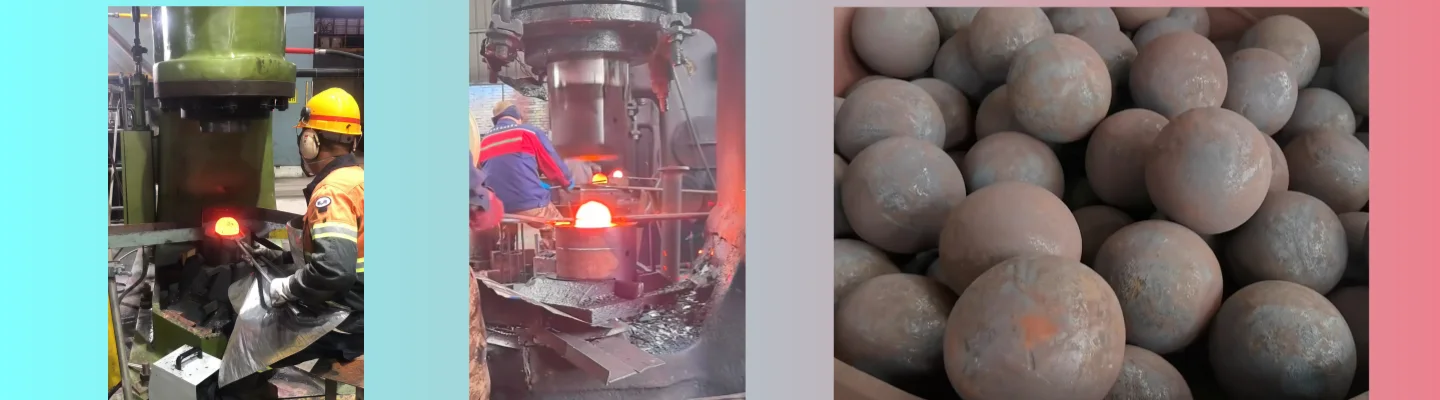
Forging: Using high-manganese steel as raw material, steel balls are made with pneumatic forging hammers combined with ball molds. Forged steel balls have a reasonable combination of alloy elements such as high-carbon manganese and chromium. Their production heat treatment has strong hardenability, small difference in internal and external hardness, and differences in impact value, making forged balls more robust compared to cast balls.
Rolling: Using high-manganese steel bars as raw material, steel balls are made with a skew rolling mill equipped with spiral rolls.
If the same material is used, the quality of steel balls made by different processes is different:
Casting < Rolling < Forging
Due to the natural solidification of molten steel, defects such as loose internal structure and pores are inevitably caused, leading to cracks, eccentric wear, and out-of-roundness during the grinding process.
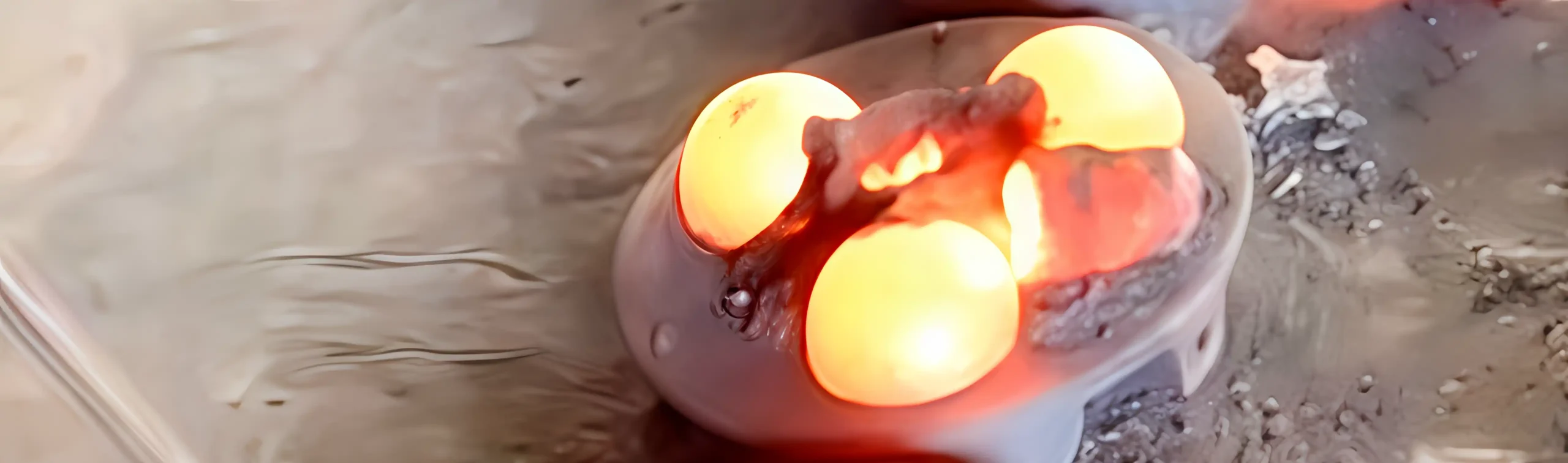
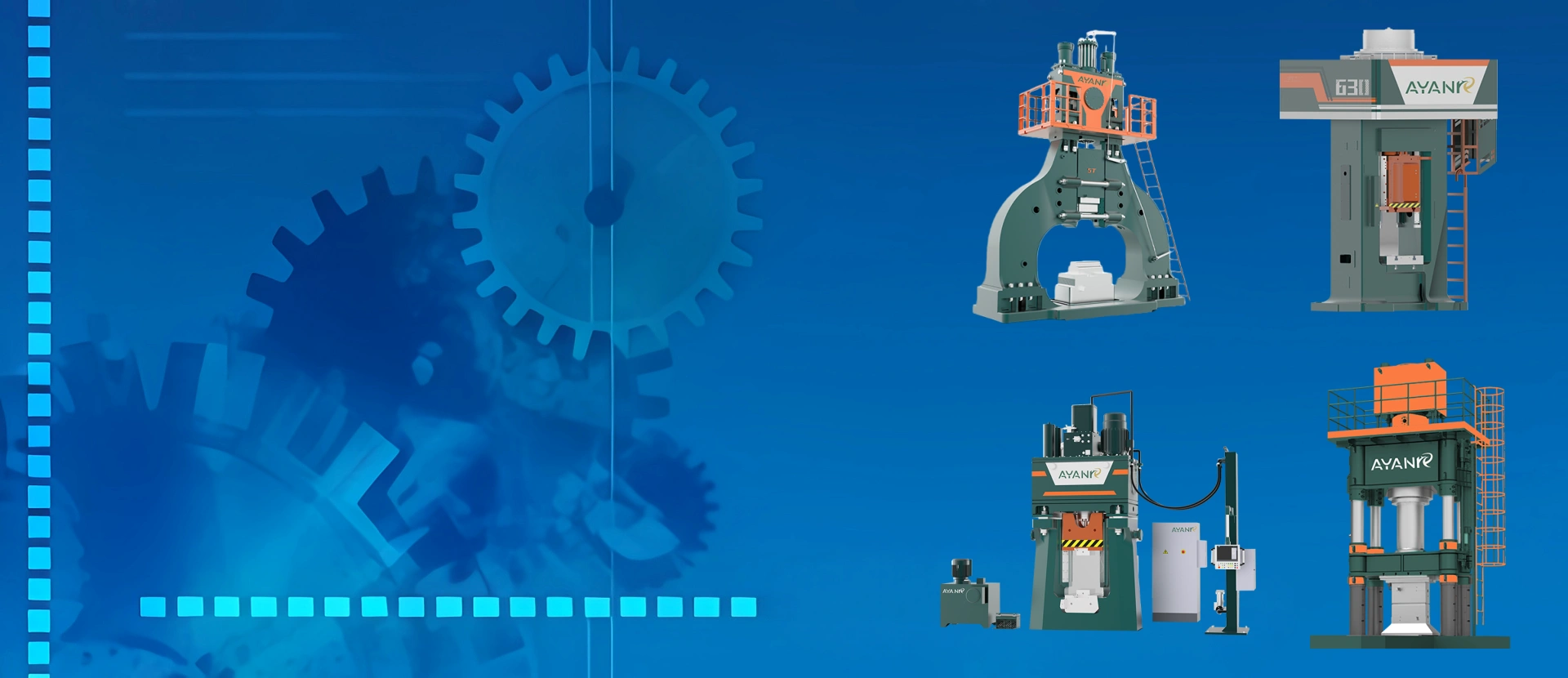
Because forged steel balls possess all the advantages of forging, the quality of forged steel balls is the best. Forged steel balls have the characteristics of low investment and quick startup, but they rely on manual labor and have low output.AYANK FORGING is a manufacturer in China that has been continuously producing pneumatic hammers for nearly 70 years; it is the only enterprise in China whose air forging hammer has won the national highest quality award (Silver Award). AYANK can provide pneumatic hammers specially designed for forging steel balls.
The C41 series pneumatic hammer has the following features:
Low investment, quick startup, and a wide range of steel ball diameters that can be produced.
The raw material can be either hot-rolled round steel or hot-rolled steel billets, with no limit on billet length.
Easy to organize production.
The steel balls produced have high overall hardness, high impact toughness, low breakage rate, and will not deform.
The hardness of rolled steel balls is lower than that of forged ones, but the production efficiency and degree of automation are higher.
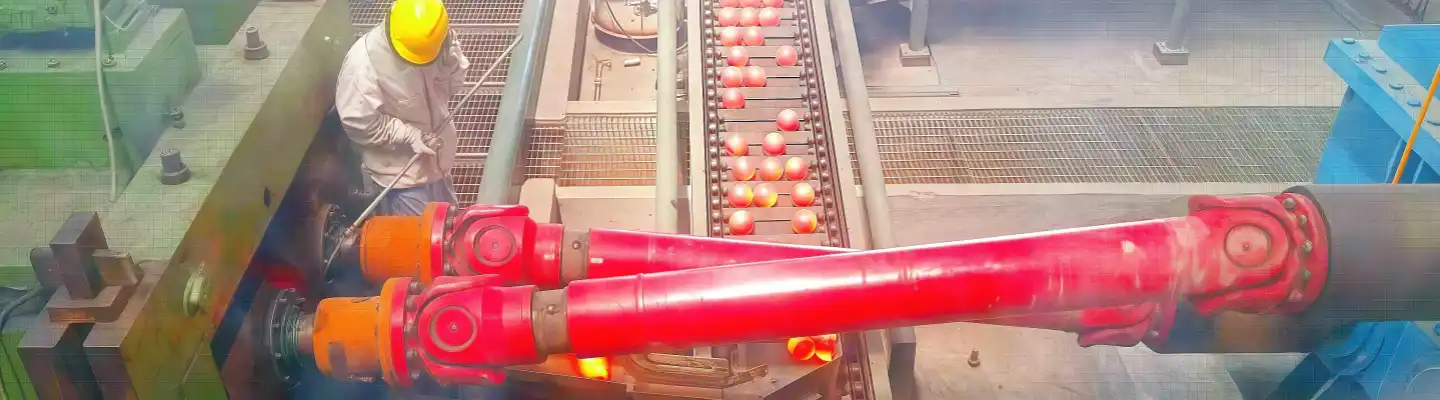
AYANK's hot-rolled ball mill steel ball production equipment, after multiple innovative designs, has the following features:
Integrated roller box design with good rigidity;
Simple adjustment and easy operation;
Firm locking and high stability;
Quick and efficient guide plate replacement. It provides assurance for stable, efficient, and high-quality operation of the steel ball rolling production line.
If you want to choose steel ball making equipment suitable for yourself, factors such as output, steel ball diameter, cost, and labor need to be considered. Through years of development and accumulated experience in forging equipment research and development, AYANK FORGING has launched design consulting services, which can provide professional advice based on customer needs in terms of forging process design, forging equipment selection, overall line process layout, auxiliary system configuration, etc.
If you want to purchase steel ball making equipment, welcome to contact our AYANK team!
What are the differences between the various processes for producing steel balls?
Receive the news that you are interested in.