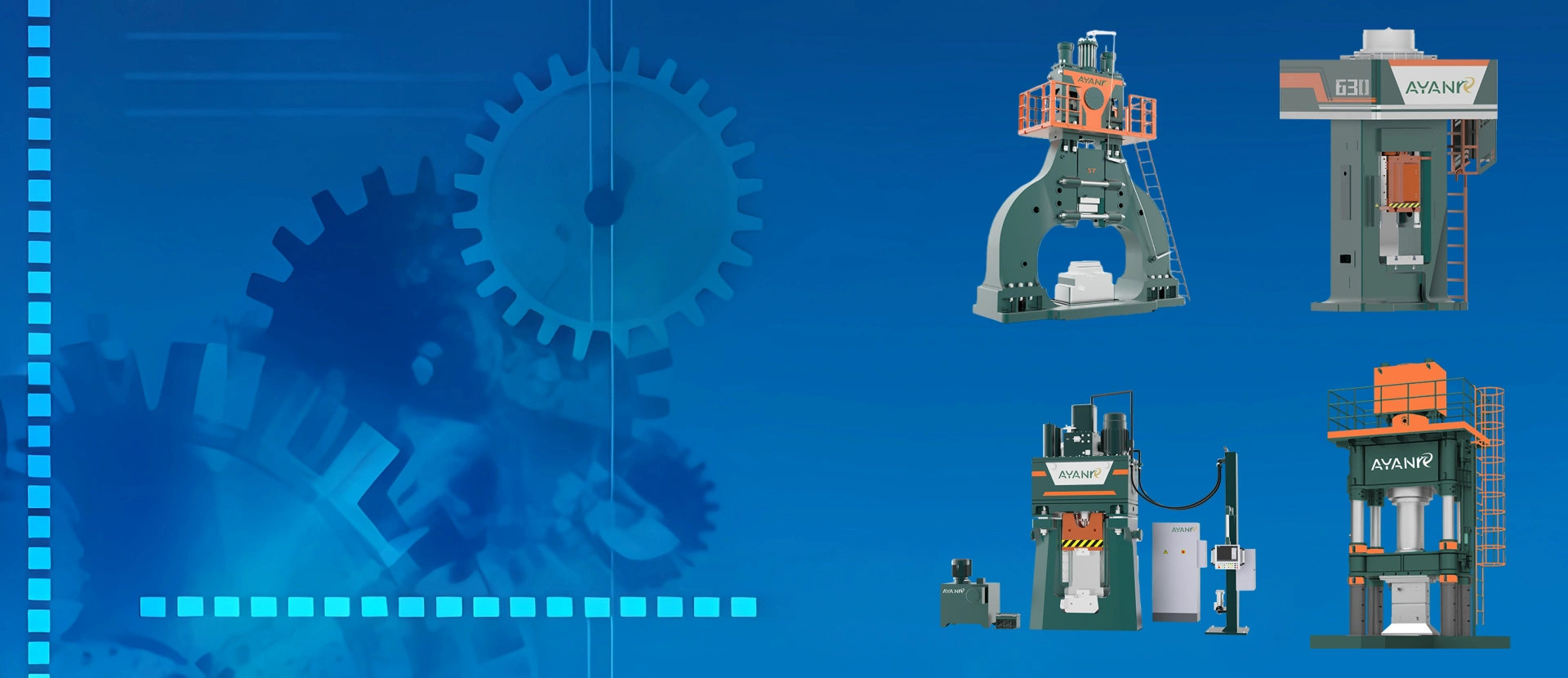
The pneumatic hammer is a type of free forging equipment. It performs punching, shearing, forge welding, drawing out, upsetting, twisting and bending on forgings, and with a die pad it can also carry out various types of open-die forging. It is widely used in the forging industry at home and abroad. Because the machine works from compressed air, it is called a pneumatic hammer.
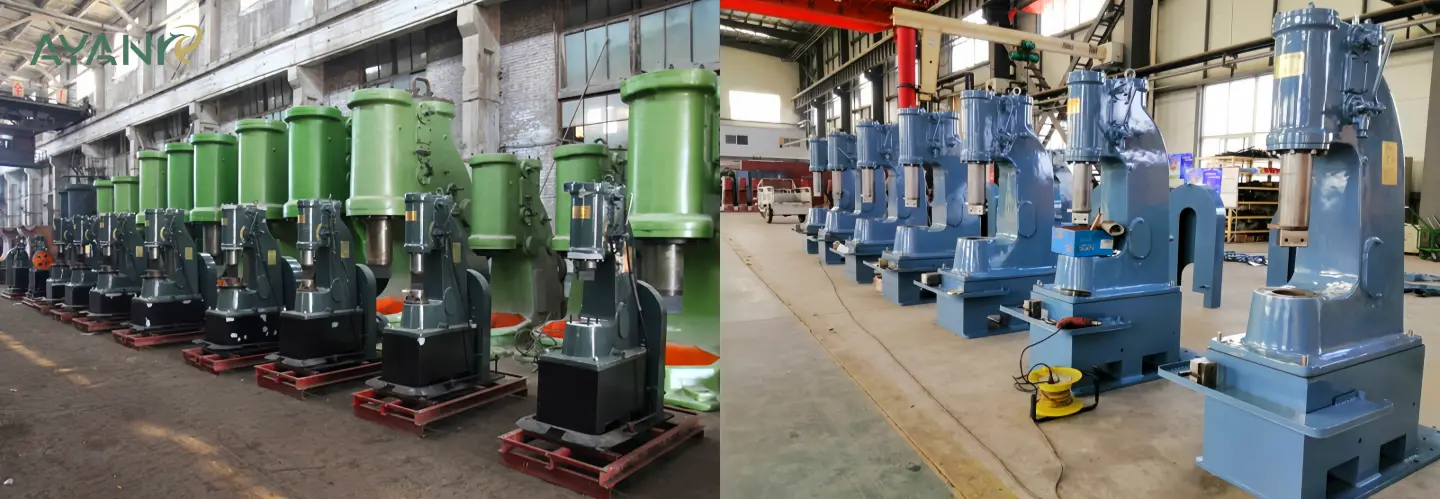
There are many brands on the market and prices vary widely, so the question is worth taking seriously. A pneumatic hammer is not a consumable. A high-quality machine can run for decades in a harsh factory, which means the purchase price is only the first of the costs it carries.
A machine that fails early costs you three times: the repair, the production lost while it is down, and the argument with a supplier who cannot respond. Choosing quality first saves economic cost, time cost and after-sales cost at once.
AYANK FORGING was founded in 1956 and is a forging equipment group that integrates forging design, consulting, equipment supply, installation and maintenance. That gives the company more than 70 years of professional experience in building forging equipment. AYANK exclusively drafted the national standard for pneumatic hammers, and the C41A series has won the National Product Quality Silver Award, the only highest award in China's pneumatic hammer industry.
AYANK pneumatic hammers are sold in the domestic market and exported to 98 countries and regions, including Germany, the United States, Japan and the United Kingdom. The company holds strong technical capability: its technology research and development centre is the Henan Provincial CNC Forging Equipment Technology Center and a postdoctoral research base, staffed by nearly a hundred professional technicians and holding more than 40 patents for forging equipment technology.
From raw material to finished machine, every hammer goes through multiple complex processes and strict quality inspection. Behind that sit the R&D engineers and the people on the shop floor, and the distributors AYANK keeps in many countries who provide local service and after-sales support to the customers who run these machines.
AYANK FORGING offers a complete pneumatic hammer range, from the small C41A-15 to the C41A-110, and from the C41A-150 up to the C41A-2000. The table below is the published specification for the series:
| Model | Weight of falling part (kg) | Blow energy (kJ) | Max. blow frequency (blows/min) | Motor power (kW) |
|---|---|---|---|---|
| C41A-15L | 15 | 0.16 | 300 | 2.2 |
| C41A-25L | 25 | 0.27 | 250 | 3 |
| C41A-40L | 40 | 0.53 | 245 | 4 |
| C41A-55L | 55 | 0.7 | 230 | 7.5 |
| C41A-75L | 75 | 1 | 210 | 7.5 |
| C41A-110L | 110 | 1.98 | 180 | 15 |
| C41A-150L | 150 | 2.5 | 180 | 18.5 |
| C41A-250B | 250 | 5.6 | 140 | 22 |
| C41A-400B | 400 | 9.5 | 120 | 30 |
| C41A-560B | 560 | 13.7 | 115 | 45 |
| C41A-750B | 750 | 19 | 105 | 55 |
| C41A-1000L | 1,000 | 27 | 95 | 75 |
| C41A-2000L | 2,000 | 54 | 80 | 132 |
Two columns carry most of the decision. The weight of the falling part sets how big a section the hammer can work; the blow energy sets how much deformation it delivers in a single blow. Read across a row and you can see the trade-off the series is built around: as the falling part grows from 15 kg to 2,000 kg, blow energy rises from 0.16 kJ to 54 kJ, but the maximum blow frequency falls from 300 blows per minute to 80.
That single trend answers most of the question. A small, fast hammer suits light work that is handled many times a minute, such as drawing out and finishing small forgings. A heavy, slower hammer suits the big section that only moves under a large energy input. Matching the two is the whole job of selection.
The maximum malleable blank is the third number to check, and it is the one buyers most often miss. Each model is rated for a maximum square and a maximum round section, from 30 × 30 mm and Φ35 mm on the C41A-15 up to 350 × 350 mm and Φ400 mm on the C41A-2000. If the largest section in your order book sits at the top of a model's range, go up one size rather than plan to run the machine at its limit every shift.
Four things sit outside the machine itself, and all of them are cheaper to settle before the order than after it arrives:
Only after those four are settled does price become a fair comparison, because a cheaper machine that needs a new compressor or a rebuilt foundation is not cheaper.
They describe the same family of machines. A power hammer is the general term for a hammer driven by air, steam or mechanical means; a pneumatic hammer is the air-driven type, which is what the C41A series is.
The small end of the range, from the C41A-15 to the C41A-110, covers sections from 30 × 30 mm up to 110 × 110 mm with blow energies from 0.16 to 1.98 kJ and high blow frequency for light, repeated work.
The C41A-2000 is rated for a 350 × 350 mm square or Φ400 mm round malleable blank, with 54 kJ of blow energy and a 2,000 kg falling part.
It works on a planned inspection cycle rather than a fixed interval. Daily checks on air lines, lubrication and the ram guide, plus scheduled inspection of the valves and die fixings, are what keep a machine running for decades.
Because the moving mass rises. The C41A-15 strikes up to 300 times a minute with a 15 kg falling part, while the C41A-2000 strikes up to 80 times a minute with 2,000 kg. Energy per blow goes up as frequency comes down.
Yes. AYANK machines are exported to 98 countries and regions and supported through distributors in many countries who provide local service and after-sales support.
How does a blacksmith choose the right power hammer for himself?
Receive the news that you are interested in.
