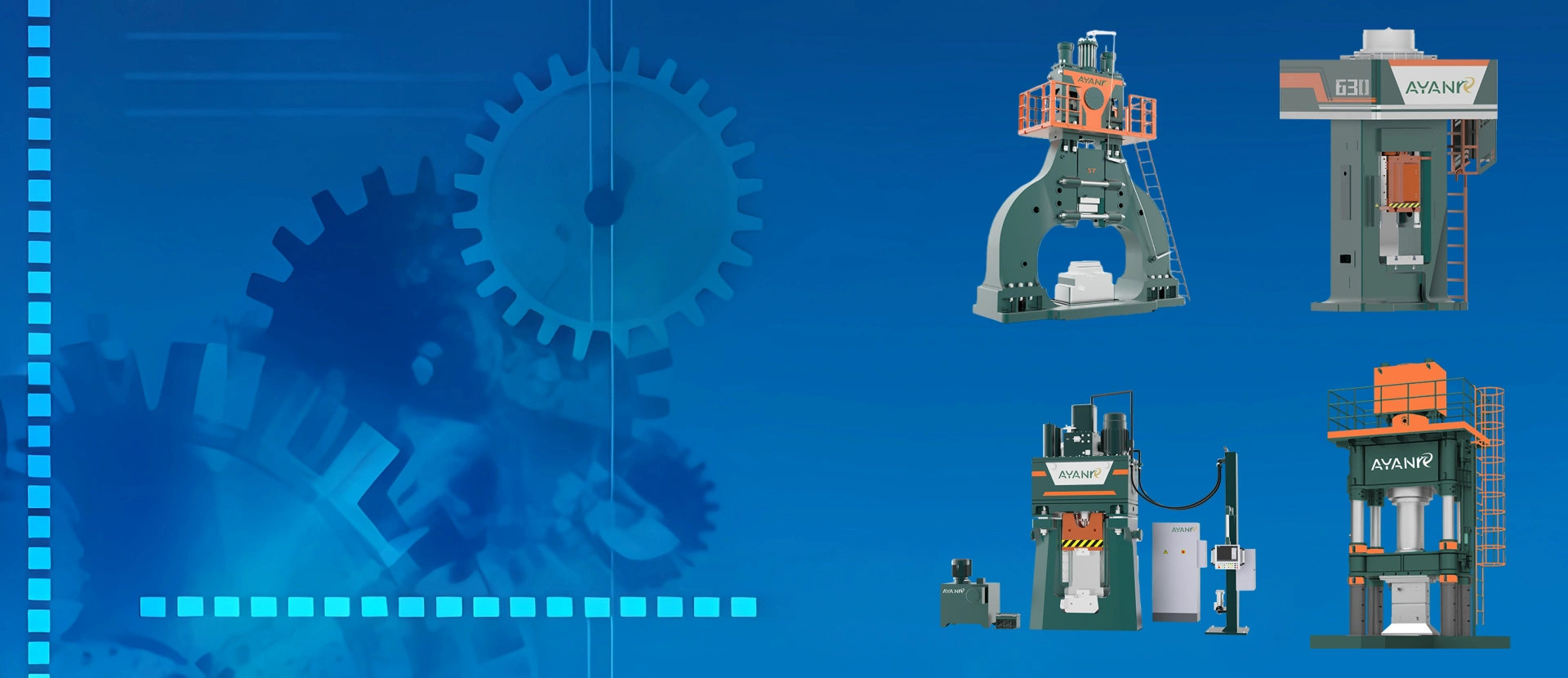
Both machines are used for die forging, but they solve different problems. The hammer delivers a fast, repeated blow into a multi-cavity die; the friction screw press delivers a slower, energy-limited squeeze into a single cavity. The comparison below sets out where each one holds the advantage.
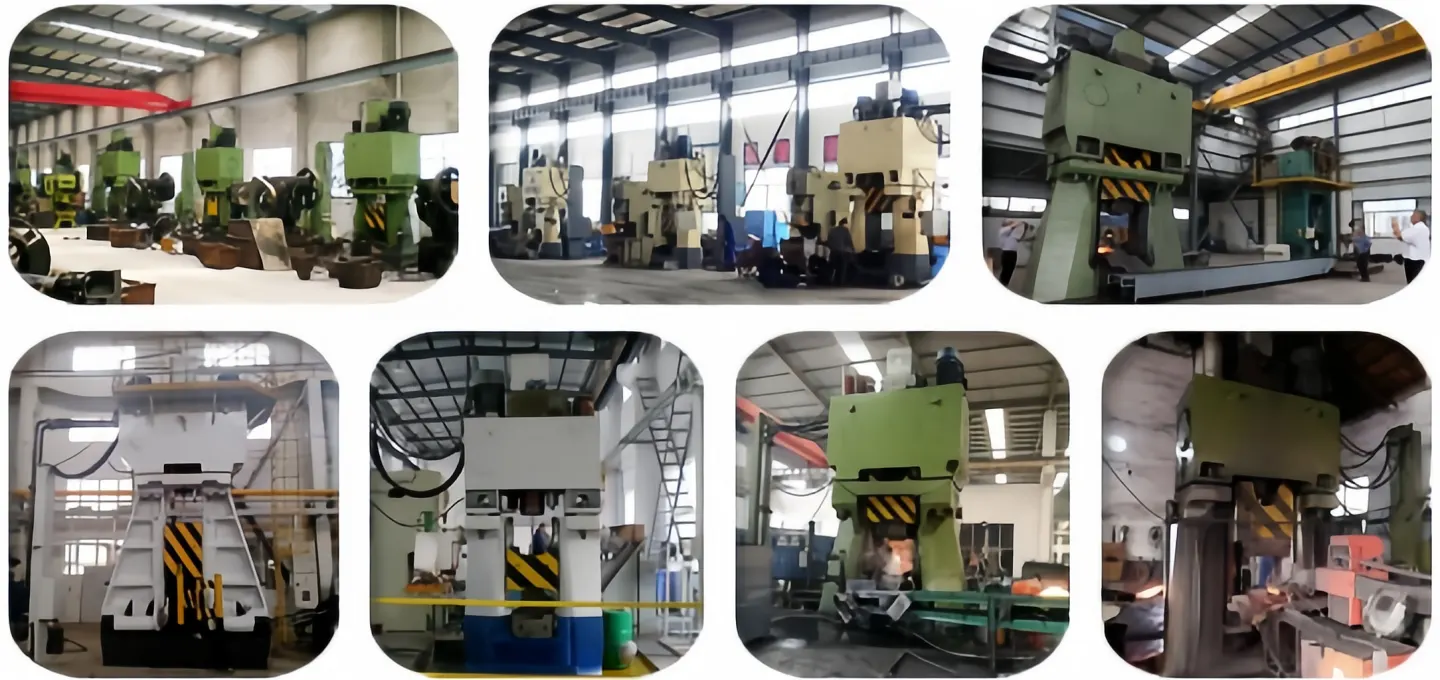
The CNC die forging hammer is forging equipment used for producing various die forgings under medium or mass production conditions. It can perform multi-cavity die forging. Because of its simple structure, high productivity, low cost and adaptability to die forging processes, it is a commonly used forging machine.
The outstanding advantage of the CNC die forging hammer is its fast striking speed, which results in short contact time with the die. That makes it particularly suitable where high-speed deformation is needed to fill the cavity — forgings with thin ribs, complex shapes and tight weight tolerance. Because of its fast and flexible operation, its adaptability is very strong, and it is sometimes called “universal” equipment. The forging hammer remains the forming machine with the best performance-to-price ratio.
The AYANK C92KA series CNC die forging hammer carries the same advantages as a traditional hammer, and adds high frequency, high precision, low energy consumption, long die life, easy operation and easy maintenance.
High frequency comes from the hydraulic system, which lets the ram obtain greater energy within a shorter stroke: short-stroke, high-speed, high-frequency continuous forging becomes practical, which is what makes rapid forming possible. No other forging equipment matches this. The striking frequency of the CNC hammer is 70–90 times per minute; a friction screw press runs at 6–15 times per minute.
Precision comes from the U-shaped integral frame with an X-type radial guide rail structure, together with the hydraulic and electrical control systems. The U-shaped frame holds rigidity while improving the motion accuracy of the ram, and the digital programmable control system keeps the striking energy consistent whatever the operator does — which is what holds forging precision steady across a shift.
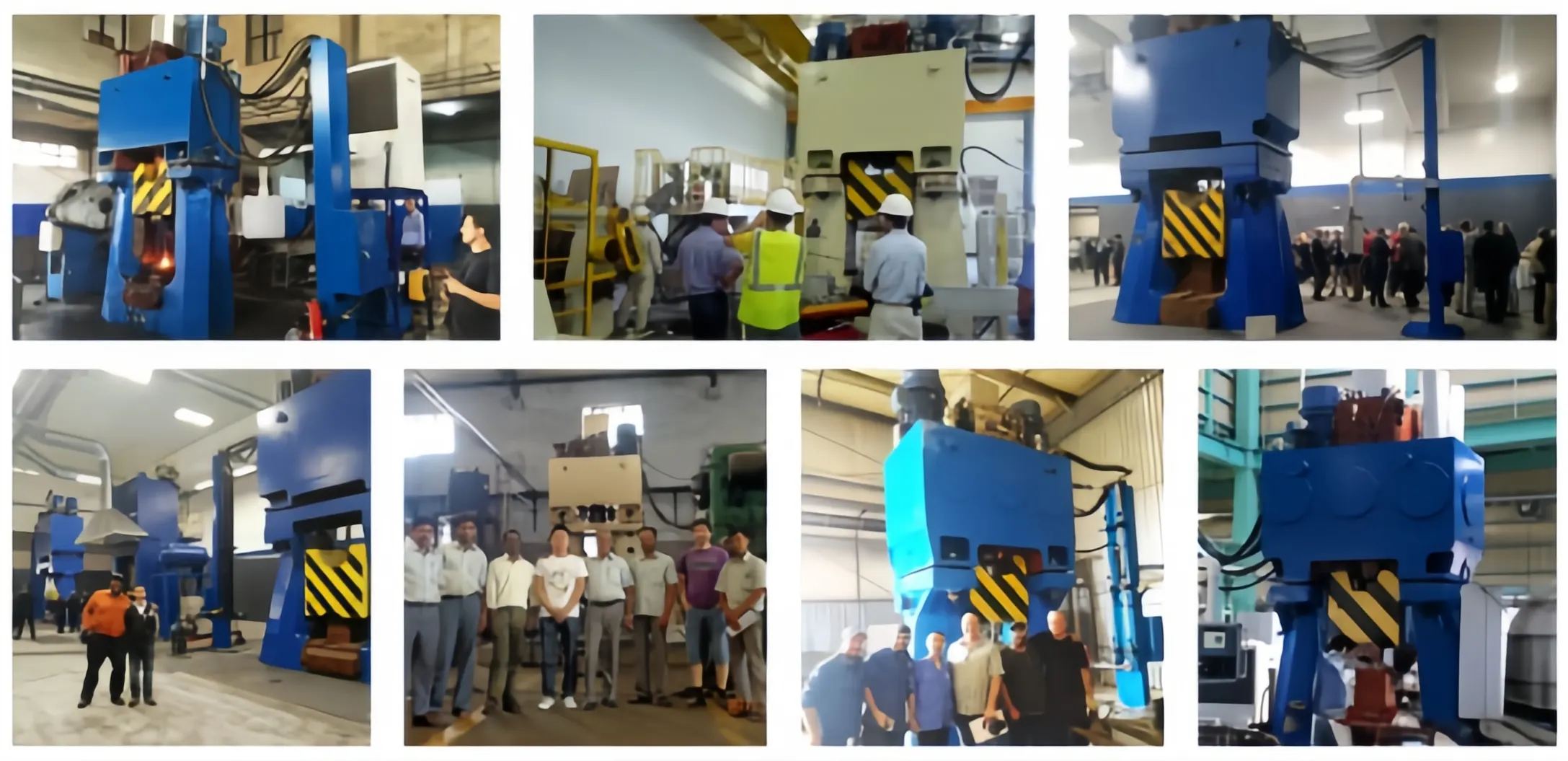
Because the drive is fully hydraulic, energy utilisation is more than twenty times higher than that of a traditional forging hammer. And because the striking energy is programmable, the hammer uses only the energy the deformation needs: excess striking energy is itself a waste.
The C92KA works on a high-speed, short-stroke principle. Maximum striking speed reaches about 6 m/s, forming time is as short as 5–15 ms (friction screw press: 30–150 ms), and cold-strike time on the die is about 2–3 ms (friction screw press: 30–60 ms). Impact loss and thermal loss on the die therefore drop sharply. Precise digital energy control then matches the delivered energy to the deformation work, so the die is not damaged by energy the forging does not need.

The friction screw press carries the working characteristics of both the die forging hammer and the hot die forging press: there is a degree of impact during operation, the slide stroke is not fixed, and the force between slide and worktable is taken by the frame of the press. Its die forging behaviour follows from that:
The slide moves slowly and strikes with a mild impact, which allows several strikes and deformations in one cavity. It can deliver large deformation energy for bulk operations such as upsetting and extrusion, and large deformation force for small-deformation operations such as coining and embossing.
Against the CNC die forging hammer, the forging screw press withstands eccentric load less well. It is normally used for single-cavity die forging, with preforming done on separate equipment; two cavities are possible only where the eccentric force stays small, such as bending plus finish forging, or upsetting plus finish forging. Tonnage, low working speed and the need for auxiliary preforming equipment are the other limits.
Because of its structure, the friction screw press transmits little vibration outwards, so the foundation is simpler than a hammer's and generally needs no damping arrangement. Infrastructure cost is lower.
The CNC die forging hammer is a PLC-controlled programmable striking device that can be extended into a fully automated line. And because it can run multi-cavity forging, an automation upgrade for relatively complex parts — the ones that need preforming and blocking — needs almost no extra auxiliary equipment.
Both machines have their own character in forging work, and in many fields they can replace one another. The selection has to be made against the forgings you actually run and the direction the plant is heading, so that investment cost stays low and the return stays high.
Receive the news that you are interested in.
