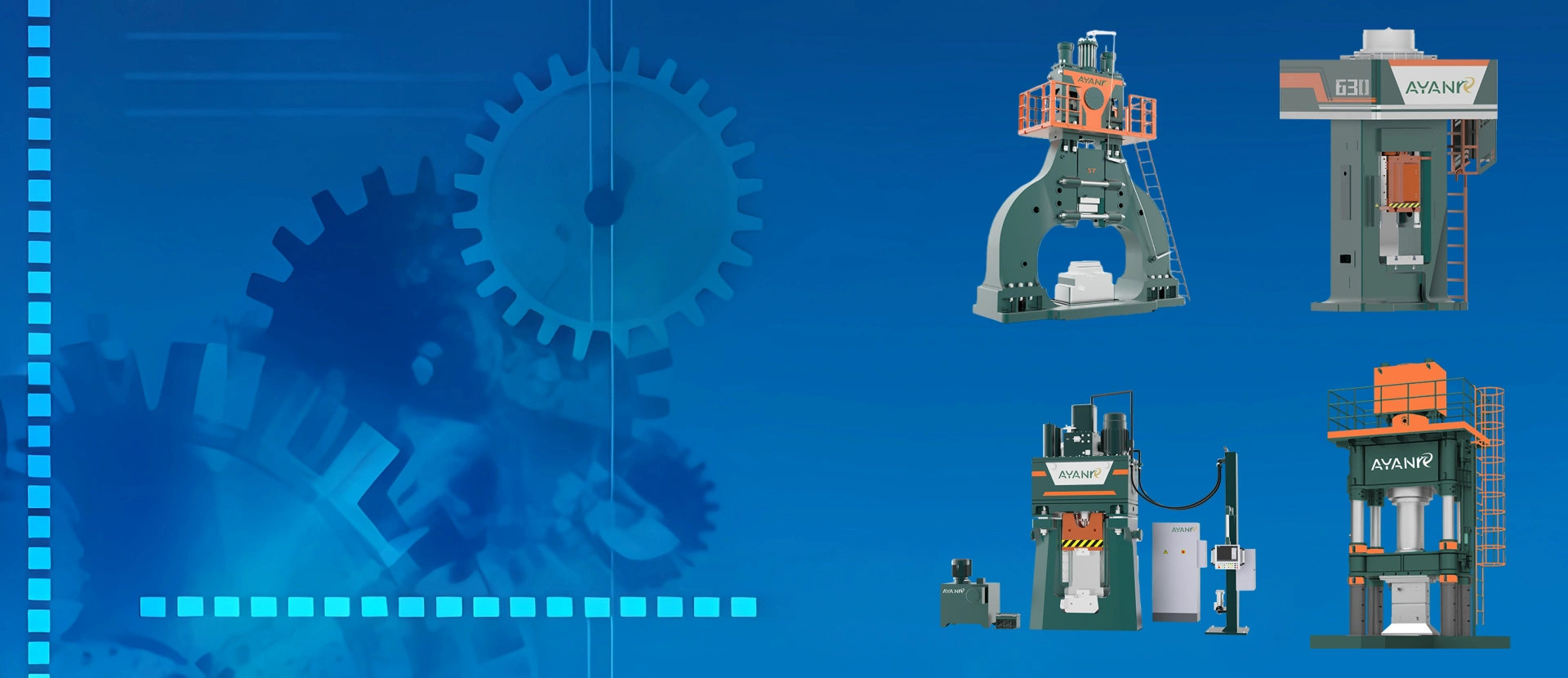
AYANK FORGING is a forging equipment manufacturer with 70 years of production history. Design, manufacturing, installation, service and automation upgrades of that forging equipment all sit under one roof, and the machines are exported to Germany, Japan, Turkey, India and 98 other countries and regions. That combination of process knowledge and in-house build capability is what puts the company among the leading representatives of Chinese forging equipment and automation.
Industry standards. The company took part in drafting the industry standard for the C41A series pneumatic hammer and contributed to five national standards for forging equipment — technical authority that is written into the standards other makers build to.
Quality certification. The C41A pneumatic hammer holds the National Silver Award for Quality and the plant is ISO 9001 certified.
R&D and testing. A provincial R&D center, a national forging hammer research institute, a physical and chemical laboratory, dedicated quality inspectors and three-level NDT qualified personnel — the infrastructure behind both the technology and the quality claim.
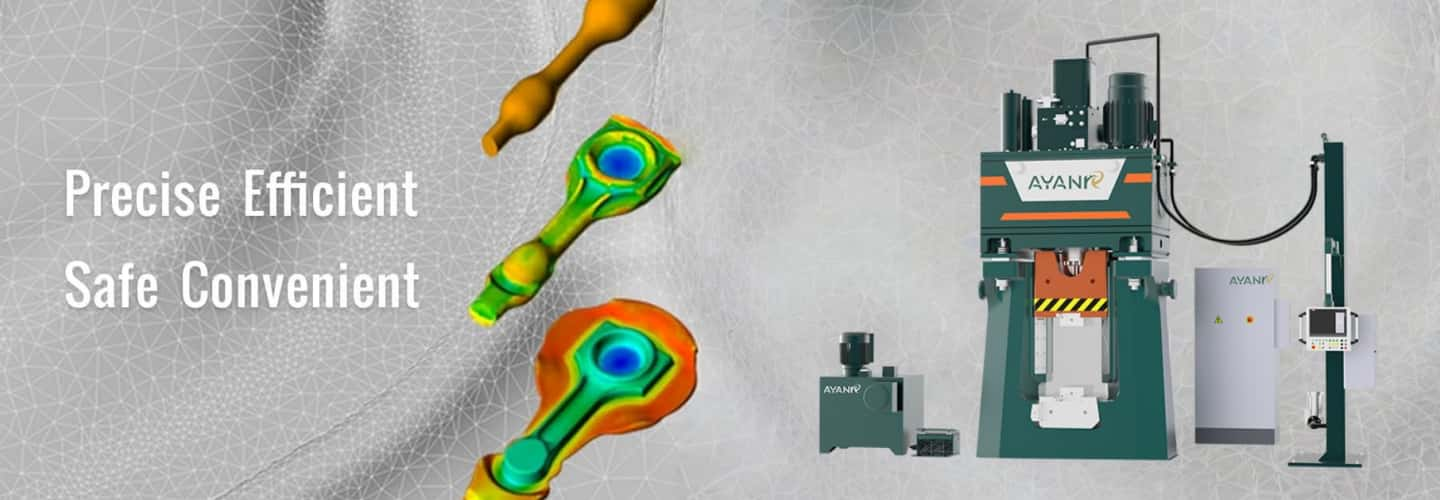
Applications. Automotive, motorcycle, engineering machinery, hydraulic fittings, hardware tools, construction hardware, household hardware, medical equipment, kitchen hardware, agricultural tools and hand tools, wherever high-volume precision die forging is needed. It also handles high-density special-shaped parts, high-precision thin-walled forgings and aerospace work, which is why it is the core machine on automatic precision forging lines.
Technical strength. AYANK built China's first 50 kJ CNC fully hydraulic die forging hammer in 2005, breaking the foreign monopoly, then introduced the world's first 250 kJ machine and larger tonnages — the type also known as a programmable hammer. The C92K-625 kJ is currently the largest of its kind in the world and meets the quality standards demanded in the US, Europe and Japan. It demonstrates top-tier capability in large structural component machining and complex hydraulic integration, with forging precision matching German levels.
Product features. A slide valve structure holds striking energy to ±1.5%. Programmable digital control makes it possible to forge thin-walled parts, irregular shapes, thin-rib parts and forgings with tight tolerances, which covers complex work in hardware tools, shipbuilding and railway supply.
Core advantages. Dimensional error of ±0.2 mm and weight error of ±0.3 g, with a surface finish that needs little downstream work. Millisecond control and ±1.5% energy repeatability give high output at high striking frequency. A closed oil tank and two-stage filtration raise resistance to contamination, which is where the long service life and low maintenance come from. A single large imported accumulator supplies the stored energy for repeated high-energy blows, keeping the hydraulic system stable and the process efficient. The intelligent control system handles automatic energy adjustment, process optimization, multi-station signalling, remote diagnostics and fault finding, and it records the parameters of each forging process. Safety is covered several times over: a safety lower seal, a cylinder-top buffer, high and low pressure safety valves and a support interlock; the buffer cylinder on the hammer rod provides hydraulic throttle cushioning and a flexible limit, and the oil-blocking flap on the lower seal cuts the external connection automatically if the hammer rod breaks.
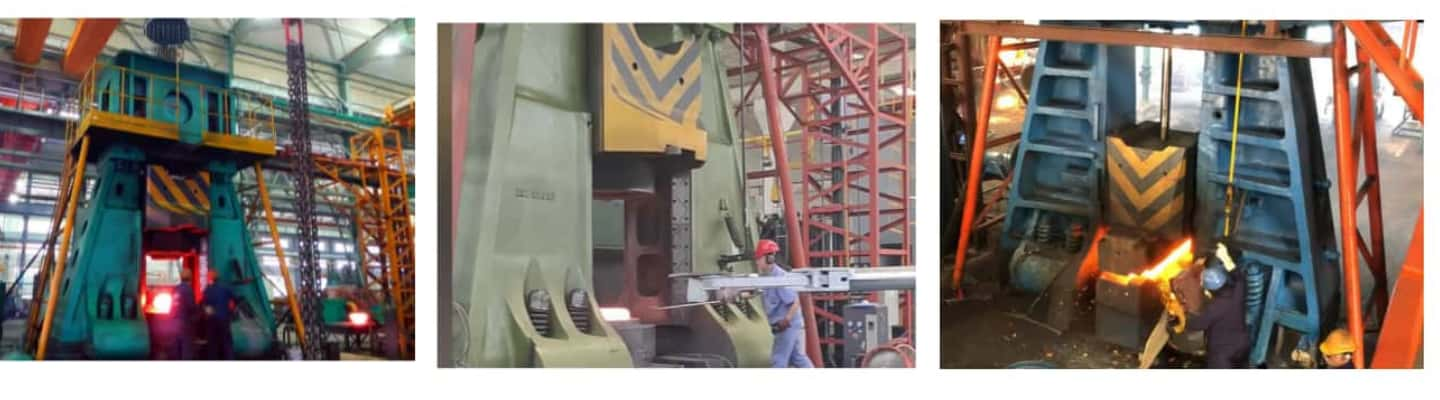
Overview. A fully hydraulic drive with constant high-pressure oil supply to the lower piston chamber. It suits a wide range of die forging work and brings high energy, fast frequency, no die clamping, a low failure rate, and the ability to hold the hammer at any position.
Core advantages. The C86YA-630 kJ is the largest fully hydraulic die forging hammer in the world, which speaks to capability in large structural components and complex hydraulic control. Piston and hammer life are extended, energy use is efficient, and the machine adapts well to small and medium batch production.
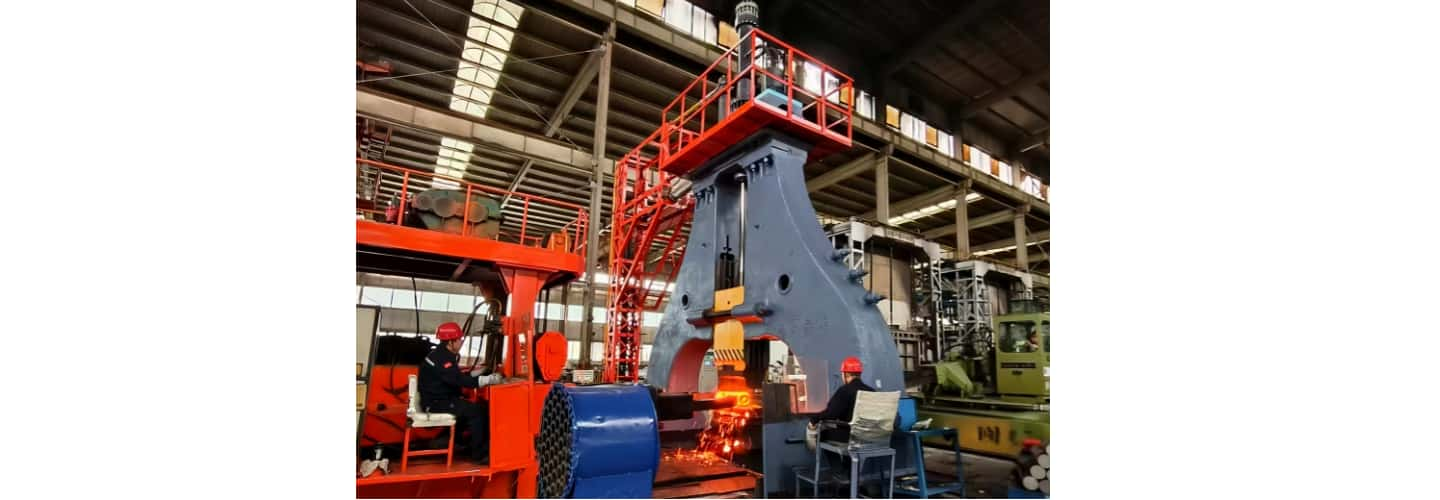
Applications. Modern open-die equipment for free forging and the preliminary forming of metal. It is used widely in heavy equipment, power generation, shipbuilding, petroleum, metallurgy and related industries.
Technical strength. Successive models — C66Y-630 kJ, C66Y-875 kJ and C66Y-910 kJ free forging electro-hydraulic hammers — keep AYANK at the top of the largest open-die tonnage class, concentrated in the part of the market where manufacturing capability is hardest to reach.
Frame stability. A large anvil with a 1:20 hammer-head-to-anvil ratio, plus a base and frame joint designed for the load path, holds the chassis steady and gives the frame high rigidity. Jitter drops, wasted impact energy drops, and the anvil block does not fatigue-crack after years of service. The result is energy concentrated in the forging, a high energy efficiency and a longer machine life.
Hammer rod life. An adjustable pull lever suits different workpiece heights, and the double X guide rails give a long anti-eccentric moment arm. The side loads are taken by the guides instead of the rod, which cuts rod stress and extends rod life considerably.
Output. A servo differential slide valve with a cone valve composite structure (national invention patent ZL200810119517.7) resets hydraulically and passes 10,000 L/min. Response is immediate, so the hammer delivers more than 50 consecutive full-energy blows — higher output, shorter cycles, better economics.
Stable striking energy. A large-capacity accumulator supplies steady energy and frequency and removes the weak blow that appears when the oil heats up. The motor does not have to stay loaded, so oil heating from gas expansion is reduced, motor power draw falls, energy repeatability holds and the machine runs safely through a long shift.
Easy operation. A cylinder-valve integrated pipeless linkage with a servo control valve on its own pilot circuit (patent ZL201020273919.5) and a vertically mounted actuator valve give fast response and fine control. Light blow, heavy blow, slow rise, slow drop and rapid recovery are all available without changing the stroke; there is no hydraulic clamping or local wear. The operator works less hard, the machine runs continuously, and maintenance demand drops.
Safety. A dedicated buffer device, a hammer rod lower seal, and protection for the hydraulic station and pipework. The buffer cylinder above the rod gives hydraulic throttle cushioning and a flexible limit; the oil-blocking flap on the lower seal cuts the external connection automatically if the rod breaks; and mounting the hydraulic station overhead reduces the pipe runs between pump and valve block. That combination removes the risk of oil escape from a broken rod or a leaking pump — no pollution, no fire risk.
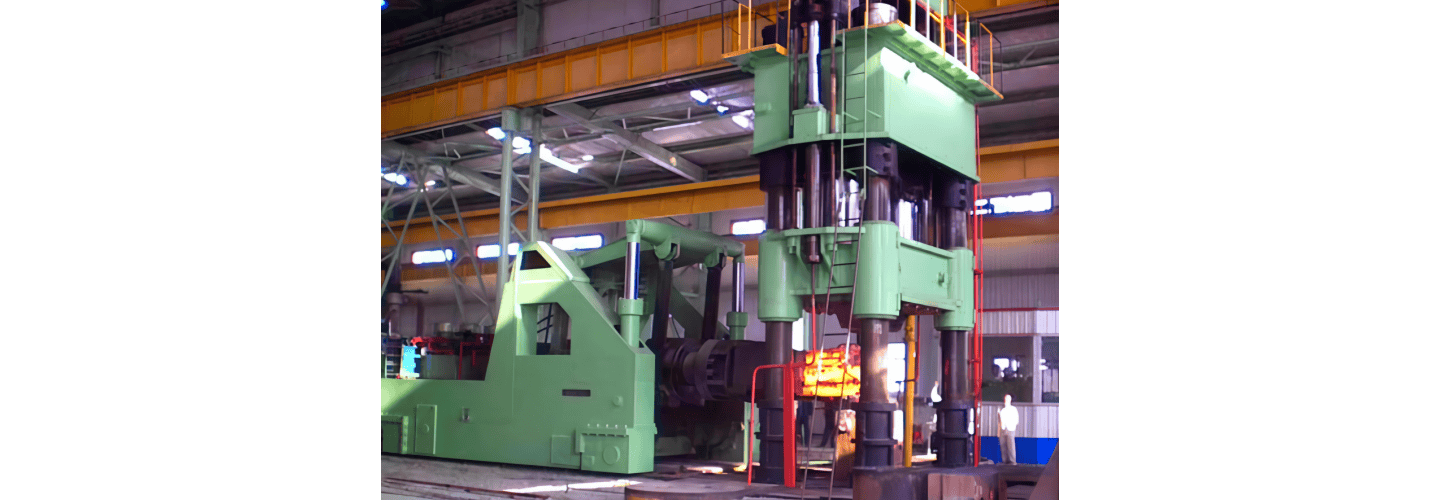
The Y13A runs an advanced control and monitoring system and switches easily between automatic, semi-automatic, manual and linked modes. Auxiliary devices are complete, and the press performs upsetting, drawing out, punching, ring expansion, twisting, bending, offsetting and chopping. Against conventional free forging equipment it forges faster, produces more per shift, holds tighter tolerance, saves energy and automates further.
Core features. The control system supports multi-function interaction and real-time monitoring in several directions; the hydraulic integrated control gives fast, stable, vibration-free movement; remote control from an indoor station simplifies the process and improves safety; a quick die-change device keeps the line moving; a multi-point multi-stage pressure relief system adds stability; and several safety detection devices cover the machine end to end.
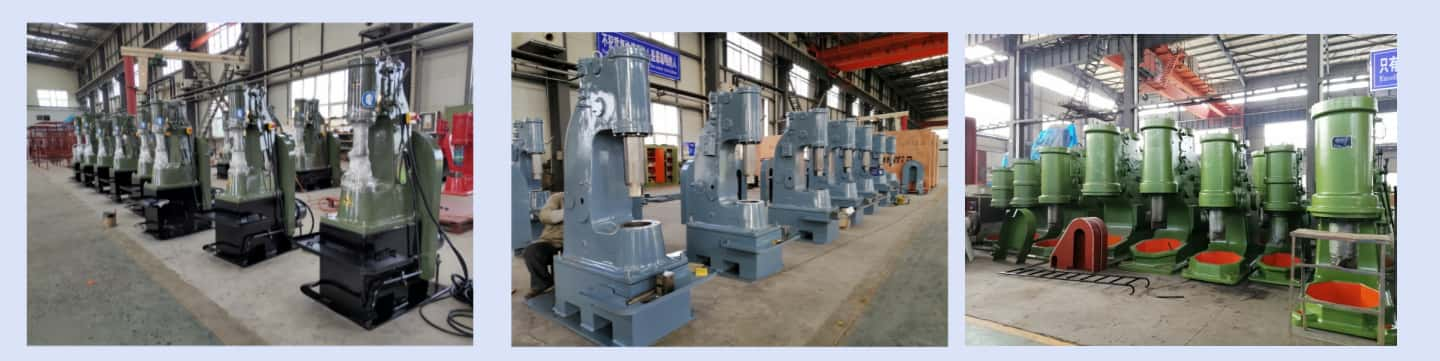
Applications. Drawing out, upsetting, punching, hot shearing, forge welding, twisting and bending, plus simple loose-tool forging.
Core advantages. More than 60 years of continuous production, and AYANK is the drafting unit for the C41A air hammer industry standard. The product holds the National Quality Silver Award, and both the large industrial models and the small blacksmith models are exported to 74 countries and regions including Germany, the United States, Japan and the United Kingdom.
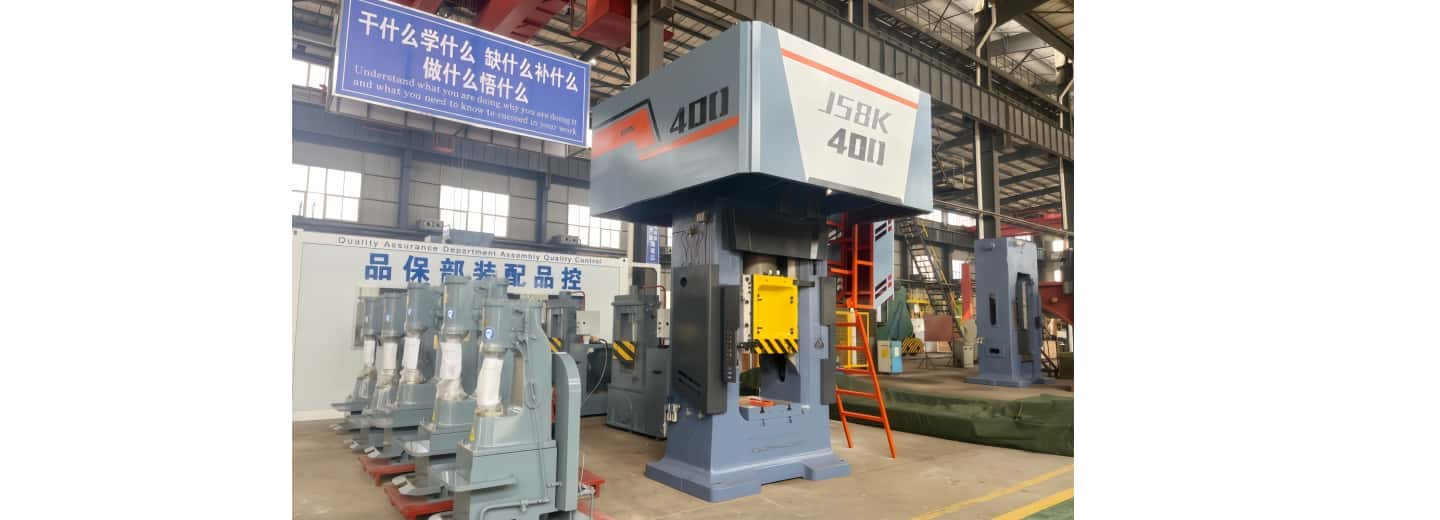
Overview. The J58KA electric screw press runs an intelligent variable-frequency control system with digital control of striking energy, high forging precision, good repeatability, a simple and reliable structure, easy maintenance, low noise, and the working character of both a hammer and a press. It is a green process with wide adaptability, and it has a particular advantage in aluminum, copper and other non-ferrous forging.
Core features. Several frame types can be built to order; frame rigidity and strength are high, with accurate and stable transmission; the flywheel friction overload protection is safe and reliable; the control system supports remote maintenance, online detection, OEE statistics and maintenance reminders; and intelligent modules — quick die change, die spray lubrication, flue gas treatment — can be added, so the machine expands with the line.
Capacity. Built to order from 250 t to 10,000 t, covering everything from small precision forgings to large structural parts.
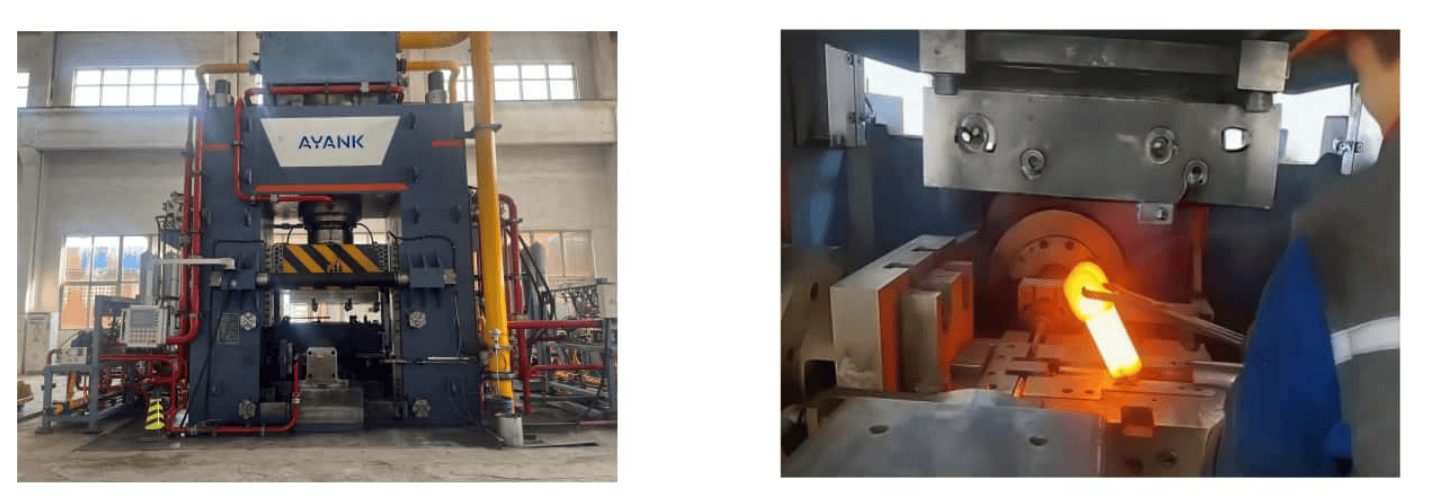
Overview. A new generation of intelligent multi-directional forming equipment: high structural rigidity and accurate guidance, generous die and operating space, fast loading, and a control system that sets the sequence and speed of every axis digitally. It forges bosses and bores in several directions at once, which lifts the mechanical properties of the material. The result is tight tolerance, stable running, short forming time, high output, better forging properties and less material consumed.
Complexity. Eight cylinders work vertically and horizontally, either together in one cycle or in sequence, so complex structural parts come out in a single pressing.
Flexibility. Servo proportional valves with a PLC let the forming sequence, speed and direction be programmed per part, which suits high-mix production.
Speed. A high-flow plunger pump, servo proportional valve and accumulator together give fast approach and a short forming time, and die life runs at roughly double that of a conventional multi-directional press.
Precision. Servo proportional valves with magnetic sensors position each piston rod, which is what holds the forging tolerance in multi-directional forming.
Stability. Structural rigidity and guidance accuracy keep multi-directional offset loads from concentrating stress or distorting the frame, so every part in a batch matches.
Intelligence. The line runs a KUKA robot for loading and unloading, a vision system checks size and quality after forming, and data acquisition devices capture the cycle, so the whole process can be traced.
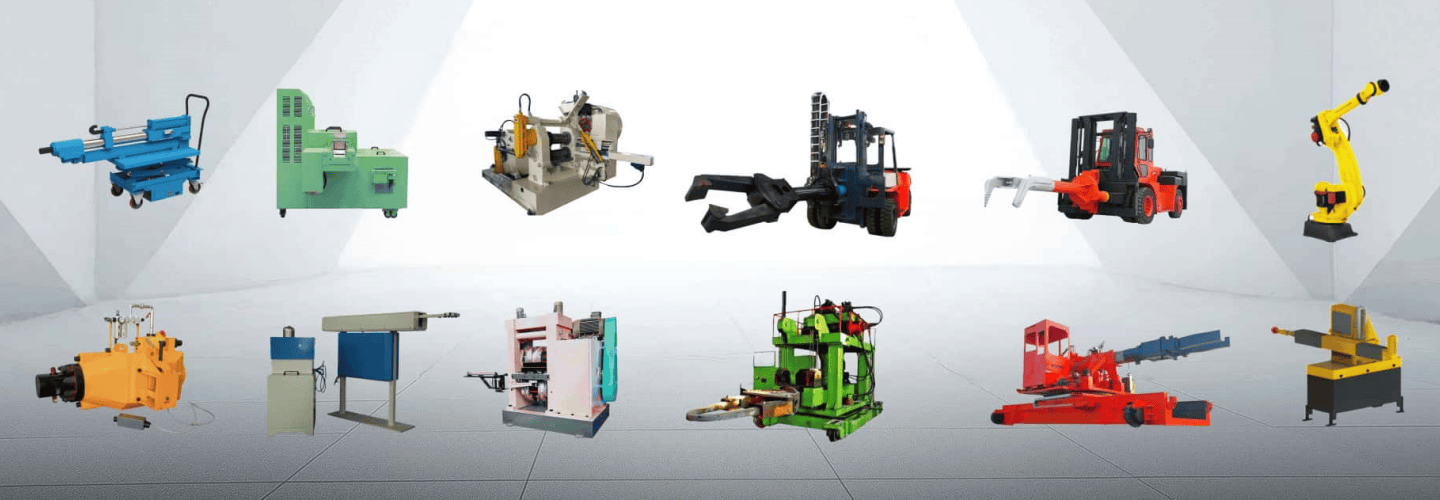
The range covers forging manipulators, billet loading and handling machines, wedge machines, automatic graphite spray equipment and more. Each unit matches the main press so the line forms a complete production link, raising automation, output and safety on installations of any scale.

Compatible equipment. Pneumatic, steam and hydro-pneumatic hammers can all be converted to fully hydraulic electro-hydraulic hammers.
Upgrade options. Steam and air hammers, and standard electro-hydraulic hammers, can gain servo control and remote operation.

Compatible equipment. Steam and air die forging hammers, and electro-hydraulic die forging hammers, can be upgraded to CNC die forging hammers.
Upgrade options. Existing CNC hammers can be fitted with a sealed oil tank system for better stability and cleaner operation.
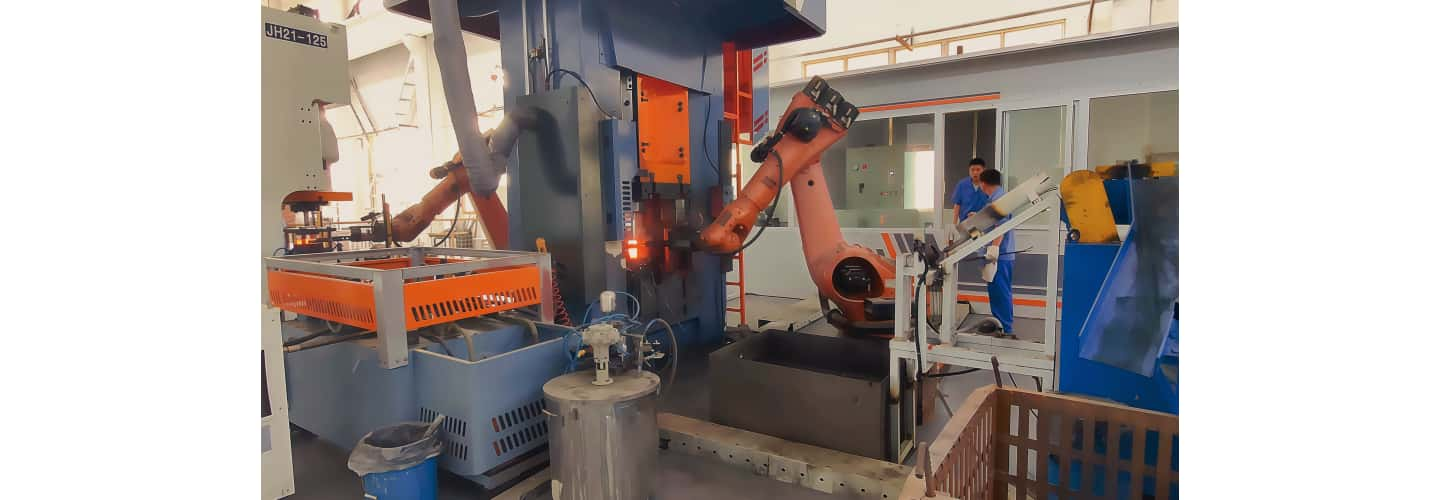
Capability. Process consulting, line design, installation and retrofit as a single service, with in-house capacity from design and machining through assembly and commissioning to quality inspection. Lines have been delivered to dozens of forging plants in China and abroad, covering automotive, engineering machinery, aerospace, hardware tools, shipbuilding, petroleum and wind power, with equipment exported to Germany, Japan, Turkey, India and many other markets.
What sets it apart. AYANK is the only Chinese company running an automatic forging line in Germany — the market with the highest quality bar — which is where the claim to be at the leading edge of Chinese forging equipment and automation actually comes from.
With 70 years behind it, AYANK FORGING works to four principles: expertise in the craft, craftsmanship in service, integrity in dealing and value delivered. The service organization covers every forging and auxiliary machine the company sells — pneumatic hammers, electro-hydraulic hammers, electric screw presses, open-die presses, manipulators and billet handlers.
Equipment health inspection. Engineers assess precision, performance, energy efficiency and safety, then set out preventive maintenance measures.
Overhaul and upgrading. Strip-down, cleaning, inspection, repair or replacement of parts and reinstallation. Upgrades focus on hydraulic and electrical systems for efficiency and environmental compliance.
Relocation and reinstallation. Dismantling, refurbishment, foundation adaptation and reinstallation, with performance brought back to the level before the move or better.
Spare parts. Wear parts for electro-hydraulic hammers, CNC hammers and electric screw presses held in stock, with short lead times and OEM quality.
Used equipment. Evaluation, refurbishment, installation and customization for second-hand forging equipment, with maintenance and parts support afterwards.
Remote monitoring. IoT monitoring gives real-time visibility, remote diagnostics and predictive maintenance alerts, which cuts downtime and running cost.
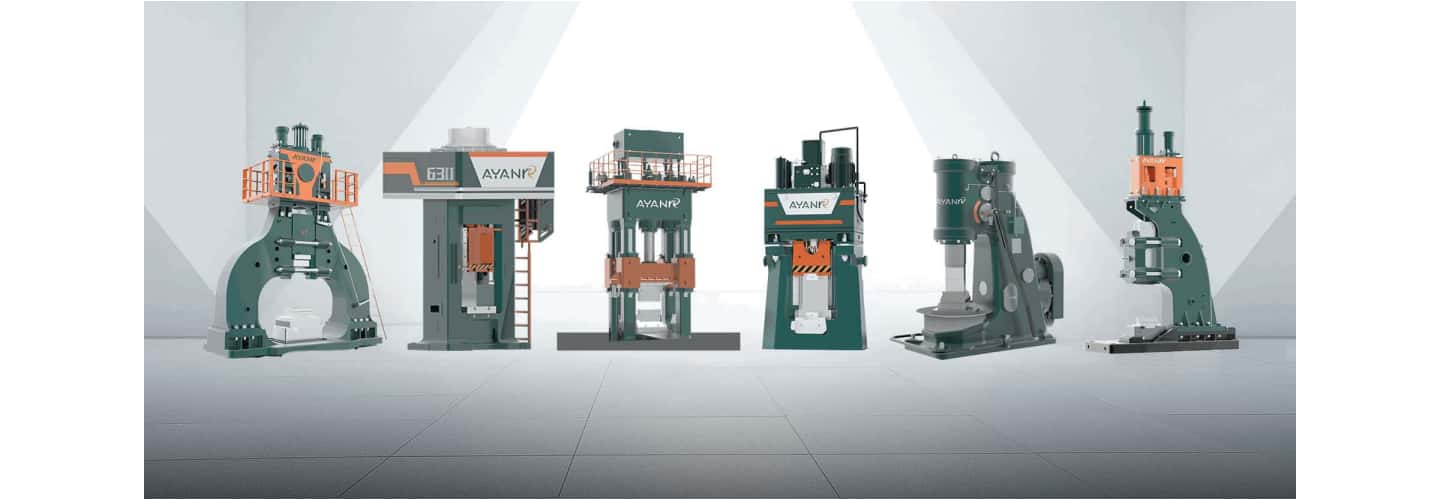
Die forging hammers (C92KA CNC, 16–625 kJ; C86YA fully hydraulic, 25–630 kJ), open-die hammers (C66YA, 35–910 kJ), rapid open-die forging presses (Y13A), pneumatic hammers (C41A, 15–2,000 kg), electric screw presses (J58KA and J58ZK, 250–10,000 t) and multi-directional forging presses (Y16A), together with manipulators, billet handlers, die spray systems and complete automation lines.
The C92KA is programmable and holds striking energy to ±1.5% with ±0.2 mm dimensional error, which is what thin-walled, thin-rib and tight-tolerance parts need, and it is the machine that anchors an automated line. The C86YA is the simpler machine to run: no die clamping, the hammer stops at any position, and it suits general die forging and small to medium batches. If the part is complex in more than one plane, the Y16A multi-directional press forms it in a single cycle instead of several.
Yes. Pneumatic, steam and hydro-pneumatic hammers can be converted to fully hydraulic electro-hydraulic hammers, and die forging hammers can go further to CNC control with a sealed oil tank system. The frame, foundation and tooling stay in place, which is where the cost saving sits.
Equipment health inspection, overhaul and upgrading, relocation and reinstallation, stocked spare parts, used-equipment refurbishment, and IoT remote monitoring with predictive maintenance alerts.
Send the part drawing, the material, the blank size and the daily output. We match the model to the heaviest section you forge every week rather than to the largest part you might quote for once — our guide to choosing a forging hammer walks through the same logic.
Tell us what you forge, in what material and section, and how much you make in a day. We will come back with a selection plan, a cycle-time estimate and a price.
Receive the news that you are interested in.
