The material selection and forming process of the slide carriage not only determine its performance but also affect its manufacturing cost and market share. This article takes a certain slide carriage (made of SAE1025 material) as an example to analyze and elaborate on its forging forming process and the layout of a fully automatic forging production line.
Whether it is a large overhead conveyor or a small linear slide, the slide carriage is the execution unit for automatic material handling and transfer, and an indispensable "joint" in factory automation. It acts like a flexible "bridge" or "carrier", with its core function being to support, guide, and transmit motion, allowing objects to run stably and efficiently along a preset track. Smooth operation, low wear, low noise, long life, adaptability to complex spatial routes, and extremely high wear resistance are the foundation of automated logistics.
A high-performance slide carriage can significantly extend equipment life and reduce downtime due to failures, making it an indispensable component in modern industrial production. Choosing a reasonable slide carriage material and forging forming process is the guarantee of slide carriage quality. A well-laid-out fully automatic production line is the basis for strong market competitiveness of slide carriage products.
Taking the slide carriage produced by AYANK's customer as an example, the slide carriage drawing and dimensional
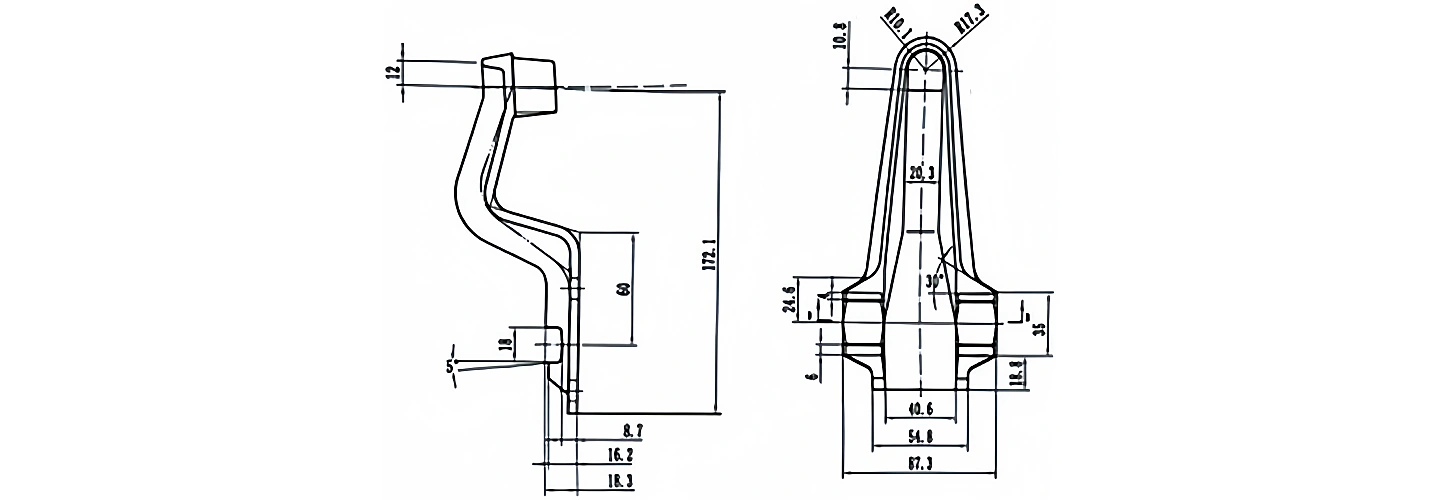
Figure 1 Slide Carriage Dimensional Parameters
The slide carriage material is SAE1025, the raw material diameter is φ38mm, the workpiece heating temperature is 1180°C, the friction coefficient is 0.3, and the die preheating temperature is 300°C. The forging process steps for a certain slide carriage are: cutting → heating → roll forging → pre-forging → final forging → trimming, as shown in Figure 2.

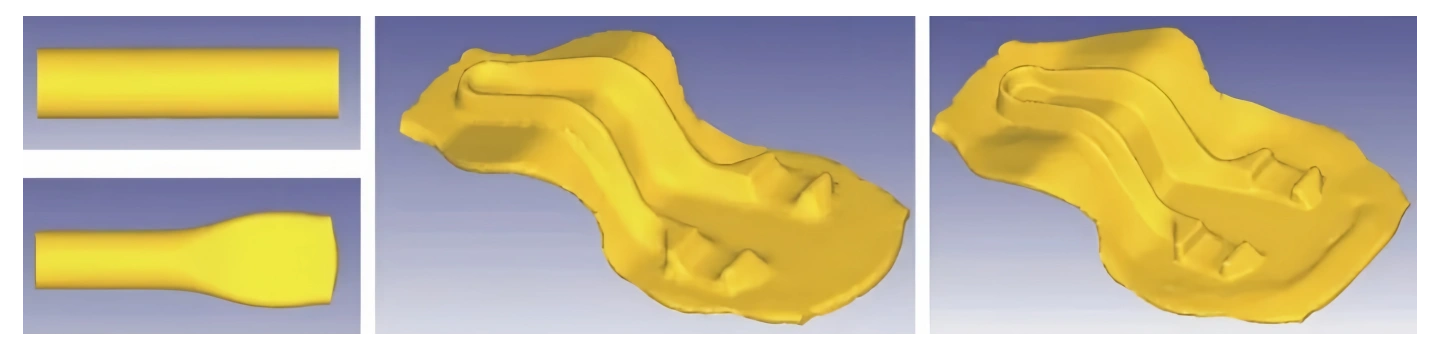
Figure 2 Slide Carriage Forging Process Steps
Roll forging is a continuous forming process of metal between rolls, and its flattening deformation is complex, making it difficult to precisely control based solely on traditional experience. Using the finite element method for simulation analysis, the main purposes are process optimization, defect prediction, mechanism understanding, and design guidance, as shown in Figures 3, 4, and 5.

Figure 3 Blank model of a certain slide carriage

Figure 4 End state of roll forging
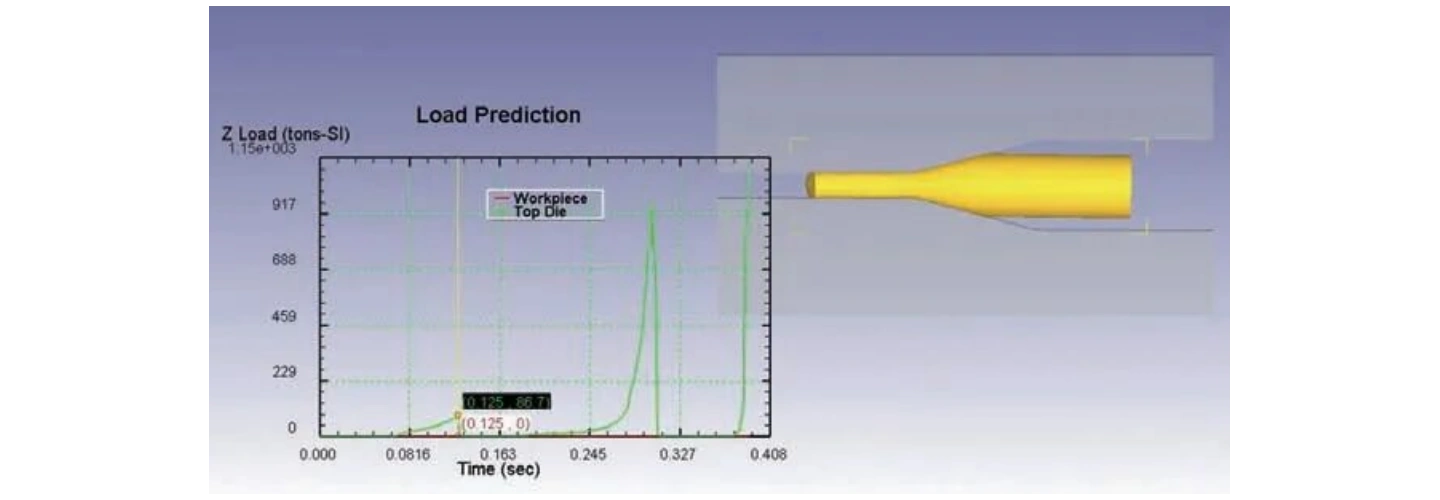
Figure 5 Forming force analysis diagram
Based on the above simulation analysis, when the die preheating temperature is 300°C, the workpiece heating temperature is 1180°C, and the friction coefficient is 0.3, the roll forging forming force is 880 kN. Slide carriage pre-forging simulation analysis: Pre-forging simulation plays a key role in process design and defect control. Its ultimate goal is to connect upstream and downstream processes and obtain high-quality final forgings through scientific optimization, as shown in Figures 6 and 7.

Figure 6 Initial state of pre-forging

Figure 7 End state of pre-forging
Based on the above simulation analysis, when the die preheating temperature is 300°C and the friction coefficient is 0.3, the slide carriage pre-forging forming force is 9600 kN. Slide carriage final forging simulation analysis: Final forging simulation is not only the last step to verify the process but also the bridge connecting design and final product performance, as shown in Figures 8, 9, and 10.

Figure 8 Initial state of final forging

Figure 9 End state of final forging
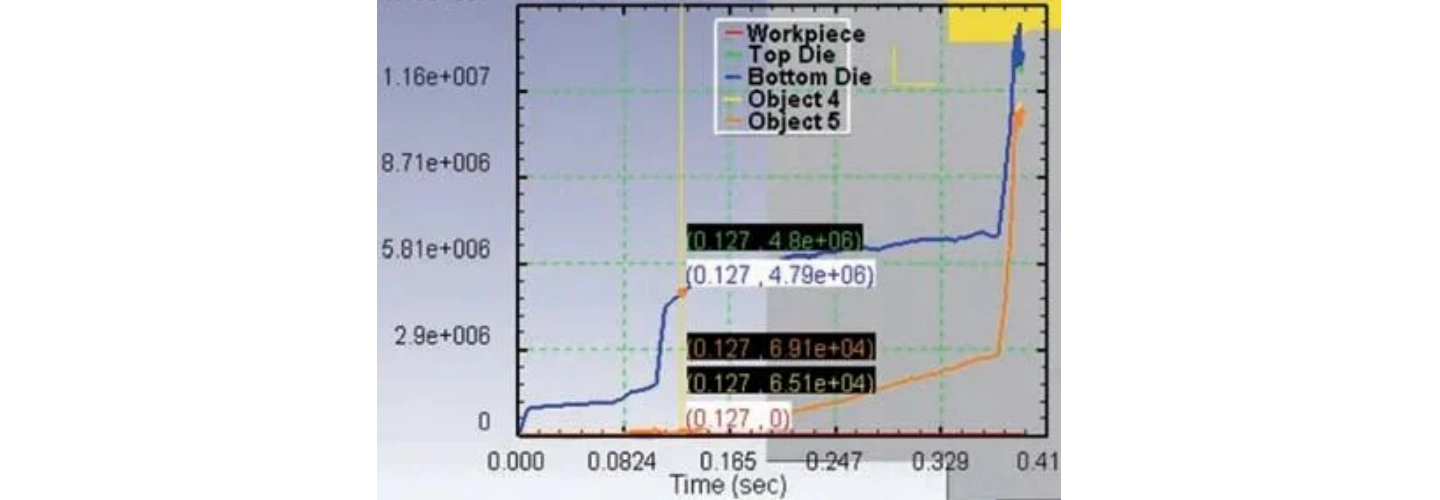
Figure 10 Final forging forming force analysis diagram
Based on the above simulation analysis, when the die preheating temperature is 300°C and the friction coefficient is 0.3, the roll forging forming force is 12100 kN. According to the slide carriage simulation analysis, for equipment selection: it is recommended to use a 12000 kN roll forging machine for roll forging, a 16000 kN press for pre-forging and final forging, and a 1200 kN press for trimming.
Layout Planning of the Fully Automatic Forging Production Line for Slide Carriage Forming
The theoretical production cycle time of this fully automatic forging production line for slide carriages is 15 to 18 seconds.The 3D layout planning of this fully automatic forging production line for slide carriages is shown in Figure 11.
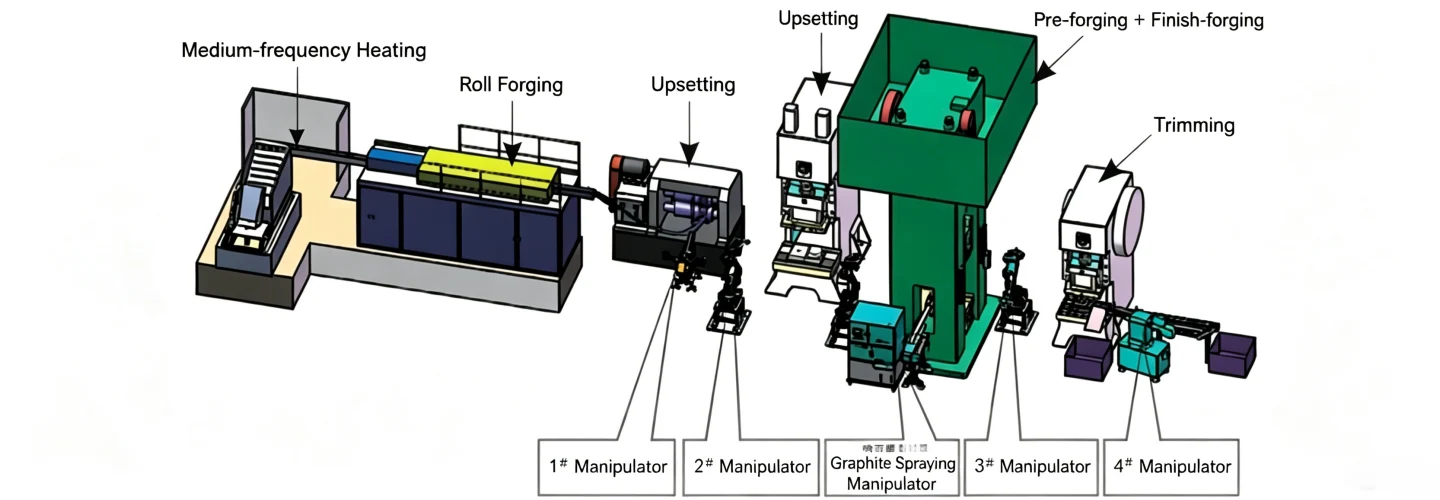
Figure 11 3D Layout Planning of the Fully Automatic Forging Production Line
Introduction to the Control System of the Fully Automatic Forging Production Line for Slide Carriages
(1) Automatic control. PLC is used to control the coordinated actions of the manipulator, forming equipment, and heating furnace. A touch screen operation interface is used for setting various parameters.
(2) Main parameters include operating speed, stroke, production quantity/cumulative quantity, working time, and control authority.
(3) Automatic warnings include: feeder material shortage warning; manipulator missed pick-up and dropped material warning; manipulator abnormal stop warning; forming equipment abnormal stop warning. Multiple photoelectric sensing technologies are used on the equipment to alert operators and ensure operational safety.
(4) Operation modes include automatic mode and manual mode.
(5) Stop modes include power-off stop (by turning off the power button on the operation screen or cutting off the power supply to the equipment), emergency stop (using the emergency stop button in case of an accident; emergency stop immediately halts all movements of the manipulator), single-cycle stop (the equipment stops after completing one cycle), and normal production stop (after producing the required products, the equipment gradually finishes forming the remaining products and then stops). Note: During emergency stop, the power supply to signal lights and the programmable logic controller (PLC) is not cut off, nor is the power supply to solenoid valves and detection switches.
Safety System of the Fully Automatic Forging Production Line for Slide Carriages
(1) Electrical safety. All equipment on this fully automatic forging production line for slide carriages strictly implements grounding protection and leakage protection measures.
(2) Furnace safety. The system is equipped with leakage protection, overcurrent protection, and door-open main power disconnect protection measures.
(3) Manipulator safety. Each manipulator gripper is equipped with a gripping sensor. Missing material or dropping material during operation will trigger a stop alarm.
(4) Forming equipment fault safety protection. Each manipulator is equipped with an escape function. That is, when the forming equipment operates abnormally with consecutive hits (two consecutive presses without a manipulator signal), the automatic forging system will identify it as abnormal, and the manipulator will immediately retreat to avoid being crushed by the forming equipment.
(5) Abnormal furnace automatic material discharge protection. If any abnormality occurs at any position on this fully automatic forging production line for slide carriages, the sorting device of the heating furnace will switch to low-temperature discharge to prevent multiple materials from accumulating and causing furnace failure.
(6) Safety fence. This fully automatic forging production line for slide carriages is installed with a safety fence and safety doors. When the equipment is running, the safety doors must be closed. If a safety door is opened, the equipment will pause immediately.
Conclusion
The AYANK fully automatic forging production line for slide carriages uses simulation-based forging and is assembled into a fully automatic forging production line, which can meet the forging requirements of slide carriages. It replaces the traditional "manpower-intensive tactics" with automated "intensive cultivation". Through precise control, innovative processes, and efficient workflows, it achieves five core values: high efficiency, high quality, low cost, long life, and greater safety. It is a key technological path for modern manufacturing to pursue extreme competitiveness. After verification at the customer site, this fully automatic forging production line improves production efficiency by 35% compared to traditional forging processes, greatly reducing manufacturing costs and enhancing market competitiveness.

Figure 12 shows the forged blanks at the customer site
Receive the news that you are interested in.