Pneumatic Hammer Steel Ball Forging Production Line

Pneumatic Hammer Steel Ball Forging Production Line

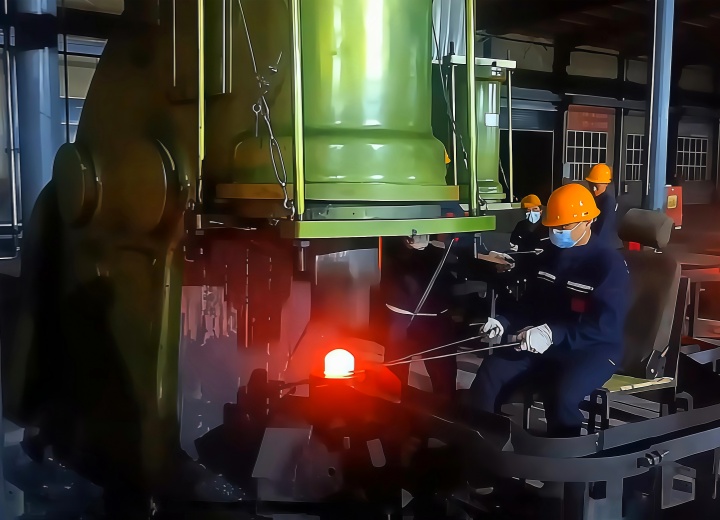
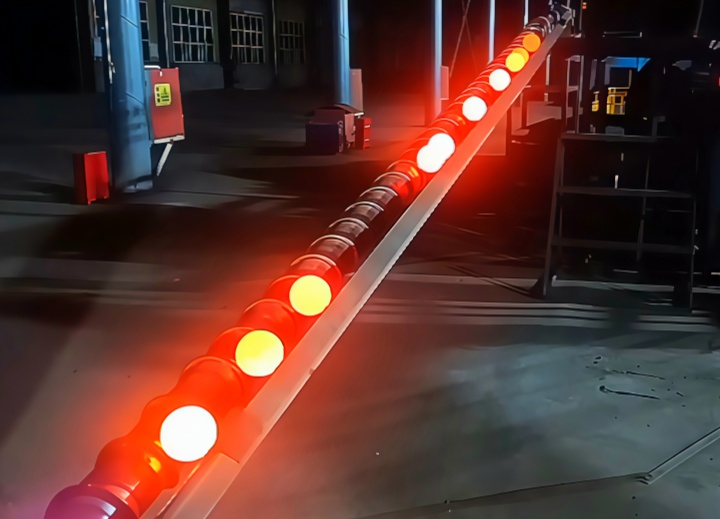
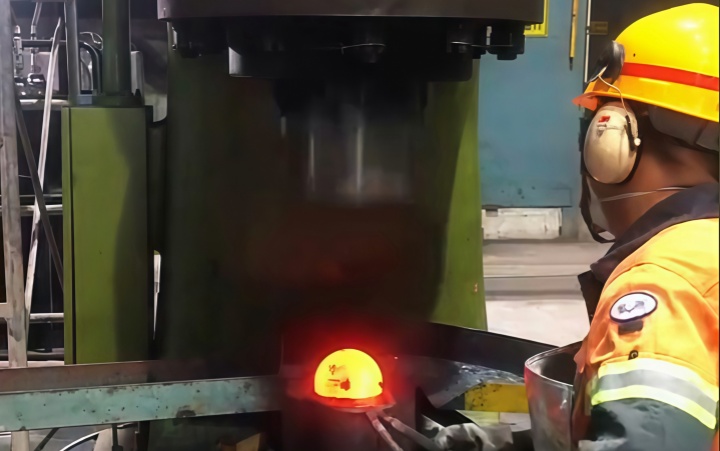
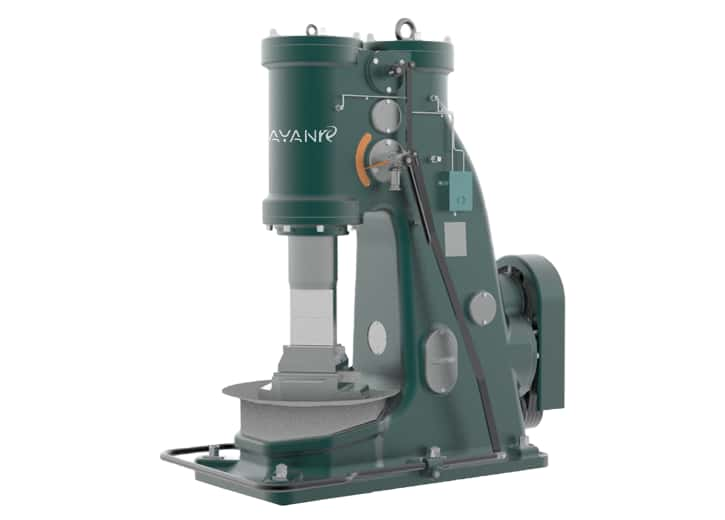
The pneumatic hammer steel ball forging production line turns a heated steel billet into a finished grinding ball in five steps, using the rapid, repeated blows of a pneumatic hammer to work the metal rather than cut it. Six models cover balls from 70 mm to 200 mm in diameter, at rates from six pieces a minute on the C41-150 down to one a minute on the C41-1000. The blow raises the forging ratio and closes internal porosity, so the ball that leaves the line is denser and more wear resistant than a cast ball of the same steel. The line serves grinding duty in mining, cement and coal powder plants, where a ball that fails early takes the mill down with it. The five process steps are set out in the steel ball forging process, step by step.

Product Features

  • Dense structure, not just shape

    The blow works the steel instead of cutting it. The forging ratio rises, internal cavities close, and the grain flow follows the ball's contour — which is what becomes toughness, and toughness is what becomes wear life in a mill.

    Dense structure, not just shape
  • One hammer covers a range of diameters

    Every model forges every size below its maximum, so a C41-400 runs anything from small balls up to 110 mm. A product mix does not need one machine per size.

     One hammer covers a range of diameters
  • Output falls as the ball grows, tonnage does not

    Pieces per minute drop from six on the C41-150 to one on the C41-1000, but weight rises faster than output falls: the largest model moves close to four times the tonnage of the smallest. Size the line on whichever figure your order book is quoted in.

     Output falls as the ball grows, tonnage does not
  • The die carries the product change

    Ball dies are a matched pair cut for one diameter. Changing size means changing the set, which makes the line efficient on a narrow diameter range and awkward on a wide one — worth settling before the machine is chosen.

    The die carries the product change
  • Starts with one hammer, grows to two

    Pre-forging and finish forging can run as two stations on two hammers, or as two passes on one. Two hammers remove the wait between passes; one hammer gets a line running on less capital.

    Starts with one hammer, grows to two
  • Near-net shape, less scrap

    The ball is forged close to final form, so scale loss and secondary machining stay low compared with cutting a ball out of bar stock.

    Near-net shape, less scrap

Product parameters

Pneumatic Hammer Type Max.Diameter of Forged Ball Average Efficiency
C41-150 70mm 6 pcs/minute
C41-250 90mm 4 pcs/minute
C41-400 110mm 3 pcs/minute
C41-560 130mm 2.4 pcs/minute
C41-750 150mm 2 pcs/minute
C41-1000 200mm 1 pcs/minute

Steel Ball Forging Line FAQ

What does the line include besides the hammer?

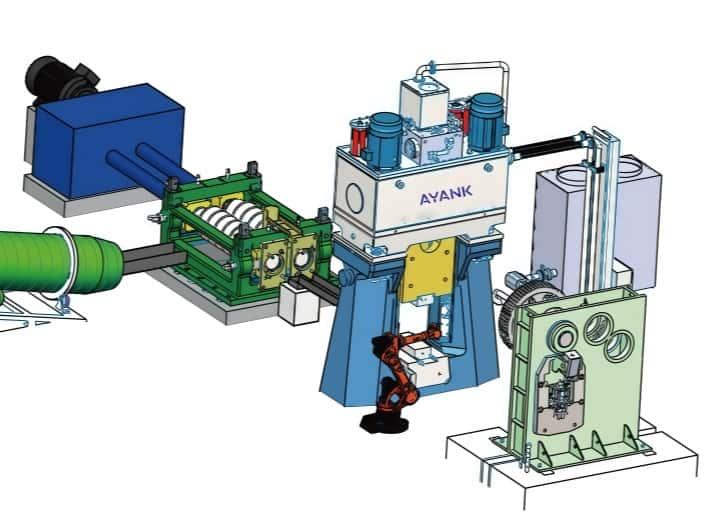
A working line is the hammer plus the billet heating in front of it, the ball dies inside it, and the handling that moves a red-hot ball between stations. Where volume justifies it, a second hammer splits pre-forging from finish forging. The hammer is the part this page prices; everything else is specified around it.

How do I size a line from a monthly tonnage?

Convert the tonnage into pieces using ball weight, then divide by the rated pieces per hour. 150 tonnes a month of 110 mm balls is about 27,450 pieces; at 180 pieces an hour the C41-400 covers that in roughly 152 production hours — inside a 200-hour month of eight-hour days. The arithmetic assumes heating and handling keep pace with the hammer.

Can one line run several ball diameters?

The machine does not change — any model forges every diameter up to its maximum. The die set does. Ball dies are cut as a matched pair for one diameter, so each size you sell needs its own set, stored and swapped as the schedule moves.

What does the line need on site?

A foundation block sized for the hammer's weight and for the dynamic load of the blow; the drawing is issued with the order and matched to the soil at your site. Then compressed air sized for one hammer or for the pair, and die storage close enough to the machine that a change stays a change rather than a transport job.

How does this compare with a skew rolling line?

They attack the same product differently: forging works a heated billet between dies, skew rolling forms the ball between rotating rolls. The choice usually comes down to diameter range and volume rather than to quality. The steel ball skew rolling mill sets out that route in full.

What do you need to quote a line?

The diameters you intend to sell, the tonnage per month behind them, the raw material you will feed, the tolerance you inspect to, and whether the line needs one hammer or two. From those, the model, the die sets, the heating and handling around them, and the shipping split all follow.

Hot Products

Send Message

contact

Metal Forming Expert

High quality metal forming equipment

Professional technical support services

Worry free after-sales maintenance service

    • *

    • *

    Home Tel Mail Inquiry