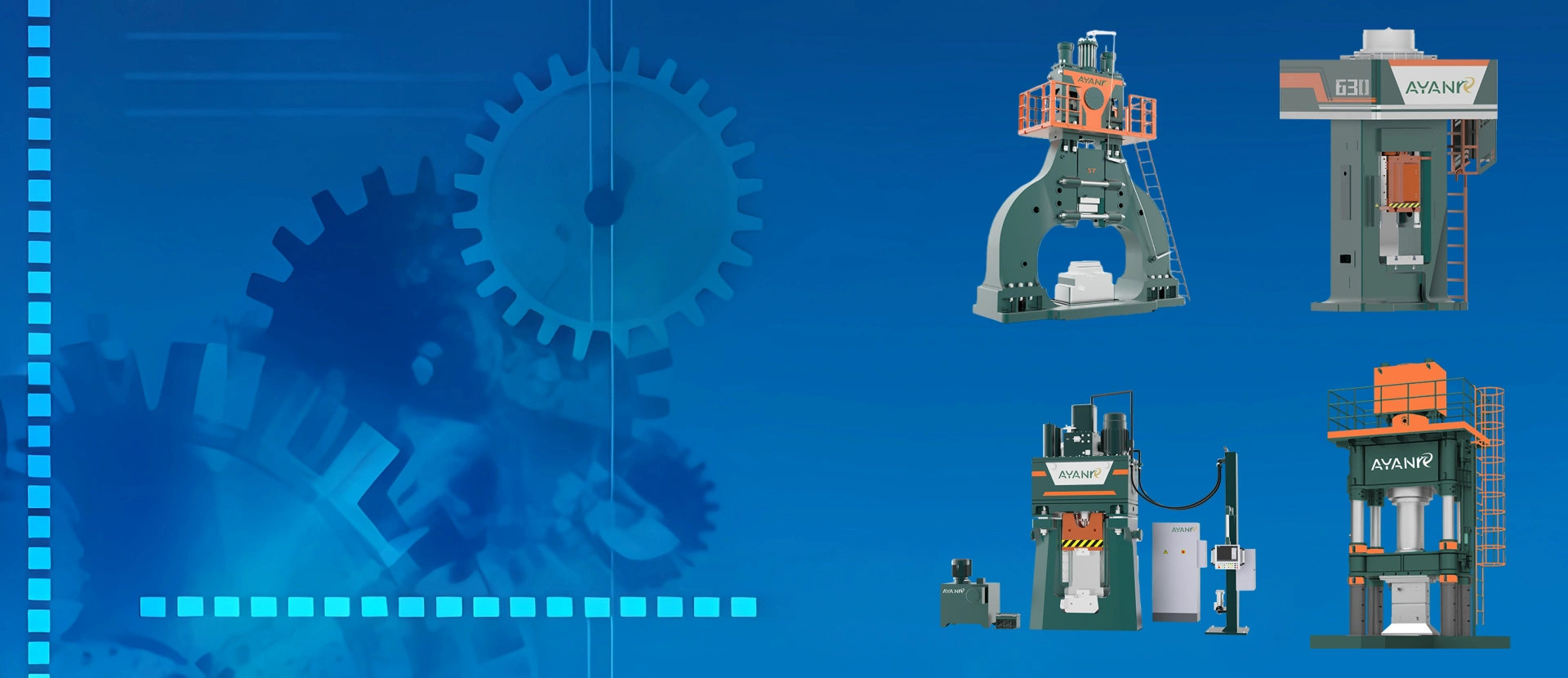

The AYANK FORGING C66YA series fully hydraulic open-die forging hammer answers the core demands of modern forging production by putting a fully hydraulic drive on the frame. The drive removes the dead-blow effect that steam and air hammers carry, keeps striking and return speeds high, and lifts forging efficiency with them. Operation is flexible and easy to control — the hammer can be suspended at any point in the stroke, which is what gives an operator real control over a sequence of open-die draws rather than a fixed blow. The core advantages are ample energy, high frequency, no die sticking, low failure rates and simple operation.
It suits equipment upgrades in forging plants in particular, where the return is measurable on four fronts: higher production efficiency, lower energy cost, a better working environment and better product quality. The result is a balance between cost-effectiveness and capability for medium to large open-die forging. As a hydraulic forging hammer it sits between the pneumatic hammers at the small end of the range and the open-die presses at the large end.
A hydraulic forging hammer is judged on four things: whether the blow is repeatable, how fast it comes back for the next one, how long it stays in service between failures, and whether it can be tied into handling equipment.
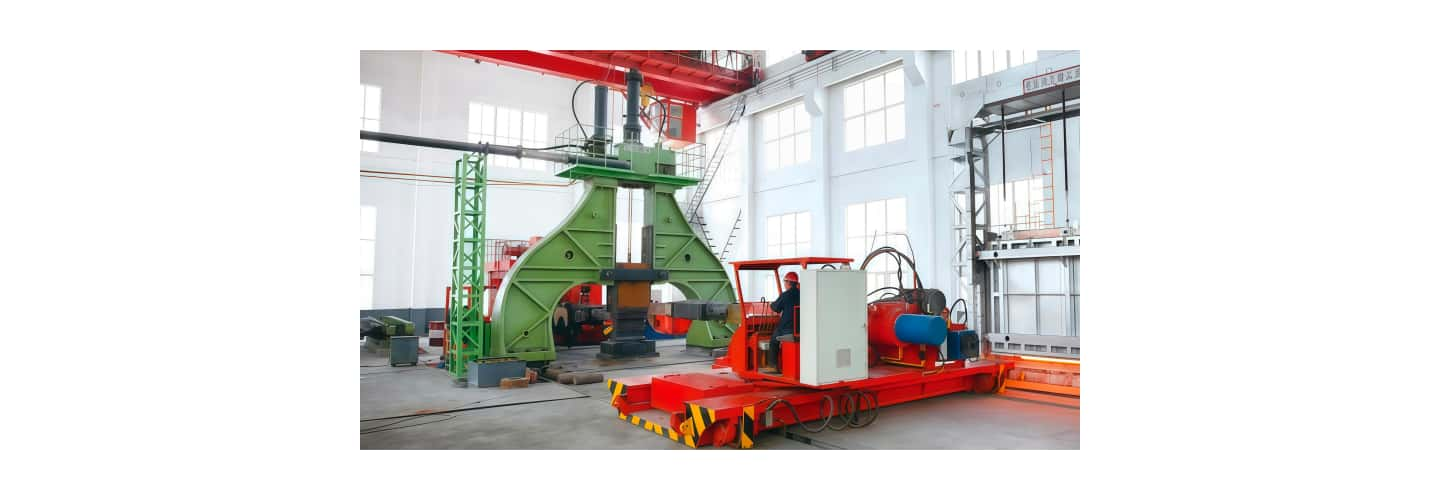
A dedicated striking valve system gives precise energy control and blow-to-blow consistency, which is what a high-integrity forging depends on. The energy is set through PLC programming, and the error stays within ±1.5%.
The hydraulic mechanism delivers a high striking frequency — up to 75 strokes per minute on the smaller models — together with fast return strokes, which is where cycle time is actually won or lost.
The X-guide rail structure extends the service life of the hammer rod considerably, and the fully hydraulic system carries the piston with it, so failure rates stay low and the total cost of ownership comes down. Wear parts are covered by the spare parts and components stock.
The system can be upgraded with aviation-grade joysticks for remote or manual operation, and it synchronises with a forging manipulator so that hammer and handling equipment move as one cell rather than two machines. That coordination is the precondition for an automated forging line.
Between them the fourteen models cover the full requirement range for medium and large open-die forging equipment, with support for customised adaptation. The series is the open-die counterpart to the C61YA single-frame fully hydraulic open-die forging hammer; where the part needs a press rather than a hammer, the Y13A open-die forging hydraulic press is the other route.
| Item | Unit | C66YA-35 | C66YA-70 | C66YA-120 | C66YA-140 | C66YA-175 | C66YA-210 | C66YA-245 | C66YA-280 | C66YA-350 | C66YA-420 | C66YA-520 | C66YA-630 |
|---|---|---|---|---|---|---|---|---|---|---|---|---|---|
| Strike energy | kJ | 35 | 70 | 120 | 140 | 175 | 210 | 245 | 280 | 350 | 420 | 520 | 630 |
| Falling mass | kg | 1300 | 2650 | 4100 | 5100 | 6300 | 7500 | 8200 | 8800 | 12400 | 14400 | 16000 | 20000 |
| Max. stroke | mm | 1000 | 1260 | 1450 | 1500 | 1730 | 1800 | 1850 | 1900 | 2000 | 2300 | 2480 | 2600 |
| Strokes per minute | strokes/min | 60-75 | 60-75 | 60-75 | 60-75 | 50-65 | 45-60 | 45-60 | 40-55 | 40-55 | 40-55 | 35-50 | 33-48 |
| Main motor power | kW | 55 | 55 | 55 | 55 | 55 | 55 | 55 | 55 | 55 | 55 | 75 | 75 |
| Number of motors | pcs | 2 | 3 | 4 | 5 | 6 | 7 | 7 | 8 | 10 | 8 | 10 | 16 |
| Rail spacing | mm | 460 | 550 | 650 | 710 | 760 | 890 | 890 | 900 | 980 | 1120 | 1200 | 1550 |
| Operating space (L × W) | mm | 1800 × 1250 | 2300 × 1380 | 2700 × 1470 | 3500 × 1650 | 3700 × 1930 | 4200 × 2000 | 4200 × 2000 | 4200 × 2250 | 4730 × 2350 | 4700 × 2450 | 5000 × 2780 | 5170 × 2800 |
| Lower anvil face height | mm | 750 | 750 | 760 | 760 | 880 | 880 | 900 | 900 | 900 | 950 | 1200 | 1200 |
| Overall dimensions (L × W × H) | mm | 3600 × 1500 × 6300 | 4500 × 1700 × 7000 | 5100 × 2300 × 7800 | 5900 × 2300 × 8000 | 6300 × 2500 × 9000 | 6740 × 2500 × 9500 | 6740 × 2500 × 9600 | 6920 × 2600 × 10000 | 7720 × 2900 × 10600 | 8380 × 2950 × 11500 | 8700 × 3000 × 12000 | 8930 × 3100 × 12500 |
Two things the ladder shows at a glance: main motor power holds at 55 kW from 35 kJ to 420 kJ and steps to 75 kW at 520 kJ, and every model from 120 kJ upward carries multiple 55 kW pump motors rather than one, which is what keeps the strike frequency high as the falling mass grows.
Striking energy is precisely controllable, with the error held within ±1.5% through PLC programming, and repeatability high enough to keep forging quality consistent across a batch.
The striking valve uses a servo differential spool and poppet composite structure (national invention patent ZL200810119517.7) and resets by hydraulic control.
For the same class of high-tonnage fully hydraulic open-die forging hammer (C66K-910kJ) built by AYANK FORGING, publicly available information as of December 2025 shows no equivalent larger specification in production anywhere in the world — which is where the company's depth in high-tonnage R&D and manufacturing becomes visible.
“The C66YA series hydraulic hammer is not merely an upgrade iteration; it represents a qualitative leap forward in forging technology,” stated a spokesperson for AYANK FORGING. “We are committed to providing our customers with equipment that maximises uptime, enhances precision, and strengthens their competitiveness in demanding markets.”
The C66YA hydraulic forging hammer suits the open-die forgings required by aerospace, energy, shipbuilding and heavy machinery — shaft and disc forgings, ring and flange blanks, and the large single pieces those industries order in small numbers and cannot afford to scrap.
AYANK FORGING builds forging equipment for exactly that kind of work: reliable, efficient machines backed by technical support, for forging manufacturers who measure the purchase by the years the machine runs rather than by the day it arrives.
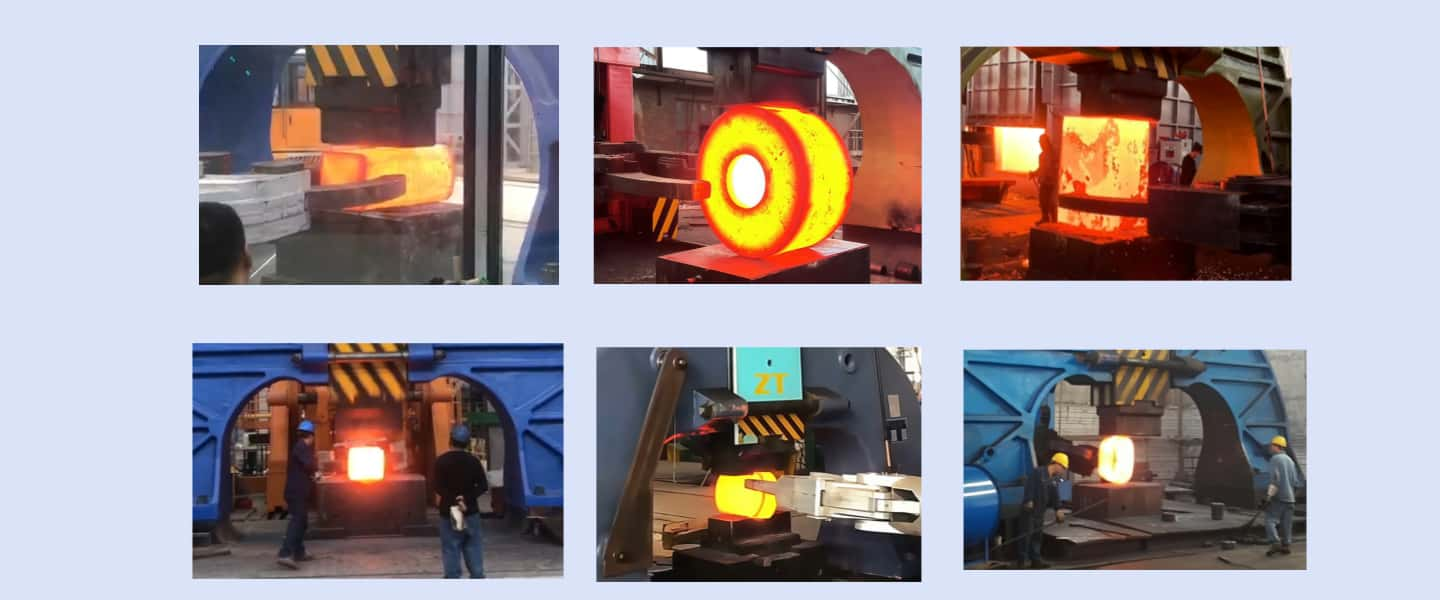
The C66YA series is positioned as energy-efficient, high-performance equipment built to replace old steam-air hammers and hydro-pneumatic hammers. Its advantages centre on the reliability, energy efficiency and ease of maintenance that come with a fully hydraulic drive — and the comparison that matters is against the hammer you are running now, which is the one the pneumatic forging hammer range covers at the small end.
A steam-air hammer drives the ram with compressed air or steam and loses energy in the exhaust on every blow. The C66YA hydraulic forging hammer uses a fully hydraulic drive with a dedicated striking valve, so the energy is set by PLC programming rather than by valve timing and steam pressure, and the machine holds ±1.5% blow energy instead of drifting with supply conditions.
35 kJ to 910 kJ across 14 models, from C66YA-35kJ to C66YA-910kJ.
Through the striking valve, programmed by PLC. The valve uses a servo differential spool and poppet composite structure (national invention patent ZL200810119517.7) and resets by hydraulic control, which is what keeps the error within ±1.5% blow after blow.
It puts the mass in the anvil rather than in the ram. A heavy anvil block absorbs the blow instead of passing it into the foundation, which is what protects the building, reduces vibration transmitted to the surrounding plant, and keeps the energy going into the workpiece.
Yes. The system synchronises with a forging manipulator, and it can be upgraded with aviation-grade joysticks for remote or manual operation, so hammer and handling equipment can run as one cell and feed a larger automated line.
The forging drawing or the finished part drawing, the material, the maximum billet weight and the largest section you need to draw down, plus the output you need per shift. From those the blow energy, the anvil and the handling arrangement are sized together.
Send your forging drawing or part details — we will recommend the machine that fits and quote it.
Receive the news that you are interested in.
