I. Introduction to the C86YA Series Fully Hydraulic Die Forging Hammer
II. Working Principle of the C86YA Fully Hydraulic Die Forging Hammer (Electro-Hydraulic Hammer)
III. Advantages of AYANK FORGING Fully Hydraulic Die Forging Hammers over Traditional Steam Hammers
V. Detailed Description of AYANK FORGING C86YA Series Fully Hydraulic Die Forging Hammer
VI. Technical Advancement and Rationality of AYANK FORGING C86YA Fully Hydraulic Die Forging Hammers
VII. Industries Suitable for AYANK FORGING C86YA Series Fully Hydraulic Die Forging Hammers
The AYANK FORGING fully hydraulic die forging hammer refers to forging equipment where both the striking and return motions of the hammer head are hydraulically driven. The system operates on the principle that the lower chamber of the hammer's piston rod is constantly supplied with high-pressure oil. Striking and return are achieved by controlling the oil pressure in the piston's upper chamber.
Fully hydraulic die forging hammers offer advantages such as sufficient energy, high frequency, no die holding, low failure rate, and the capability to suspend the hammer at any position. They are suitable for producing various types of die forgings.
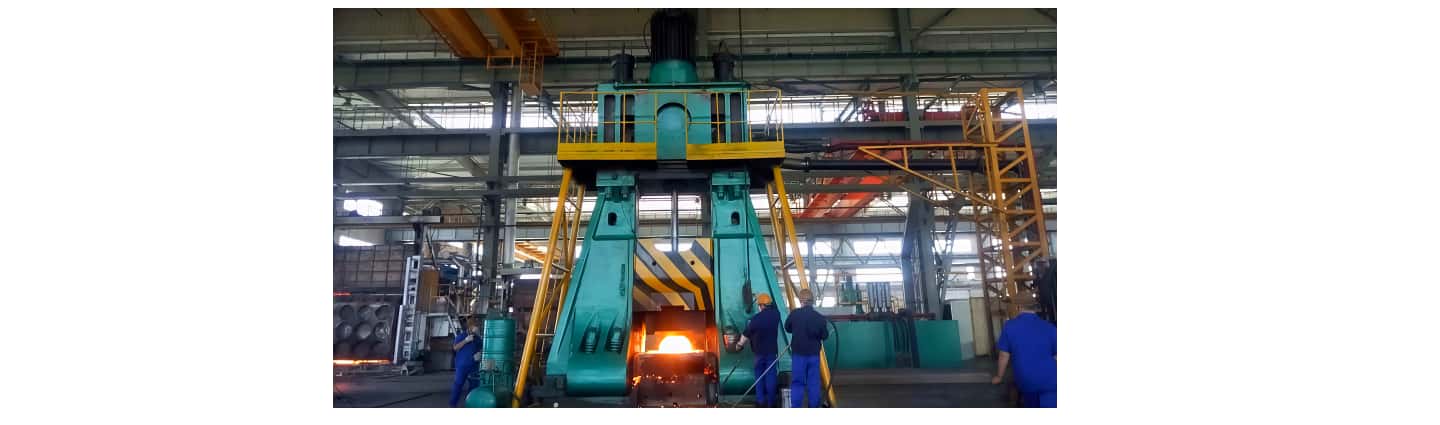
The AYANK FORGING fully hydraulic die forging hammer is a system where an electric motor drives a high-pressure oil pump to supply the high-pressure oil that drives the hammer head's movement. The equipment forms a self-contained system, operating independently without the constraints of boiler or air compressor status (presence/absence of air or pressure). It can commence operation whenever electrical power is available.
A fully hydraulic electro-hydraulic hammer refers to a hydraulic hammer where both the striking and return strokes—that is, the upward and downward travel of the forging hammer's piston rod—are driven by hydraulic oil. The system principle involves the lower chamber of the piston rod being constantly supplied with high-pressure oil. Striking and return are achieved by switching the oil pressure in the piston's upper chamber between high and low states. When high pressure is applied to the piston's upper chamber, the lower chamber remains under high pressure. This common high-pressure oil acts simultaneously on the circular area at the top and the annular area at the bottom of the piston rod. The difference in these areas generates a net downward force, which, combined with the weight of the falling parts, produces the downward strike. Concurrently, oil from the lower chamber returns to the upper chamber via a connected passage. When the pressure in the upper chamber is released to a low state, the return force generated by the constant pressure acting on the annular area of the lower chamber overcomes the weight of the falling parts and the corresponding friction to achieve the return stroke.
As can be seen in the system schematic below, the main control valve is a hydraulic servo valve. During operation, the hammer operator controls five positions of the main control valve's spool via a handle, thereby enabling various hammer head actions: strike, return, slow upward movement, slow downward movement, neutral position, and emergency stop. The operating method is fundamentally similar to that of traditional hammers.
The primary energy utilization rate of traditional steam forging hammers is less than 2%, and can be as low as 0.2%. In contrast, the primary energy utilization rate of a fully hydraulic electro-hydraulic power unit can reach 20%. By retrofitting with a fully hydraulic power unit, the inefficient pneumatic power system is eliminated, and the operational accuracy of the equipment is restored. Consequently, the energy saving rate can exceed 90%, enhancing the forging capacity of the equipment, significantly reducing energy consumption, and lowering production costs.
1. fundamentally solves the issues of oil-air cross-contamination and air leakage in the forging hammer's piston rod, thereby reducing the failure rate and maintenance costs.
2.The striking valve offers sensitive response and high flow capacity, enabling high-frequency, high-energy strikes (≥60 strikes/min) and significantly improving productivity.
3.The buffer, shock absorption, and anti-collision system achieves a soft upper limit stop, ensuring stable operation and high safety.
4.The manual servo follow-up control system provides precise control over striking energy, allowing easy execution of various light and heavy blows.
5.The improved working environment for the piston rod seal rings, combined with reduced sealing requirements, greatly extends seal life and lowers maintenance costs.
6.As the piston's lower chamber is normally under high pressure, the hammer head's return after a strike is not delayed, resulting in short die holding time. This extends the life of the dies (anvil blocks) and facilitates the operator's workpiece turning.
7.The actuating valve combines the operating characteristics of a spool valve with the sealing properties of a poppet valve. This enhances the controllability and sealing performance of the valve port, reducing internal system leakage and heat generation.
8.The traditional operating method ensures responsive control and low operator labor intensity.
The working principle and structure of the C86YA series fully hydraulic die forging hammer power unit are identical to those of the C66YA series fully hydraulic open-die forging hammer power unit. Therefore, please refer to the detailed description of the C66YA series fully hydraulic power unit.
1.A single-lever control enables all hammer head movements: slow ascent, slow descent, striking, return, emergency stop, suspension at any position, and continuous strikes with varying strokes and frequencies. Operation is simple, convenient, flexible, and effortless.
2.The rational structure eliminates inertial venting, ensuring smooth, continuous, and non-lagging actions.
3.Both the fast-feed and fast-discharge ports are servo-controlled, eliminating the occasional malfunctions that can occur with hydro-pneumatic electro-hydraulic hammers, making operation safer and more reliable.
4.The actuating valve combines the operating characteristics of a spool valve with the sealing properties of a poppet valve. This enhances the controllability and sealing performance of the valve port, reducing internal system leakage and heat generation.
5.The main control valve is a self-developed servo valve with a wide range of applications. It can meet the requirements of 1-20 ton die forging hammers and 1-10 ton open-die forging hammers.
6.The system's oil consumption is monitored in real-time. When consumption is high, multiple pumps operate under load simultaneously. When consumption is low, only a few pumps are under load, while the remaining pumps are forcibly unloaded. This significantly reduces the unloading frequency of the pumps and unloading valves, minimizes hydraulic shock, and extends their service life. (Patented)
7.The system is equipped with overpressure and loss-of-pressure protection. In the event of a rupture in the main inlet hose or oil spraying from the seal's lower port due to a fracture in the middle of the piston rod, the system promptly shuts off the main oil outlet and immediately stops the motor, enhancing system safety. This patented technology collects the pressure signal from the lower chamber of the piston rod and achieves safety protection through mechanical interlock, overcoming the reliance on electrical signals and circuit continuity. (Patented)
The C86Y series fully hydraulic die forging electro-hydraulic hammer is a precision die forging device with strong adaptability and high cost-effectiveness. It offers advantages such as high frequency and efficiency, high precision, no die sticking, and low failure rate. It is suitable for the multi-variety, high-volume, and medium/small-batch production of precision die forgings across various industries, particularly well-suited for precision forgings that are thin-walled, have complex cavities, or high density. It can also meet forging requirements in low-temperature environments, making it a core piece of equipment for producing various types of die forgings.
Automotive Manufacturing Industry: Various automotive die forgings
Motorcycle Industry: Various motorcycle die forgings
Construction Machinery Industry: Die forgings such as hydraulic fittings, pins, gears, and gear blocks
Tools and Hardware Industry: Die forgings such as wrenches, pliers, cutters, and hand tools
Architectural Hardware Industry: Various architectural hardware die forgings
Daily-Use Hardware Industry: Various daily-use hardware die forgings
Medical Device Industry: Various medical precision die forgings
Kitchen and Bathroom Hardware Industry: Various kitchen and bathroom hardware die forgings
Agricultural Machinery Industry: Various agricultural tool die forgings
Cutlery Industry: Various knife/cutter die forgings
Aerospace Industry: High-density, irregularly shaped precision die forgings
Other Fields: Various general-purpose die forgings, die forgings made from special materials (requiring low-temperature forging)
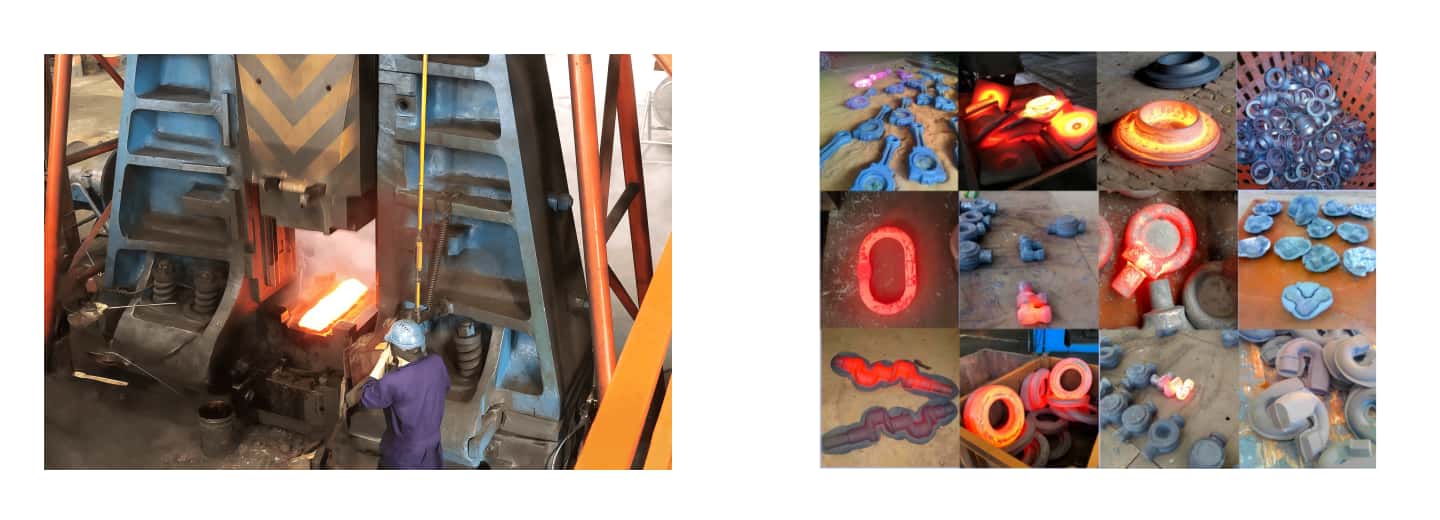
It is particularly suitable for precision forging production lines handling multi-variety, medium/small, and large batches, as well as for the production of thin-walled, irregularly shaped parts that are difficult to fill in mold cavities, and high-density precision forgings. It is also suitable for low-temperature forging scenarios and production demands that require high surface finish and specific chemical properties of the forgings. With its strong versatility, it can flexibly handle the production of various types of die forgings.
Receive the news that you are interested in.