What radial ring rolling does
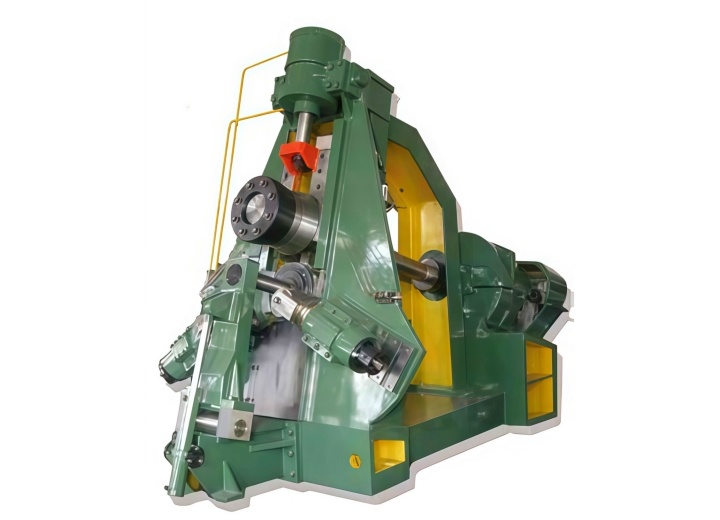
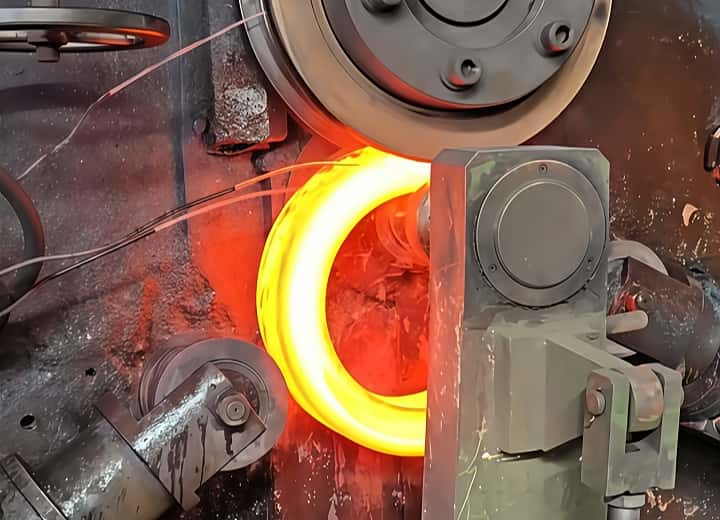
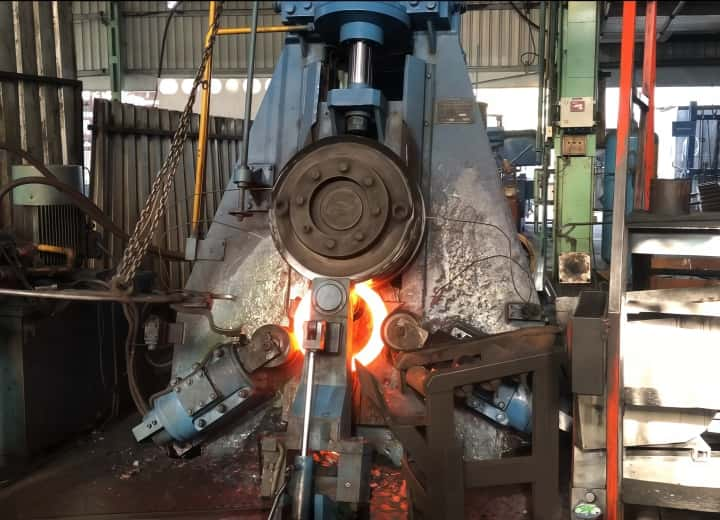
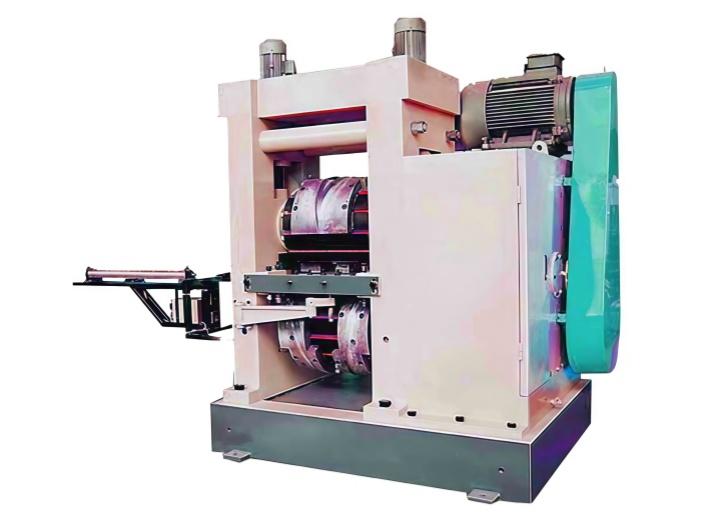
A radial ring rolling machine forms a ring with one working pair: a driven main roller outside the ring and a free-turning mandrel inside the bore. The wall between them is squeezed as the ring rotates, so the outside diameter grows while the wall thins. Height is not actively worked; it is carried from the pierced blank and held by the tooling.
That single pair of tools is the whole design difference. Because there is no second, axial set of rollers to coordinate, the cycle stays short and the machine stays compact — which is why the D51A series reaches 600 pieces per hour at the small end and is built around rings from 200 mm to 1,000 mm outside diameter.
When a radial machine is the right choice
Radial against radial-axial: how the choice is actually made
| Consideration |
Radial (D51A) |
Radial-axial (D53KA) |
| Ring outside diameter |
200–1,000 mm |
400–12,000 mm |
| Height control |
Set by the blank and tooling |
Actively rolled between axial taper rollers |
| Cycle time |
Short; up to 600 pcs/h |
Longer; large rings dominate |
| Best section |
Rectangular, and special sections with dedicated tooling |
Thick-walled and tall rings where height must be held |
| Typical parts |
Bearing rings, gear blanks, flat and weld-neck flanges |
Tower flanges, slewing rings, ball valve bodies |
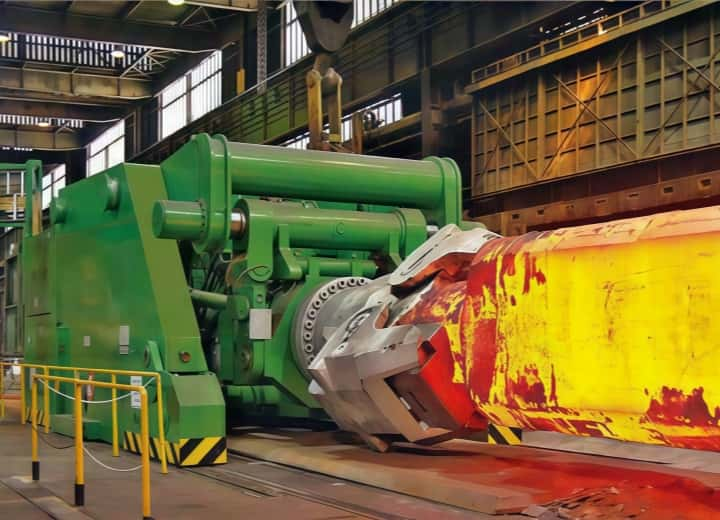
The dividing line is height tolerance. As long as the finished height can be carried from the blank, a radial machine gives the same ring with a shorter cycle and a smaller footprint. Once the ring is large enough that the wall spreads during rolling, or the drawing calls for a held height, the axial pair becomes necessary — that is the case covered by the radial and axial ring rolling machine.
How to read the parameters above
Ring size OD. The ten models step from 200 mm to 1,000 mm. Each figure is a single size rather than a range, so the model is chosen by the largest ring you intend to roll plus the section you want to roll it in.
Max. productivity. This is the number that separates the models. It falls from 600 pcs/h on D51-160E to 50 pcs/h on D51-1000E, because ring mass and the wall being reduced both grow with diameter. Output planning should start from this column, not from the motor rating.
Rolling line speed. Line speed runs from 1.45 to 2.2 m/s across the series, and the small models are the faster ones. Unlike a large radial-axial mill, where speed is fixed by the process, here the speed is matched to the ring size — that is what allows the high piece rates at the low end.
Rolling wheel OD and center height. Rolling wheel outside diameter runs 360–820 mm and the centre height of the rolling roller from 670 mm to 1,600 mm. Both are tooling and foundation figures: they set the mandrel size you can use and the pit depth the machine needs.
Motor power. Main motor runs from 30 kW to 110/132 kW, hydraulic station from 7.5 kW to 15/18 kW. The hydraulic figure matters because the slide stroke and the clamping are hydraulic on this series, and it is the load that stays on even between rings.
Slide stroke. Stroke runs from 70 mm on the smallest model up to 350 mm on the largest. For special sections with a tall profile, stroke is often the figure that rules out a model before force does.
From billet to bearing ring
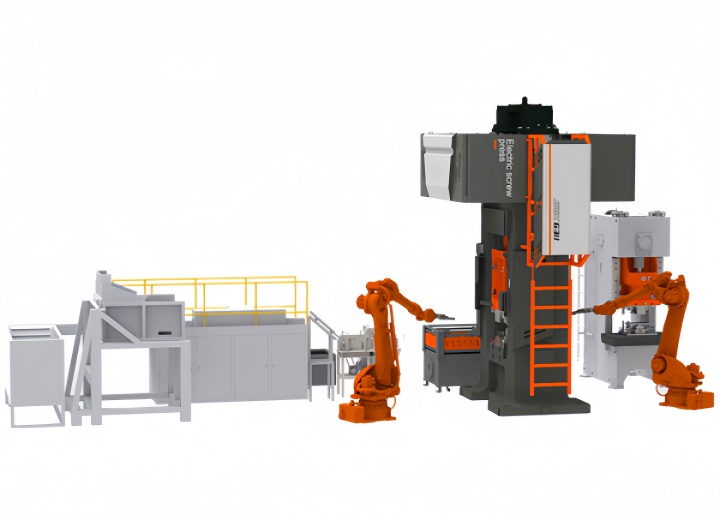
The machine does not work alone, and the two stations around it decide the ring you get.
- Cut the bar to a billet weight that matches the blank. A billet shearing machine is the usual choice at this step, because weight error here becomes wall error in the ring.
- Heat, upset and pierce the billet into a donut blank with a bore sized for the mandrel.
- Roll in a single pass — the blank is loaded on the mandrel, the main roller advances, and the ring reaches size in one cycle rather than a sequence of passes.
- Unload and cool, then machine the faces and bore where the drawing requires a finished surface.
Because the ring is rolled once rather than in repeated passes, the blank weight is the main variable in the process. Get the blank right and the ring is right; a blank that is heavy shows up as a ring that cannot be brought to thickness without over-rolling.
Matching the machine to your ring
Five answers settle the size of the radial ring rolling machine you need, and the order matters.
- Finished outside diameter. Pick the smallest model whose rating covers your largest ring. Oversizing costs cycle time, because the productivity column falls steeply.
- Section, not just size. A rectangular section is the standard case. A special section — a gear blank with a hub, a flange with a raised face — needs dedicated tooling and usually a larger stroke.
- Output per shift. Divide the requirement by the productivity figure of the candidate model, then allow for loading, unloading and tooling checks. A 600 pcs/h model and a 50 pcs/h model are not substitutable on the same job.
- Machining allowance. These machines are sold on precision blanks: the closer the rolled ring is to the finished part, the less material is turned into chips afterwards. State the allowance your machining line expects.
- Power and floor. Main and hydraulic motor ratings set the electrical supply, and the machine outsize plus centre height set the foundation.
Rectangular sections and special sections
A rectangular section — a plain bearing ring or a flat flange — is the shape the process handles most predictably, and it is where the high piece rates are achieved. The tooling is straightforward and changeover is quick.
A special section is a different job. A gear blank with a hub, a weld-neck flange with a raised face, a bearing ring with a groove: each needs its own main roller profile and mandrel, and the section has to be formable without trapping material. The practical questions are how many rings the tooling will run before it needs attention, and how long a changeover takes on your batch pattern.
Tooling, changeover and uptime
The working tools are the main roller and the mandrel. Both are ring-specific, and on a machine built for high piece rates the changeover time is worth as much attention as the rolling force. Mandrel wear at the bore contact and scale build-up on the roller face are the two items that show up first, and both appear as a wall-thickness drift rather than as a fault.
Two habits keep output where the table says it should be: check the first ring of each batch dimensionally, and keep the hydraulic oil and the clamping pressure in specification. The hydraulic station runs continuously, so a drop in clamping shows up as a ring that moves on the mandrel before it shows up as a rejected part.
Where these rings go
The applications listed for this series — automotive machinery, oil and gas, chemical — all share the same requirement: a ring that arrives at the machining line as a near-net blank rather than a sawn or cut section. Bearing rings and gear blanks are the highest-volume cases, where a second of cycle time is worth real money over a year. Flat flanges and weld-neck flanges are the larger end, where the ring is a single component per finished part.
What to put in your enquiry
Six items and the radial ring rolling machine comes back sized:
- Finished ring drawing, with outside diameter, bore, height and section
- Material grade and forging temperature
- Blank dimensions, or the billet size you start from
- Output required, in pieces per hour or per shift
- Machining allowance expected on the rolled ring
- Available power supply and floor space
Frequently asked questions
What is the difference between a radial and a radial-axial ring rolling machine?
A radial machine works the ring wall with one roller and one mandrel, so height comes from the blank. A radial-axial machine adds axial taper rollers that work the top and bottom faces, so ring height is actively formed in the same cycle. Radial suits small and medium rings at high output; radial-axial suits large rings where height must be held.
What ring sizes does the D51A series cover?
From 200 mm outside diameter on D51-160E up to 1,000 mm on D51-1000E, across ten models.
How many rings per hour can it produce?
Maximum productivity ranges from 600 pcs/h on the smallest model to 50 pcs/h on D51-1000E. Output falls as ring size grows, so the model should be chosen from the productivity column for your actual ring, not from its diameter rating alone.
Can it roll special sections, or only rectangular rings?
Both. Rectangular sections are the standard case; special sections such as gear blanks and weld-neck flanges need dedicated main roller and mandrel tooling, and usually a longer slide stroke.
Does the radial machine control ring height?
Not actively. Height is carried from the pierced blank and held by the tooling. Where the finished height must be formed within the cycle, a radial-axial machine is the correct choice.
What blank does it start from?
A pierced donut blank produced by heating, upsetting and piercing a cut billet. The bore is sized for the mandrel and the blank weight determines the final wall.
What is the tooling changeover?
The main roller and the mandrel are both ring-specific, so a new section means a tooling change rather than a machine change. Changeover time depends on the section and on the crane access at the machine.
Send your forging drawing or part details We will recommend the machine that fits and quote it.