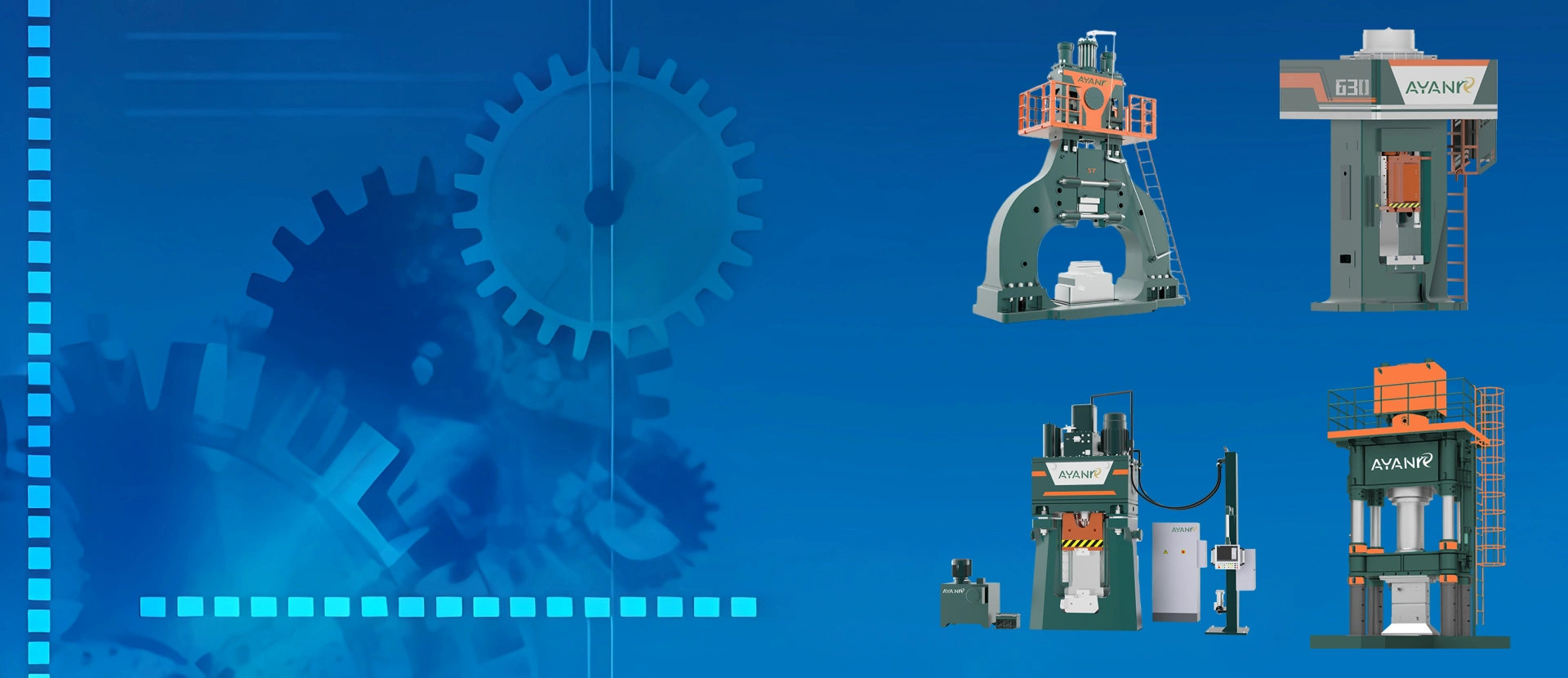
There are two routes to a track link today. One is casting. The other is forging on a CNC full hydraulic die forging hammer.
A track link is a small part that decides whether a large excavator can walk at all. It carries the whole machine and it takes the load of every turn, so when a link fails in service the machine stops being an excavator and becomes something you have to recover. That is why the way a link is made matters more than its price per piece.

Casting a track link means melting the material to a liquid, pouring it into a pre-made cavity shaped like a link, and waiting for it to solidify. What comes out is a link with no further forming step.
Three things follow from that. The casting shop is a hot place and melting gives off fumes, which is hard on the people working in it and hard on the surroundings. The solidifying metal leaves a loose structure, coarse grains, and internal shrinkage cavities, porosity and blowholes. And the resulting link is comparatively poor in hardness and wear resistance, so chromium has to be added to make up the difference - and chromium is expensive, which pushes up the cost of the track link.
For those reasons, the market share of cast track links has been falling year by year.
Forging a track link starts with a heated bar, placed on the die of a CNC full hydraulic die forging hammer. Pre-forging and finish forging turn it into a finished link in two blows, with no machining of the load-bearing form.
The hammer works at high speed, so the bar deforms heavily in each blow. That deformation is what changes the internal structure through the section: density goes up, and the shrinkage cavities, porosity, blowholes and coarse grain that casting leaves behind do not form. The result is a link with higher hardness and stronger wear resistance, from the same material, without buying chromium to compensate.
One Vietnamese customer bought three CNC full hydraulic die forging hammers within two years to produce track links and other forgings. One of those machines, a 125 kJ unit, runs on track links in Vietnam.
| Point | Cast track link | Forged on a CNC die forging hammer |
|---|---|---|
| How it is made | Melted, poured into a cavity, left to solidify | Bar heated, pre-forged and finish-forged in the die |
| Internal structure | Loose, with coarse grains | Dense - the structure is fully changed by the deformation |
| Internal defects | Shrinkage cavities, porosity, blowholes | None of these form |
| Hardness and wear resistance | Comparatively poor | Higher hardness, stronger wear resistance |
| Alloy cost | Chromium must be added, and chromium is expensive | No chromium addition needed to reach the same hardness |
| The workshop | High temperature, fumes from melting | No melting stage |
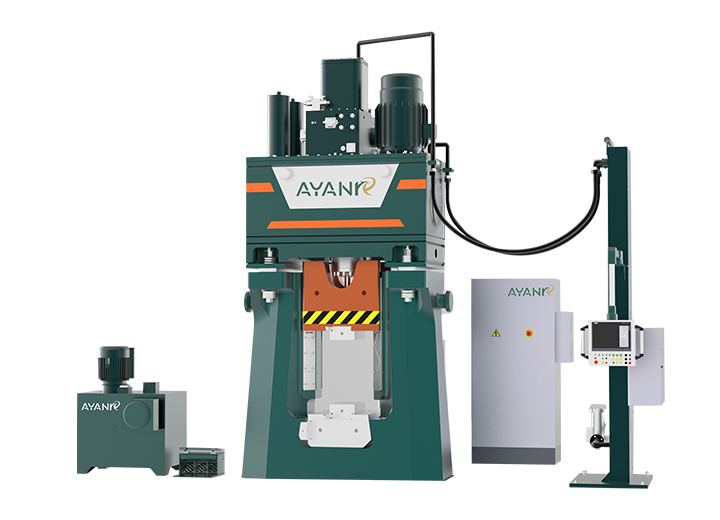
A CNC full hydraulic die forging hammer is modern, programmable precision forging equipment. It runs on PLC control, its striking accuracy is high, and the forging energy is set digitally rather than by feel. It is the main forging machine for precision forgings in automobiles, aerospace, aviation, hand tools and motorcycles, and it can be combined with robots into a fully automatic production line, which cuts labor cost and makes the forgings more competitive.
AYANK FORGING CNC full hydraulic die forging hammer carries seven advantages in precision forging:
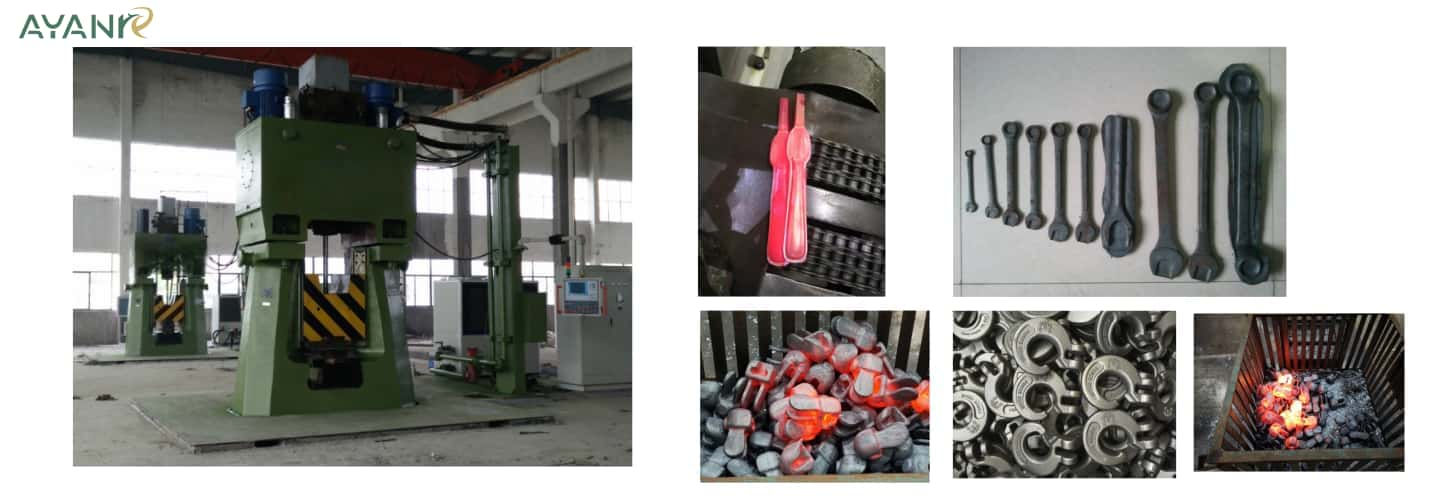
Track links differ by machine class, so the answer to "which hammer" depends on the part, not on the tonnage of the excavator it fits. Four things settle it:
With those four, the model comes out of the C92KA range, and the Vietnam case above is what that looks like once it is running.
Because the deformation does the work. Casting solidifies metal in a cavity, which leaves a loose structure, coarse grains, shrinkage cavities, porosity and blowholes. Forging a heated bar in the die at high speed deforms it heavily through the section, raises density, and those defects do not form.
Not to reach the same hardness. A cast link is comparatively poor in hardness and wear resistance, so chromium is added to make up the difference, and chromium is expensive. The forged link reaches higher hardness and stronger wear resistance from the deformation itself, which is where the cost saving comes from.
A hot shop and fumes from melting, which affects the people working in it and the surroundings, plus the chromium addition, plus a higher rejection risk from internal defects that cannot be seen from outside.
It follows the link size and the material, not a fixed rule. The Vietnamese customer referenced here runs a 125 kJ machine on track links; the C92KA range covers 16 kJ to 625 kJ in 17 capacities, so the same platform covers track links on the small end and much larger die forgings above it.
The impact valve holds each blow to within plus or minus 1.5% of the set energy, so the last link in a batch is forged the way the first one was. That repeatability is what keeps die load even and die life predictable.
Yes. The hammer can be combined with robots into a fully automatic production line, and the control system supports programmed strike sequences plus remote monitoring over the network, which is what makes a two-shift link line practical.
Send your forging drawing or part details — we will recommend the machine that fits and quote it.
Receive the news that you are interested in.
