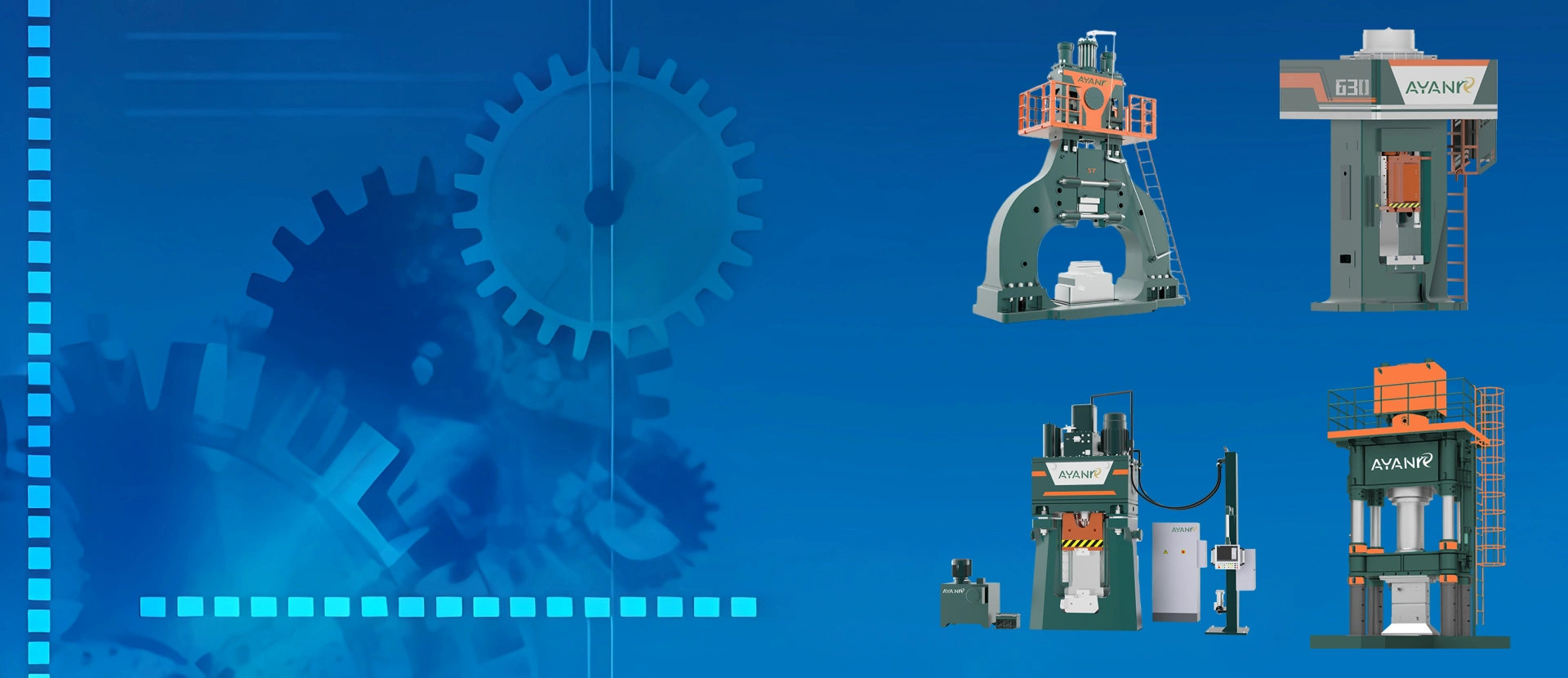
On high-voltage long-distance transmission at 132 kV to 765 kV, the fittings are the weak link that decides whether the line stays up. If the quality of a fitting is poor, the whole line fails with it.
Cast parts carry large internal voids. Exposed to wind and sun year after year on a tower, they are prone to brittle fracture, and a brittle fracture gives no warning before it happens.
Forged parts come out of the die with the grain aligned along the stress direction and with zero porosity. That is why their fatigue life runs 60% higher than a casting's.
Put that on a real network. Across an entire 400 kV transmission network, one shackle breaking is not the loss of one fitting - it is the loss of the line, and the outage that follows costs far more than the fitting ever did.
A fitting on an overhead line is not loaded once. It carries the conductor tension continuously and takes every wind-induced vibration, every galloping event and every thermal cycle on top of it. Failure therefore comes from fatigue rather than from a single overload, which is why the internal structure of the part matters more than its tensile figure on paper.
A casting solidifies with shrinkage cavities and a coarse, discontinuous grain structure. Those voids act as stress raisers, and a crack that starts at one of them travels through the section without meeting a grain boundary that runs the right way to stop it. A forging starts as worked metal: the deformation closes the internal voids and turns the grain to follow the shape of the part, so a crack has to work against the grain flow to propagate.
That is the whole argument for forging power fittings, and it is why the choice of press matters as much as the choice to forge. A machine that cannot repeat its blow energy cannot repeat that grain structure part after part.
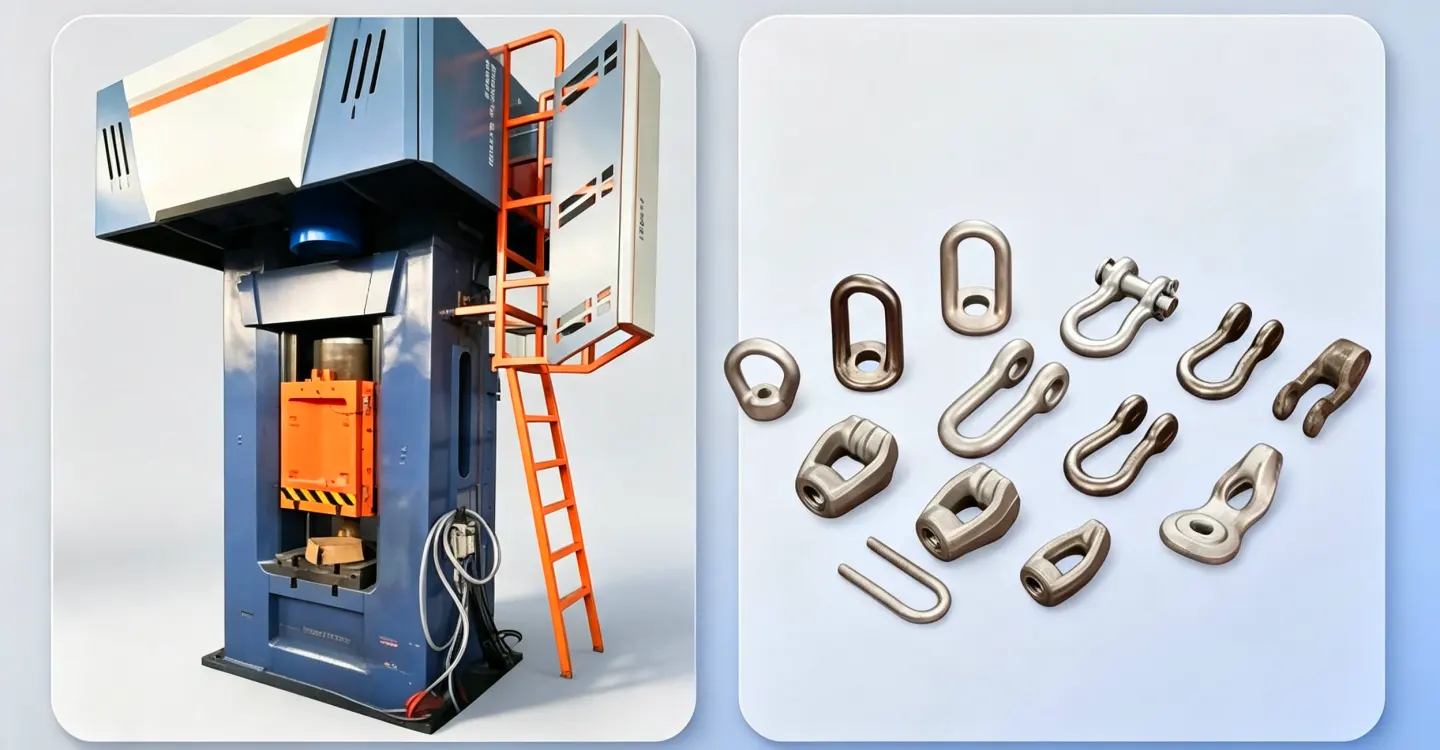
| Power fitting | Single weight | Recommended AYANK model |
|---|---|---|
| Shackle / U-ring | 0.3–3 kg | J58KA-250 / 400 |
| Turnbuckle / Screw coupling | 0.5–5 kg | J58KA-400 / 630 |
| Eyebolt / Stud | 0.2–2 kg | J58KA-250 / 400 |
| Ball head / Fork joint | 0.5–4 kg | J58KA-400 / 630 |
| Insulator hardware / Suspension point parts | 1–6 kg | J58KA-630 / 1000 |
| Large specification dead-end / Strain clamp | 3–10 kg | J58KA-1000 / 1600 |
The J58KA electric screw press against a double-disc friction press and a CNC hammer, on the six things that decide which machine a small power forging belongs on:
| Dimension | J58KA electric screw press | Double-disc friction press | CNC hammer |
|---|---|---|---|
| Blow energy | Programmable, ±1.5% | Foot-operated, ±10% | Foot-operated, ±8% |
| Energy saving | 60–70% less than a friction press | High energy consumption | Medium energy consumption |
| Die life | High - no bottom dead centre, no die impact | Medium | Low - high impact |
| Noise and vibration | Medium | Medium | High |
| Automation integration | Easy to match with robots | Difficult | Medium |
Small power forgings come down to three conditions: large batch, strict precision, and multi-cavity dies. On all three, the electric forging screw press is the most suitable main machine. Programmable energy is what makes a multi-cavity die work, because every cavity has to fill on the same blow.
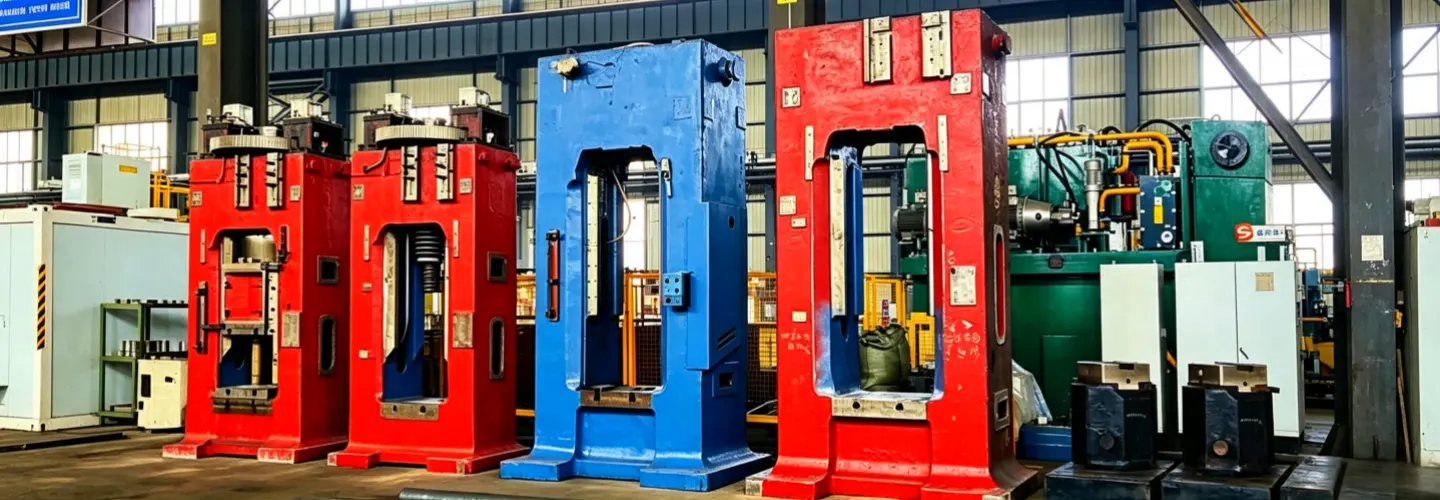
If the choice is still open on tonnage and drive, the working principle, the energy path and the model sizing are set out in how an electric screw press machine is sized for a forging.
Common materials for these parts:
Billets are heated on a medium-frequency furnace with infrared temperature measurement, which is what keeps the grain from coarsening before the part ever reaches the die. Galvanising and hot-dip galvanising allowance is reserved at the design stage.
The line runs: medium-frequency furnace, electric screw press, trimming press, graphite spraying robot, inspection station. A six-axis robot picks the part and sprays the die, and one person monitors two machines.
Reference cycle time for a shackle is 10 to 12 seconds per die at four pieces per die, and the published shift output on that reference is 2,500 to 3,000 pieces. Ask for the figure against your own part before planning capacity, because both move with part size and die layout.
A sales manager designs the detailed forging solution against your part.
| Dimension | Forging (J58KA) | Casting |
|---|---|---|
| Internal quality | Zero porosity | Prone to shrinkage cavities |
| Fatigue life | 30–50% higher | Baseline |
| Batch consistency | ±1.5% energy | Large fluctuation |
| Die life | 8,000–12,000 pieces | Sand mould unlimited, but single piece poor |
| Long-term maintenance cost | Low - fewer broken-part claims | High |
With those five, AYANK engineers return a process plan, a J58KA selection and a CIF quotation within 24 hours.
Because the failure mode on a line is fatigue, not single overload. A casting solidifies with shrinkage cavities and a coarse grain, which act as stress raisers and give a crack a path through the section. Forging closes those voids and turns the grain to follow the part, so fatigue life runs higher and the fracture is less sudden.
Blow energy. The J58KA is programmable to within plus or minus 1.5%, against roughly plus or minus 10% on a foot-operated friction press. On a multi-cavity die every cavity has to fill on the same blow, and that repeatability is what makes the die work. The screw press also uses 60 to 70% less energy and gives longer die life.
Shackles from 0.3 to 3 kg are quoted on the J58KA-250 or J58KA-400. Confirm against the drawing, because the largest section and the arc that has to fill matter as much as the weight.
Yes, and the J58ZKA servo direct drive is the better choice there. Its energy closed loop keeps the blow from over-striking a soft metal, which a mechanically driven press cannot do as precisely.
100% dimensional inspection, magnetic particle testing, ultrasonic testing, tensile and yield testing to the applicable fitting standard, and a load test at 120 kN or 200 kN to customer requirement.
90 days including installation and commissioning, excluding customised models, subject to the sales manager's confirmation.
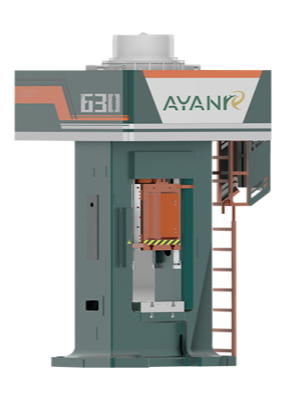
Send your forging drawing or part details — we will recommend the machine that fits and quote it.
WhatsApp +86 178 1460 1503 · info@ayankforging.com
Receive the news that you are interested in.
