If the forging hammer is chosen poorly, not only will production efficiency fail to improve, but a series of common forging problems will also appear — high energy consumption, high cost, large material waste and fast die wear. Whether you run a small blacksmith workshop, a small or medium forging plant, or a large enterprise doing precision forging for automotive parts, heavy industrial shafts or aerospace components, choosing the right hammer is what decides output, cost and margin.
AYANK FORGING, drawing on more than 70 years of experience building forging hammers, has put together a selection method that is accurate, executable and quick to adapt. It weighs equipment type, forging conditions and workshop layout together, so buyers avoid the usual traps, match the model to the job, and leave room for where their production is heading.
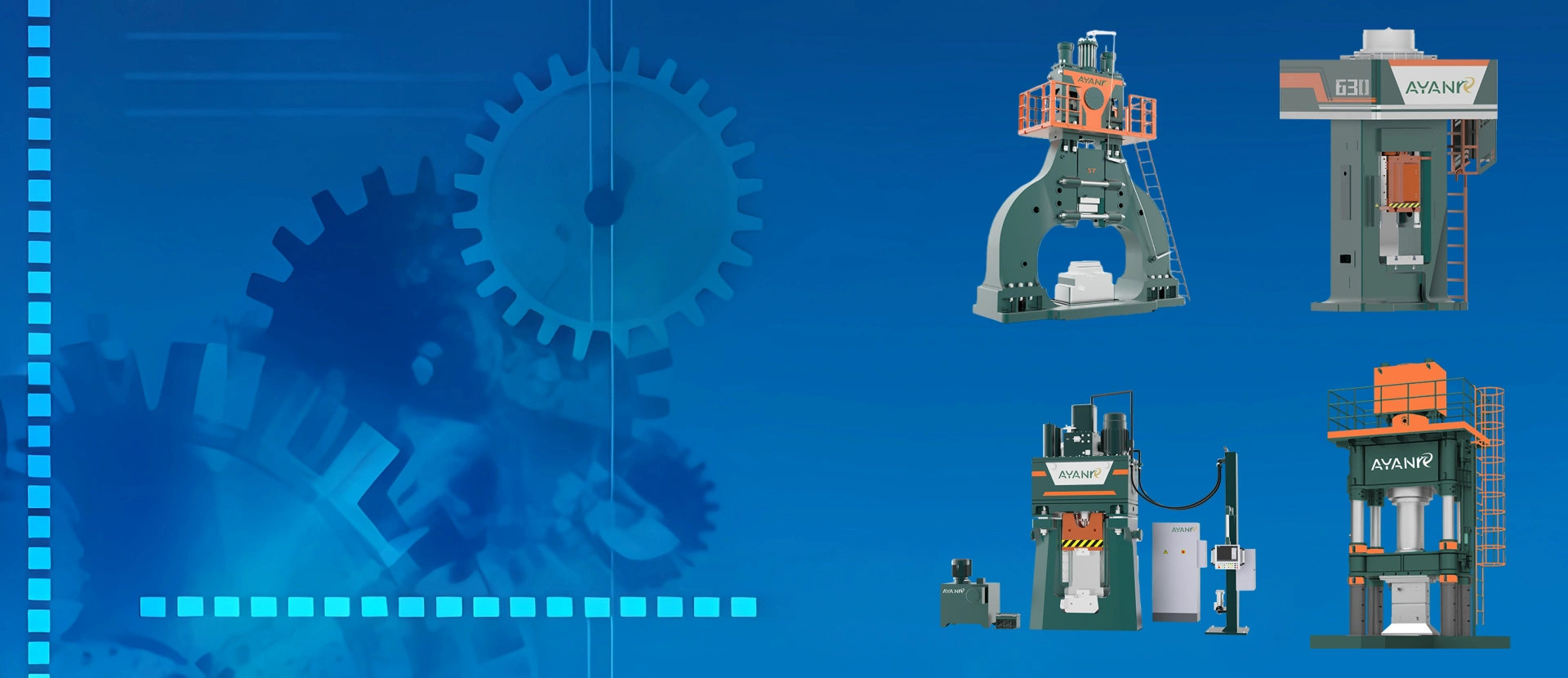
Before choosing a hammer, it helps to know how each type actually works and where it is used. The hammers commonly sold today fall into two families: die forging hammers and open-die forging hammers. Die forging equipment divides further into six groups: CNC fully hydraulic die forging hammer, fully hydraulic die forging hammer, electric screw press, servo direct-drive electric screw press, hot die forging press and multi-directional forging hydraulic press. Open-die equipment divides into five: pneumatic hammer, single-arm fully hydraulic open-die forging hammer, double-arm fully hydraulic open-die forging hammer, fully hydraulic free forging hammer and blacksmith hydraulic press.
The sections below distinguish them by working principle and application:
What are the advantages of a hydraulic forging press?
Precise, stable pressure control: the hydraulic system delivers a continuous, adjustable force. Compared with impact-type hammers, this static pressing action works more evenly through the section, lowers internal stress and improves forging quality.
|
Y13A Series Quick Open-Die Forging Hydraulic Press
|
Y16A Multi-directional Forging Hydraulic Press
|
Blacksmith Hydraulic Press
|
|
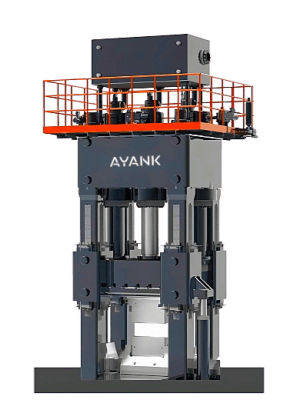
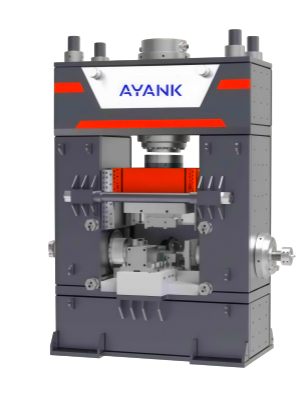
Three-beam, four-column prestressed frame with extended guiding ensures high rigidity and strong resistance to eccentric loads, making it suitable for long shafts and large cross-section forgings. The hydraulic system uses two-way cartridge valve integrated control with multi-stage high-speed pressure relief, giving fast approach and return speeds, stable pressing, low impact and high efficiency. It handles upsetting, drawing out, punching, hole expanding, bending and offsetting, balancing efficiency with forging consistency.
|
Eight cylinders work vertically and horizontally, either together in one pressing cycle or in a programmed sequence, covering complex structural forgings that normally take several operations. Material utilization is high, and the forged part comes out with no flash and no die draft angle, so near-net shaping is possible. That cuts machining stock, shortens the manufacturing cycle and lowers the overall cost of the forging.
|
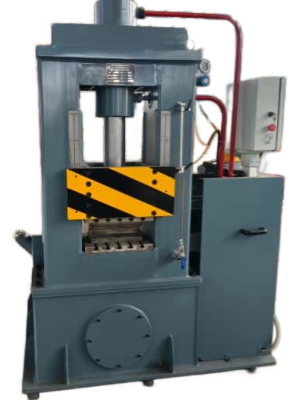
Small blacksmith forging presses — typically 25 t, 50 t and 150 t models — run far quieter than a traditional hammer and noticeably improve the working environment. The series covers drawing out, upsetting, punching, shearing, forge welding, twisting and bending. Typical work includes small farm tools such as sickles and hoes, and the machines are popular with blacksmiths and metal artists at home and abroad.
|
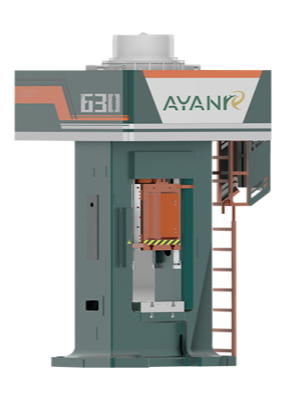
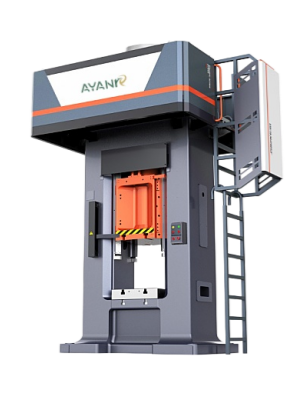
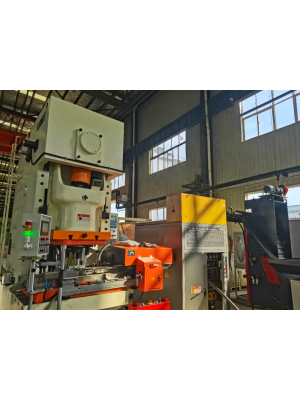
The electric screw press is the main press type that combines impact force with controllable energy and high precision. It performs closed-die forging and precision forming, and it is more stable, more energy-efficient and easier to automate than a traditional friction hammer. It marks the shift of modern die forging lines from experience-based hammering to quantifiable process control, which is why it has become core equipment on automated forging lines.
|
J58KA Series Electric Screw Press
|
J58ZKA Series Servo Direct-Drive Electric Screw Press
|
|
Driven by a variable-frequency motor, the flywheel and screw deliver controllable blows. Striking energy is programmable with high repeatability; the frame is rigid, the slider guides accurately, and the machine resists eccentric loads well. There is no fixed bottom dead center, so the press cannot jam. Compared with a friction press it is more energy-efficient, quieter and easier to maintain. Suitable for closed-die and precision forging — valves, gears and claw poles, connecting rods, flanges, hardware tools, tableware — and especially good at non-ferrous precision work in aluminum and copper, and at building automated lines with manipulators.
|
An AC permanent-magnet synchronous servo motor drives the flywheel and screw directly, with zero transmission: motor torque goes straight to the screw and the gears, belts and clutch disappear. The transmission path is short, energy loss is minimal, and overall transmission efficiency reaches 85–90%. A digital control system replaces the friction disc drive and gives closed-loop control of both striking energy and stroke position. The result is a simple structure with high efficiency, low noise and low vibration. Suitable for hot precision forging, precision pressing, coining and finishing of steel, aluminum, copper and difficult-to-deform alloys; especially good at closed-die forging and near-net shaping of complex parts, and ready to interface with manipulators or robots. |
Closed-die forging machines press heated metal inside shaped dies to produce accurate, repeatable, high-strength parts for industrial manufacturing.
|
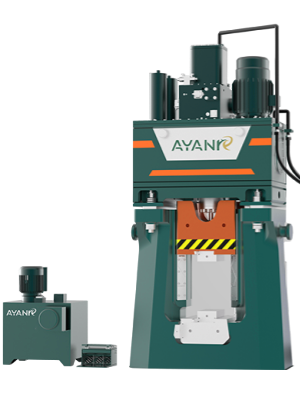
C92KA CNC Full Hydraulic Die Forging Hammer
|
C86YA Full Hydraulic Die Forging Hammer
|
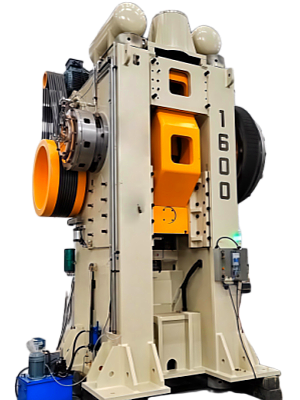
Hot Die Forging Press
|
Multi-directional Forging Hydraulic Press
|
|
Especially suitable for multi-variety, large-batch precision forging lines, and for thin-walled parts, irregular shapes that are hard to fill, thin-rib parts and forgings with tight tolerances. It also suits precision forging of high-density irregular parts in aerospace.
|
Especially suitable for multi-variety, small-to-medium batch and large-batch precision forging lines, and for thin-walled parts, irregular shapes that are hard to fill, and high-density precision forgings. It also suits low-temperature forging and work with high demands on surface finish and chemical properties. Versatility is high, so it handles a wide range of die forgings without dedicated tooling changes.
|
The hot die forging press places heated metal in the die and forms it under high-pressure impact or static pressure, producing closed-die and precision forgings. It suits mass production of automotive parts and hardware components.
|
The multi-directional forging hydraulic press drives vertical and horizontal rams together or in sequence to forge and laterally extrude heated metal, including lateral piercing. Tees, valve bodies and parts with side bosses or inner cavities come out in one cycle, with little or no flash, high material utilization and a dense, precise forging.
|
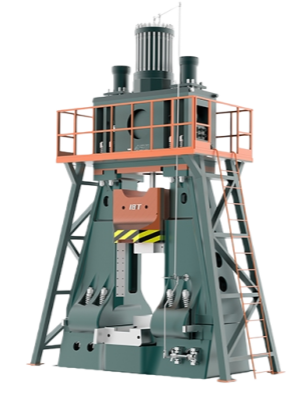
An open-die forging machine — free forging equipment — repeatedly presses a hammer head or hydraulic slide onto a heated billet held on open anvil tools such as a flat or V-shaped anvil. It performs upsetting, drawing out, punching, hole expanding and shoulder pressing to make shafts, shells, rings and large forgings. Dies are simple and flexibility is high, which suits single-piece and small-batch heavy forgings, but accuracy and material utilization are lower than in closed-die forging.
|
C66YA Full Hydraulic Open-Die Forging Hammer
|
C61YA Full Hydraulic Open-Die Forging Hammer
|
C41A Pneumatic Forging Hammer
|
Y13A Quick Open-Die Forging Hydraulic Press
|
|
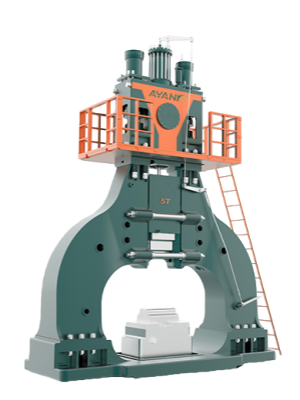
A high-pressure hydraulic system drives the hammer head through differential striking — oil pressure switched between upper and lower chambers — plus a fast return. Under open-die conditions it performs drawing out, upsetting, punching, shoulder pressing and shaping on medium-to-large shafts, shells and rings. The double-arm arch frame gives a large working space and stable guidance, and striking energy is adjustable through the operating valves or servo control, which suits single-piece and small-batch heavy forging. |
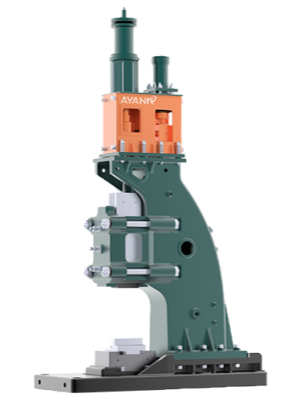
The C61YA uses a C-frame structure. Hydraulic drive — usually with a hydraulic-pneumatic accumulator — gives the hammer head controllable blows for drawing out, upsetting, punching, shoulder pressing, bending and shaping on shafts, discs, rings and shells. Striking energy is adjustable, blow frequency is high, energy use is relatively low and the machine adapts well to different billet sizes.
|
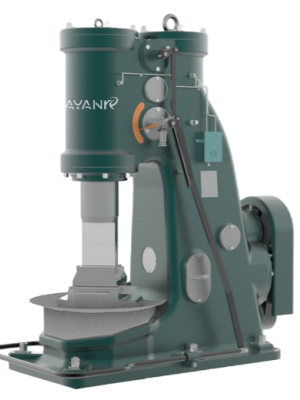
The C41A pneumatic hammer uses compressed air to drive the hammer head back and forth, performing drawing out, upsetting, punching, shoulder pressing, bending and shaping on shafts, discs, rings and small-batch work. The structure is simple, start and stop are instant, striking force is set by foot pedal or handle, and the trade-off is higher energy consumption and more vibration.
|
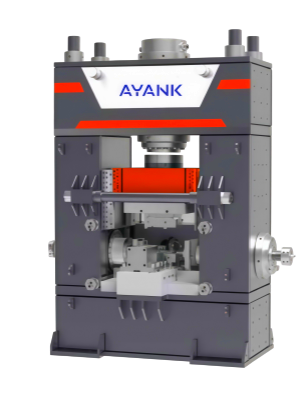
A three-beam, four-column structure gives high rigidity and strong resistance to eccentric loads, and a movable worktable makes anvil changes and loading easier. Suitable for quick upsetting, drawing out, punching, hole expanding, bending and offsetting on medium-to-large shafts, shells and rings, in single pieces and small batches, or as support to a ring rolling line.
|
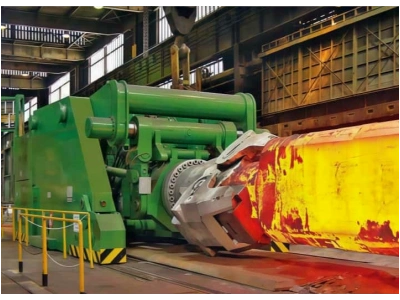
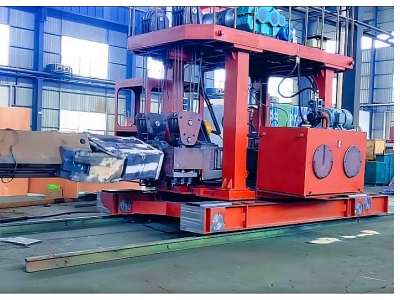
Forging manipulators clamp, carry, rotate and position hot forgings, and usually work alongside a hydraulic press or hammer. They take on the heavy handling and posture adjustment that would otherwise cost time at the anvil, and they are what makes a line safe and continuous.
|
CNC Forging Manipulator
|
Rail-Bound Forging Manipulator
|
|
A CNC forging manipulator clamps, carries, rotates and positions hot forgings automatically, and interfaces with heavy equipment such as hydraulic presses and free forging hammers to make a line continuous. |
The rail-bound, gantry-type manipulator travels on rails and uses heavy clamp arms to grip, turn, lift and position hot billets and forgings. It suits free forging and heavy work: load capacity and travel are large, and it acts as the heavy auxiliary machine for an automated large-tonnage press line. |
|
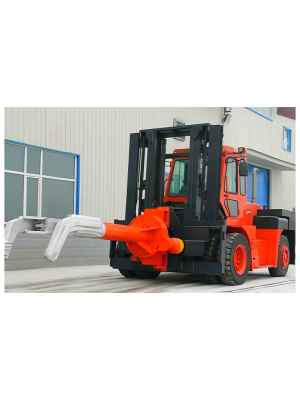
Tire-Type Charging Machine
|
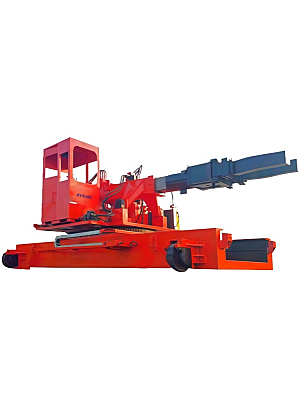
Rail-Bound Charging Machine
|
Self-Propelled Trackless Handling Machine
|
|
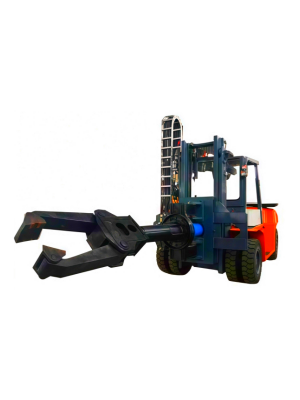
The tire-type charging machine sits on a forklift chassis, so it moves easily. With fork or clamp attachments it loads and unloads billets at the furnace and moves material around the shop, coping with multi-station layouts and cutting handling time. |
This machine runs on rails and moves ingots, square billets, discs and ring forgings around the plant. It is widely used in free forging, on ring rolling lines, for furnace charging and for heavy material handling. |
This machine moves and positions workpieces without fixed rails, which makes material handling flexible across forging shops, production lines and heavy industrial work. |
Ring rolling machines produce the seamless forged rings used for bearings, flanges, gear blanks, railway parts, wind power components and heavy machinery.
|
CNC Radial-Axial Ring Rolling Machine
|
Vertical Ring Rolling Machine
|
|
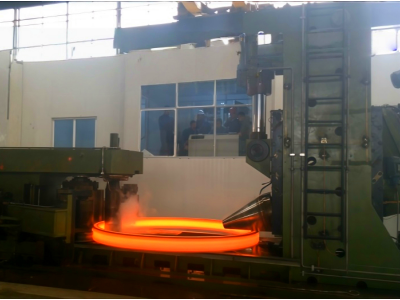
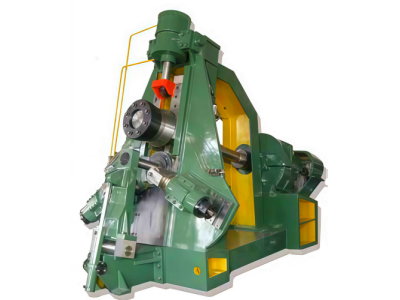
While the ring is rolled radially and expanded, axial cone rolls control height and end faces to suppress bulging and tilting, giving closed-loop control of diameter, wall thickness, height, roundness and flatness. It turns out bearing races, flanges, gear blanks and wind power or pressure vessel flanges efficiently. |
The vertical ring rolling machine produces seamless rings, bearing outer rings, gear blanks, pipe flanges and industrial annular parts. It is widely used in machinery manufacturing, automotive, railway, shipbuilding, petroleum and energy.
|
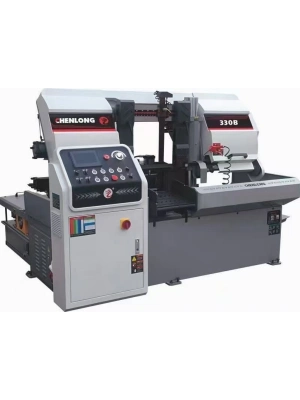
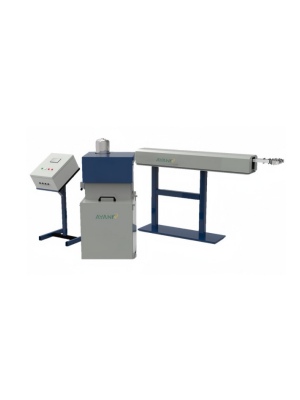
Billet cutting machines and bar shearing machines prepare material before forging. They set the blank weight accurately, which protects material utilization and keeps cycle times predictable.
|
Billet Cutting Machine
|
Fully Automatic High-Speed Metal Circular Sawing Machine
|
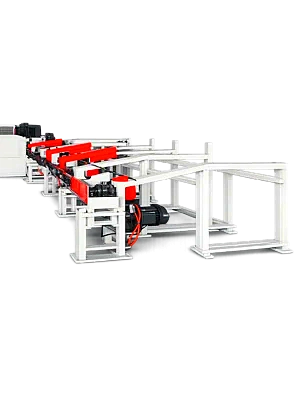
Bar Shear
|
|
The billet cutting machine cuts bar and billet to length before forging. It suits closed-die forging lines, billet preparation and material sizing, and keeps the cut weight consistent. |
The high-speed circular sawing machine cuts metal bar and billet accurately before forging. It suits hot forging preparation, bar processing and industrial lines where material has to be pretreated efficiently. View Details |
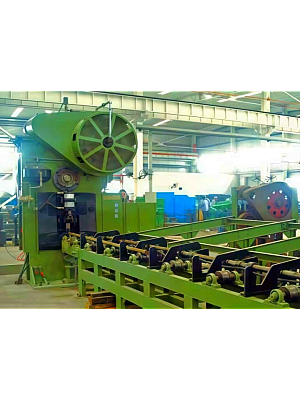
The bar shearing line cuts bar into forging billets. It suits large-scale billet preparation, closed-die forging production and automated material processing. View Details |
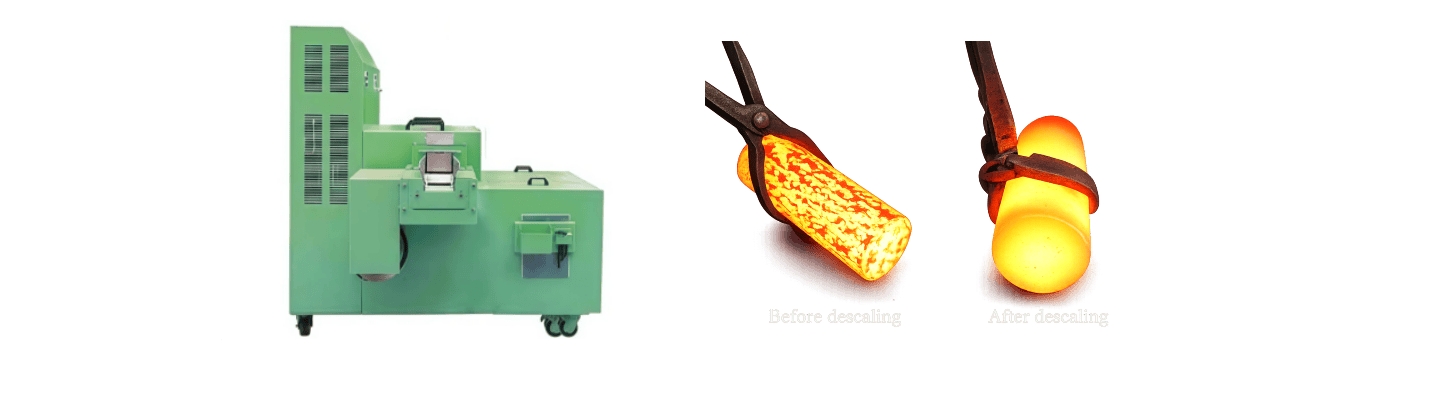
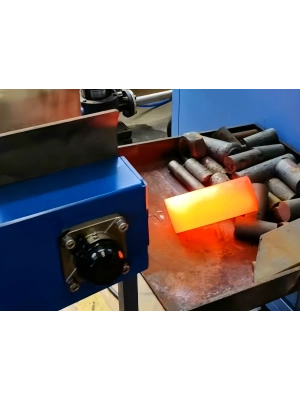
Descaling equipment removes oxide scale from the surface of a heated billet before it enters the die, which protects surface quality, saves die wear and keeps the part consistent from one shift to the next.
|
Descaling Machine
|
|
The descaling machine strips oxide scale off the billet after heating. Surface quality improves, die wear drops, and defects caused by scale pressed into the forging are avoided. |
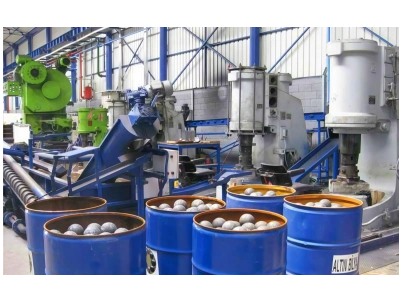
|
Steel Ball Skew Rolling Machine
|
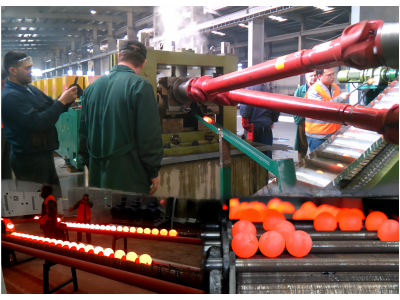
Pneumatic Hammer Forging Steel Ball Production Line
|
|
The skew rolling machine makes steel balls automatically and suits mines, cement plants and grinding media producers who need a high, steady output.
|
The high-energy impact of the pneumatic hammer refines the grain and makes the structure very dense. Forged balls have deep hardness, resist wear and break less often. The line is simple, durable and cheap to run, which suits continuous heavy duty in mines and cement plants; the trade-offs are striking noise, and dimensional accuracy and automation that fall short of hydraulic closed-die forging. |
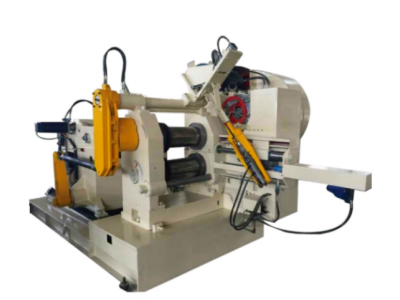
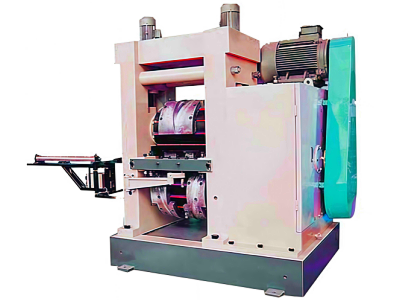
Roll forging machines and cross wedge rolling machines both form metal by rotating tools. The roll forging machine grips the billet between sector rolls carrying dies and completes blank making or preforming of long parts such as connecting rods and wrenches; it saves material and lets the flow lines follow the contour. The cross wedge rolling machine compresses the billet radially with wedge-shaped rolls so it extends axially, which suits high-volume shaft blanks such as half shafts and stepped shafts, at very high output and good coaxiality. Both are efficient, material-saving and leave continuous flow lines, which makes them right for mass production — but the shapes they can produce are limited, the dies are dedicated and the investment is relatively large.
|
Roll Forging Machine
|
Cross Wedge Rolling Machine
|
|
The roll forging machine performs pre-forging and forming ahead of final forging. It suits closed-die lines that need better material distribution and higher output. |
The cross wedge rolling machine rolls shaft-type parts to shape. It suits efficient production of stepped shafts, automotive parts and preforms. |
|
Nut Forging Automated Production Line
|
Automatic Graphite Spraying Machine
|
Multi-Functional Prestressed Inserted Die Holder
|
Descaling Device
|
|
The automatic nut production line handles feeding, heating, conveying, forging and pressing of nut blanks. It suits efficient nut manufacturing and large-scale forging lines.
|
The automatic graphite spraying machine applies lubricant during forging. It replaces manual spraying, lubricates the die more evenly, keeps the operator clear of the die area and makes every cycle the same. |
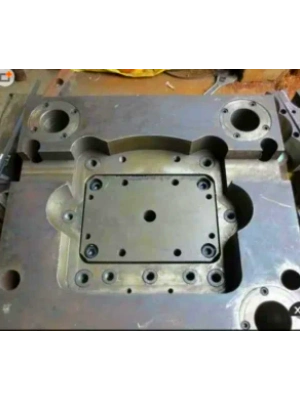
The multi-functional prestressed inserted die holder carries the die and adds production flexibility. It suits screw presses, friction presses and high-energy forging presses. View Details |
The descaling device sits on the line and removes oxide scale from the billet before forming. It gives a cleaner surface, better workpiece quality and longer die life. |
For a shortlist of hammers by application — open-die, closed-die, steel, small and heavy forgings — see best forging hammer by application.
If you are not sure which equipment fits your part, send us the product information. We will plan the whole forging process around your line and find the configuration that suits you.
Receive the news that you are interested in.