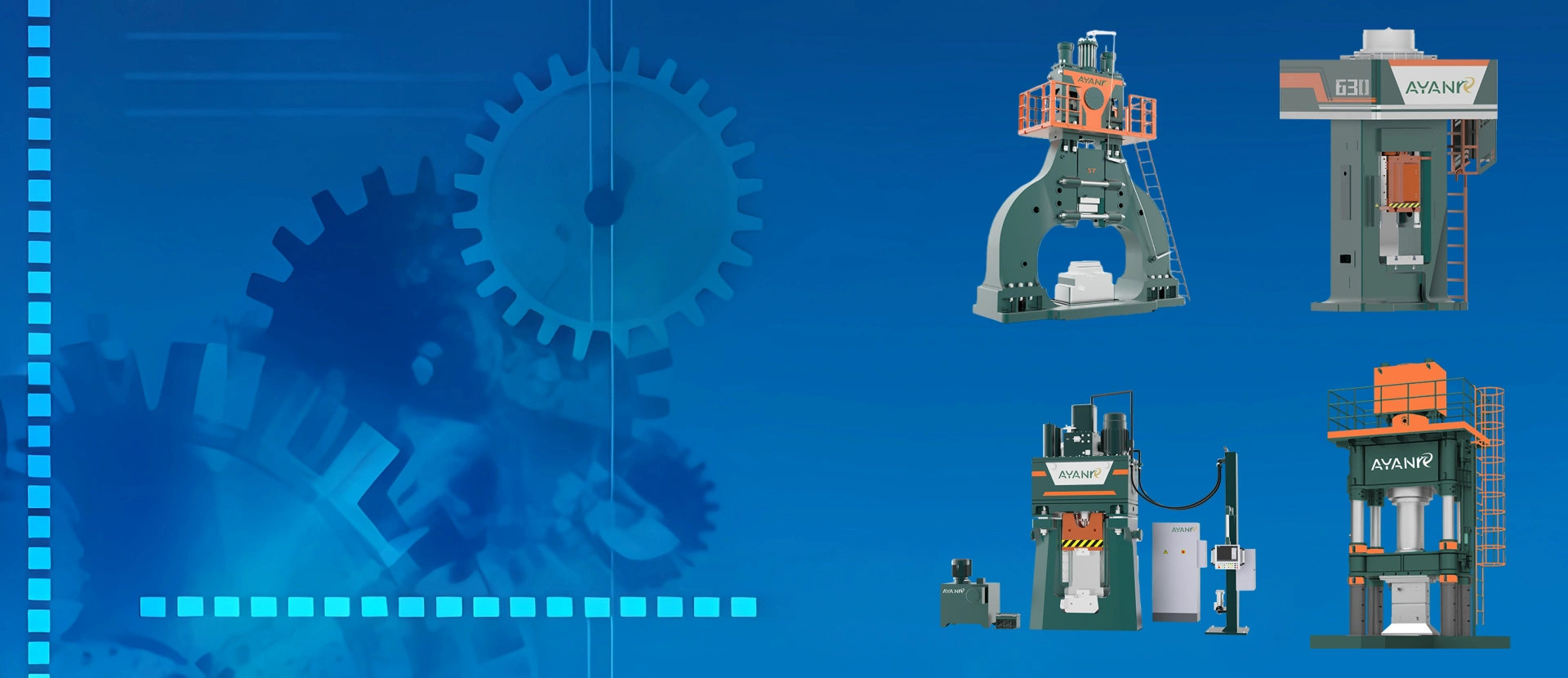
If you are choosing a free forging hammer, you will meet two types. One is the traditional steam or air hammer. The other is the full hydraulic open die forging hammer, which goes after higher efficiency, less pollution and better control of striking energy. Both are used for the same family of free forgings - agricultural machinery shafts, flanges, pin shafts and the like.
The AYANK C66YA series belongs to the second group. What actually differs in a full hydraulic hammer? The C66YA is set out below from its structure, its performance and its typical applications, so you can judge which type of hammer fits your shop.
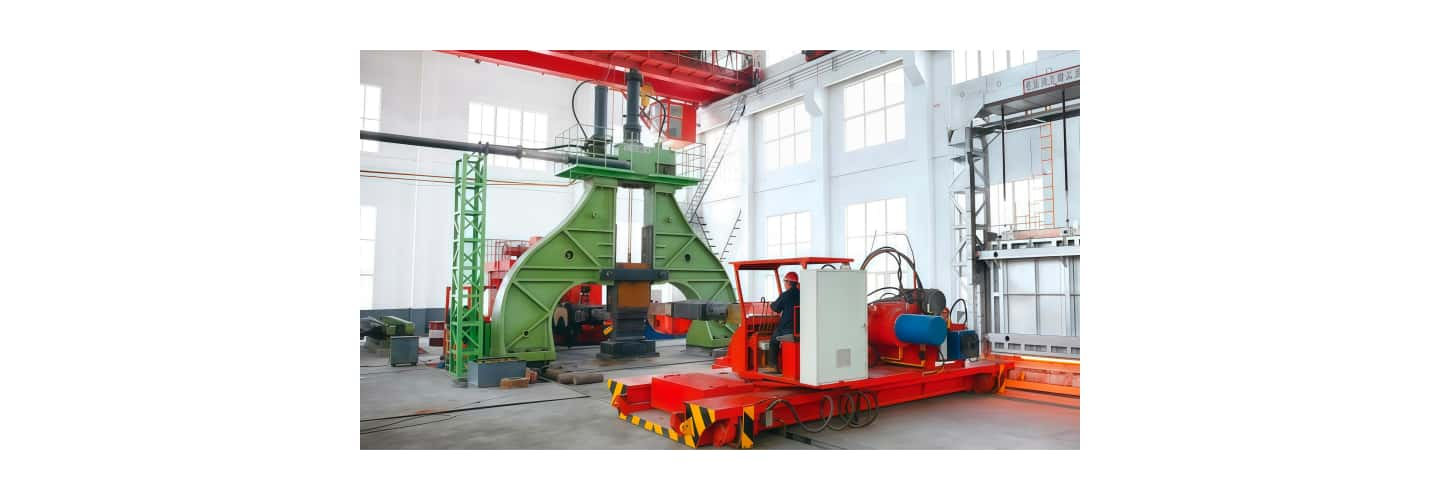
A steam or air hammer relies on steam from a boiler to drive the ram. The energy path is: fuel, boiler, steam, cylinder, ram. That chain is where the loss happens - during conversion, overall efficiency is usually below 2%.
An electro-hydraulic hammer replaces the whole steam system with a hydraulic power unit, an accumulator and a servo valve. The path becomes: electrical energy, hydraulic pump, accumulator, servo valve, ram. Comprehensive energy utilization reaches 20%.
That is a tenfold gain in overall energy utilization. It also removes the auxiliary plant entirely - no boiler, no steam pipes, no compressed air network. Forging the same part, a full hydraulic hammer saves 70% to 80% of the energy a steam or air hammer needs, and the energy saved is profit kept.
The C66YA uses an arch-type structure on a full hydraulic power unit, which gives it better rigidity in long-shaft stretching and in rounding work.
The arch frame spreads the impact force evenly through the body during a strike. Together with the large anvil, that keeps the whole machine steady under continuous striking and cuts foundation vibration - and steady is what gives a long shaft its consistency along its length.
Open die forging involves eccentric striking: stretching one side of a long shaft, flattening the edge of a flange. On a steam or air hammer that eccentric load accelerates guide rail wear. The C66YA uses double X adjustable guide rails combined with tie rods, which absorb the lateral force and take load off the hammer rod and the dies.
The core of the hydraulic system is a servo differential spool valve combined with a poppet valve - an AYANK patented design. Flow capacity reaches 10,000 L/min, which is what allows full-energy continuous striking: more than 50 blows without pressure drop. There is no back pressure on the return stroke, so cycle frequency at the same tonnage runs higher than on a conventional hydraulic hammer.
Striking energy is precisely controllable, held to within plus or minus 1.5% through PLC programming, with high repeat accuracy - which is what keeps forging quality consistent from the first blow to the last.
| Comparison item | C66YA full hydraulic | Steam/air hammer |
|---|---|---|
| Energy efficiency | 20%+ | Below 2% |
| Continuous striking | Full energy, 50+ blows | Limited by steam or air supply |
| Guide rail wear resistance | High, X-shaped guide | Low, ordinary guide |
| Foundation vibration | Low, 1:20 ratio on an anvil base | High |
| Safety hazards | None - no boiler | Boiler explosion risk |
What that means in a free forging workshop:
Thirteen models from C66YA-35 to C66YA-875, covering 35 kJ to 875 kJ of striking energy.
| Item | Unit | C66YA-35 | C66YA-70 | C66YA-120 | C66YA-140 | C66YA-175 | C66YA-210 | C66YA-245 | C66YA-280 | C66YA-350 | C66YA-420 | C66YA-520 | C66YA-630 | C66YA-875 |
|---|---|---|---|---|---|---|---|---|---|---|---|---|---|---|
| Strike energy | kJ | 35 | 70 | 120 | 140 | 175 | 210 | 245 | 280 | 350 | 420 | 520 | 630 | 875 |
| Falling mass | kg | 1300 | 2650 | 4100 | 5100 | 6300 | 7500 | 8200 | 8800 | 12400 | 14400 | 16000 | 20000 | 28000 |
| Maximum stroke | mm | 1000 | 1260 | 1450 | 1500 | 1730 | 1800 | 1850 | 1900 | 2000 | 2300 | 2480 | 2600 | 2600 |
| Strike frequency | strokes/min | 60-75 | 60-75 | 60-75 | 60-75 | 50-65 | 45-60 | 45-60 | 40-55 | 40-55 | 40-55 | 35-50 | 33-48 | 40-44 |
| Main motor power | kW | 55 | 55 | 55 | 55 | 55 | 55 | 55 | 55 | 55 | 75 | 75 | 75 | 75 |
| Number of motors | pcs | 2 | 3 | 4 | 5 | 6 | 7 | 7 | 8 | 10 | 8 | 10 | 16 | 18 |
| Rail spacing | mm | 460 | 550 | 650 | 710 | 760 | 890 | 890 | 900 | 980 | 1120 | 1200 | 1550 | 1650 |
| Operating space | mm | 1800 × 1250 | 2300 × 1380 | 2700 × 1470 | 3500 × 1650 | 3700 × 1930 | 4200 × 2000 | 4200 × 2000 | 4200 × 2250 | 4730 × 2350 | 4700 × 2450 | 5000 × 2780 | 5170 × 2800 | 5170 × 2700 |
| Lower anvil mirror height | mm | 750 | 750 | 760 | 760 | 880 | 880 | 900 | 900 | 900 | 950 | 1200 | 1200 | 1250 |
| Main engine dimensions | mm | 3600 × 1500 × 6300 | 4500 × 1700 × 7000 | 5100 × 2300 × 7800 | 5900 × 2300 × 8000 | 6300 × 2500 × 9000 | 6740 × 2500 × 9500 | 6740 × 2500 × 9600 | 6920 × 2600 × 10000 | 7720 × 2900 × 10600 | 8380 × 2950 × 11500 | 8700 × 3000 × 12000 | 8930 × 3100 × 12500 | 9200 × 3100 × 13000 |
Get the selection wrong and you end up either short of striking energy, so the part does not deform properly because the machine is too small, or paying for energy you never use because it is too large. Three factors decide it:
| Part weight range | Recommended C66YA class |
|---|---|
| Below 50 kg | Small tonnage |
| 50–150 kg | Medium tonnage |
| 150–300 kg | Large tonnage |
| Above 300 kg | Extra-large tonnage |
The C66YA covers a wide spread of free forgings across several industries. Typical examples:
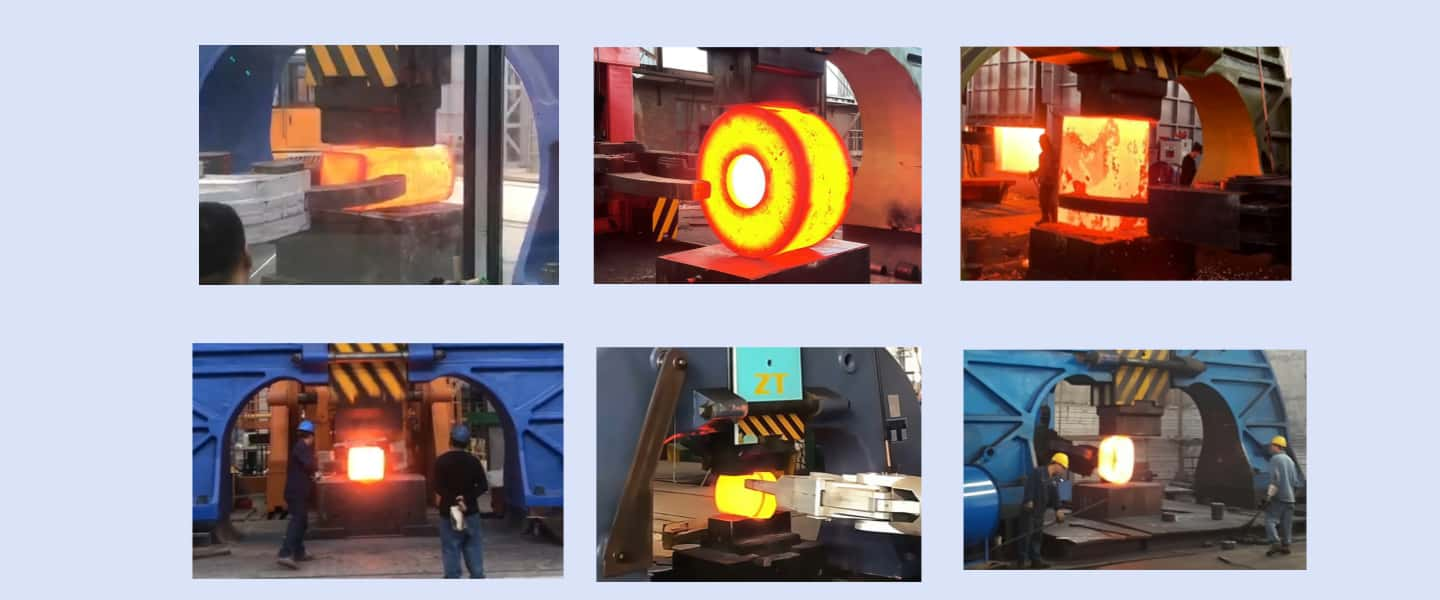
Send the part drawings and AYANK will recommend a model within 48 hours. Weight, maximum length and daily output are what the recommendation is built on; the weight ranges in the quick reference above are the starting point, not the answer.
No. It is designed specifically for open die forging. For closed precision die forging, look at the C92KA CNC hammer or the electric screw press range instead.
Yes. An optional automatic synchronized manipulator is available in 20T and 50T specifications, for coordinated operation with the hammer.
Yes. AYANK provides construction drawings based on your site information, and the 1:20 hammer-to-anvil ratio is what keeps the foundation requirement low relative to a steam hammer of the same capacity.
70% to 80% of the energy in forging the same part, and around 90% of the electricity cost against running a steam boiler - because there is no boiler, no steam pipework and no air network to keep running.
Whether you are replacing an old steam hammer or building a new workshop, the C66YA full hydraulic electro-hydraulic hammer brings the energy saving, the CNC control and the continuous striking capability that a self-use forging shop needs. The rest of the range is described on the free forging production line page.
Send your forging drawing or part details — we will recommend the machine that fits and quote it.
Receive the news that you are interested in.
