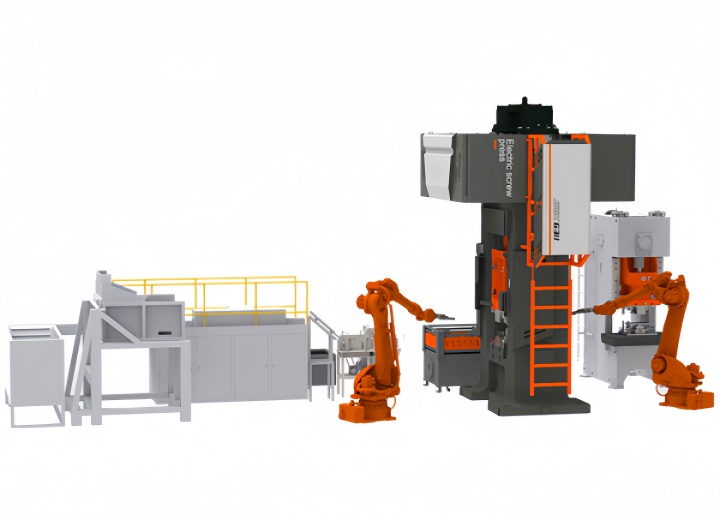
| item |
unit |
J58ZKA-250 |
J58ZKA-315 |
J58ZKA-400 |
J58ZKA-630 |
J58ZKA-1000 |
J58ZKA-1600 |
J58ZKA-2500 |
J58ZKA-4000 |
J58ZKA-6300 |
J58ZKA-8000 |
J58ZKA-10000 |
| Nominal force |
kN |
2500 |
3150 |
4000 |
6300 |
10000 |
16000 |
25000 |
40000 |
63000 |
80000 |
100000 |
| Maximum allowable working force |
kN |
4000 |
5000 |
6300 |
10000 |
16000 |
25000 |
40000 |
64000 |
100000 |
125000 |
160000 |
| Slide stroke H0 |
mm |
320 |
380 |
400 |
450 |
500 |
600 |
650 |
750 |
850 |
850 |
1000 |
| Stroke number |
min-1 |
28 |
26 |
24 |
20 |
18 |
16 |
14 |
12 |
10 |
9 |
8 |
| Min. die height H |
mm |
500 |
550 |
570 |
720 |
750 |
960 |
1050 |
1510 |
1720 |
1800 |
2160 |
| Thickness of table plate h |
mm |
120 |
120 |
120 |
160 |
200 |
220 |
250 |
310 |
320 |
320 |
360 |
| Worktable size (F*BxL*R) |
mm |
560*600 |
640*700 |
730*750 |
900*820 |
1050*920 |
1280*1000 |
1400*1200 |
2200*1680 |
2200*2000 |
2400*2200 |
3000*2400 |
| Slider bottom size(F*B x L*R) |
mm |
560*560 |
620*654 |
730*630 |
870*710 |
1020*850 |
1280*968 |
1560*1110 |
2000*1500 |
2100*1750 |
2200*2000 |
2800*2000 |
*Note:Above parameters are standard parameters and no announce if there are any changes.
Where the J58ZKA Sits in the Range
11 models · 250 t to 10,000 t · same frame, table and shut height as the J58KA
A die built for a J58KA fits the J58ZKA at the same model number, so the frame size is already settled once the die envelope is known. What the servo drive changes is not the tonnage but how tightly the energy is held: the rotor couples straight to the screw, striking frequency rises by more than 10% on the same frame, and the setpoint is closed-loop rather than stored in a flywheel. Tonnage is therefore decided on the J58KA range, and the drive on the part — the frame-by-frame breakdown runs through each size.
How the Direct Drive Works
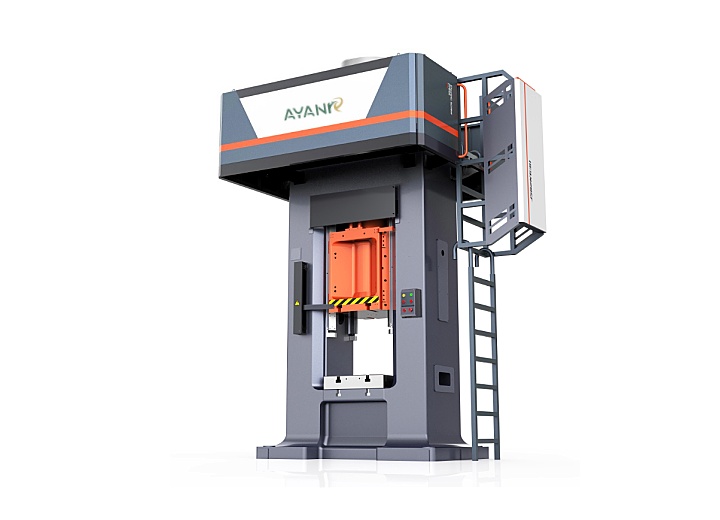
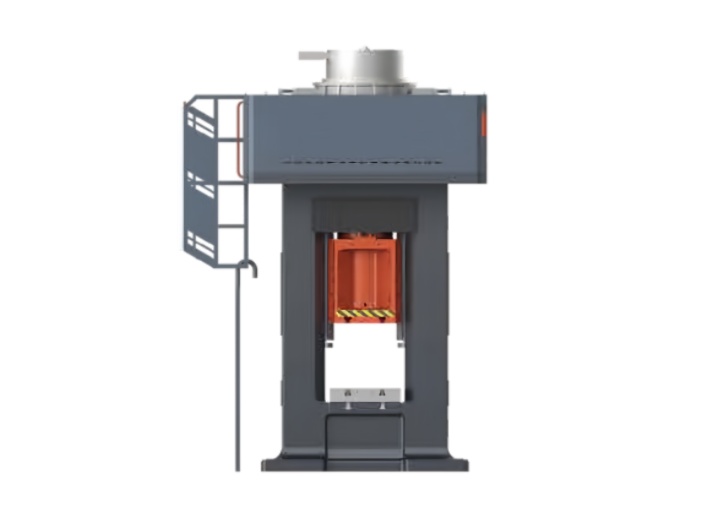
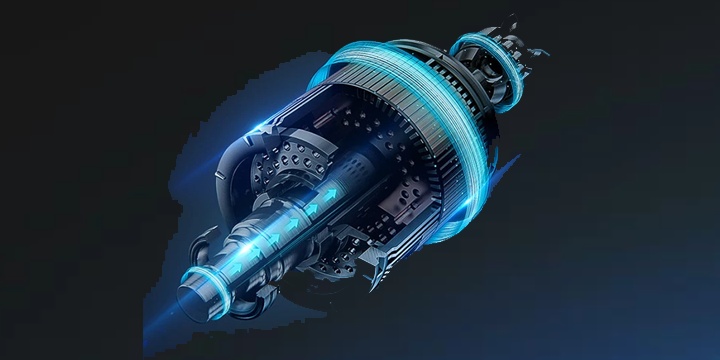
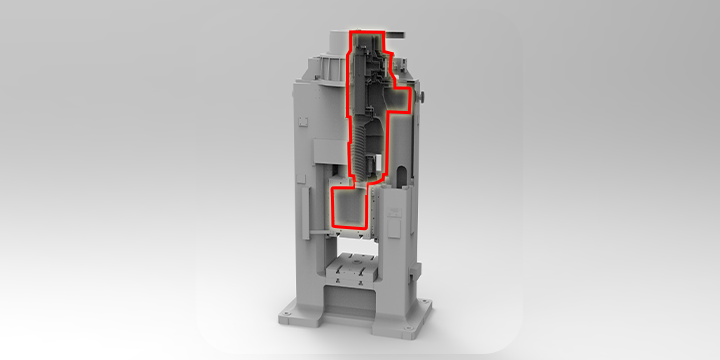
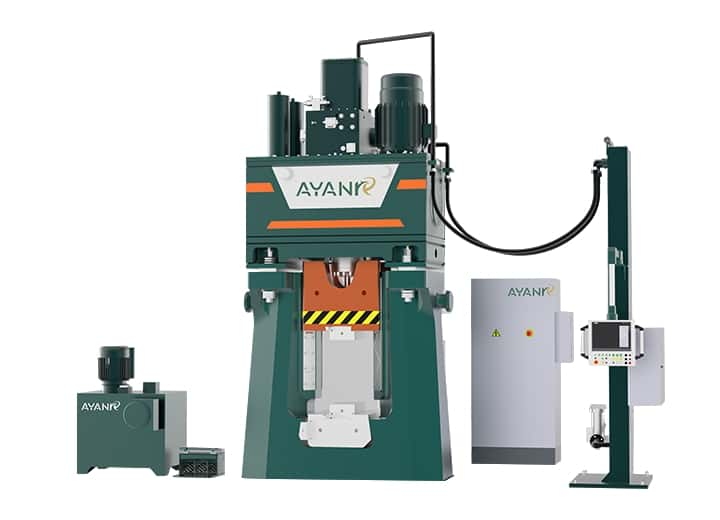
The rotor of a permanent-magnet synchronous torque motor sits on a hollow shaft and drives the screw rod directly. There is no gearbox, no belt and no coupling to align. Every part removed from that chain is a part that cannot wear, slip or add backlash, and the transmission loss that goes with it disappears.
Each of the eleven capacities is built with a motor matched to it, rather than one large motor running well below its rating on the small frames. A matched motor works near its efficient point at every tonnage, which is where the energy numbers come from: transmission efficiency more than 20% above a conventional screw press, and 8% to 10% less energy than the same press on an asynchronous drive.
Two figures on the table above are easy to confuse. Nominal force is the continuous rating. Maximum allowable working force is what the frame and the drive tolerate in a peak, and it runs roughly 1.5 to 1.6 times nominal on every model. Size the press on nominal force for the routine part, then check the heaviest part against the allowable figure — that is the order the table is meant to be read in.
The motor is water-cooled rather than air-cooled. A low-speed, high-torque motor concentrates its losses in a small frame, and air cannot carry that heat away at the duty a forging press runs. Water does, which holds the winding temperature stable through a shift — and a stable motor is what keeps the blow energy repeatable from the first stroke of the shift to the last.
A servo drive and a frequency-conversion drive answer different questions, and the choice turns on how tight the energy tolerance is on your part. The selection guide sets both drive types side by side, together with the tonnage range for each and the checks to run before a model is quoted.
Frequently Asked Questions – J58ZKA Servo Direct Drive Screw Press
Technical answers on the 250–10000T servo direct drive electric screw press.
What tonnage range does the J58ZKA servo screw press cover?
The J58ZKA series covers 11 capacities from 250T to 10000T, with nominal force from 2,500 kN to 100,000 kN. Maximum allowable working force runs from 4,000 kN on the 250T model to 160,000 kN on the 10000T model.
What is the difference between servo direct drive and a conventional screw press?
In the J58ZKA the permanent-magnet synchronous servo motor rotor is connected directly to the screw rod, so the transmission chain is much shorter. This raises transmission efficiency by over 20% and saves 8% to 10% more energy than a standard asynchronous motor, with no transmission wearing parts.
Which forging processes is the J58ZKA suitable for?
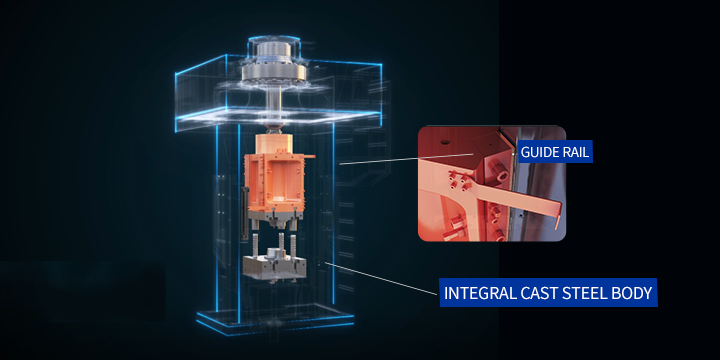
Precision hot forging, closed-die forging, coining, sizing, precision pressing, stamping and calibration. The rigid frame and servo energy control suit both single-stroke coining and automated die forging lines.
How is the blow energy controlled?
Blow energy is set electronically through the servo drive rather than by mechanical adjustment, so each stroke repeats the same energy. Stable, repeatable energy is what protects die life and keeps forged-part dimensions consistent.
How fast does the press strike?
Shorter excitation time raises the striking frequency by more than 10% compared with a standard asynchronous drive. Stroke number ranges from 28 strokes per minute on the 250T model down to 8 strokes per minute on the 10000T model.
What automation and maintenance features are available?
The intelligent control system provides remote maintenance, online detection, OEE data and maintenance reminders. Optional modules include quick mold change, mold spray lubrication and flue gas treatment. Various frame types are available for automated forging lines.
How do I choose the right model for my forging?
Send your forged-part drawing or photo, material, forging weight and production requirements. We recommend the model from the 11 capacities and send a quotation. As a reference, slide stroke ranges from 320 mm on the 250T model to 1000 mm on the 10000T model, and the worktable from 560x600 mm to 3000x2400 mm.
Is the motor water-cooled, and why?
Yes. A low-speed, high-torque motor concentrates its losses in a small frame, and air cannot carry that heat away at the duty a forging press runs. Water cooling holds the winding temperature stable through a shift, which is what keeps blow energy repeatable from the first piece to the last.
Send your forging drawing or part details — we will recommend the machine that fits and quote it.
Drawings by email, so the file arrives intact. We reply within 24 hours. Prefer to type it out? Use the message form at the bottom of this page.
Email your drawing