The forging industry has long operated in harsh working conditions characterized by vibration, noise, high temperatures, heat, and smoke. Workers face high labor intensity and risks such as mechanical injury, burns, scalds, dust hazards, radiation, and noise exposure. Consequently, forging enterprises frequently experience high employee turnover, and labor shortages have become a persistent challenge. As the industry evolves, some forging companies are rapidly advancing toward high-end, precision, and intelligent forging. They have captured the customer base demanding mid-to-high-end forging products, achieving high added value and profits, and are further progressing toward automated and intelligent forging. Automated forging production lines can not only replace manual labor but also significantly enhance production efficiency and product consistency. This helps reduce production costs and improve corporate competitiveness, leading to their increasing adoption in forging enterprises.
A forging automation production line is designed according to the shape, dimensions, material, production precision, and capacity requirements of the forgings. The forging production process is planned first, followed by the selection of corresponding main forging equipment, auxiliary equipment, and customized dedicated forging dies and fixtures. These are then integrated to form a complete automated forging production line.
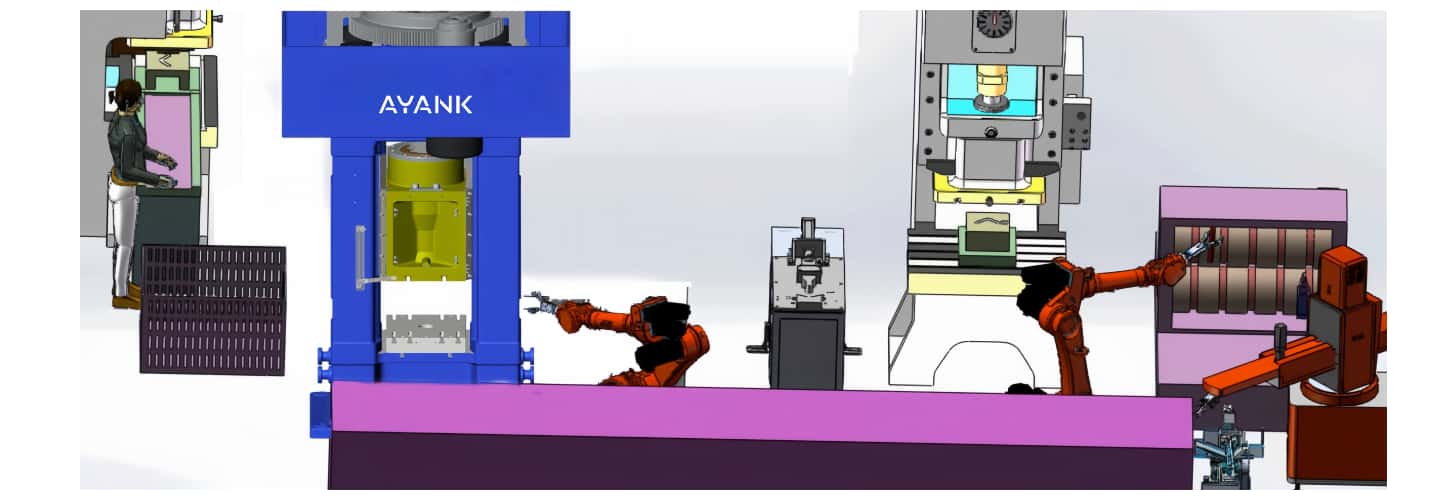
Equipment for an automated production line typically includes: cutting equipment, automatic feeders, heating furnaces, automatic positioning and transfer devices, descaling machines, main forging equipment, trimming/finishing equipment, robots, transfer stations, die lubrication systems, and a master control system. The specific configuration varies depending on the forging product and production process. Forgings with similar shapes, deformation requirements, and required impact energy can be grouped on a single production line, with switching between products achieved by changing dies and fixtures.
A forging automation production line consists of various equipment, but simply combining equipment does not constitute an automated line—this is a common misconception. Forging is a highly specialized industry involving heating and complex processes in demanding production environments. An automated forging line must withstand various challenges in actual production. Achieving stability, reliability, and durability heavily tests the overall line design capability. It requires not only consideration of the forging process but also an understanding of the performance of different equipment types and manufacturers. Design must account for coordination and collaboration between equipment, as well as various potential anomalies. Implementing safety protections and early warnings to minimize failures and damage to production facilities is crucial. Many automation lines fail to function properly due to inadequate planning.
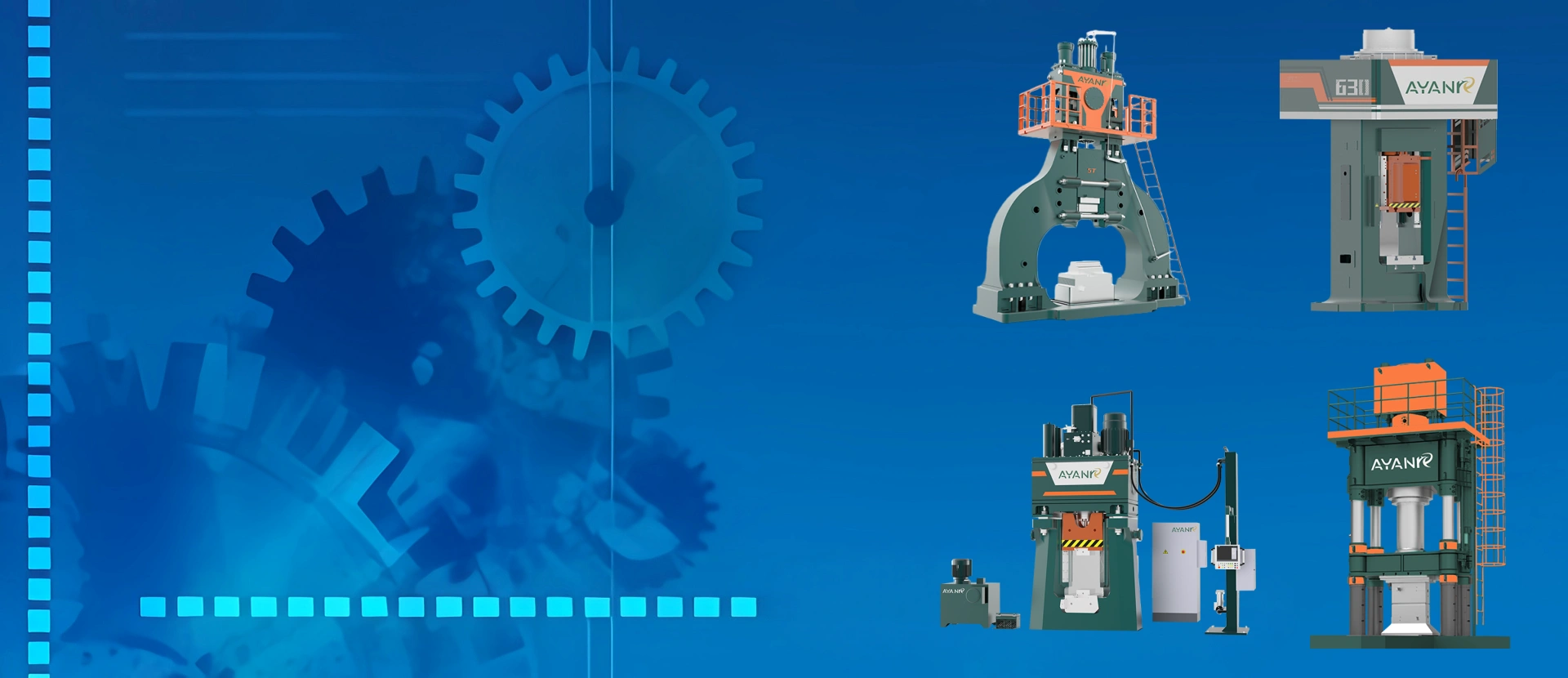
With 70 years of deep roots in the forging industry, AYANK FORGING has served over ten thousand clients across various sectors. Through providing equipment and services, we have gained in-depth understanding of real-world forging production, accumulating extensive technical expertise. We possess dozens of types of forging and auxiliary equipment and have a large pool of proven supporting equipment suppliers. After years of practice, we have launched dozens of stable and reliable automated forging production lines. These can be centered on the J58ZKA series electric screw presses or C92KA series CNC forging hammers as the main forging equipment. Integrated with forging furnaces, forging robots, trimming presses, and other equipment through a PLC-coordinated communication system capable of self-diagnostics, our lines offer reliable performance, exceptional forging consistency, and effectively reduce equipment downtime.
Our company can also undertake automation upgrades for existing forging workshops. Where upgrade conditions permit, we provide reliable automation solutions while striving to minimize customer investment.
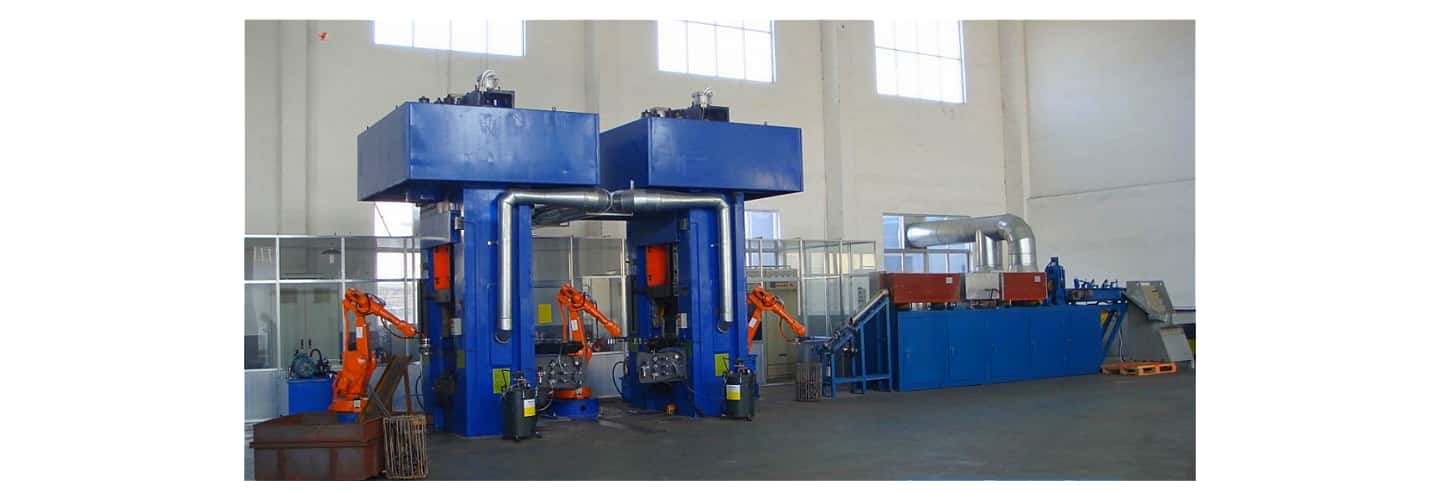
For a complete customized forging automation production line from AYANK FORGING, we arrange senior technicians to provide comprehensive forging process solutions and supply proven equipment. The line is assembled and debugged in our factory to resolve potential issues before on-site installation and commissioning at the customer's facility. We offer training, production support services, and after-sales service for the entire line to ensure stable and reliable automated operation.
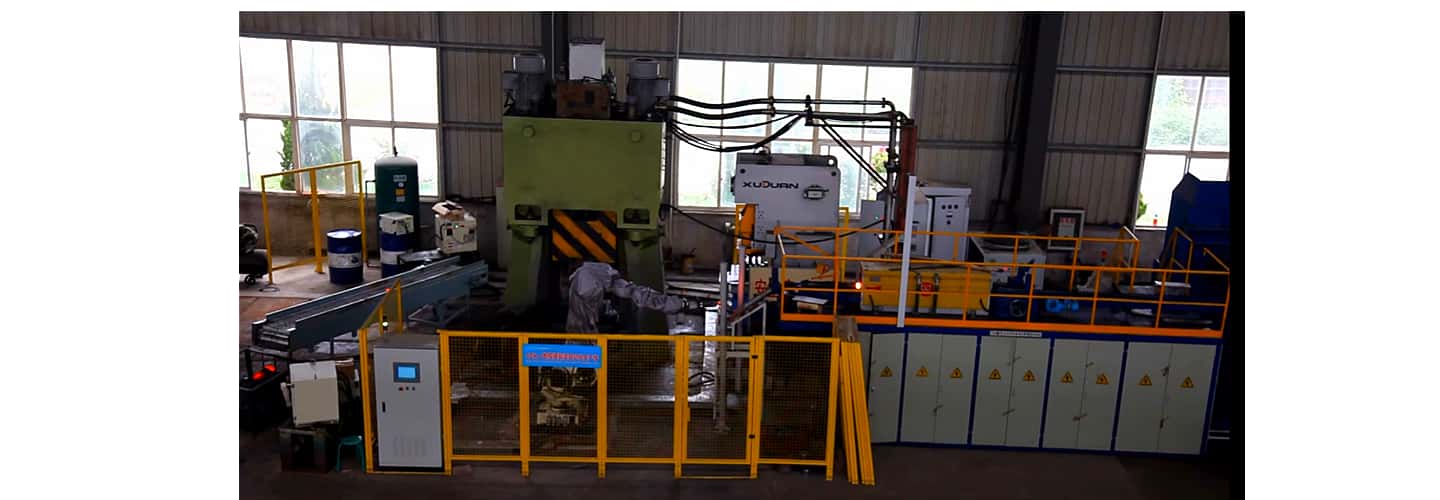
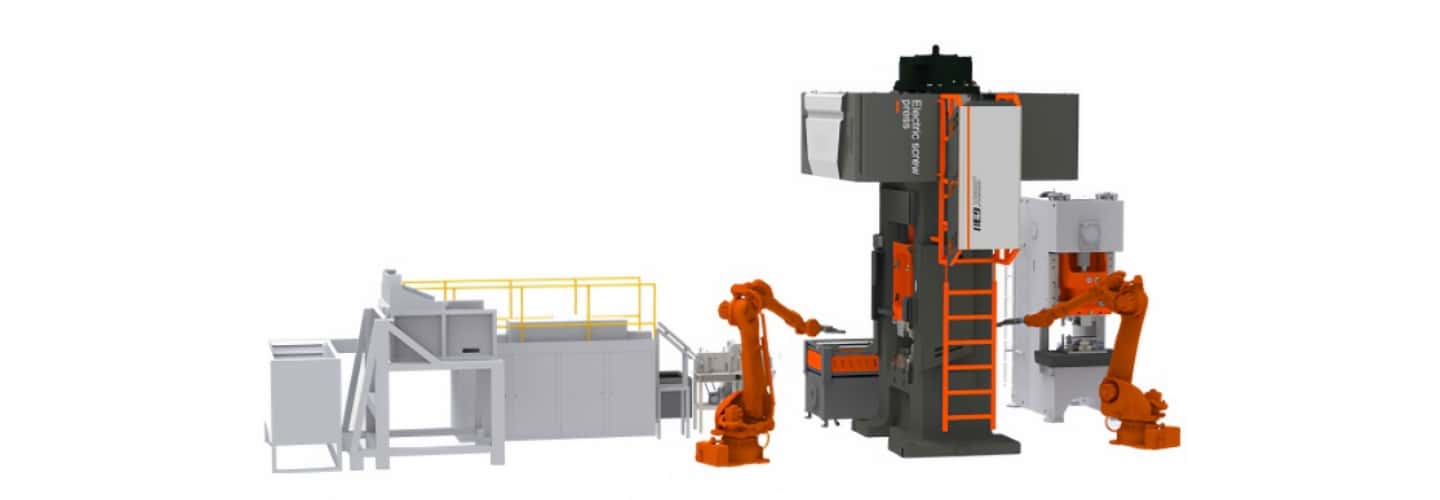
AYANK FORGING provides complete forging automation production line solutions, centered on electric screw presses or CNC forging hammers. We offer the following products/services:
Bus Control System: Connects and controls the heating furnace, pre-forging equipment, forging equipment, post-processing equipment, as well as descaling, lubrication systems, robots, and transfer/positioning devices in the forging line. The system features fully automatic, semi-automatic, and manual functions to adapt to and meet various operational states. It complies with internationally recognized safety standards.
Process Integration: Based on the entire production line's process flow, completes equipment configuration and layout planning between devices to ensure coordinated and smooth automatic operation of the line.
Robots, Manipulators, Transfer Carts: Manipulators and transfer carts form an automatic loading/unloading and logistics system for workpieces. Alternatively, fully imported robots can be used to implement the automatic loading/unloading and logistics system.
Spray Lubrication System: Can utilize domestically produced or imported spray lubrication devices installed on manipulators developed independently by our company. This achieves functions like blowing off scale and cooling/lubricating dies. Compared to multi-axis robots, it offers a high cost-performance ratio. Of course, we can also configure imported multi-axis robots as per customer requirements to fulfill die cooling and lubrication functions.
Remote Diagnostics: AYANK FORGING's automated forging lines utilize "Internet + Intelligent Manufacturing," enabling remote monitoring of production line status. Based on equipment warnings, we can promptly remind customers to perform maintenance, servicing, or prepare spare parts, aiming to minimize equipment downtime.
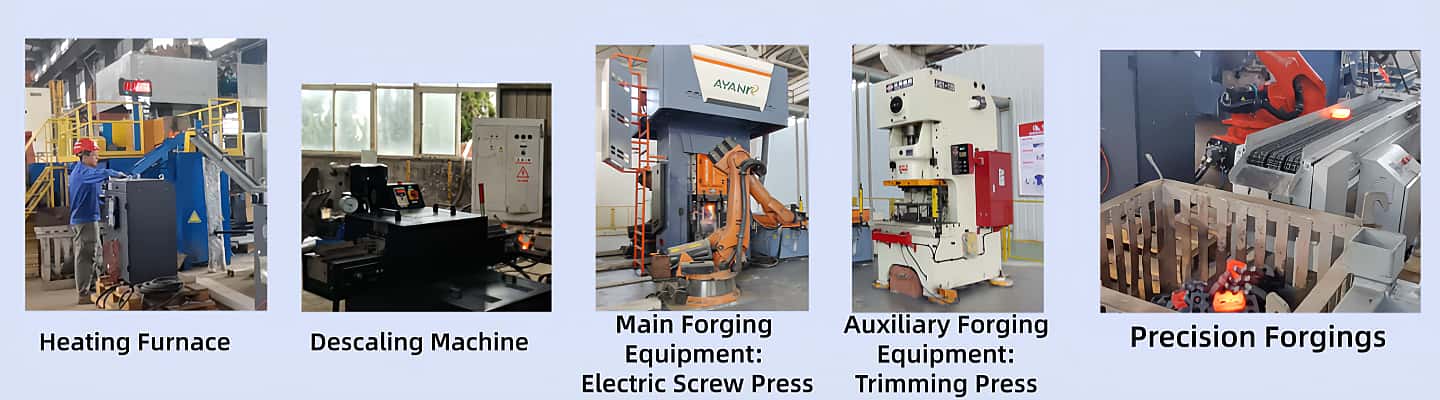
Customizing a forging automation production line requires attention to the following key points:
Define Requirements: Determine specifications for the precision forgings to be produced, the production process, finished product quality standards, production efficiency, and production cost targets. All subsequent work revolves around this foundation. Changing requirements later may affect the entire line's performance, making this step crucial.
Select Suitable Production Process: The production process is the core of the entire line, impacting both cost and final production outcomes. Properly arranging the sequence and connection of forging steps can enhance work efficiency. Once the process is selected, the process plan and layout diagram can be finalized, and supporting equipment procured accordingly.
Choose Appropriate Main Forging Equipment: The main forging equipment typically represents a significant portion of the automation line's cost. Priority should be given to selecting the main forging equipment suitable for the defined process. Where parameters like force capacity are sufficient, prioritize energy-efficient, environmentally friendly, and durable main forging equipment. Existing main forging equipment can be considered during process planning. If existing equipment is relatively old, selecting new, high-efficiency main forging equipment is recommended.
Select Supporting Line Equipment: Such as feeders, electric furnaces, punches, scale cleaners, graphite spraying devices, conveyors, robots, etc. This equipment generally accounts for a smaller portion of the cost. Choose compatible equipment that meets automation needs, preferably selecting products from reputable manufacturers known for being user-friendly, durable, and having low failure rates.
The focus of designing and building a precision forging automation line is to rationally plan the automated forging process and select equipment suitable for automated integration. This unleashes the synergistic effect of the entire line, enabling it to meet process design requirements completely and achieve sustained, smooth, and efficient product production.
Production Line Design & Development: Customized design of forging production lines based on user requirements and site conditions.
Forging Process Development: Provides process simulation and forming solutions for forging production.
Die & Die Set Design & Manufacturing: Provides design and manufacturing of universal die sets required for equipment and dies needed for forging production.
Forging Production Line Automation: Provides automation transformation for existing production lines or auxiliary equipment required for automated production.
Equipment Maintenance: Provides regular maintenance, overhaul, or relocation services for forging equipment.
Equipment Spare Parts Supply: Provides design, production, and supply of wear parts and spare parts required for equipment.
Scope of Application
AYANK FORGING offers one-stop, integrated forging automation solutions widely applicable to industries such as automotive parts, construction machinery parts, hardware tools, railways, transportation, power generation, petrochemicals, shipbuilding, military, and aerospace.
Learn about CNC Forging Hammer Automated Forging Production Lines
Receive the news that you are interested in.