
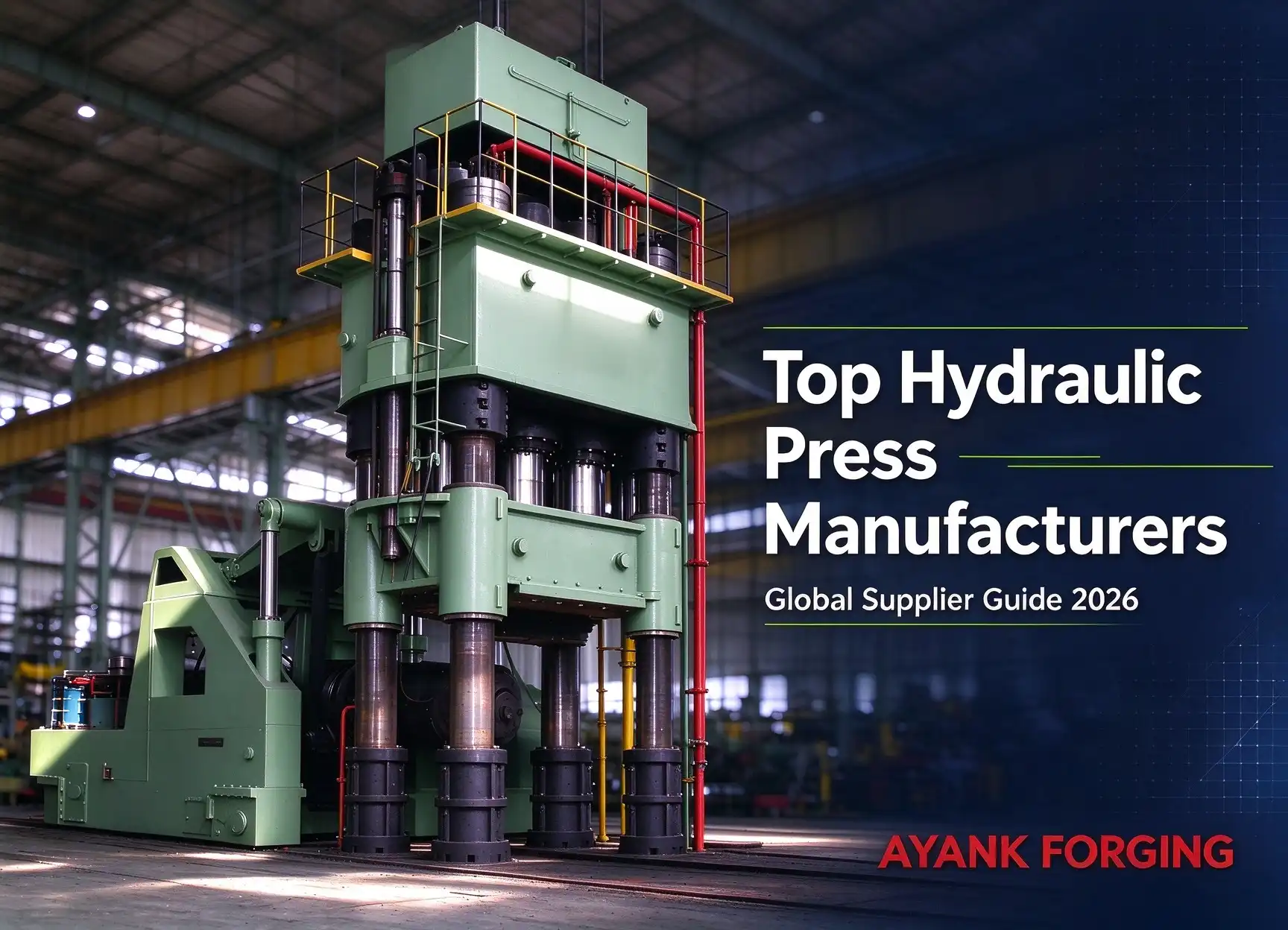
Choosing between hydraulic press manufacturers requires more than comparing tonnage and price. Industrial buyers should consider the manufacturer's engineering specialization, press design, application experience, customization capability, automation, production-line integration, installation support, and long-term service.
Quick Answer
Leading hydraulic press manufacturers serve very different markets. Schuler offers a broad portfolio of hydraulic press and forging technologies; Siempelkamp specializes in large hydraulic forming and forging systems; Macrodyne focuses on custom hydraulic and servo press systems; Beckwood specializes in engineered-to-order hydraulic presses; Accudyne supplies custom hydraulic presses and dedicated forging equipment; and HBE Press focuses strongly on hydraulic forging presses and related equipment.
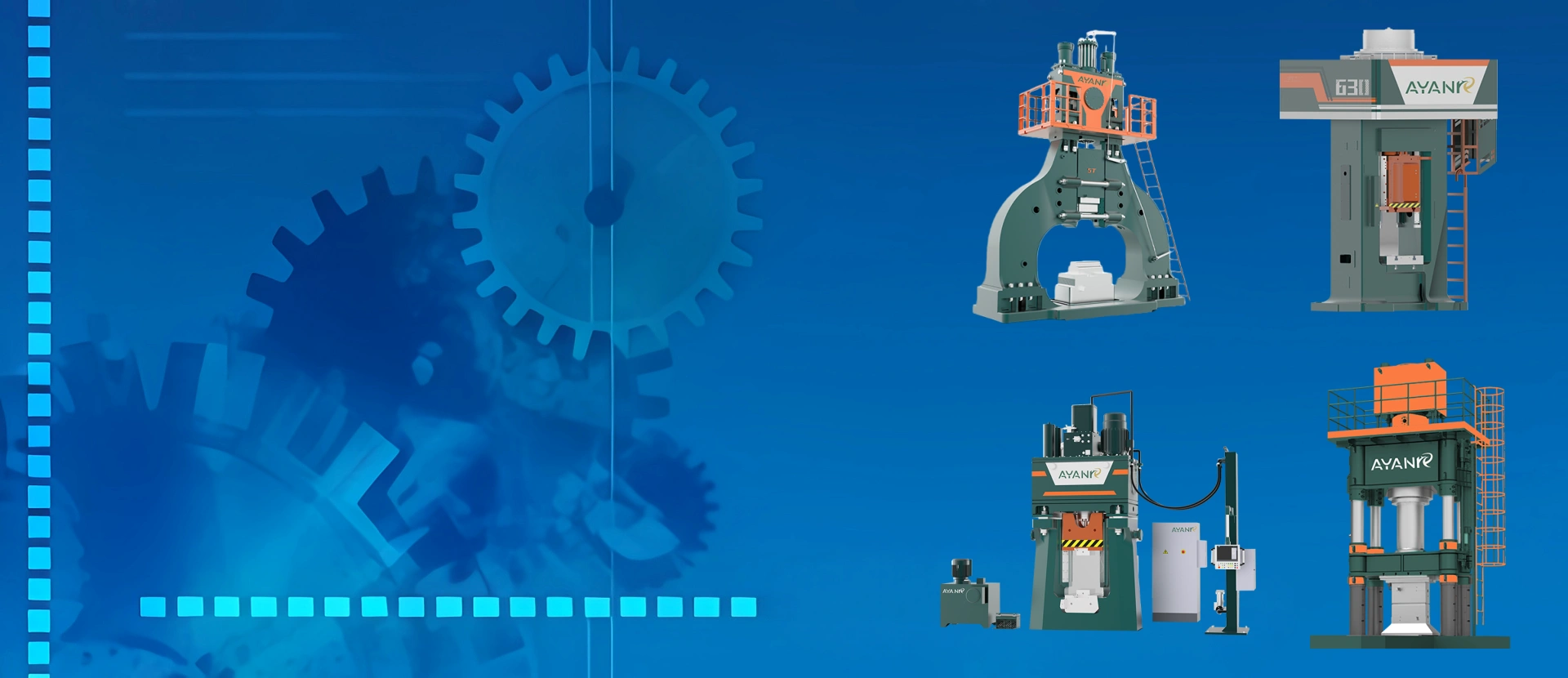
AYANK operates in a more specialized segment of this market, focusing on industrial forging equipment, including forging presses, forging hammers, electric screw presses, roll forging equipment, and integrated forging production solutions.
There is no single manufacturer that is the best choice for every hydraulic press application. The right supplier depends on the forming process, material, required force, workpiece geometry, production volume, automation level, factory conditions, and project budget.
How We Selected These Hydraulic Press Manufacturers
This guide is intended as a supplier research resource rather than an official market-share ranking. The companies are not ranked from best to worst.
Manufacturers were included based on publicly available information about their current hydraulic press products and industrial forming capabilities. Factors considered include:
- Current hydraulic press product portfolio
- Industrial metal-forming or forging relevance
- Custom engineering capabilities
- Available press configurations
- Automation and production-line integration
- Application and industry coverage
- Installation, modernization, or service capabilities
- Publicly documented manufacturing and engineering information
The list intentionally includes manufacturers with different specializations. Some provide very large forging systems, while others focus on custom hydraulic presses, specialized forming equipment, or integrated forging lines.
Hydraulic Press Manufacturers at a Glance
| Manufacturer | Primary Market Position | Hydraulic / Forming Focus | Forging Relevance |
|---|---|---|---|
| Schuler | Large industrial forming systems | Hydraulic presses, press lines and metal forming | Hydraulic forging presses and complete forging technologies |
| Siempelkamp | Heavy industrial press systems | Large hydraulic metal-forming presses | Open-die, closed-die and specialized forging presses |
| Macrodyne | Custom industrial presses | Hydraulic and servo press systems | Custom systems for forging and metal forming |
| Beckwood Press | Custom press engineering | Custom hydraulic and servo-electric presses | Forging is among supported forming applications |
| Accudyne | Custom hydraulic press systems | Engineered hydraulic presses and specialized systems | Forging presses, ring mills and ring sizing equipment |
| HBE Press | Forging press specialist | Hydraulic forging systems | Forging presses, manipulators and ring rolling equipment |
| AYANK | Forging equipment manufacturer | Industrial forging machinery | Forging presses, hammers, screw presses and forging lines |
The comparison should not be interpreted as a performance ranking. A manufacturer specializing in a very large open-die forging press serves a different purchasing requirement from a company supplying a customized forming press or a complete medium-scale forging production line.
Schuler
Schuler is a major industrial forming equipment manufacturer with a broad portfolio covering hydraulic press technology and forging equipment.
Its hydraulic press technologies extend beyond forging into applications such as drawing, stamping, coining and other industrial forming processes. For forging specifically, the company's portfolio includes hydraulic forging presses, hydraulic presses for ring blanks and aluminum wheels, and open-die forging systems.
Hydraulic Press Capabilities
- Hydraulic forging presses
- Hydraulic drawing and stamping presses
- Hydraulic press lines
- Hydraulic cold extrusion presses
- Open-die forging systems
- Hydraulic presses for ring blanks and wheel forging
Schuler's MH hydraulic forging presses are designed for applications requiring high forces and long working travel. The company's published product information describes applications including hot forging, piercing, and partial forging of fittings and thick-walled pipes.
Schuler is therefore particularly relevant to buyers researching established suppliers capable of delivering large industrial metal-forming systems and integrated forging technology.
Siempelkamp
Siempelkamp is another manufacturer with a particularly strong position in heavy hydraulic forging presses.
The company designs hydraulic forging presses for both hot and cold forming. Its published portfolio covers open-die forging, closed-die forming and specialized forming of demanding materials.
Hydraulic Forging Capabilities
- Open-die forging presses
- Closed-die forging presses
- Hot and cold forming
- Specialized forming systems
- Peripheral equipment and plant integration
- Automation and process engineering
According to Siempelkamp's current product information, its hydraulic forging press portfolio extends to very high press forces and is designed around demanding industrial workpieces. The company also emphasizes process development, material-forming simulation, and integration of peripheral systems.
This makes Siempelkamp especially relevant when researching manufacturers for large or technically demanding hydraulic forging projects.
Macrodyne
Macrodyne is known for custom industrial press systems rather than a narrow catalog of standardized hydraulic presses.
Its equipment portfolio includes custom hydraulic and servo press systems for metal forming and other industrial applications. This project-oriented approach makes the company relevant when the workpiece or manufacturing process requires a press configured around a specific production requirement.
Typical Areas of Focus
- Custom hydraulic presses
- Servo press systems
- Hot forming
- Cold forming
- Open-die and closed-die forging applications
- Automated forming systems
For buyers comparing custom hydraulic press manufacturers, this type of engineering approach can be particularly relevant when a standard press frame, stroke, working area, control system, or automation package does not match the production process.
Beckwood Press
Beckwood Press is a U.S. manufacturer focused heavily on custom hydraulic press engineering. Its portfolio includes custom hydraulic presses as well as servo-electric forming equipment.
Beckwood offers several conventional press frame configurations, including gib-guided, four-post, two-post and C-frame designs, while also developing non-traditional configurations for specialized applications.
Why Buyers Consider Beckwood
- Engineered-to-order hydraulic presses
- Multiple press-frame configurations
- Custom working areas and press characteristics
- Automation and quick-die-change options
- Specialized forming applications
- Installation and technical support
Beckwood is particularly relevant to buyers whose main requirement is a custom hydraulic forming solution rather than a dedicated forging-equipment product family.
Accudyne Engineering & Equipment
Accudyne Engineering & Equipment combines custom hydraulic press engineering with a dedicated range of hydraulic forging equipment.
The company's current forging-equipment portfolio includes forging presses, ring mills, ring sizers and related hydraulic equipment. It also develops custom hydraulic press systems for specialized manufacturing applications.
Forging Equipment Portfolio
- Hydraulic forging presses
- Ring mills
- Ring sizers
- Ring expanders
- Custom hydraulic systems
- Replacement components and tooling
Accudyne states that it has served the U.S. forging industry since 1954. Its forging presses are configured around customer tonnage, bed size and process requirements, making the company particularly relevant to buyers looking for customized hydraulic forging equipment.
HBE Press
HBE Press is more narrowly focused on forging than many general-purpose hydraulic press manufacturers.
The company's public product information focuses on hydraulic forging presses, manipulators, ring rolling equipment and related forging systems. It also provides refurbishment, modernization, installation and commissioning services for existing equipment.
Main Equipment Areas
- Hydraulic forging presses
- Forging manipulators
- Ring rolling mills
- Forging equipment refurbishment
- Press modification and upgrades
- Installation and commissioning
HBE Press states that it has more than 30 years of experience in hydraulic forging press projects and has supplied forging companies in markets including the United States and Europe.
For buyers specifically searching for hydraulic forging press manufacturers rather than general hydraulic press suppliers, HBE Press is therefore a particularly relevant company to evaluate.
AYANK — Forging Equipment & Hydraulic Press Solutions
AYANK approaches the hydraulic press market from a different direction. Rather than positioning itself as a supplier for every type of hydraulic press application, the company focuses on industrial forging equipment and forging production systems.
This specialization is important for buyers whose primary requirement is not simply to purchase a hydraulic cylinder and press frame, but to develop a complete metal forging process around the workpiece.
AYANK Forging Equipment
- Hydraulic forging equipment
- Open-die forging hammers
- Die-forging hammers
- Pneumatic forging hammers
- Electric screw presses
- Roll forging machines
- Automatic forging production lines
AYANK's equipment portfolio allows a project to be evaluated from the forging process rather than from one machine category alone. Depending on the component, a hydraulic forming solution, forging hammer, electric screw press, roll-forging process, or combination of machines may be evaluated.
Forging Process-Oriented Equipment Selection
For a new project, the starting point should be the forged component. Important information includes the material grade, billet dimensions and weight, final part drawing, required deformation, annual output, heating method, tooling, and automation requirements.
This is particularly relevant when comparing a hydraulic press with alternative forging technologies. A hydraulic press is not automatically the correct machine simply because high forming force is required.
Buyers can also explore AYANK's forging hammer guide and forging hammer selection guide when comparing impact forging with press-based forming processes.
Hydraulic Forging Press Manufacturers
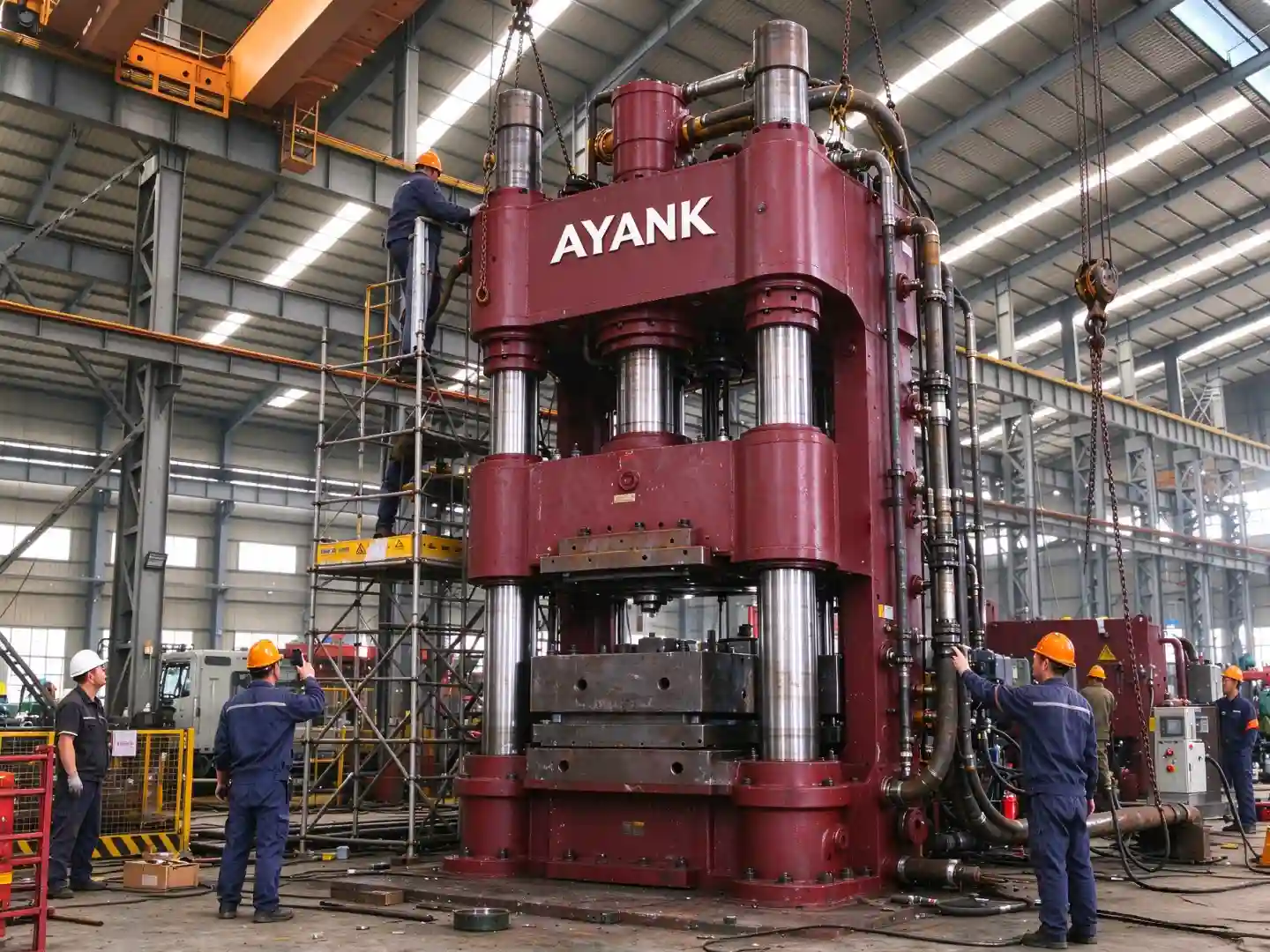
Hydraulic forging press manufacturers represent a specialized segment of the wider hydraulic press industry. These machines are designed around bulk metal deformation rather than general assembly, molding, straightening, or workshop pressing.
Depending on the machine and process, hydraulic forging presses can be used for:
- Open-die forging
- Closed-die forging
- Hot forming
- Cold forming
- Upsetting
- Preforming
- Ring and wheel production
- Specialized heavy-component forming
Manufacturers such as Schuler, Siempelkamp, Accudyne and HBE Press publish dedicated forging press technologies, while other hydraulic press manufacturers may support forging as one application within a broader custom press portfolio.
This distinction matters. A buyer searching for a hydraulic press to forge a large alloy-steel component has very different requirements from a manufacturer looking for a small hydraulic press for assembly or straightening.
Types of Hydraulic Press Manufacturers
The term hydraulic press manufacturer covers a very broad equipment market. Before requesting quotations, buyers should identify which type of manufacturer matches the intended production process.
Hydraulic Forging Press Manufacturers
These companies focus on bulk metal forming processes such as open-die forging, closed-die forging, upsetting, preforming and other high-load forging operations.
Metal Forming Press Manufacturers
These manufacturers supply hydraulic presses for operations such as drawing, stamping, coining, bending and general sheet or bulk metal forming.
Custom Hydraulic Press Manufacturers
Custom press manufacturers design the frame, hydraulic system, working area, stroke, controls and automation around a specific customer application rather than relying only on standardized machine models.
Hydraulic Press Line Manufacturers
Some suppliers integrate multiple presses with feeders, robots, transfer systems, die-change systems, material preparation and downstream equipment to create complete production lines.
Special-Purpose Hydraulic Press Manufacturers
Specialized suppliers may focus on processes such as extrusion, composites, hydroforming, ring production, hot forming, compression molding, wheel production or other specific industrial applications.
Hydraulic Press Manufacturers: China vs USA vs Europe
Country of origin can influence engineering traditions, supply chains, service networks, project costs, and equipment configurations, but it should not be used as the sole basis for selecting a hydraulic press manufacturer.
For industrial buyers, the more useful question is whether a manufacturer has relevant experience with the specific forming process, workpiece, material, production volume, automation level, and factory conditions.
| Region | Typical Market Characteristics | What Buyers Should Verify |
|---|---|---|
| Europe | Strong presence in large-scale metal forming, forging systems, process engineering and highly automated production equipment. | Project scope, technical configuration, lead time, service availability and total investment. |
| USA / North America | Strong custom press engineering market with suppliers serving aerospace, automotive, industrial forming and specialized applications. | Custom engineering capability, local support, automation scope and application experience. |
| China | Broad manufacturing base covering general hydraulic presses, forging equipment and customized production machinery. | Actual manufacturing capability, technical documentation, reference projects, quality control, installation support and whether the supplier specializes in the required process. |
The comparison becomes particularly important for forging projects. A buyer should distinguish between a company that manufactures general-purpose hydraulic presses and a manufacturer with engineering experience in hot forging, open-die forging, closed-die forging, material handling, tooling and complete forging production systems.
How to Choose a Hydraulic Press Manufacturer
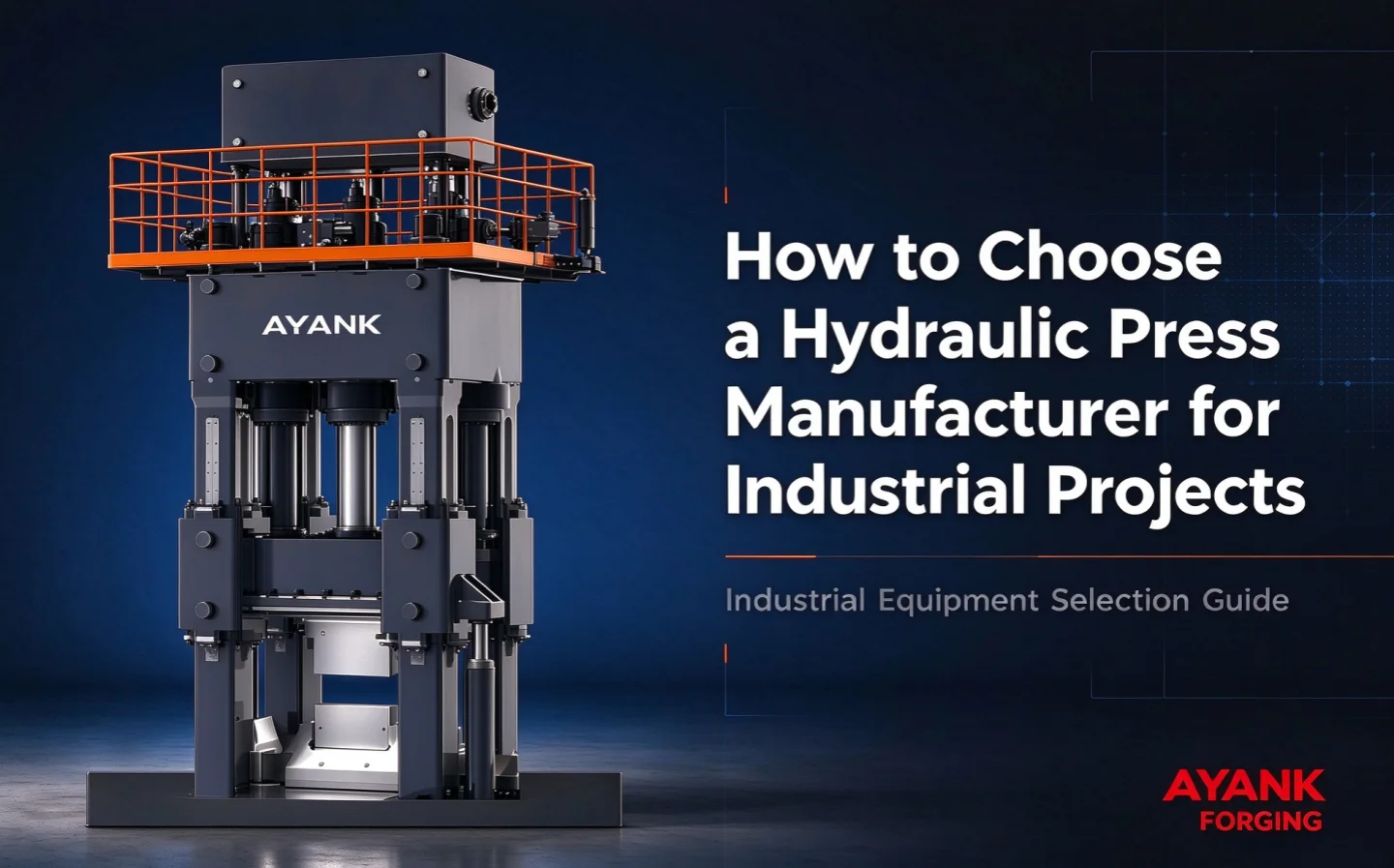
A hydraulic press is normally a long-term capital investment. Comparing quotations only by nominal force and purchase price can result in a machine that does not match the actual production process.
Before selecting a supplier, evaluate the following areas.
1. Start With the Application
The manufacturer should first understand what the press must produce.
Forging, deep drawing, stamping, straightening, extrusion, compression molding and assembly are all possible hydraulic press applications, but they require different machine structures, control strategies, strokes, speeds and auxiliary systems.
2. Evaluate Process Experience
A manufacturer with relevant application experience can evaluate more than nominal press force. For forging applications, the discussion may include material flow, billet temperature, deformation sequence, die configuration, press speed, handling and downstream operations.
3. Compare the Complete Machine Specification
Two machines described with the same nominal force may still differ significantly. Buyers should compare the complete technical specification rather than one headline number.
- Nominal press force
- Working stroke
- Daylight or opening height
- Bed and slide dimensions
- Approach, pressing and return speeds
- Frame construction
- Hydraulic system configuration
- Control system
- Position and force control requirements
- Tooling interface
- Automation requirements
- Safety system
4. Check Custom Engineering Capability
Many industrial projects cannot be solved efficiently with a standard catalog machine. A capable custom hydraulic press manufacturer should be able to adapt the machine to the workpiece, tooling, production process and factory layout.
5. Evaluate Automation Capability
Automation becomes increasingly important as workpiece temperature, weight, cycle time and production volume increase.
Depending on the application, a hydraulic press may need to communicate with heating equipment, robots, manipulators, feeders, transfer systems, trimming equipment, inspection stations and downstream handling systems.
6. Verify Manufacturing Evidence
Buyers should look beyond marketing statements such as "high quality" or "advanced technology." Useful evidence includes factory photographs, machining capability, assembly processes, test procedures, completed equipment, customer installations and relevant project references.
7. Review Installation and After-Sales Support
Large hydraulic presses may require foundation preparation, assembly, hydraulic commissioning, electrical commissioning, alignment, trial production and operator training.
Clarify which services are included in the quotation and which responsibilities remain with the buyer.
Hydraulic Press Manufacturer Selection Checklist
When comparing hydraulic press suppliers, a structured checklist makes quotations easier to evaluate.
| Item | Questions to Ask |
|---|---|
| Application Experience | Has the manufacturer supplied presses for a similar process or component? |
| Engineering | Can the machine be engineered around the actual workpiece and process? |
| Press Specification | Are force, stroke, speed, daylight and working area clearly defined? |
| Hydraulic System | Is the hydraulic configuration documented and appropriate for the duty cycle? |
| Controls | What process parameters can be programmed, monitored and recorded? |
| Automation | Can the press integrate with feeding, handling and downstream equipment? |
| Tooling | Who is responsible for die and tooling design? |
| Factory Evidence | Can the supplier show manufacturing, assembly and testing capability? |
| Installation | What foundation, installation and commissioning support is provided? |
| Service | How are spare parts, troubleshooting and long-term maintenance handled? |
What Information Should You Send to a Hydraulic Press Manufacturer?
Sending only a required tonnage usually does not provide enough information for accurate equipment selection.
For a new project, prepare as much of the following information as possible:
- Final component drawing
- Material grade
- Raw material or billet dimensions
- Initial and final workpiece weight
- Forming process
- Required forming force, if already calculated
- Required stroke and daylight
- Tool or die dimensions
- Forming temperature
- Required production capacity
- Number of shifts per day
- Automation requirements
- Existing upstream and downstream equipment
- Available factory space
- Local electrical requirements
- Installation location
For forging applications, the component drawing and process requirements are especially important because the correct equipment may not always be the machine type originally specified by the buyer.
Hydraulic Press vs Mechanical Press vs Screw Press
Selecting a manufacturer also requires selecting the correct press technology. Hydraulic, mechanical and screw presses generate and control forming energy differently, so they are not interchangeable in every application.
| Press Type | General Characteristic | Typical Reason for Selection |
|---|---|---|
| Hydraulic Press | Controlled force and motion over the working stroke | Applications requiring high force, controlled forming speed, long working travel or process flexibility |
| Mechanical Press | Mechanically driven cyclic motion | High-production applications where repeatable cyclic operation and productivity are important |
| Screw Press | Energy-based forming through screw-driven ram movement | Forging applications requiring controlled forming energy and high forming capability in a compact machine concept |
The correct choice depends on the part geometry, material, forming sequence, required force or energy, production rate, tooling and desired process control.
This is one reason buyers should consult a manufacturer that understands the forming process rather than selecting equipment solely from a tonnage table.
For forging projects, AYANK also supplies J58KA electric screw presses and J58ZKA servo direct drive electric screw presses , providing alternative equipment options when a screw press is more appropriate for the required forging process.
When Should You Choose a Hydraulic Forging Press?
A hydraulic forging press is particularly relevant when the process requires controlled deformation under high force rather than repeated impact blows.
Hydraulic forging presses are used across open-die and closed-die forging, hot and cold forming, and specialized heavy-component production. Current manufacturer portfolios also show their use for applications involving rings, flanges, wheels, pipes and difficult-to-form materials.
For example, Schuler describes hydraulic forging presses as suitable where high forces and long working travel are required, while Siempelkamp supplies dedicated open-die and closed-die hydraulic forging press systems. Macrodyne and Beckwood also publish custom hydraulic press solutions for open- and closed-die forging applications.
However, hydraulic technology should not automatically be selected for every forging part. Depending on the workpiece and production requirement, a forging hammer, mechanical press, screw press or another forming process may be more appropriate.
When Should You Consider a Forging Hammer Instead?
Forging hammers shape metal through repeated impact energy. They remain important equipment for many open-die and die-forging applications and can be particularly useful when the process benefits from multiple controlled blows and flexible manipulation of the workpiece.
Buyers comparing these technologies can read What Is a Forging Hammer? for an introduction to hammer operation and Best Forging Hammer for application-based equipment selection.
For pneumatic equipment specifically, see the Pneumatic Forging Hammer Guide, or compare it with Hydraulic Forging Hammer technology.
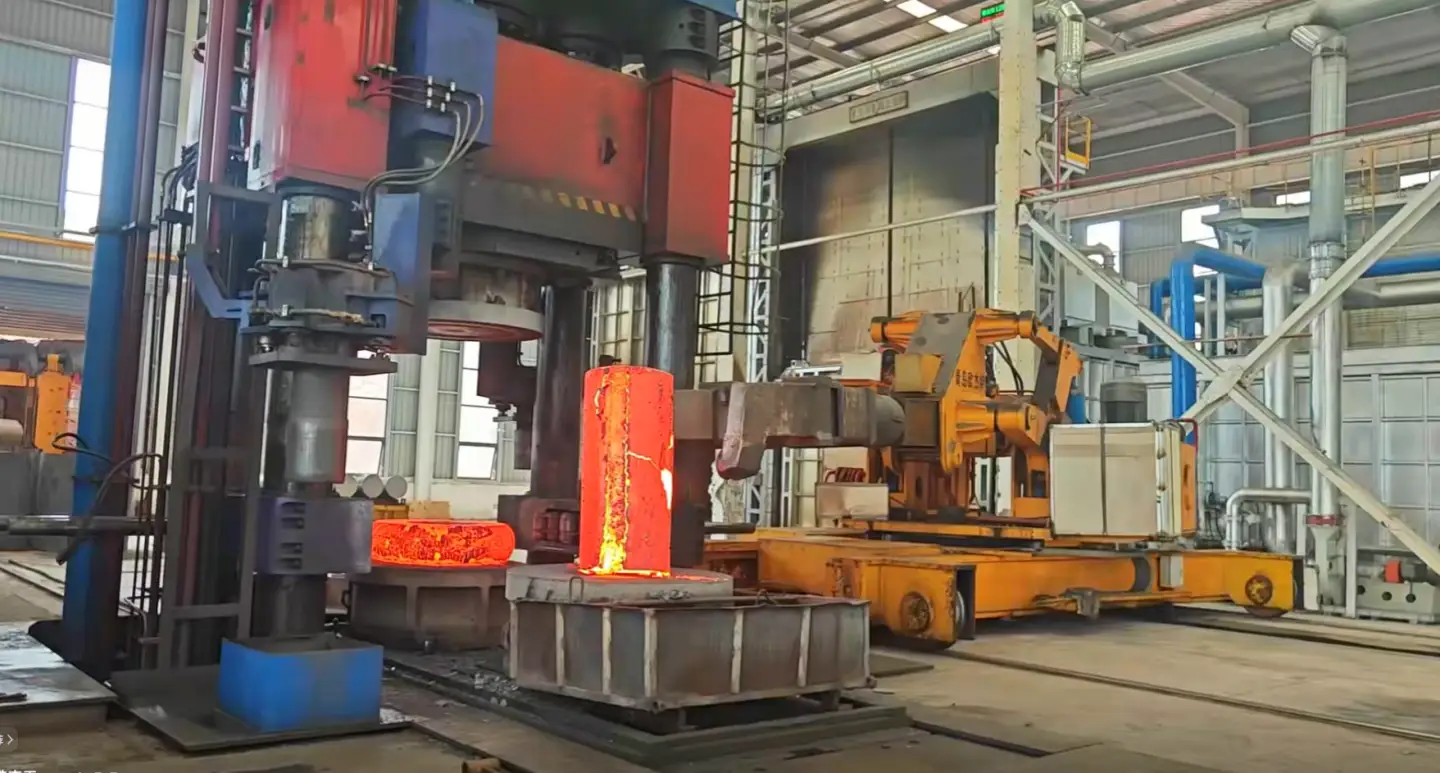
Should You Buy a Hydraulic Press or a Complete Production Line?
The press is only one part of many industrial forming processes.
A complete production system may also require:
- Billet cutting
- Material heating
- Descaling
- Automatic feeding
- Robotic or manipulator handling
- Preforming
- Main forming or forging
- Trimming
- Cooling
- Inspection
- Downstream material handling
For this reason, buyers planning a new factory or production line should discuss the complete process with potential manufacturers before finalizing an individual machine specification.
How to Compare Hydraulic Press Quotations
The lowest quoted machine price does not necessarily represent the lowest project cost. Quotations from different hydraulic press manufacturers may include significantly different scopes of supply.
Before comparing prices, normalize the quotations and confirm whether each proposal includes the same technical and commercial scope.
- Main press
- Hydraulic power unit
- Electrical and control system
- Safety equipment
- Tooling or die interfaces
- Material handling
- Automation
- Foundation requirements
- Installation supervision
- Commissioning
- Operator training
- Spare parts
- Technical documentation
- Warranty and after-sales service
A technically detailed quotation is also useful evidence that the supplier has understood the application rather than simply selecting a standard machine based on nominal tonnage.
Which Hydraulic Press Manufacturer Should You Choose?
There is no universal answer because the manufacturers in this guide serve different parts of the hydraulic press market.
| Project Requirement | Manufacturer Type to Evaluate |
|---|---|
| Large industrial metal-forming system | Established heavy forming and press-system manufacturers |
| Large open-die or closed-die forging | Specialized hydraulic forging press manufacturers |
| Highly customized forming process | Custom hydraulic press engineering companies |
| Forging project requiring comparison of several machine technologies | Forging equipment manufacturers with multiple equipment categories |
| Automated production project | Manufacturers with press-line and automation integration capability |
Schuler and Siempelkamp demonstrate broad capabilities in large industrial forming and hydraulic forging systems. Macrodyne and Beckwood emphasize custom press engineering. Accudyne and HBE Press have strong relevance to dedicated forging applications. AYANK is positioned around forging equipment selection and integrated forging production solutions rather than the entire general-purpose hydraulic press market.
The appropriate shortlist should therefore be determined by the actual component and manufacturing process rather than by a generic global ranking.
Questions to Ask Before Selecting a Hydraulic Press Supplier
Before placing an order, ask potential suppliers specific technical questions instead of relying only on brochures and quotations.
- Have you manufactured equipment for similar components or processes?
- How was the proposed press force determined?
- What are the working, approach and return speeds?
- How is ram position and forming force controlled?
- Can the machine operate continuously at the required production rate?
- What automation can be integrated?
- What information is recorded by the control system?
- What foundation is required?
- Which components require regular maintenance?
- Which spare parts should be stocked?
- Who performs installation and commissioning?
- What remote and on-site technical support is available?
Frequently Asked Questions
Who are some leading hydraulic press manufacturers?
Manufacturers active in industrial hydraulic press technology include Schuler, Siempelkamp, Macrodyne, Beckwood Press, Accudyne Engineering & Equipment, HBE Press and other regional specialists. Their product ranges and target applications differ significantly, so they should not be treated as a simple best-to-worst ranking.
What should I look for in a hydraulic press manufacturer?
Evaluate application experience, engineering capability, machine specifications, customization, automation, manufacturing evidence, quality control, installation support, spare parts and long-term service. The manufacturer should understand the complete forming process rather than only the required nominal press force.
Who manufactures hydraulic forging presses?
Several industrial press manufacturers offer dedicated hydraulic forging equipment. Examples include Schuler and Siempelkamp, while companies such as Macrodyne and Beckwood also engineer custom hydraulic presses for forging applications. Other suppliers specialize more narrowly in forging equipment and related production systems.
What is the difference between a hydraulic press and a hydraulic forging press?
Hydraulic press is a broad equipment category covering many forming and industrial operations. A hydraulic forging press is specifically engineered for bulk metal deformation processes such as open-die forging, closed-die forging, upsetting or related hot and cold forming operations.
Are Chinese hydraulic press manufacturers suitable for industrial projects?
China has a large and diverse hydraulic press manufacturing industry, so capability varies between suppliers. Buyers should verify relevant project experience, engineering, manufacturing facilities, quality control, technical documentation, commissioning support and after-sales service rather than making a decision based on country of origin alone.
How do I request a hydraulic press quotation?
Provide the final component drawing, material, billet or raw material dimensions, forming process, required force if known, stroke, working area, production target, tooling information, automation requirements and installation location. More complete process information allows the manufacturer to propose a more appropriate machine.
Is a hydraulic press better than a forging hammer?
Neither technology is universally better. Hydraulic presses provide controlled force and motion during deformation, while forging hammers shape material through impact energy. The appropriate technology depends on the component, material, forging process, production rate and required process control.
Should I buy only the press or a complete production line?
It depends on the project. Existing factories may only need a replacement or additional press, while new forging projects may benefit from integrated heating, feeding, handling, forging, trimming and automation. The complete production process should be evaluated before the equipment scope is finalized.
Conclusion
The global hydraulic press market includes large industrial forming-system suppliers, custom press engineering companies, dedicated hydraulic forging press manufacturers and specialized equipment manufacturers.
Instead of asking which company is universally the "best hydraulic press manufacturer," buyers should determine which manufacturer has the strongest technical fit for the required process.
For forging applications, this means evaluating more than press force. Material, workpiece geometry, forming temperature, deformation sequence, tooling, production capacity, automation and downstream operations can all influence the final equipment configuration.
AYANK focuses on industrial forging equipment and integrated forging solutions. If you are planning a new forging project, provide your component drawing, material, billet information and required production capacity so that the appropriate forging equipment and process configuration can be evaluated.
Planning a New Forging Project?
Send AYANK your workpiece drawing, material, billet dimensions, production target and automation requirements for equipment selection and project evaluation.