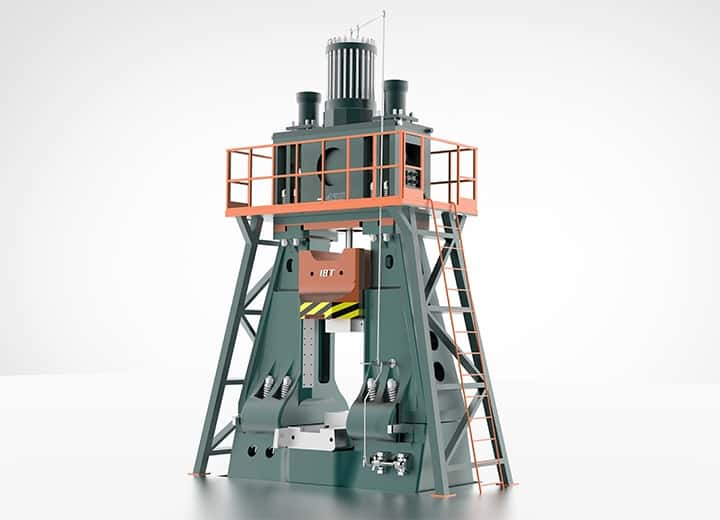
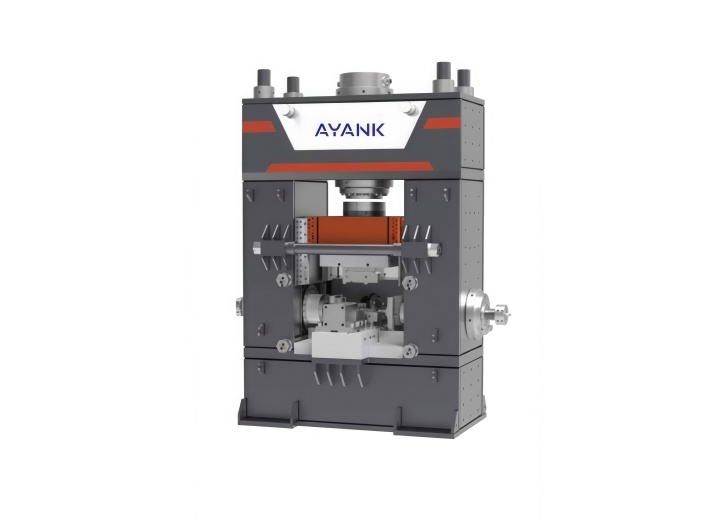
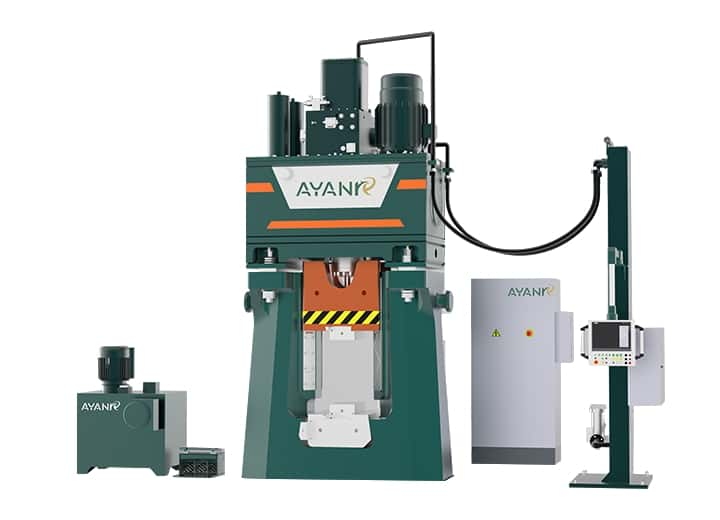
What This Press Forges
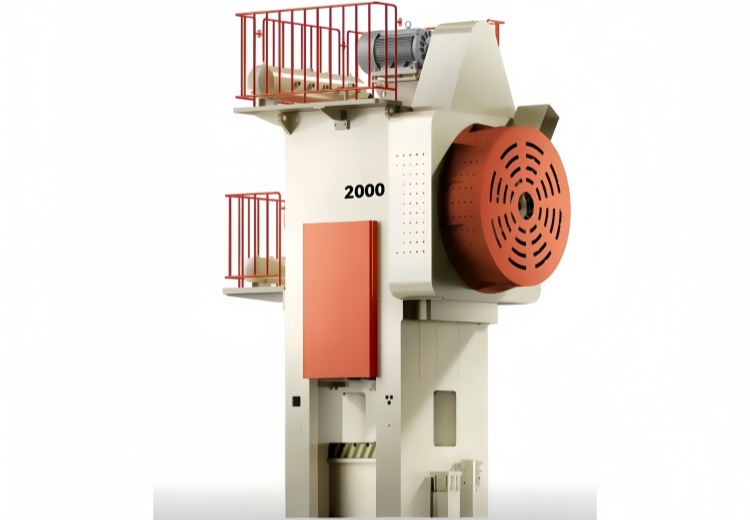
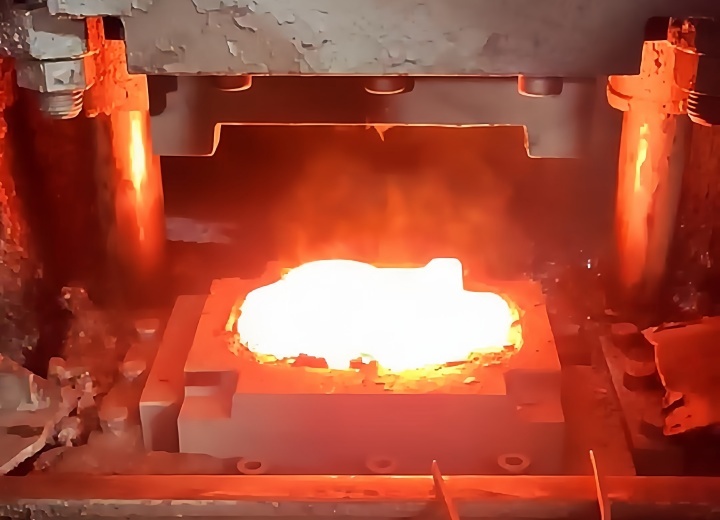
A hot die forging press shapes the part in a closed impression. The slide comes down under load, holds, and the metal fills the cavity while the press is still pushing. That is a different event from a hammer blow, and it is why the press suits a particular family of work.
What it does well: parts with a defined section, a cavity that has to be filled evenly, and a tolerance that has to repeat across a run. Connecting rods, gear blanks, flanges and hubs, short shaft parts, valve and fitting bodies, synchroniser rings and general hardware are the usual work. These are parts where the die holds the shape and the press has to deliver the same fill on the first piece and the thousandth.
What it does not do well: very thin walls, long ribs that chill before the metal reaches them, or one-off parts where the die cost never comes back. Those belong on a hammer, which delivers energy fast enough to fill a thin section before it freezes against the die face.
Three inputs size a press: the largest projected area of the part, the billet weight, and the die block size. Send those three with a drawing and the capacity can be named. Annual output decides how much of the cycle has to be automated.
Press or Hammer: Squeeze Against Impact
A forging hammer stores energy in a falling weight and releases it in milliseconds. A press applies force through a slide and holds it. The difference shows up in how the metal moves.
- Impact — the hammer's energy lands in a very short time, so the surface metal flows before it can chill. This is why a hammer fills a thin rib or a sharp corner that a press struggles with. The same speed loads the die hard on every blow.
- Squeeze — the press keeps pushing while the metal flows into the cavity. Fill is more even through the section, the die sees load rather than shock, and the slide position repeats from piece to piece, which is what a tolerance depends on.
- Billet control — a press is less forgiving of billet weight. Too much metal and the die load climbs; too little and a corner stays short. A hammer absorbs that variation better, which is why short-run work often ends up on one.
- Automation — the press stroke is repeatable and can be tooled for several stations, so it is the easier machine to put inside an automatic line. A hammer can be automated too, but the transfer has to keep pace with an impact cycle.
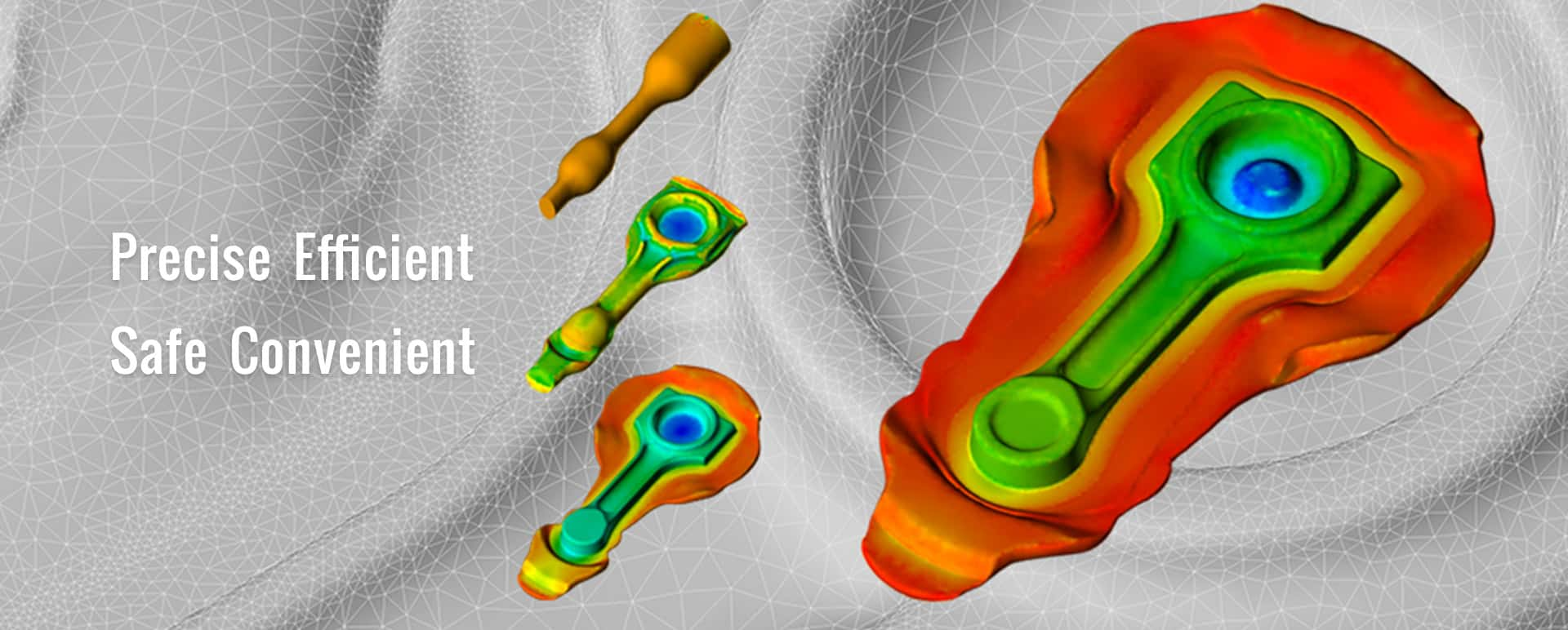
The practical answer is often both: a hammer or a roll forging machine produces the preform and distributes the metal, then the press finishes the shape with a controlled fill and a repeatable height. If your part has a thin rib and a tight tolerance at the same time, that is usually a two-operation conversation rather than a single machine choice.
Installation, Utilities and Tryout
A press foundation is designed for the machine it carries. The load is delivered through the slide rather than as a blow, but the structure still has to be sized and isolated, and the foundation drawing is issued with the order. Do not pour concrete before you have that drawing — retrofitting a foundation is the most expensive mistake in a press installation.
Utilities follow the drive and the tooling. Connected power is set by the main motor, control power is separate, and the installation usually needs compressed air for clamping or ejection and a cooling circuit for the dies. Size the supply for the total rather than for the motor alone, and confirm the voltage, phase and frequency before the electrical package is built.
Tryout runs in a fixed order, and each step is a gate:
- Mount the die and set the shut height — the die stack has to close inside the press stroke, and the shut height is set before anything runs.
- Run the slide without a billet — check stroke, guidance and the controls through a full cycle.
- Forge the first part — measure fill, thickness and flash against the drawing, then adjust before running a second piece.
- Run a small batch — the piece that passes once is not a process; the batch is where height and fill stability show.
- Record the settings — stroke, shut height, billet weight and temperature become the reference for the next run.
What we need from you at that stage: the die, the billet specification, and the acceptance criteria — the drawing tolerance, the inspection points and whether the batch is measured by sampling or by piece.
Send your forging drawing or part details — we will recommend the machine that fits and quote it.
Drawings by email, so the file arrives intact. Prefer to type it out? Use the message form at the bottom of this page.
Email your drawing