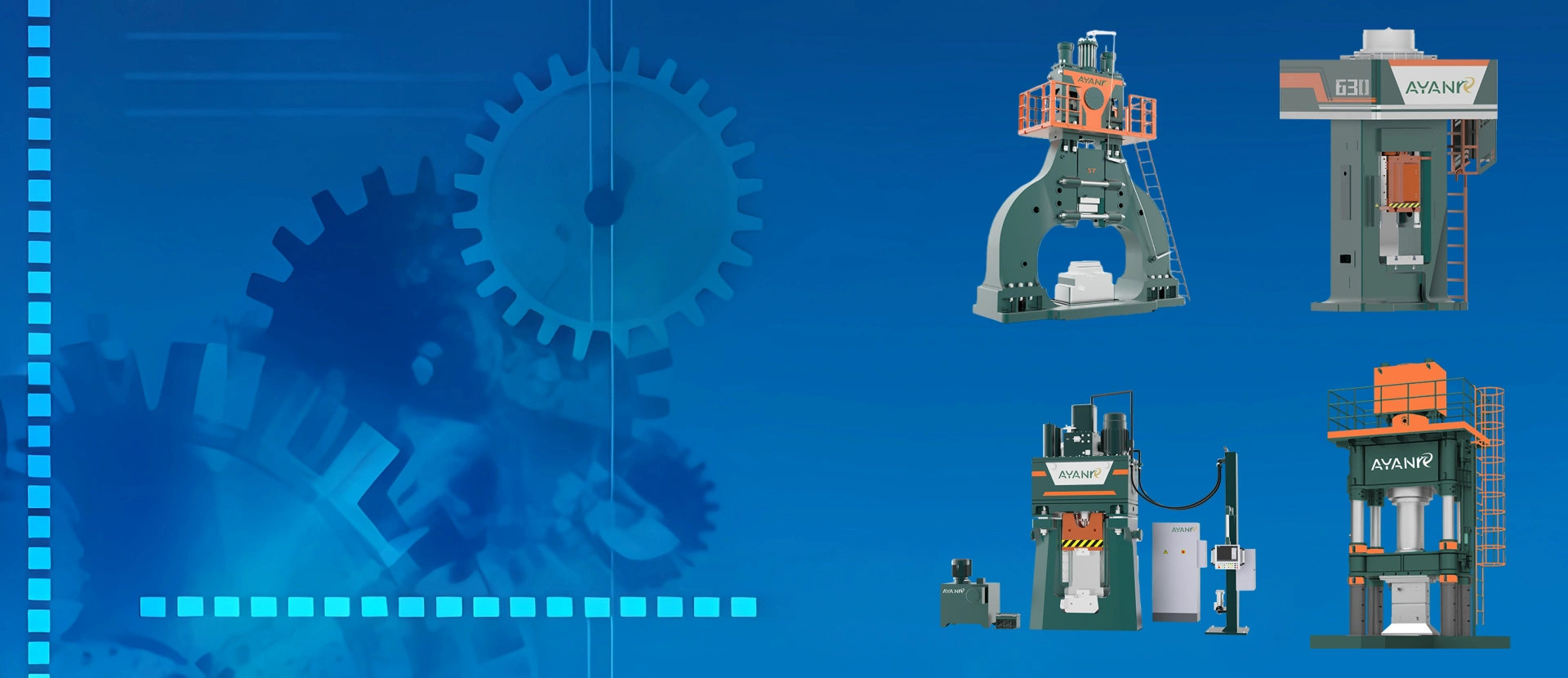
A pneumatic forging hammer production line is the traditional way to make forged steel grinding balls. The sequence is short, the investment is small next to a rolled-ball plant, and one hammer will cover a range of diameters - which is why the process has stayed in use for as long as it has.
The pneumatic forging hammer production line runs in five steps, and only two of them need a hammer.
Two hammers, not one, because the pre-forge and the finish forge are different jobs. Splitting them means neither hammer waits on the other's rhythm, and the pair together outruns a single machine doing both passes. That said, the line works either way: if output allows, one set of pneumatic forging hammer can complete the whole forging on its own.
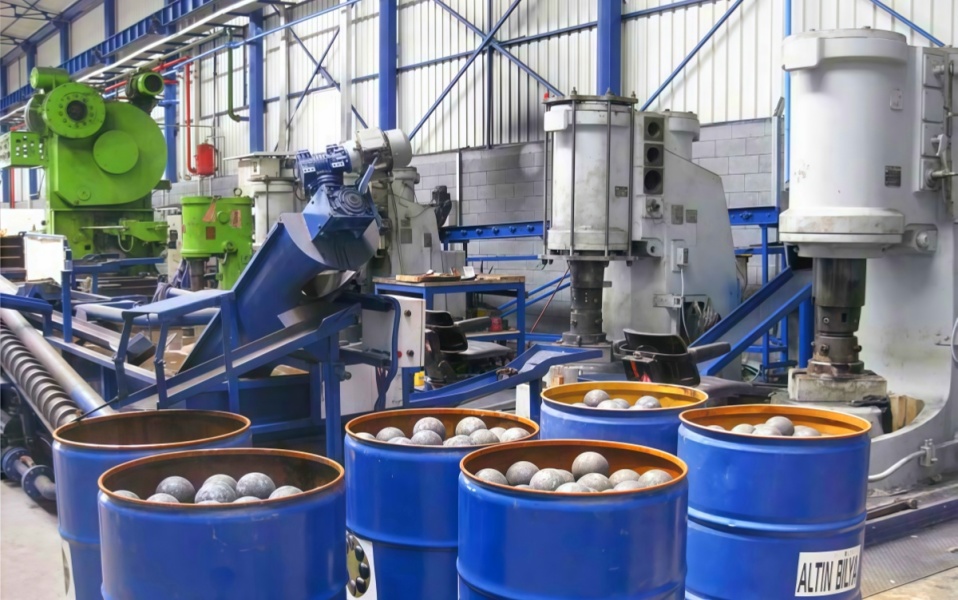
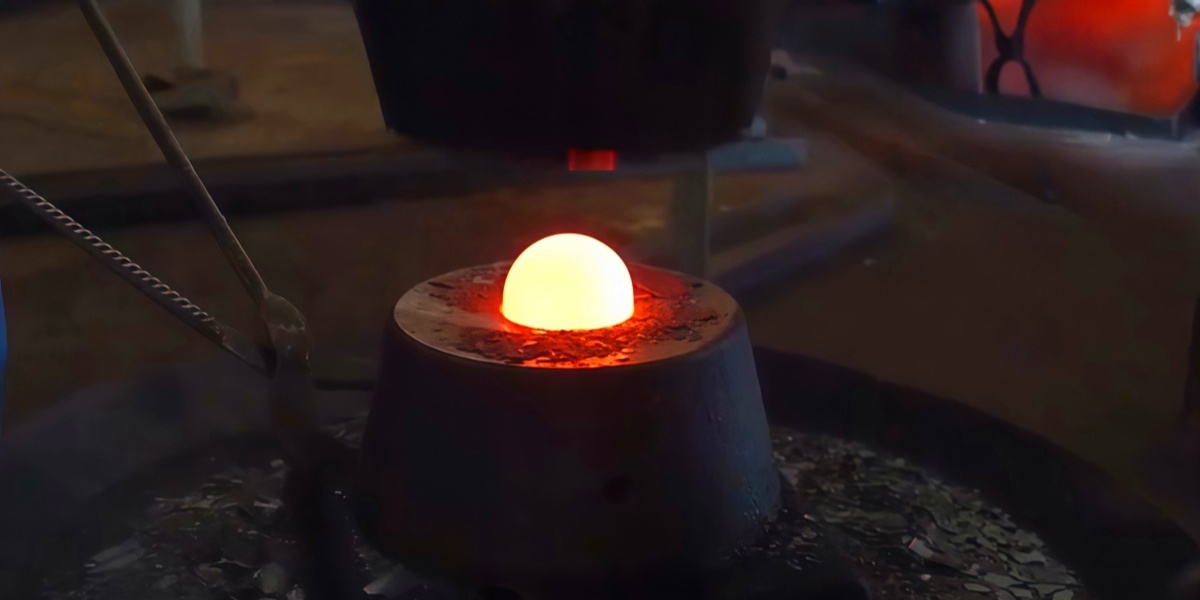
Forging a steel ball on a pneumatic hammer is the traditional route, and it survives because of what the blow does to the metal. The hammer works the raw material to the required deformation and raises the forging ratio, which is what makes the internal structure denser. A denser structure is tougher, tougher is more wear resistant, and more wear resistant means a lower rate of breakage - so a forged ball holds up in a harsh environment where a lesser ball would fail.
That matters more than it sounds. A grinding ball lives under repeated impact and abrasion, and a ball that breaks early costs far more than its purchase price, because it takes the mill down with it and contaminates the charge. Consistency across the batch is what a buyer is actually paying for.
The process also suits a wide spread of diameters, large ones in particular, and one hammer will produce several diameter ranges. That flexibility is what makes it workable for a range of production volumes rather than only for one fixed size.
A pneumatic forging hammer built specifically for forged steel balls starts from the general hammer and changes four things:
The commercial case is as short as the process: less investment, and production can be organised quickly. Hot-rolled steel and square steel both work as raw material, so the line is not tied to one mill product.
Six models cover balls from 70 mm to 200 mm. The two numbers move in opposite directions: the big hammer takes the big ball but turns out fewer of them, because each one takes longer to work.
| Pneumatic hammer type | Max. diameter of forged ball | Average efficiency |
|---|---|---|
| C41-150 | 70 mm | 6 pcs/min |
| C41-250 | 90 mm | 4 pcs/min |
| C41-400 | 110 mm | 3 pcs/min |
| C41-560 | 130 mm | 2.4 pcs/min |
| C41-750 | 150 mm | 2 pcs/min |
| C41-1000 | 200 mm | 1 pc/min |
Converted to an hourly figure at the rated efficiency, that is 360 pieces an hour on the C41-150, 240 on the C41-250, 180 on the C41-400, 144 on the C41-560, 120 on the C41-750 and 60 on the C41-1000. Those are straight arithmetic on the table, not a production guarantee - the honest way to read the table is downward: pick the smallest model that still takes the largest ball you intend to sell, because moving up a size costs you output on every smaller ball you make.
Forged wear-resistant steel balls work in grinding, across mining, cement and coal powder. That is abrasive, high-impact duty, which is exactly the case this process was designed for. If you are pairing the hammers with a hammer line rather than a ball line, the pneumatic forging hammer series covers the rest of the range.
One does the pre-forge, the other the finish forge. Separating the two passes means each hammer works at its own rhythm instead of waiting on a single machine doing both, which is where the efficiency gain comes from. A single hammer can complete the whole forging if the output you need allows it.
At the rated efficiency in the table: 360 pieces an hour on the C41-150, 240 on the C41-250, 180 on the C41-400, 144 on the C41-560, 120 on the C41-750 and 60 on the C41-1000. Efficiency falls as ball diameter rises, because each larger ball takes more work.
The C41-150 takes 70 mm, the C41-250 90 mm, the C41-400 110 mm, the C41-560 130 mm, the C41-750 150 mm and the C41-1000 200 mm. Those are ceilings, so a given hammer will also run every diameter below its maximum.
Yes. Any model covers every ball size up to its maximum, so a single hammer produces a range of diameters rather than one fixed size, which is what makes the process flexible across production volumes.
Hot-rolled steel and square steel both work. That keeps the line independent of a single mill product, which matters when bar supply tightens.
For this duty, yes. The forging blow raises the forging ratio and densifies the internal structure, which improves toughness, wear resistance and the breakage rate. A cast ball solidifies without that working, so it does not get the same structure from the same steel.
Send your forging drawing or part details — we will recommend the machine that fits and quote it.
Receive the news that you are interested in.
