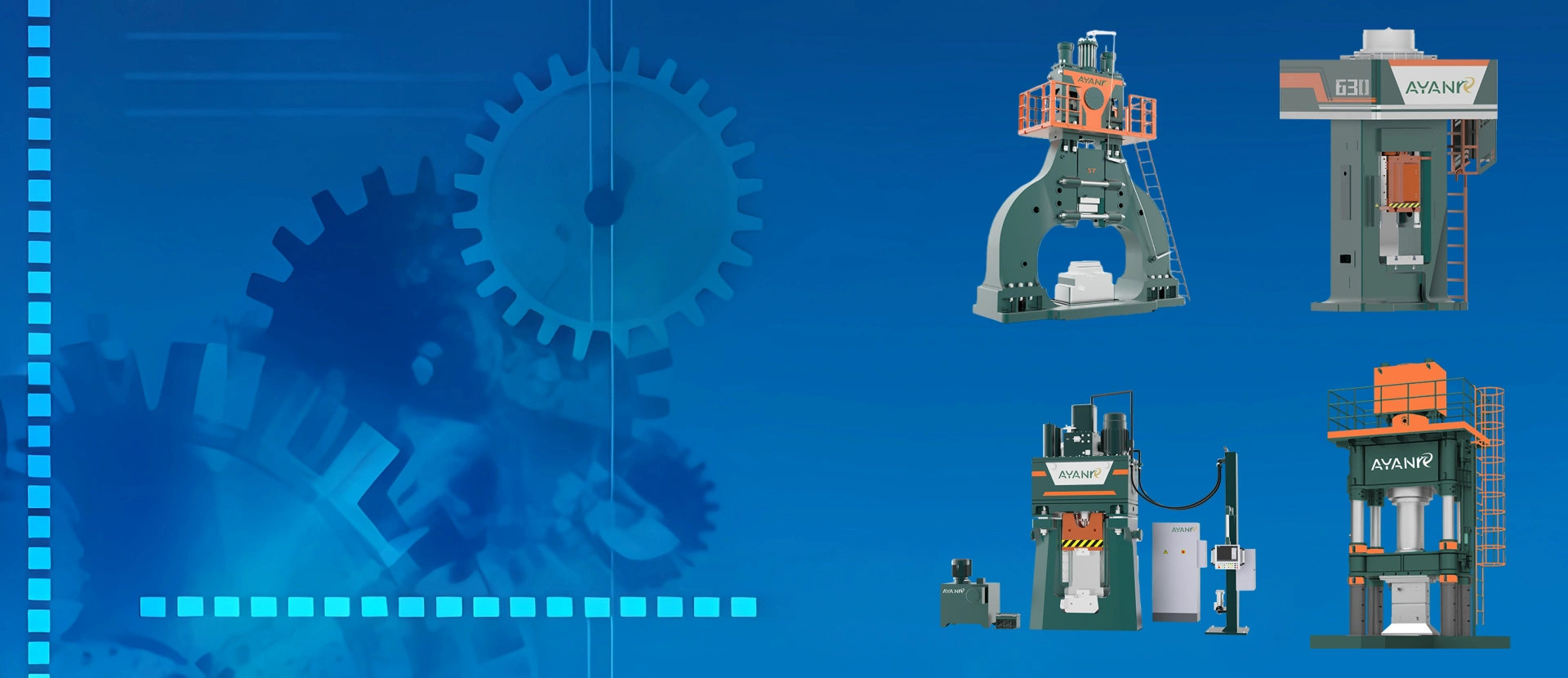
For a good blacksmith, having a stable, reliable and suitable pneumatic power hammer matters more than almost anything else in the shop.
Many buyers look only at price and tonnage, and ignore stability, the real application and after-sales support. They end up able to afford the machine but not able to afford running it — and the more they use it, the more they lose. Every one of those pain points shows up in actual production.
Below are the problems buyers hit when choosing a power hammer, and what the AYANK hammer does about each of them.
Pain points when choosing a pneumatic power hammer |
Why an AYANK pneumatic power hammer is the safer choice |
|
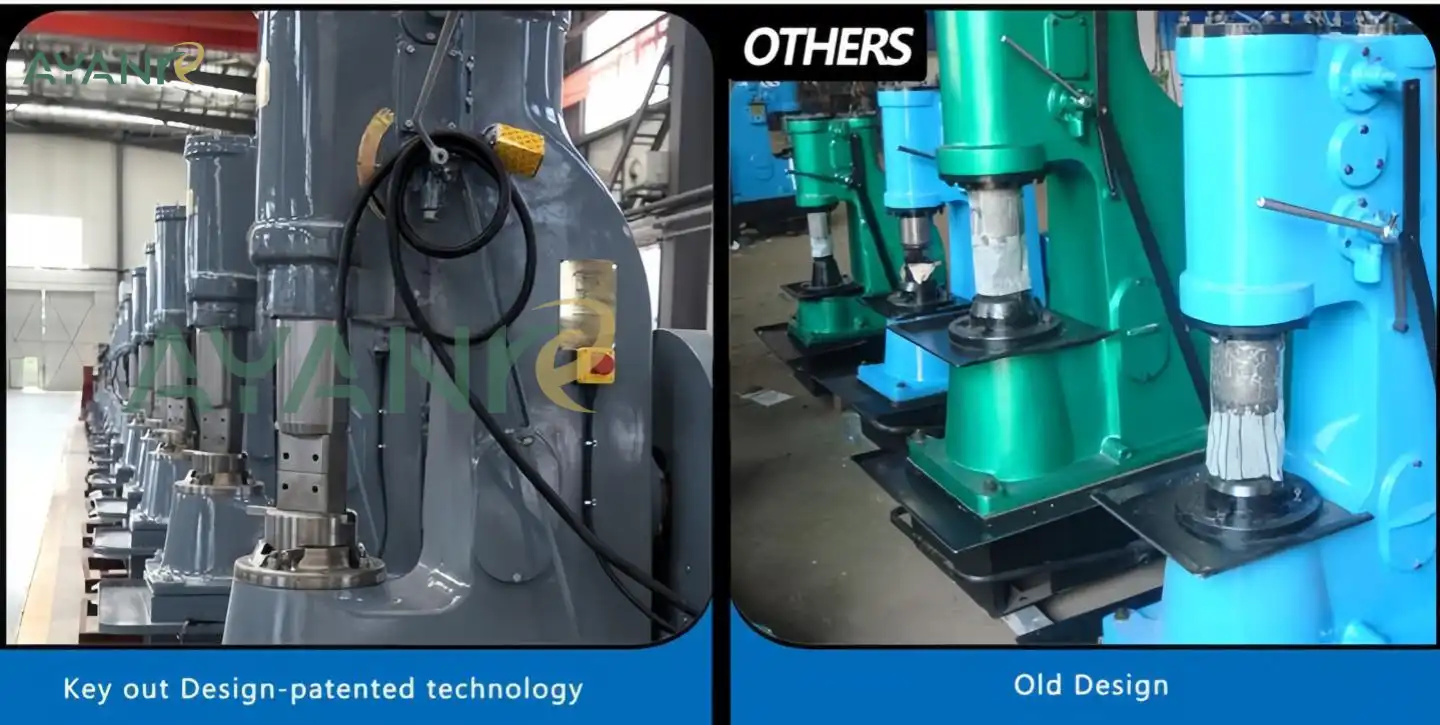
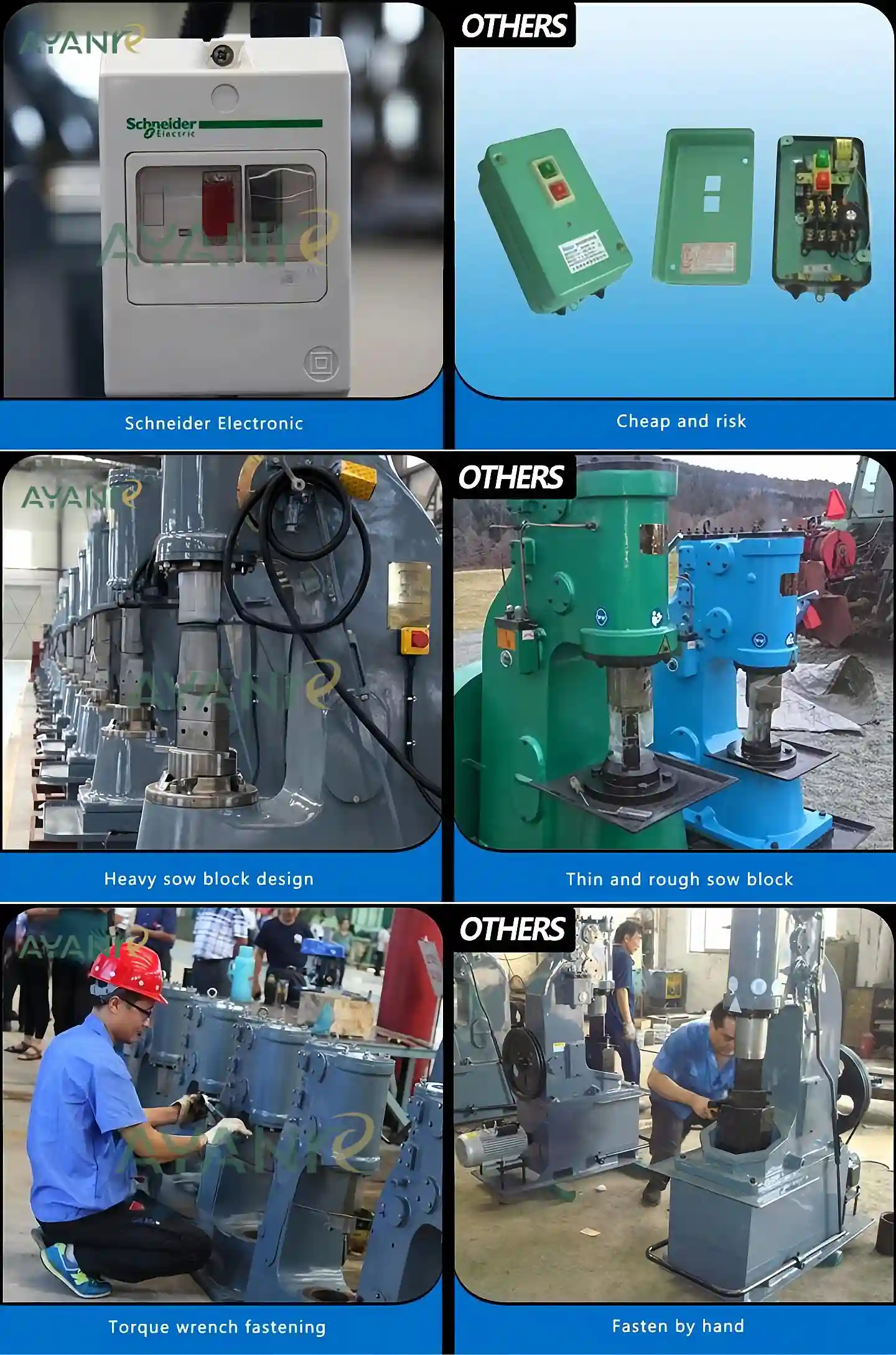
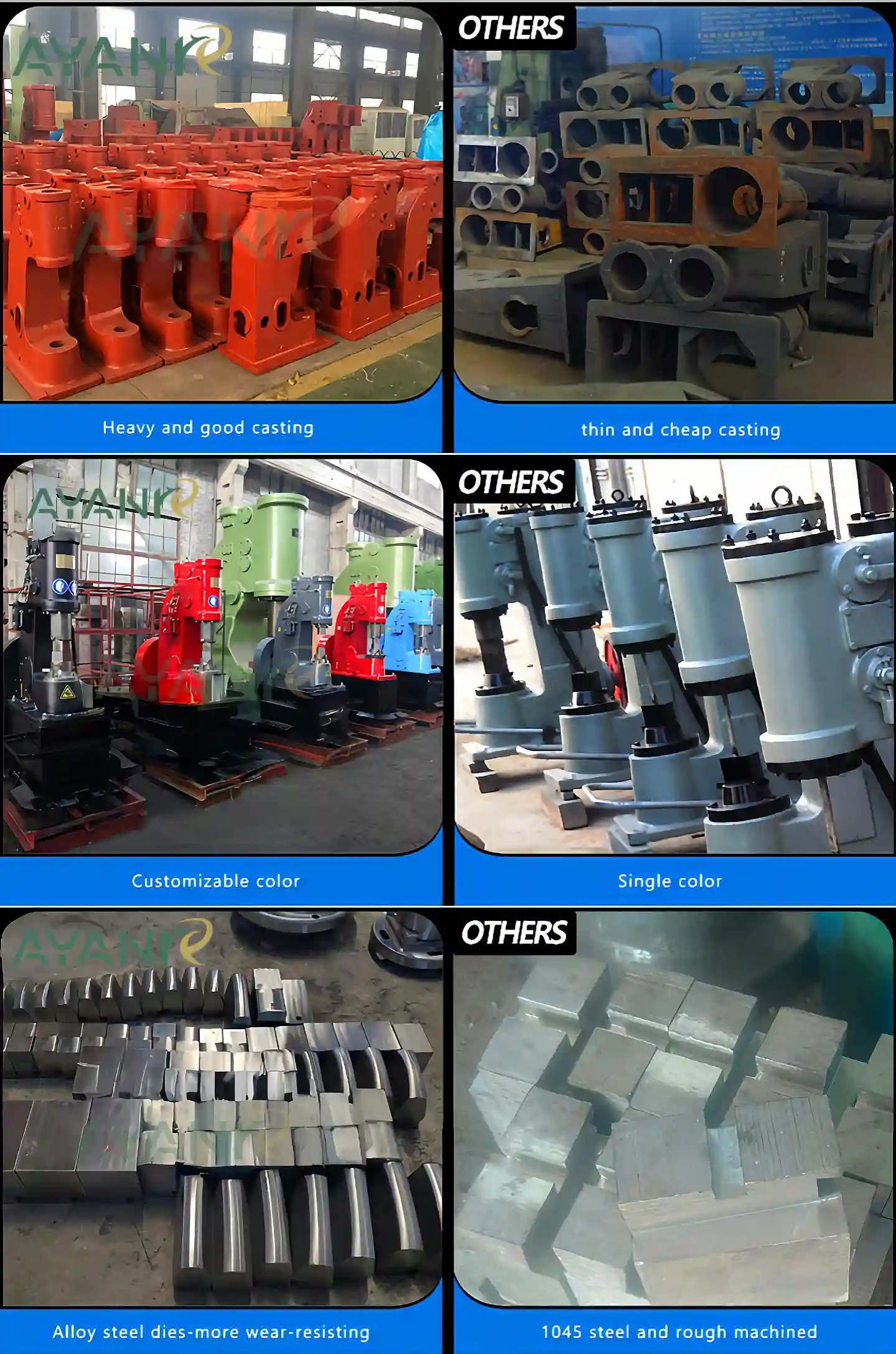
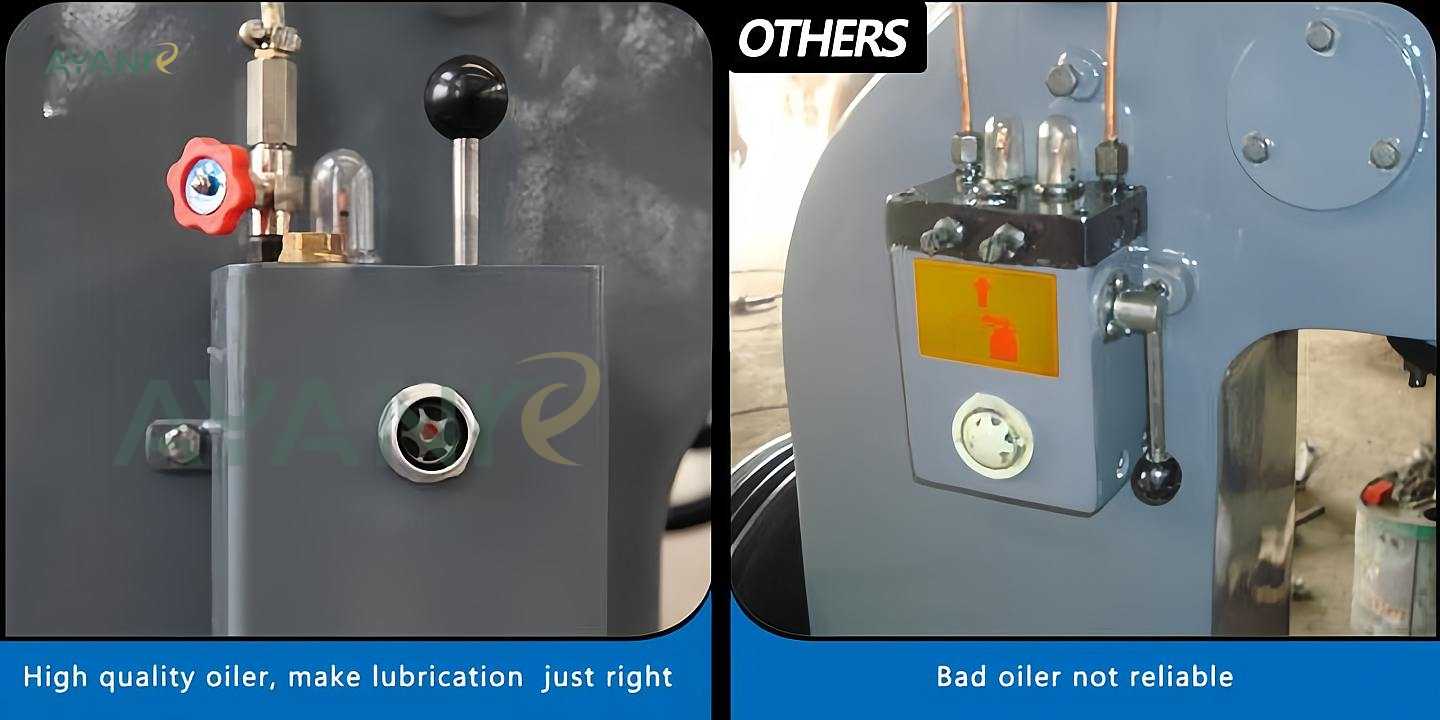
1. Poor quality, constant shutdowns for repair Many low-priced generic hammers use spliced bodies, which brings cylinder air leaks, aged seals and loosening hammer rods — minor repairs every three days and a major one every five. Small factories carry no regular spare parts and after-sales is out of reach, so a single failure means stopping work and waiting, with project delays and lost orders that no saving on the machine can cover. |
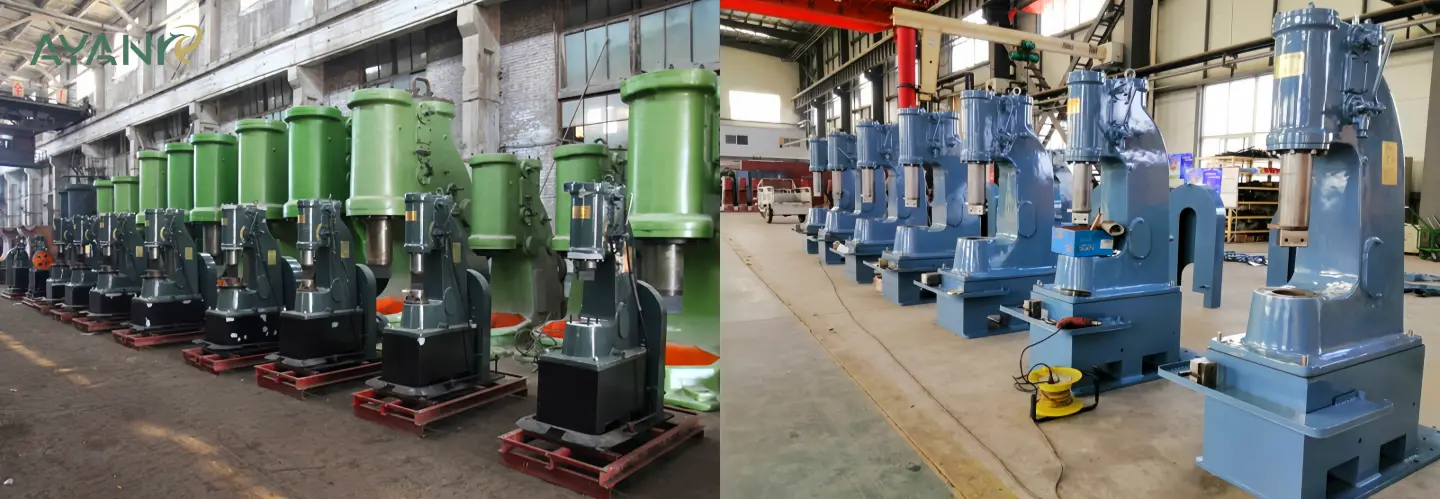
1. High quality, stable and reliable, no project delays The body is cast in one piece, which removes the usual causes of air leakage and loosening hammer rods. With 70 years in pneumatic hammer production we hold a 10,000 m² parts warehouse and keep the full range of wearing parts in stock. Daily upkeep is a periodic seal and oil change. Low failure rate, simple maintenance, stable schedules. |
|
2. Excessively high energy consumption — the power bill eats the order Old refurbished bodies and inferior hammers have poorly designed air circuits and low striking efficiency, drawing twice the electricity for the same work. Over a year, everything saved on the purchase price goes to the power company. |
2. Low energy consumption, lower power costs A new body structure, German-imported motors and control systems, and our own patented air circuit and electrical design raise striking efficiency. Same workload, less power drawn, more net profit left on the order. |
|
3. Installation trouble — it turns out it cannot be installed Foundation requirements and power specifications were never confirmed. On arrival the motor does not match the local voltage, the floor cannot take the load and there is not enough space. Return freight is expensive, and the buyer is stuck either way. |
3. Simple installation — running soon after unboxing Voltage and frequency are confirmed before the order and the motor is built to match the local supply. Large hammers ship with foundation drawings; small hammers need no foundation at all. |
|
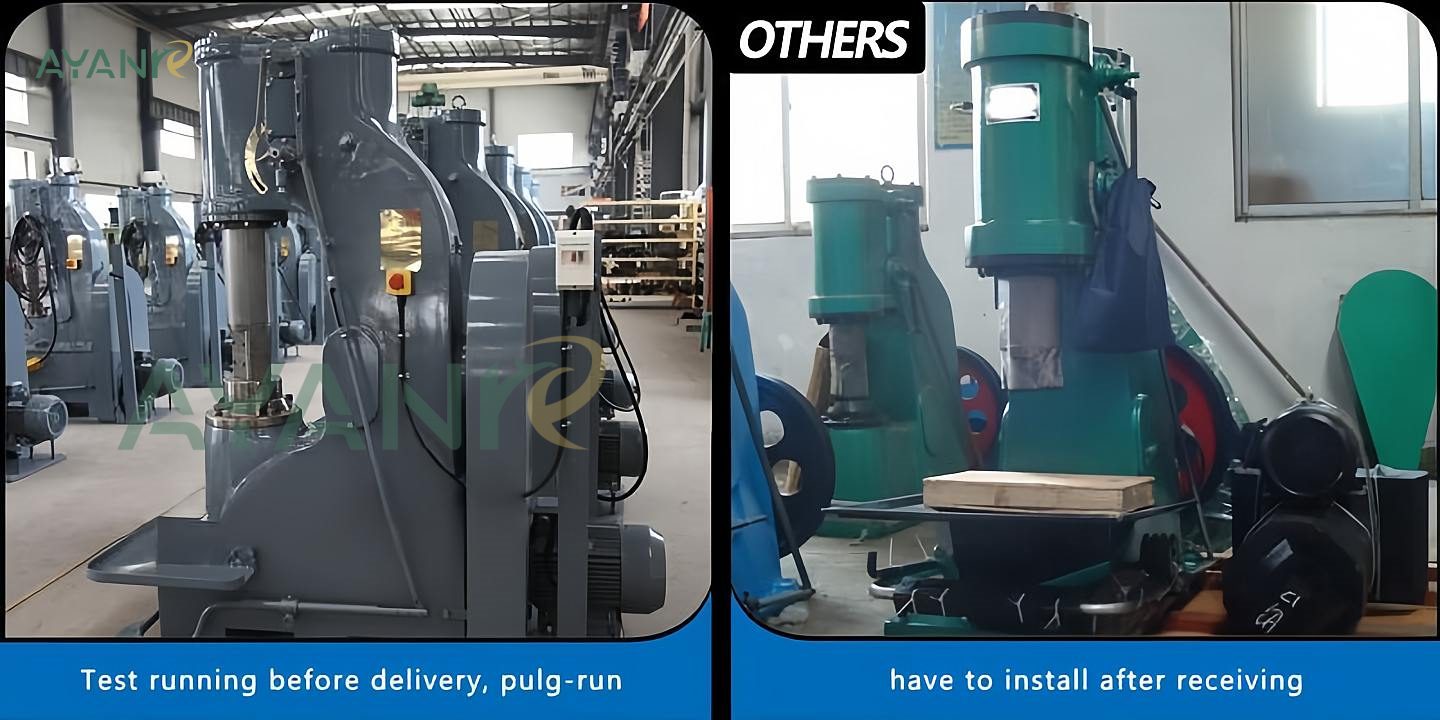
4. Cannot run after installation Two months of waiting, then the hammer arrives, gets wired up, and will not run — because nothing was trial-run or adjusted before it left the factory. After-sales cannot solve it over the phone, and the buyer loses both the money and the machine. |
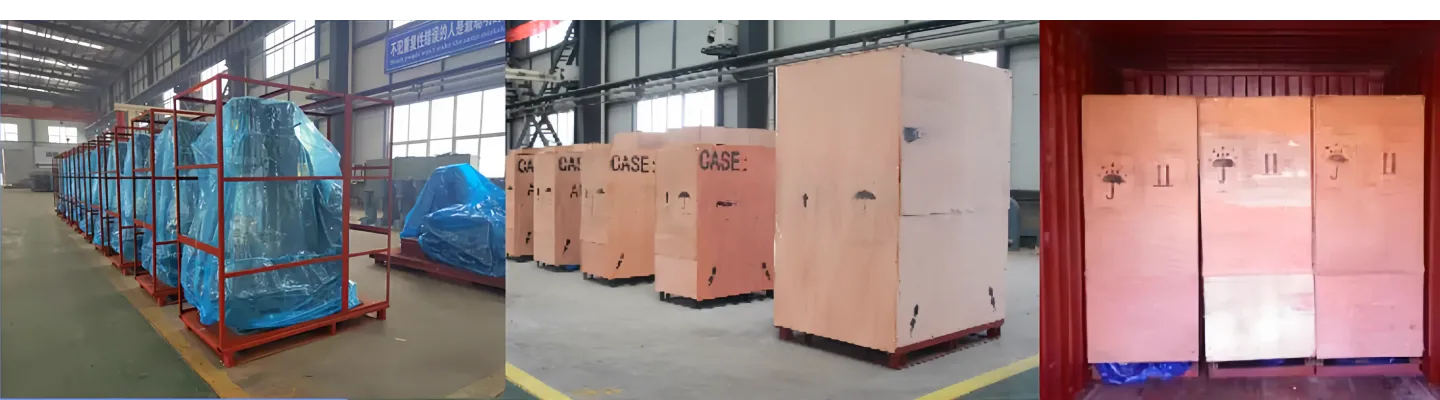
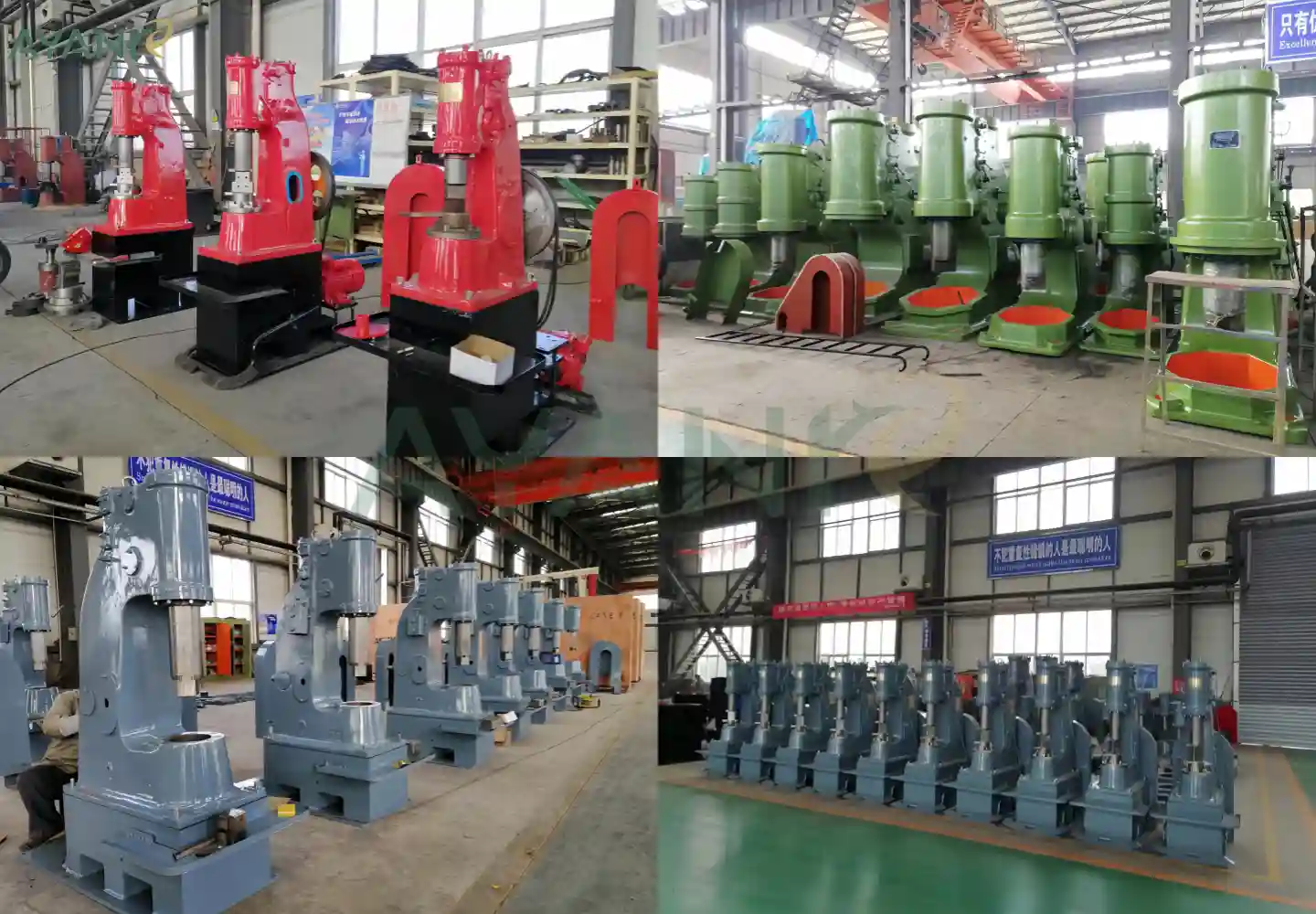
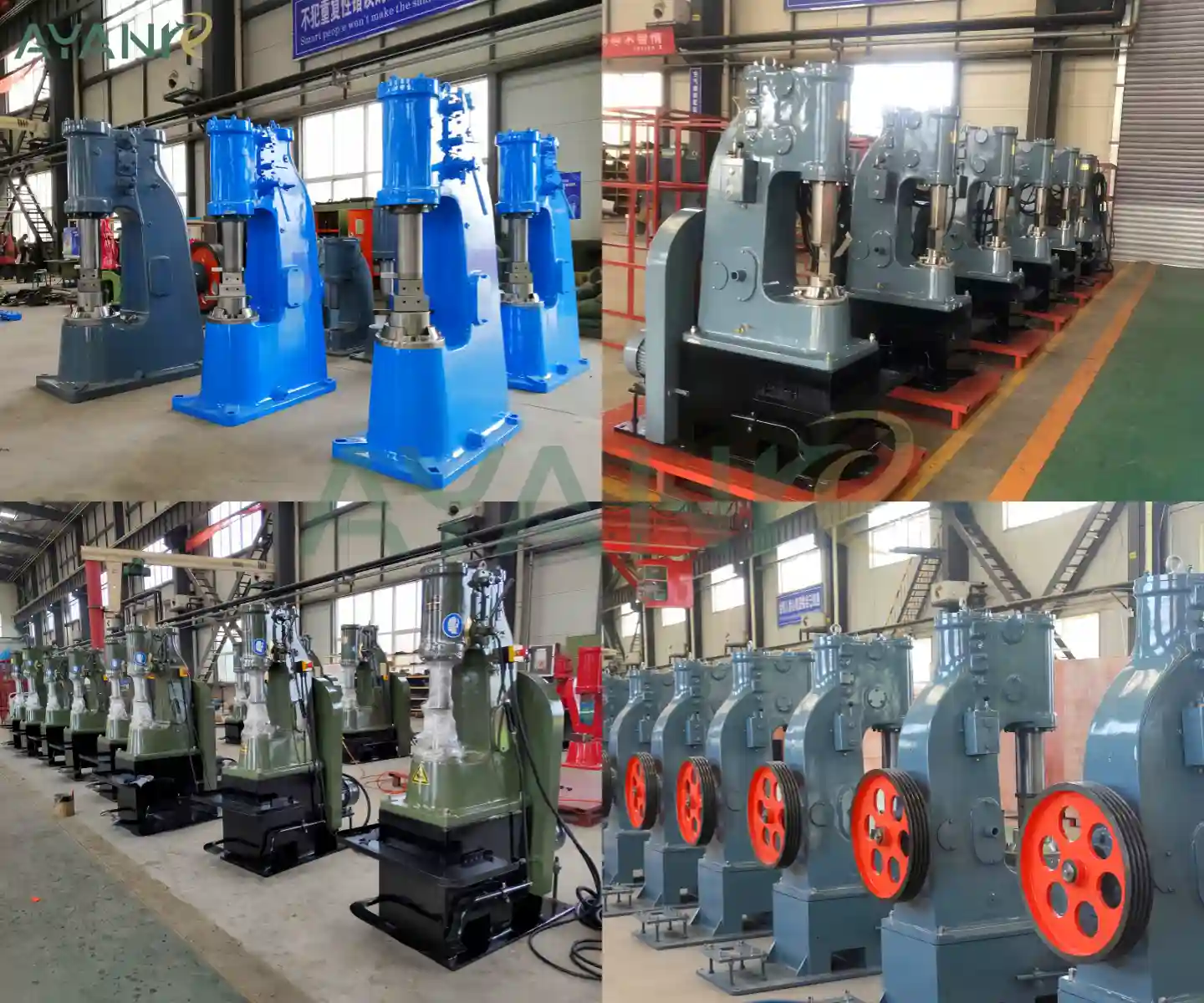
4. Ready for production on delivery Every hammer goes through two full trial runs and adjustments before dispatch, then ships fixed in a steel frame and packed in a wooden case to survive transport. Once it is installed the customer starts production with no further adjustment. |
|
5. No after-sales — nobody answers after the invoice No installation guidance, no operator training, no supply of consumable parts. When something goes wrong the buyer is on their own, and production stops while they work it out. |
5. Reply guaranteed within 24 hours Installation videos and operator training are provided. Spare parts are made in-house and kept in stock. When a problem appears, our hammer specialists diagnose it with the customer over live video. |
|
6. Too small cannot forge, too large cannot be controlled On batch orders the hammer strikes and the steel does not move, so the billet is reheated and struck again and output is barely faster than hand work; large parts are out of reach and the orders go elsewhere. On small parts the blow is too heavy — the work is flattened, thrown off the anvil, or the die cracks. Scrap climbs, material is wasted, and rework pushes the schedule further out. |
6. One-to-one model selection, neither too large nor too small We recommend from the actual work: the forged product, material and section, daily output, floor space and power supply. That removes the usual mismatch of a hammer with no power or one that wastes material, and every machine ends up matched to the production it has to do. |
|
7. Unstable striking force from an imprecise control valve A control valve with poor precision makes the blow fluctuate, so grain structure and part thickness never repeat. Batch orders become hard to standardize, and for high-end architectural or artistic work there is no consistent texture to build a product on. |
7. Precise, adjustable force for rough and fine forging Striking force and frequency are set by air intake. From heavy cogging and shaping down to finishing and pattern work on small parts, the output stays uniform, the texture repeats and the yield rate holds. |
|
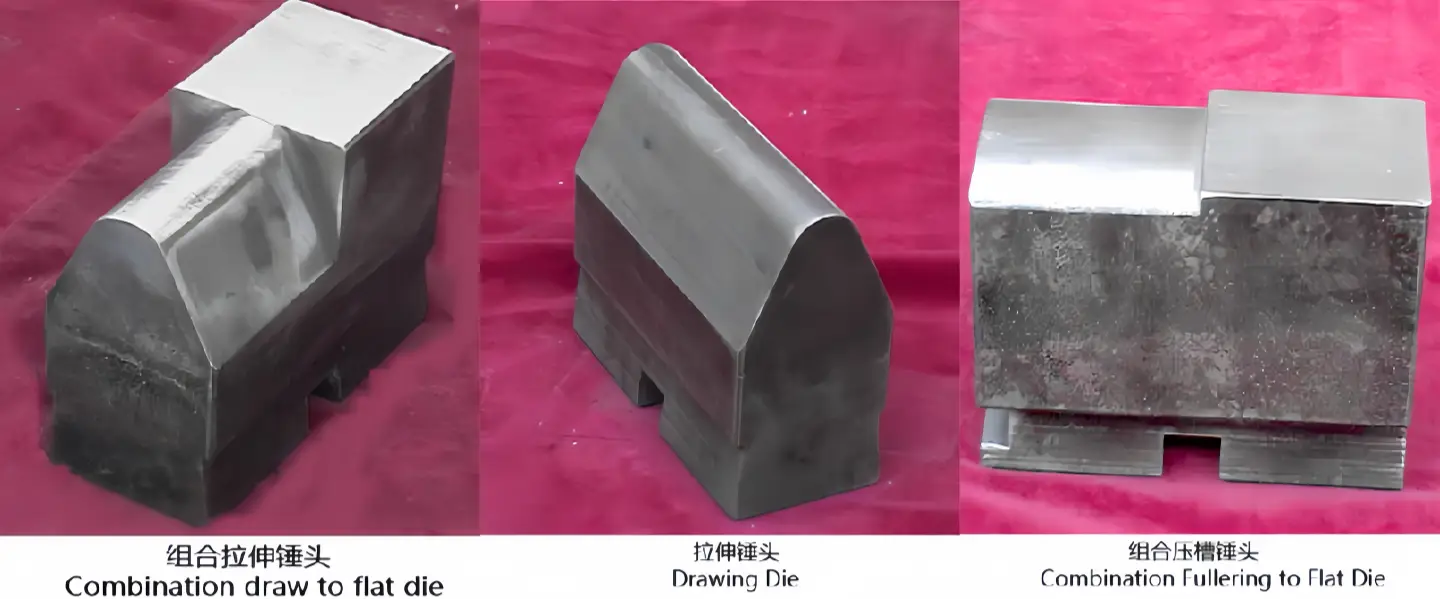
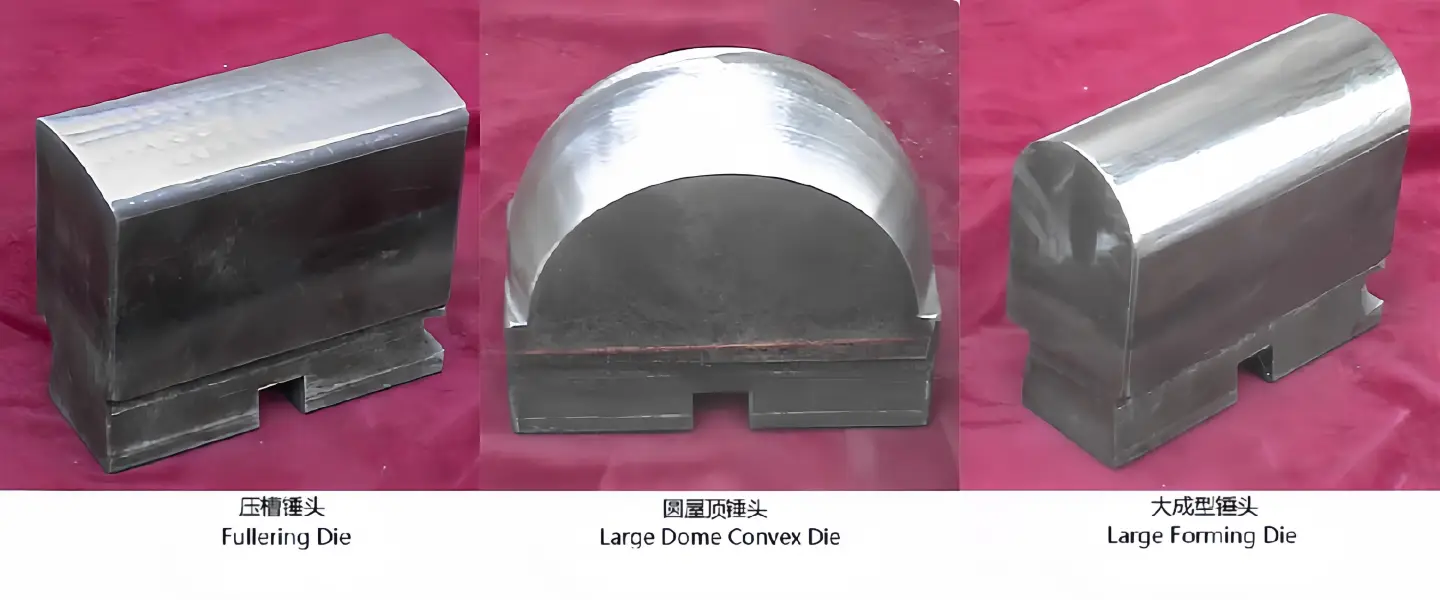
8. One hammer head only, so the process is limited A standard head is not versatile: it handles simple rough forging and nothing else. Fine ornament, special shaping and irregular workpieces are out of reach, custom heads are not offered, and the range of products the workshop can quote for stays narrow. |
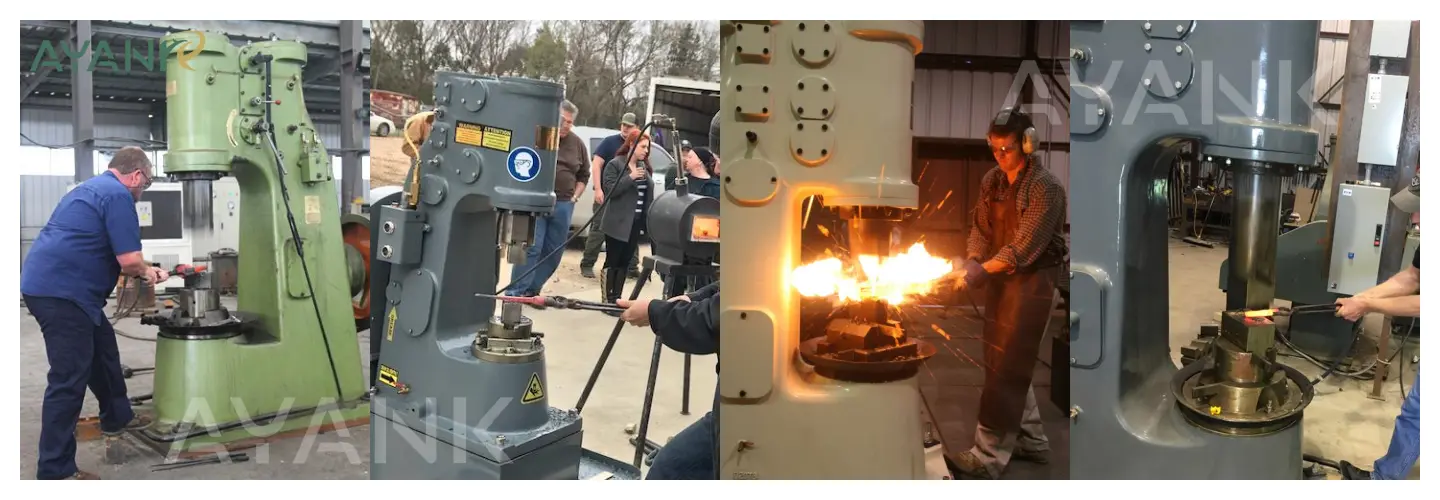
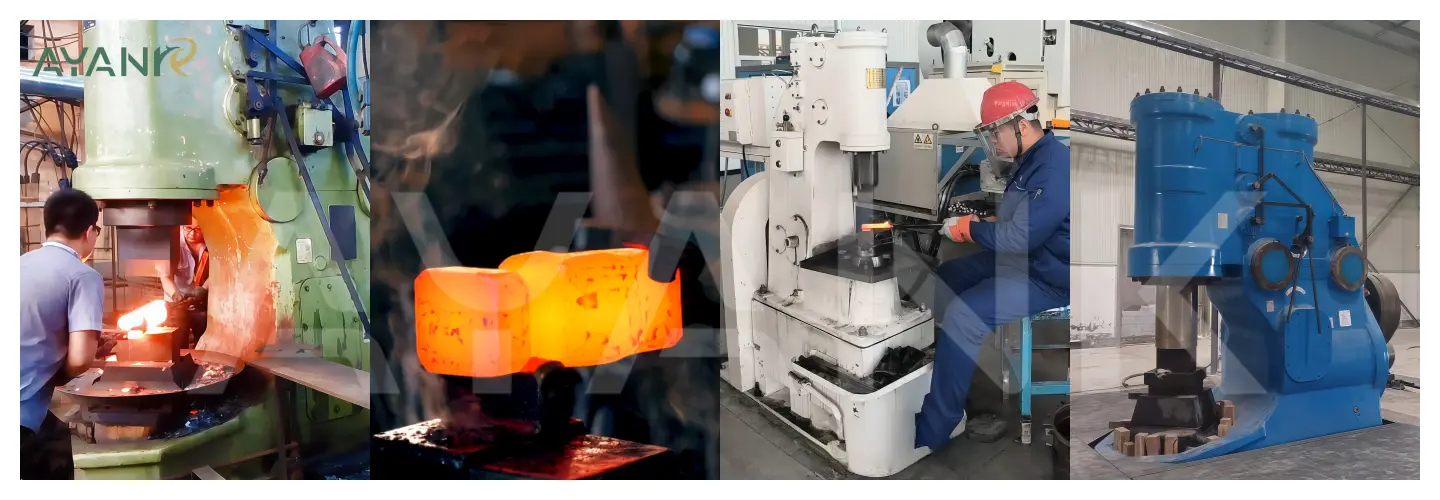
8. A range of special hammer heads for different processes Several special heads are kept in stock. Where the process needs something else, send the drawing and our machining shop builds the head to it. |
Against every one of those pain points, the AYANK C41A series of pneumatic power hammers is optimized for quality, energy use, installation, service and model selection, and covers everything from a hobby shop to a factory running mass production.
1. What do you mainly forge? Knives, agricultural tools, architectural ironwork, mining tools — and at what size, in what material?
2. How much do you forge per day? A few pieces now and then, or continuous production?
3. What are the site conditions? Single-phase or three-phase supply, what voltage in V, and what frequency in Hz?
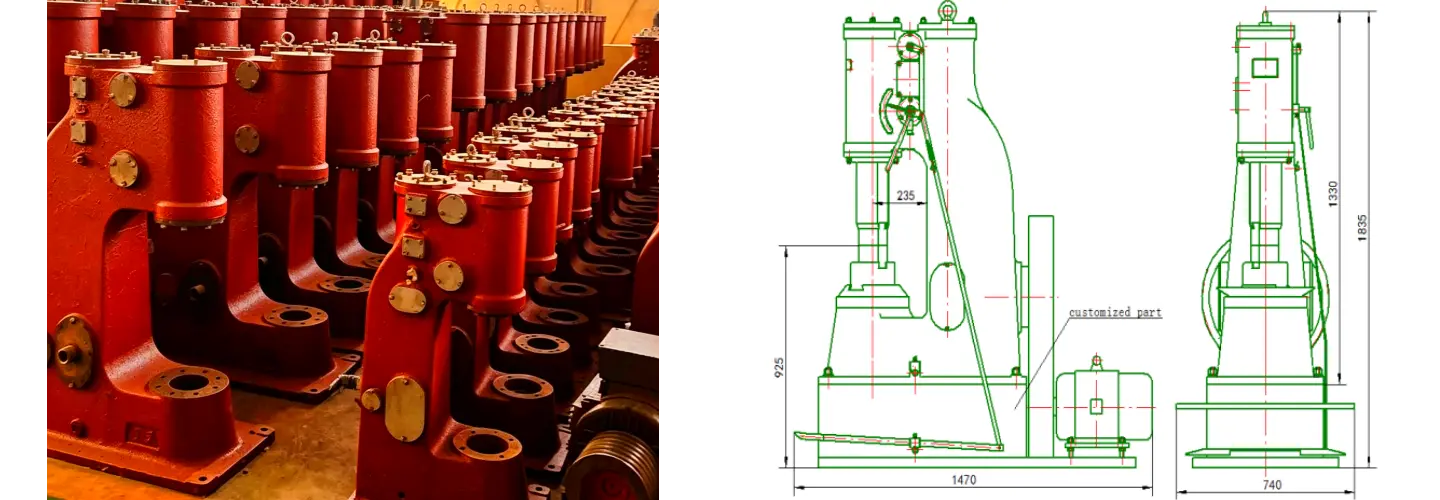
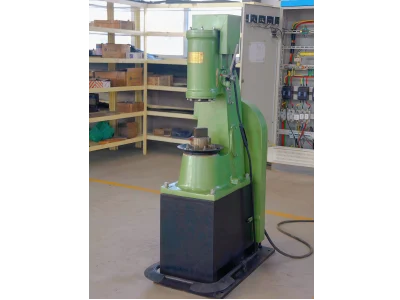
| 15 kg Pneumatic Hammer — entry level / craft / small part repair Target users: ironwork enthusiasts, small knife and jewellery shops, teaching and training Typical products: small knives, shovels, garden tools, decorative iron flowers, horseshoes Features: small footprint, runs on household power, relatively quiet |
Model (hammer head mass): 15 kg
Striking energy: 0.16 kJ
Forgable billet, round bar: Φ35 mm
Square bar: 30 × 30 mm
Theoretical striking frequency: 300 min⁻¹
Machine weight: 490 kg
|
 |
|
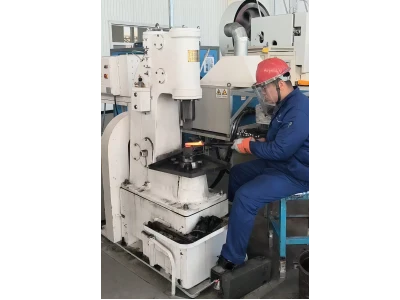
25 kg Pneumatic Hammer — the small shop workhorse, first choice for knifemakers
Target users: apprentice blacksmiths, independent knifemakers, small blacksmith shops, farm tool repair shops
Typical products: kitchen knives, scissors, small farm tools such as hoes and sickles, flat ironwork
Features: moderate striking force, fine control, one person can run it
A knifemaker in Brazil runs a 25 kg hammer for kitchen knives and turns out 40 pieces a day.
|
Model (hammer head mass): 25 kg
Striking energy: 0.27 kJ
Forgable billet, round bar: Φ48 mm
Square bar: 40 × 40 mm
Theoretical striking frequency: 250 min⁻¹
Machine weight: 1,080 kg
|
 |
|
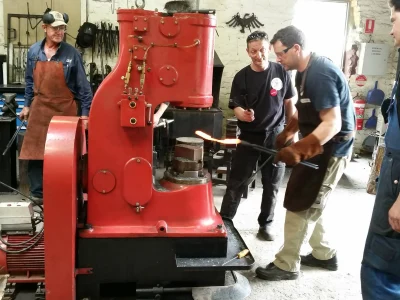
40 kg Pneumatic Hammer — advanced / small to medium batch production
Target users: professional blacksmith shops, medium workshops
Typical products: medium farm tools such as axes and picks, architectural ironwork such as railing leaves, motorcycle parts
Features: clearly more striking force, forges up to Φ68 mm round bar, about 50% more output than the 25 kg
|
Model (hammer head mass): 40 kg
Striking energy: 0.53 kJ
Forgable billet, round bar: Φ68 mm
Square bar: 52 × 52 mm
Theoretical striking frequency: 245 min⁻¹
Machine weight: 1,260 kg
|
 |
|
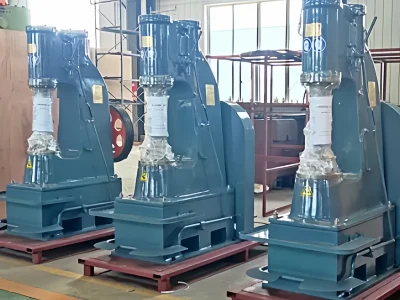
55 kg Pneumatic Hammer — professional grade / heavy farm tools and hardware
Target users: blacksmiths, professional forging shops, mining tool repair stations
Typical products: hardware tools, medical instruments, gold and silver work, manufacturing, agricultural machinery, machinery forgings
Features: strong striking force, forges up to Φ75 mm round bar, suited to cogging and drawing out
Note: power supply and foundation need to be confirmed in advance
|
Model (hammer head mass): 55 kg
Striking energy: 0.7 kJ
Forgable billet, round bar: Φ75 mm
Square bar: 60 × 60 mm
Theoretical striking frequency: 230 min⁻¹
Machine weight: 1,750 kg
|
 |
|
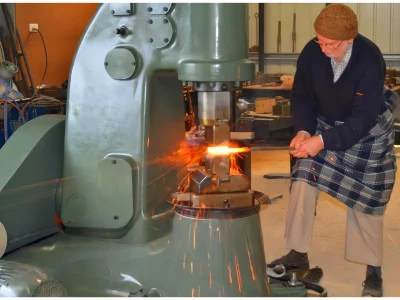
75 kg Pneumatic Hammer — near-industrial / batch production
Target users: professional blacksmiths, small forging shops, batch production workshops
Typical products: construction, hardware, electrical, railway parts, small steel pipe and general forgings
Features: large blow energy, high frequency, runs continuously for more than 8 hours
Note: power supply and foundation need to be confirmed in advance
|
Model (hammer head mass): 75 kg
Striking energy: 1.0 kJ
Forgable billet, round bar: Φ85 mm
Square bar: 65 × 65 mm
Theoretical striking frequency: 210 min⁻¹
Machine weight: 2,700 kg
|
 |
|
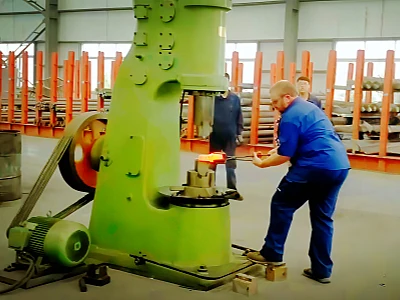
110 kg Pneumatic Hammer — industrial / heavy forging
Target users: professional blacksmiths, small forging shops, mechanical repair workshops
Typical products: construction, hardware, electrical, railway parts, small steel pipe and general forgings
Features: the heaviest blow in the range, forges up to Φ120 mm round bar
Note: power supply and foundation need to be confirmed in advance
|
Model (hammer head mass): 110 kg
Striking energy: 1.98 kJ
Forgable billet, round bar: ≤Φ120 mm
Square bar: 110 × 110 mm
Theoretical striking frequency: 180 min⁻¹
Machine weight: 3,300 kg
|
 |
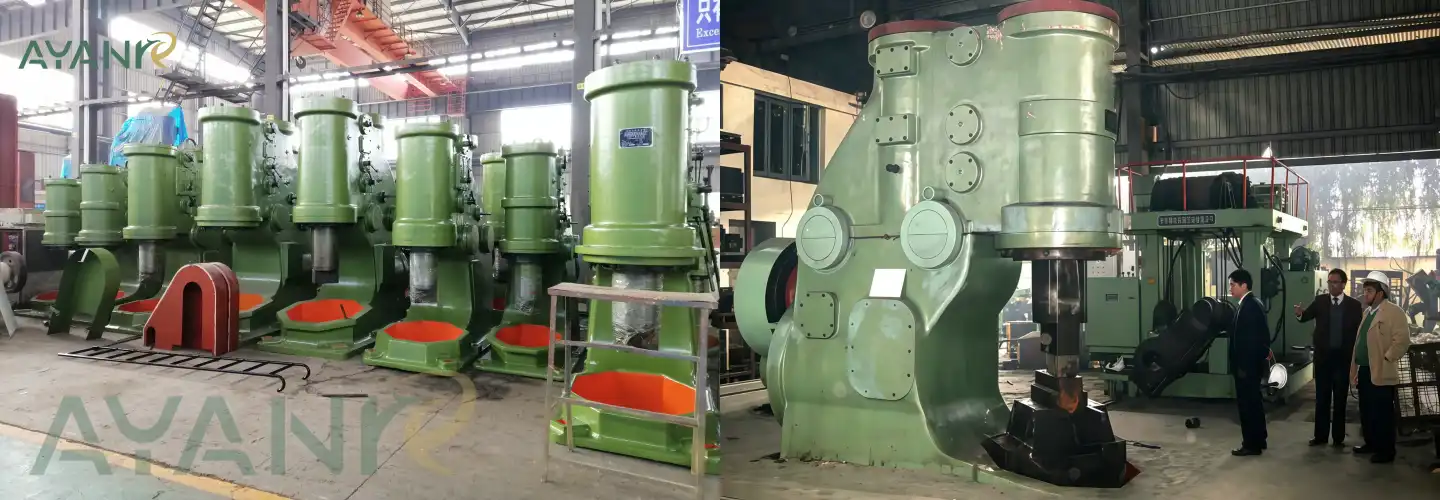
The largest hammer in the range is 2,000 kg. Click to see the full specification.
If the six models above do not settle it, our guide to choosing a forging hammer works through tonnage, die size and workshop layout step by step.
|
Model (hammer head mass)
|
Striking energy (kJ)
|
Forgable billet |
Theoretical striking frequency (min⁻¹) |
Machine weight (kg)
|
|
|
Round bar (mm) |
Square bar (mm) |
||||
|
15 kg |
0.16 |
Φ35 |
30 × 30 |
300 |
490 |
|
25 kg |
0.27 |
Φ48 |
40 × 40 |
250 |
1,080 |
|
40 kg |
0.53 |
Φ68 |
52 × 52 |
245 |
1,260 |
|
55 kg |
0.7 |
Φ75 |
60 × 60 |
230 |
1,750 |
|
75 kg |
1.0 |
Φ85 |
65 × 65 |
210 |
2,700 |
|
110 kg |
1.98 |
Φ120 |
110 × 110 |
180 |
3,300 |
Mistake 1: assuming bigger is better.
A large hammer has more blow than a small part needs, it is hard to control, and it damages dies or workpieces. Match the hammer to the heaviest section you actually forge every week, not to the largest part you might quote for one day.
Mistake 2: looking only at price and ignoring after-sales.
A hammer is a long-term investment. Availability of wear parts, warranty terms and how fast technical support answers matter more than the invoice figure.
Mistake 3: leaving foundation and installation to the last minute.
Large pneumatic hammers have definite foundation requirements. Ask the manufacturer for the foundation drawing before the machine ships, not after it lands.
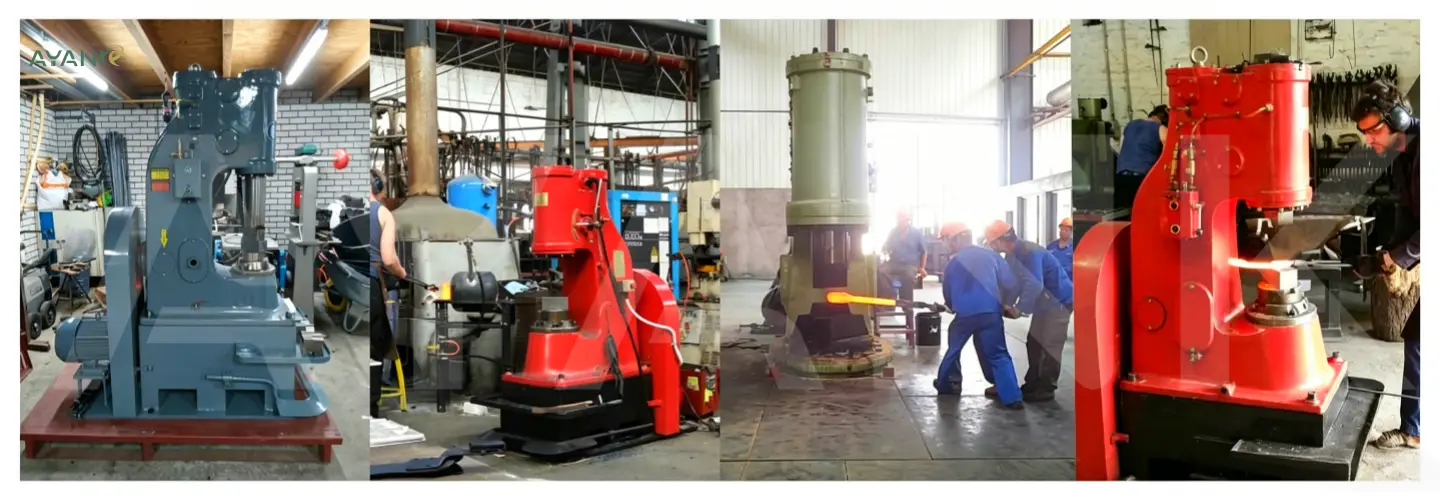
For a blacksmith who wants better quality, more output and a better margin, the decisive step is not grinding harder at the anvil — it is choosing the right hammer.
Avoid the maintenance trap, the energy trap and the selection trap. A stable, economical, precise hammer with real after-sales support holds your standard steady, raises capacity and pulls the scrap rate down.
If you are still unsure which tonnage fits your work, tell us what you forge, in what material and section, and how much you make in a day:
ask for a one-to-one selection plan and a quotation.
Receive the news that you are interested in.
