Forging Equipment Manufacturer: Die Forging Machines, Open Die Forging Machines
What Are the Processes for Customizing a Automated Forging Production Line? A Detailed Guide to AYANK’s 5 Core Steps
2026-05-26
I. The customization of an automated forging production line must adhere to the principles of "demand orientation, process core, equipment adaptability, and collaborative efficiency." The core implementation points are as follows:
Point 1: Clarify the customer’s core requirements for forging production (fundamental prerequisite)
Core Content: Determine the core requirements for forging production, including specifications, material, production process, finished product quality standards, target production efficiency, expected production costs, and other key aspects.
Significance: All subsequent process design, forging equipment selection, and solution development revolve around the core requirements. Changes in requirements may affect the adaptability and operational effectiveness of the entire automated forging production line, making this the core prerequisite of a customized project.
• Point 2: Optimize the forging production process (core component)
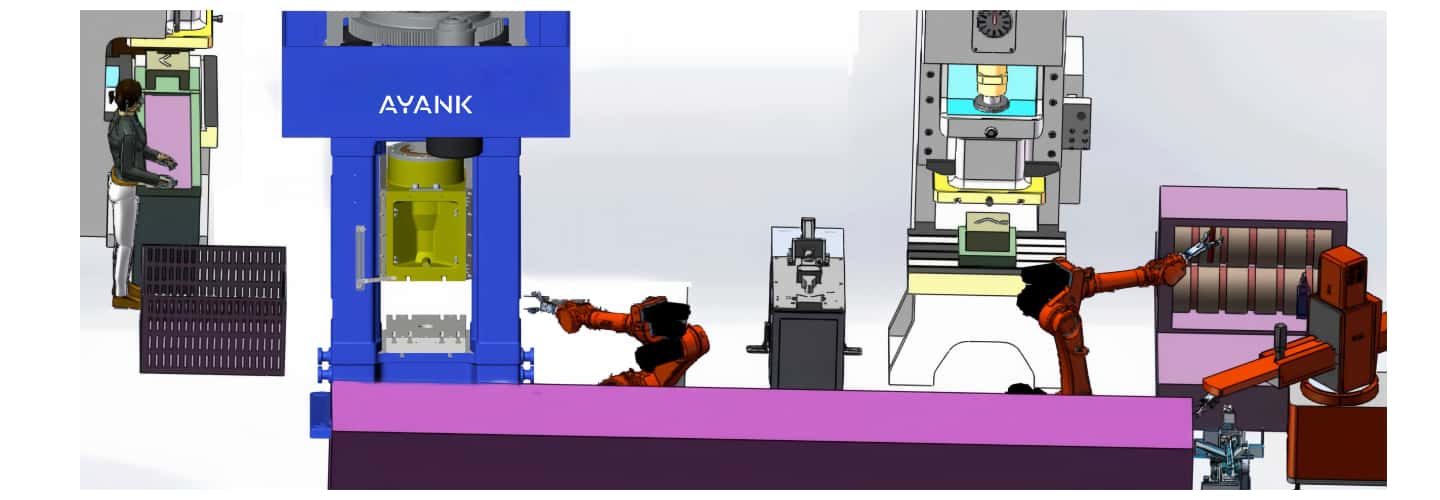
Core Content: Based on the customer’s requirements, select and optimize the appropriate forging production process. Reasonably design the sequence of forging processes and the workflow connections between each step to enhance production efficiency. Based on the optimized process, provide a detailed production process plan and workshop layout diagram to guide equipment procurement.
Significance: The production process is the core of the entire automated forging production line, directly determining the construction cost, operational efficiency, and final product quality.
• Point 3: Select the main forging equipment (key component)
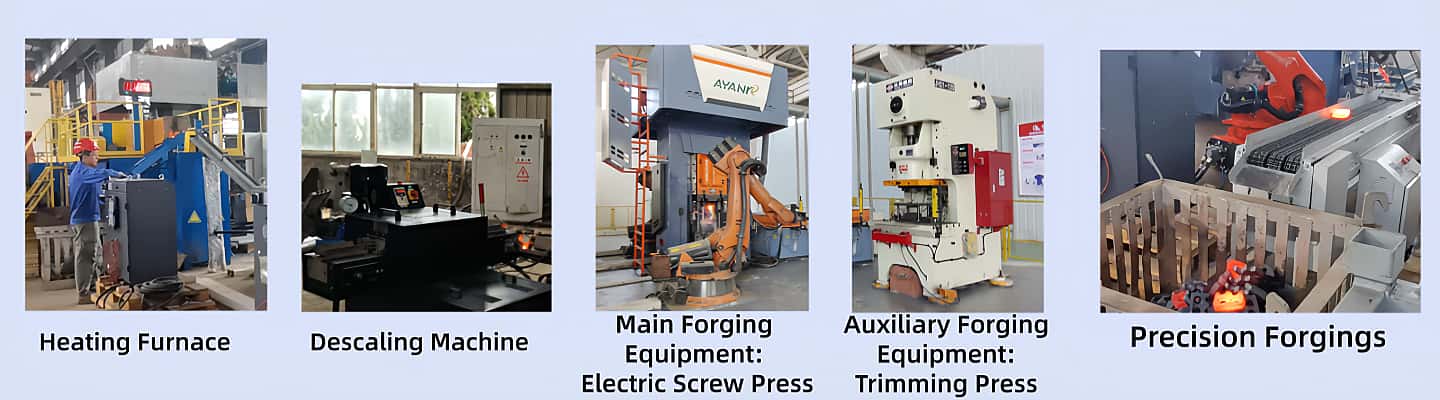
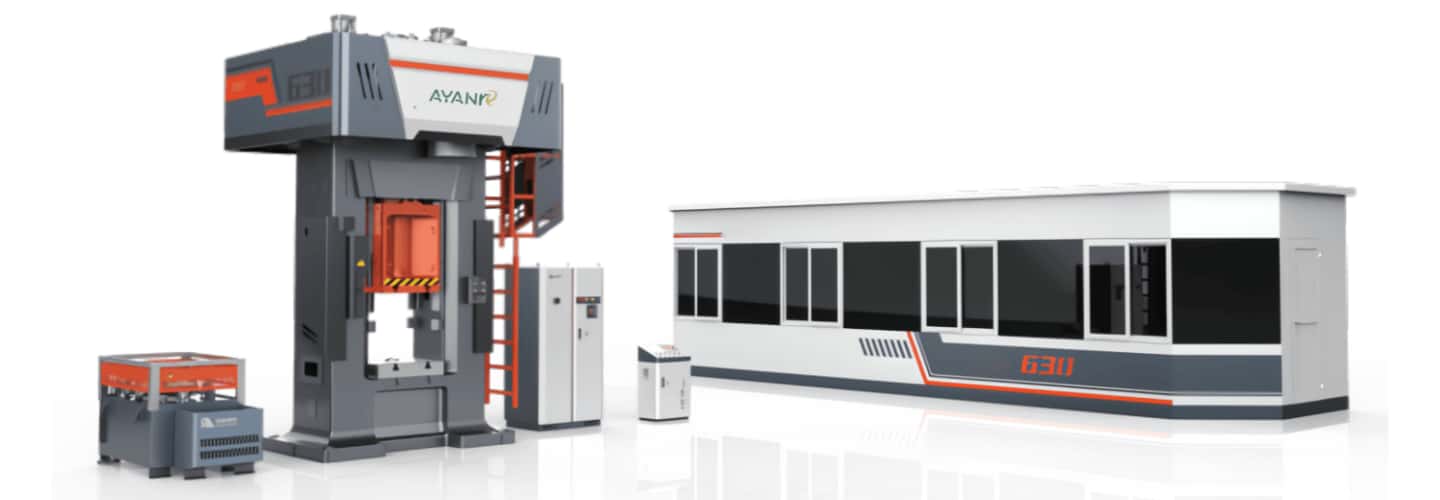
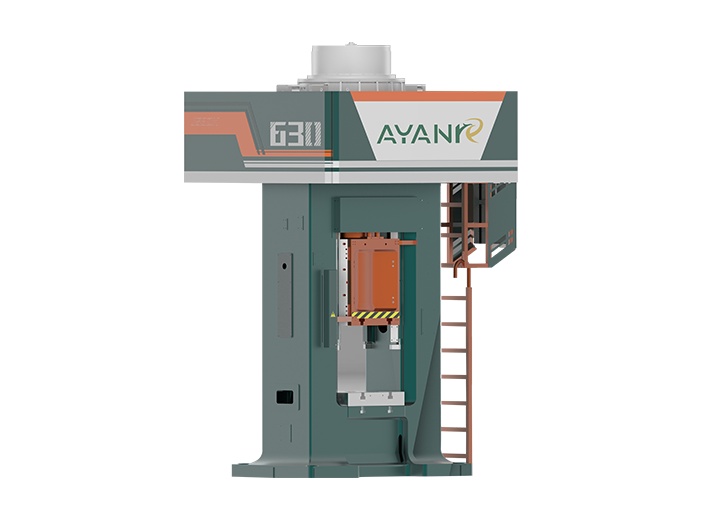
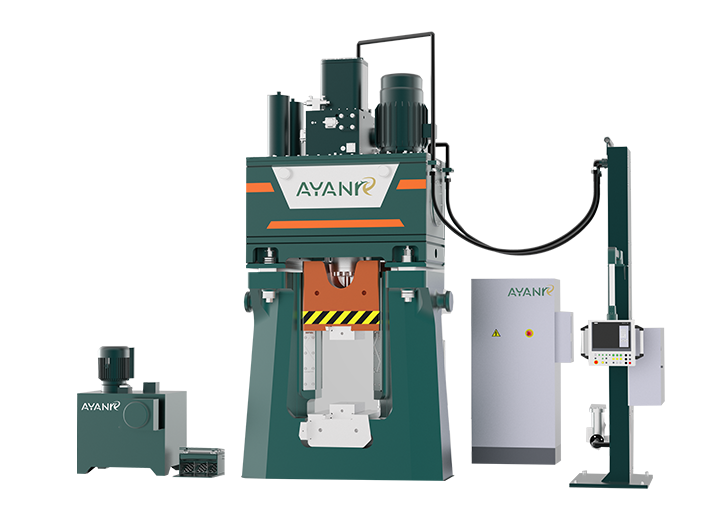
Core Content: The main forging equipment is the core of the automated forging production line and accounts for a significant portion of the cost. It should be selected based on the process requirements. Ensure that parameters such as forging pressure and impact energy of the equipment meet production needs. Prioritize energy-efficient, environmentally friendly, and durable main forging equipment (e.g., the AYANK J58KA/J58ZKA series electric screw presses). The customer’s existing main forging equipment can be integrated into the process planning. However, if the equipment is outdated and inefficient, it is advisable to replace it with high-efficiency main forging equipment to ensure the overall efficiency of the automated forging production line.
• Point 4: Select auxiliary line equipment (supporting component)
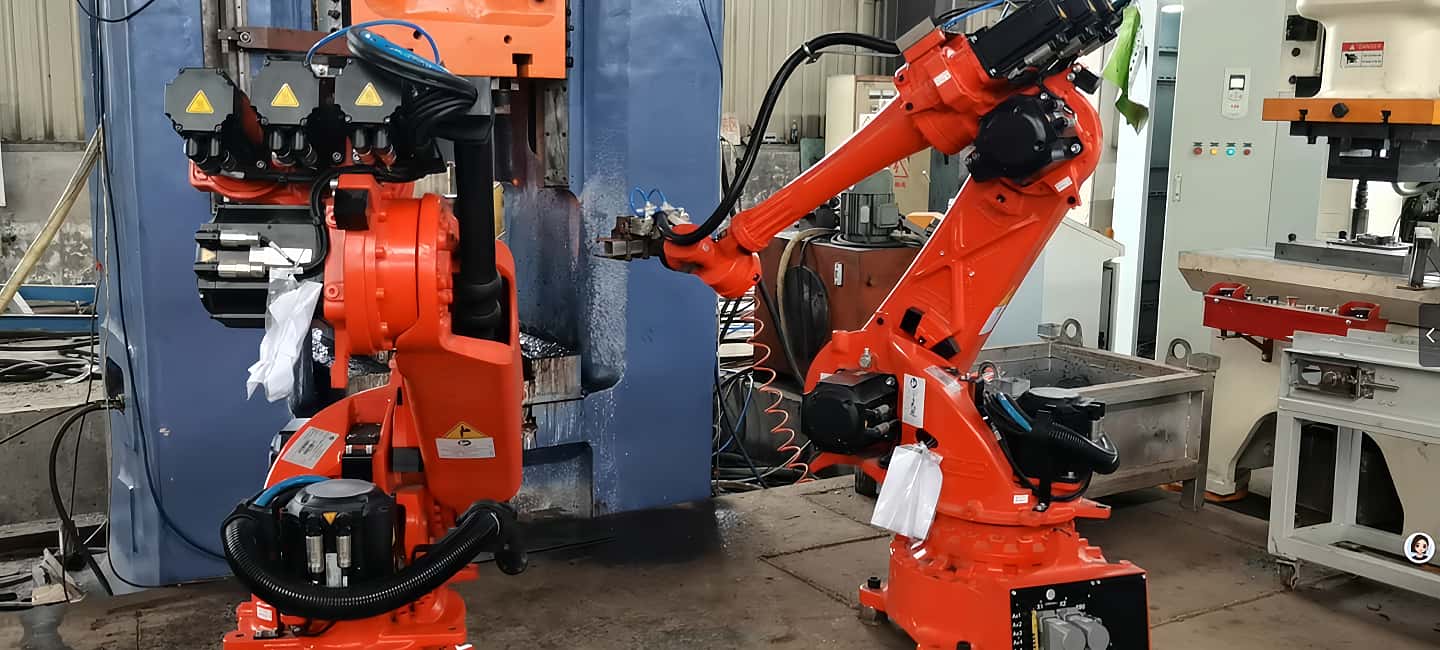
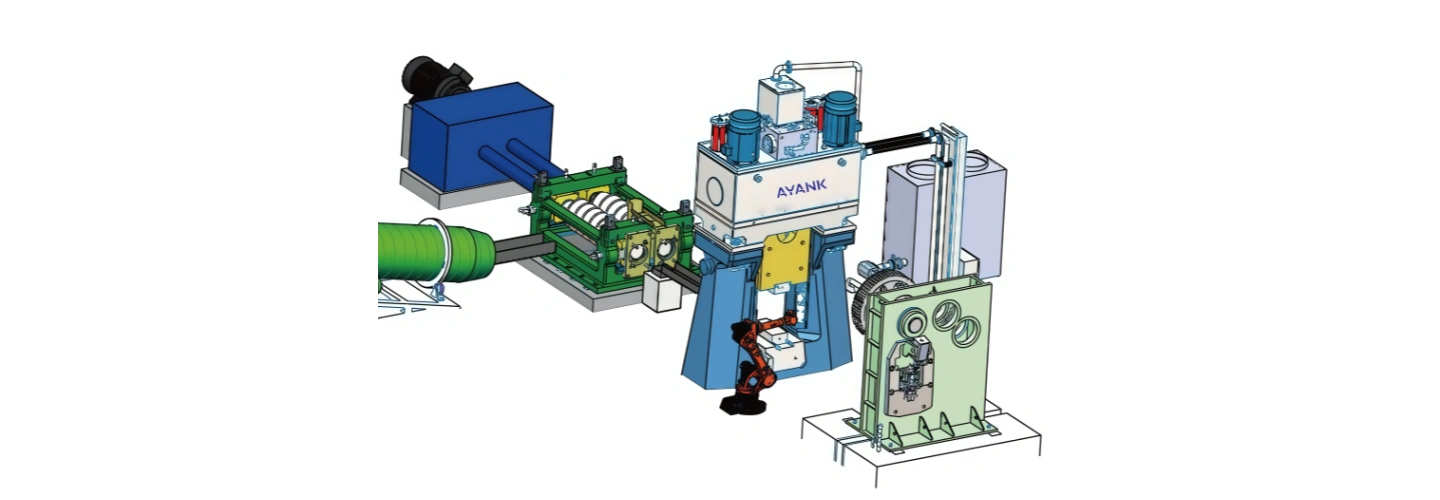
Core Content: Auxiliary equipment includes feeding machines, electric furnaces, punching machines, scale cleaning machines, graphite spraying equipment, conveyor belts, robots, etc. These items account for a relatively small portion of the cost. The core requirement is that they are compatible with the main forging equipment and the production process. While meeting the needs of automated production, prioritize products from reputable manufacturers that are reliable, durable, and have a low failure rate to reduce long-term maintenance costs.
• Point 5: Strengthen collaborative adaptability (key to implementation)
Core Content: The design and construction of an automated forging production line should focus on achieving collaborative adaptability between "process, equipment, and workflow." Reasonably plan the automated forging process, select equipment suitable for automated production lines, optimize the workflow connections between equipment, and leverage the synergy of the entire automated forging production line.
Core Goal: Ensure that the production line fully meets the process design requirements, achieving continuous, smooth, and efficient production, and ensuring that both production capacity and quality standards are met.
II. Which Industries Are Suitable for Automated Forging Production Lines?
AYANK FORGING’s automated forging production lines provide comprehensive, one-stop solutions. Leveraging extensive process expertise and equipment resources, they are widely applicable to various forging-related industries, including:
• Automotive Industry: Suitable for the forging production of automotive parts (e.g., crankshafts, gears, brake discs, etc.).
• Construction Machinery Industry: Suitable for the forging production of construction machinery parts.
• Hardware Tools Industry: Suitable for the forging production of various hardware tools (e.g., wrenches, pliers, etc.).
• Basic Industrial Sectors: Suitable for the forging production of components in industries such as railway, transportation, electric power, petrochemical, and shipbuilding.
• High-End Manufacturing: Suitable for the forging production of precision forgings in industries such as military, aerospace, and aviation.