A riveting machine, also known as a rivet machine, spin riveting machine, riveting press or radial riveting machine, is a type of riveting equipment developed on the cold rolling principle. It fastens parts together with rivets. The machine features a compact structure, stable performance, and safe, user-friendly operation. Riveting is achieved mainly through rotation and pressure, which makes the machine suitable for rivet fastening of hollow rivets, tubular rivets, solid rivets and similar fasteners.
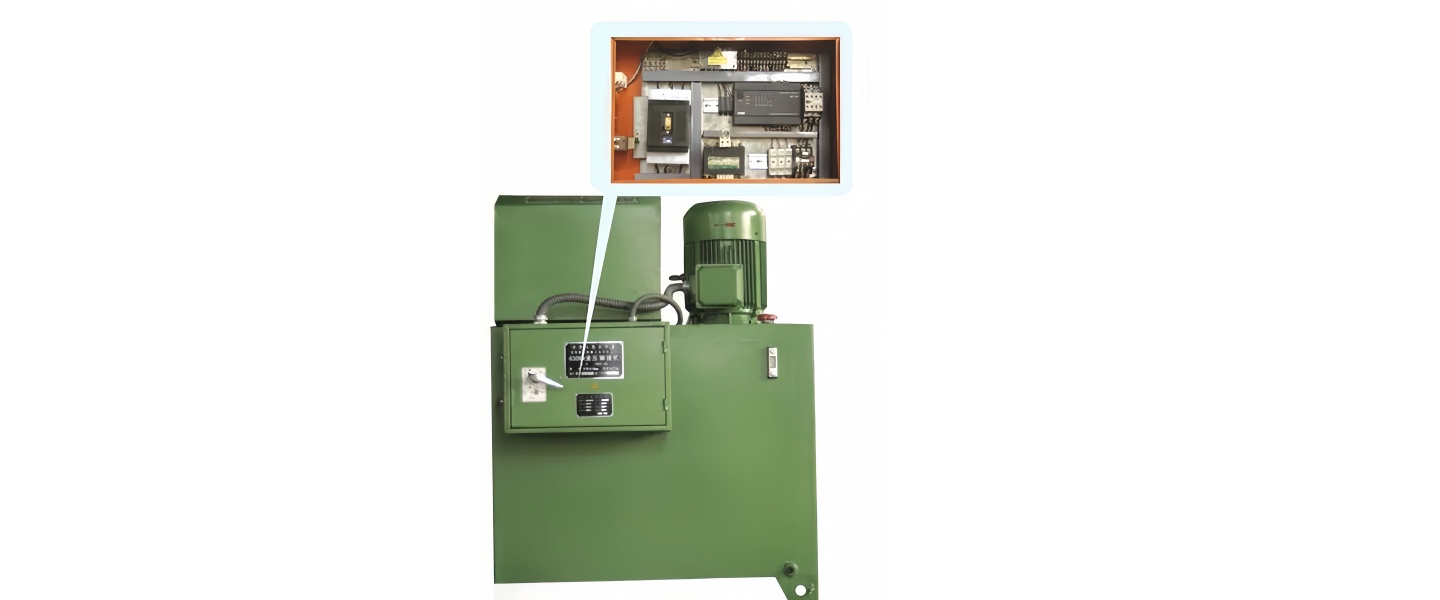
A riveting machine mainly consists of a hydraulic power unit, pipelines, a suspension device and riveting tongs. The hydraulic power unit is connected to the riveting tongs through the pipelines, and the tongs are suspended from the lower end of the suspension device. They rotate 360° horizontally and vertically around the suspension axis and move back and forth along the trolley on the suspension beam, which is what allows the operator to reach the various parts of a vehicle frame.
Common types:
The high-speed hydraulic riveting machine was independently developed by AYANK FORGING in the early 1980s to meet the needs of China's automotive industry, incorporating and adapting foreign technology. Over the past two decades it has made a significant contribution to that industry. As the automotive sector developed, our riveting machines went through several generations of innovation and are now widely used for riveting automotive frames, side frames, core plates and side column edge beams, for the impact seats of railway freight cars and tank cars, and in aviation, mining vehicle chassis and agricultural vehicle frames.
Fully hydraulic transmission and control give the machine a high output pressure, which enables direct cold riveting and improves riveting quality. Compared with traditional pneumatic riveting, the advantages are a better working environment, no noise, flexible and lightweight operation, reduced labour intensity, faster riveting speed and higher production efficiency.

Worked example: for plates 20 mm thick in total and a 12 mm rivet, L = 1.12 × 20 + 1.4 × 12 = 22.4 + 16.8 = 39.2 mm. Round to the nearest standard rivet length above the result, never below it.
| Rivet diameter (mm) | 8 | 10 | 12 | 14 | 16 |
|---|---|---|---|---|---|
| Riveting force | 16 | 20 | 28 | 40 | 50 |
Read the table by diameter: a 12 mm rivet set cold needs 28, a 16 mm rivet needs 50. The force rises faster than the diameter, which is why the tongs and the power unit have to be matched to the largest rivet the workshop actually uses.
Worked example: for a 16 mm rivet, d = 1.6 cm, so F = 10 × 1.6² × π / 4 ≈ 20 t.
The two routes are alternatives rather than a sequence. Cold riveting is what the fully hydraulic machine does directly, with no heating step and no risk of burning the coating on the parts. The hot formula applies when the rivet is heated before forming, which is how a smaller press capacity is stretched to a larger rivet diameter.
Operators must follow the inspection checklist and perform the inspections thoroughly. Proper inspection identifies problems with the hydraulic riveting machine in time and makes repair easier, while reasonable maintenance reduces part wear, extends service life and lowers repair cost. In daily operation, hold to the three goods (manage well, use well, maintain well), the four abilities (able to operate, maintain, inspect and perform minor repairs) and the five fixeds (fixed personnel, fixed locations, fixed timing, fixed quality, fixed quantity).
Confirm the workpiece and the rivets from the previous process before riveting. Rework is labour-intensive and expensive, and removing a set rivet is particularly difficult. Operators therefore have to master the technique, verify the condition of the riveting dies, the rivets and the components, and follow the operating guidelines.
Although the hydraulic riveting machine can handle complex rivet forming tasks for many rivet types, vigilance must not be relaxed. Always follow the operating procedure when handling the riveting tongs, and never place hands between the upper and lower riveting dies.
Fastening parts together with rivets, using rotation and pressure on the cold rolling principle. It handles hollow rivets, tubular rivets and solid rivets, and is widely used on vehicle frames, railway car impact seats, aviation parts and agricultural machinery frames.
Cold riveting uses the diameter and force table in this page. Hot riveting uses F = 10d²π / 4, with the diameter in centimetres, when the rivet is heated before forming.
L = 1.12 × total part thickness + 1.4 × rivet diameter, both in millimetres. For 20 mm of plate and a 12 mm rivet that gives 39.2 mm.
Low-carbon, medium-carbon and stainless steel rivets, plus copper and aluminium rivets. Radial riveting machines can also handle glass, plastic and ceramics.
Rivet specifications are generally taken from GB863.1-86, GB867-86, GB864-86, GB868-86, GB865-86 and GB869-86, in ductile materials such as Q235, F1 or F2.
So that the tongs can rotate 360 degrees horizontally and vertically around the suspension axis and travel along the beam, reaching every part of a large frame instead of the workpiece being moved to the machine.
Receive the news that you are interested in.
